



Jignesh Mevani, 9 others jailed for 3 months in 2017 unlawful rally case

News Network
May 5, 2022

A magisterial court in Mehsana, Gujarat, on Thursday, 5 May, sentenced Vadgam MLA Jignesh Mevani and nine others to three months' imprisonment for holding a rally from Mehsana in July 2017 without prior police permission. Nationalist Congress Party (NCP) leader Reshma Patel was also among those convicted. All the convicts were also fined Rs 1,000 each.

This comes days after an Assam court granted bail to Congress' Mevani in a 'manufactured' assault case. The Gujarat MLA had first been arrested in connection with a case over tweets on Prime Minister Narendra Modi.

Additional Chief Judicial Magistrate JA Parmar, who passed the judgment, said, "It is not an offence to hold a rally, but it is an offence to hold a rally without permission," reported The Indian Express. The court further said that "disobedience can never be tolerated."

The court said while pronouncing the judgment that the 10 accused could have challenged the order of the executive magistrate before appropriate higher authorities and then held the rally after receiving due permission.

Mevani and his associates had taken out an 'Azadi Kooch' from Mehsana to Dhanera in the neighbouring district of Banaskantha on 12 July 2017 to mark one year of the public flogging of some Dalits in Una.

Kaushik Parmar, one of Mevani's associates, had sought permission for the rally from the Mehsana executive magistrate under the banner of Rashtriya Dalit Adhikar Manch. The permission was initially granted but revoked by the authorities later. However, the rally was still held by the organisers.

After the rally, the Mehsana Police registered a case under Section 143 of the Indian Penal Code (IPC) for unlawful assembly against Mevani and others as they hadn't been granted permission to hold the march. The police had also submitted a charge sheet against 12 people in the case.

Former Jawaharlal Nehru University Students Union (JNUSU) president Kanhaiya Kumar, who is now part of the Congress party, had also attended the rally.

The framing of charges by the court had taken place in April 2021. However, Kumar was absent during the same. The court had passed an order to hold a separate trial against him when he appeared before the court.

The trial against the 10 accused began in April 2021. It excluded Kumar and another accused, who had died.

Comments

Add new comment

  • Coastaldigest.com reserves the right to delete or block any comments.
  • Coastaldigset.com is not responsible for its readers’ comments.
  • Comments that are abusive, incendiary or irrelevant are strictly prohibited.
  • Please use a genuine email ID and provide your name to avoid reject.
News Network
November 27,2025

DKSvokkaliga.jpg

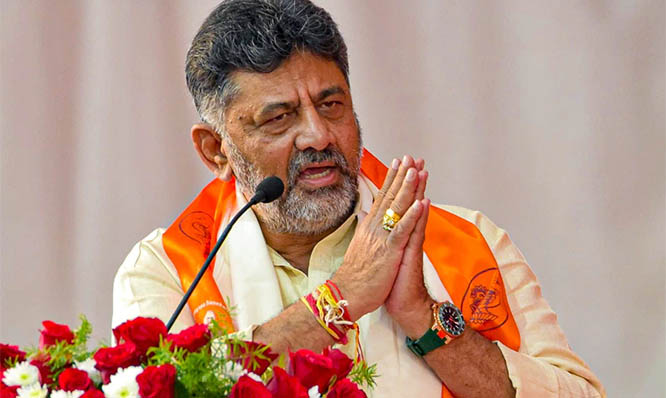
Bengaluru: The Vokkaligara Sangha on Thursday issued a stern warning to the Congress, saying the party could face serious electoral repercussions if Deputy Chief Minister D.K. Shivakumar is not appointed as Chief Minister.

The warning follows the public backing of Shivakumar’s chief ministerial ambition by top Vokkaliga pontiff Nirmalanandanatha Swami, who urged the Congress high command to honor his claim.

“The community supported Congress in the 2023 Assembly elections only because Shivakumar had a real chance to become CM. If he is cheated, we’ll teach the party a big lesson,” said newly elected Sangha president L. Srinivas. He added that Vokkaligas would organize protests under the guidance of community leaders.

General Secretary C.G. Gangadhar pointed out that Congress won more seats in the Vokkaliga-dominated Old Mysuru region due to Shivakumar’s influence, adding, “If Congress wants to retain power, Shivakumar should be made the CM.”

Outgoing president Kenchappa Gowda emphasized Shivakumar’s contribution to Congress’ victory. “Our community voted for Congress thinking he would become CM. Siddaramaiah has also served the party well, but Shivakumar should now be given a chance,” he said.

Former general-secretary Konappa Reddy appealed to Sonia and Rahul Gandhi to recognize Shivakumar’s loyalty and service, saying, “Congress is known to keep its promises. We hope it won’t break the promise made to him.”

Comments

Add new comment

  • Coastaldigest.com reserves the right to delete or block any comments.
  • Coastaldigset.com is not responsible for its readers’ comments.
  • Comments that are abusive, incendiary or irrelevant are strictly prohibited.
  • Please use a genuine email ID and provide your name to avoid reject.
News Network
December 6,2025

pilot.jpg

New Delhi: IndiGo, India’s largest airline, faced major operational turbulence this week after failing to prepare for new pilot-fatigue regulations issued by the Directorate General of Civil Aviation (DGCA). The stricter rules—designed to improve flight safety—took effect in phases through 2024, with the latest implementation on November 1. IndiGo has acknowledged that inadequate roster planning led to widespread cancellations and delays.

Below are the key DGCA rules that affected IndiGo’s operations:

1. Longer Mandatory Weekly Rest

Weekly rest for pilots has been increased from 36 hours to 48 hours.

The government says the extended break is essential to curb cumulative fatigue. This rule remains in force despite the current crisis.

2. Cap on Night Landings

Pilots can now perform only two night landings per week—a steep reduction from the earlier limit of six.

Night hours, defined as midnight to early morning, are considered the least alert period for pilots.

Given the disruptions, this rule has been temporarily relaxed for IndiGo until February 10.

3. Reduced Maximum Night Flight Duty

Flight duty that stretches into the night is now capped at 10 hours.

This measure has also been kept on hold for IndiGo until February 10 to stabilize operations.

4. Weekly Rest Cannot Be Replaced With Personal Leave

Airlines can no longer count a pilot’s personal leave as part of the mandatory 48-hour rest.

Pilots say this closes a loophole that previously reduced actual rest time.

Currently, all airlines are exempt from this rule to normalise travel.

5. Mandatory Fatigue Monitoring

Airlines must submit quarterly fatigue reports along with corrective actions to DGCA.

This system aims to create a transparent fatigue-tracking framework across the industry.

The DGCA has stressed that these rules were crafted to strengthen flight safety and align India with global fatigue-management standards. The temporary relaxations are expected to remain until February 2025, giving IndiGo time to stabilise its schedules and restore normal air travel.

Comments

Add new comment

  • Coastaldigest.com reserves the right to delete or block any comments.
  • Coastaldigset.com is not responsible for its readers’ comments.
  • Comments that are abusive, incendiary or irrelevant are strictly prohibited.
  • Please use a genuine email ID and provide your name to avoid reject.
