



Millions of women face health risks thanks to Modi govt’s LPG subsidy cuts

By Debjit Chakraborty, Saket Sundria and Dhwani Pandya
March 9, 2021

women.jpg

Five years ago, Prime Minister Narendra Modi’s government offered Indian women a chance to dramatically improve their lives with cooking fuel subsidies in what became one of his administration’s most celebrated campaigns.

Now, hamstrung by a widening fiscal deficit, New Delhi has been slowly reducing the size of those handouts -- a shift that risks upsetting women voters and potentially exposing millions to heavier levels of pollution.

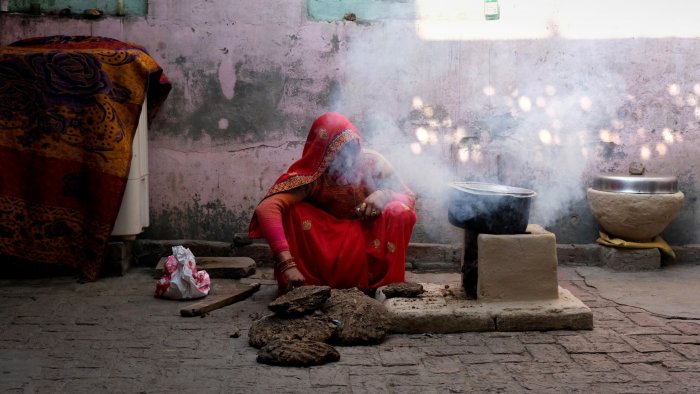
In Allauddinnagar, a village in India’s Uttar Pradesh state, Laxmi Kishore, a 35-year-old homemaker, is worried. Cooking food for her family used to be an ordeal that involved using cheap fuels like cow dung, crops and wood, which burn with a sooty flame and left her teary eyed and choking. When Modi’s program made liquefied petroleum gas cylinders affordable to her some years ago, she breathed more easily.

Now Kishore is preparing to return to her earthen stove and the smoggier fuels her ancestors used because the subsidy that landed in her account each time she refilled a cylinder has stopped arriving. Her husband lost his job as a cashier in a highway restaurant during last year’s Covid-19 lockdown, making a cooking cylinder unaffordable to them without the handout.

“I’m dreading a return to my earlier pain,” she said. “It will mean less sleep and suffering in the smoke again.”

Provisions for the LPG cooking fuel subsidies were halved in the federal budget for the fiscal year ending March 2022 to 124.8 billion rupees ($1.7 billion) from 255 billion rupees a year earlier. A spokesperson at India’s oil ministry didn’t respond to a request for comment.

The government continues to modulate the “effective price” for subsidized domestic LPG, Oil Minister Dharmendra Pradhan said in a written response to questions from parliament. “The subsidy on the product increases/decreases with the increase/decrease in the product price in international market and decision of government on subsidy,” he added.

The program launched in 2016 by the Modi government offered cash rebates for purchasing an LPG connection and a loan for the first canister of the fuel and stove. More than 80 million women from extremely poor households had received such LPG connections by Jan. 1 this year. The government announced plans in the latest federal budget to extend the benefit to another 10 million households, mostly located in the remote forests and hilly areas.

To help the poor struggling with lockdowns, the government last year also offered free LPG refills of three cylinders. India’s LPG consumption in 2020 surpassed gasoline for the first time ever over a calendar year, government data show.

But the free supplies were a one-off move and the finance director of Indian Oil Corp., the largest retailer of the cylinders, said last month that the government had last year stopped subsidizing the fuel for consumers except in the most remote areas.

Meanwhile, prices of LPG have surged across the country. Cost of a typical LPG cylinder sold by Indian Oil in Delhi has increased by 40% since November to Rs 819. Some opposition parties are focusing on the issue of high LPG prices for regional elections against Modi’s Bharatiya Janata Party.
Providing cooking gas has been one of the biggest successes of Modi’s flagship welfare programs which also included building toilets and houses for the poor.

“The elephant in the room is the price rise,” said Arati Jerath, a New Delhi-based author and political analyst. “The LPG program started as a very popular scheme, but has been petering out because of the price increase. Modi will have to come up with a new emotive issue as the government is running out of money to indulge in populism measures.”
LPG is crucial for reducing domestic pollution in India. The country has the highest instances of premature deaths in the world due to emissions from burning fossil fuels, including coal and oil products, according to research done by Harvard University in collaboration with other academic institutions.

“Withdrawal of subsidy and increase in prices is likely to affect LPG consumption, particularly in rural areas where alternatives such as firewood, agricultural residue, dung cakes are readily available,” according to Ashok Sreenivas, a senior fellow at Prayas, an Indian advocacy group that works in energy policy.

An increase in the use of alternative solid fuels will “definitely impact the health” of rural women and children as these release particulate matters that can cause illnesses including lung cancer, heart ailments and even stroke, he said.

India faces issues other than price in getting poorer populations to adopt cleaner fuel. Availability is also a problem in far flung areas that are hard to reach, Prayas said in a December report. India’s oil ministry has said beneficiaries of the program availed of less than two refills of the three free ones offered over nine months last year.

Air pollution inside houses, primarily due to burning solid fuels like wood, dried dung and biomass, contributed to more than 1 million deaths in 2010, making it the second- biggest health risk factor in India, according to a 2015 report by Steering Committee on Air Pollution and Health Related Issues.

The International Energy Agency in a special report last month said that despite the recent success in expanding coverage of LPG in rural areas, 660 million Indians haven’t fully switched to modern, clean cooking fuels. Higher costs and fewer subsidies might only make it harder to draw new users. Vehicular exhaust, industrial emissions and other factors have already made India home to 14 of the 20 most polluted cities in the world.

The task of encouraging the poor to use the cleaner fuel becomes even more challenging with millions losing their jobs during the pandemic. Poor households are more sensitive to higher fuel prices as they can easily shift to cheaper alternatives for which they need to pay just a few cents every day, rather than spending as much as $11 per cylinder upfront.

“Prices are rising and the government has stopped compensating us,” said Kaushal Kishore, Laxmi’s husband. “I can’t afford LPG any further and this is my last cylinder till I find myself a job.”

Comments

Add new comment

  • Coastaldigest.com reserves the right to delete or block any comments.
  • Coastaldigset.com is not responsible for its readers’ comments.
  • Comments that are abusive, incendiary or irrelevant are strictly prohibited.
  • Please use a genuine email ID and provide your name to avoid reject.
News Network
November 22,2025

The Karnataka government has announced a 50% rebate on pending traffic and transport fines. The discount is available from November 21 to December 12.

The rebate applies to all traffic e-challans and violation cases booked by the RTO between 1991–92 and 2019–20. Officials clarified that the offer is not applicable to pending tax dues and is restricted only to traffic-violation fines.

Across Karnataka, more than 4 lakh RTO cases remain pending, including those involving transport vehicles. While thousands of vehicle owners have already cleared their dues, the department expects to generate substantial revenue through this limited-period rebate.

How to Pay and Avail the Discount

There are three ways to check and pay your pending fines:

1. Through Mobile Apps
Available on both Play Store and App Store:
•    Karnataka State Police (KSP) app
•    KarnatakaOne app
•    ASTraM app

Steps:
•    Enter your vehicle number in any of the above apps
•    Verify the photo/details of your vehicle
•    Pay the fine with the 50% discount applied

2. Visit a Traffic Police Station

You can pay your pending fine at any nearby traffic police station.

3. Visit the Traffic Management Centre (TMC)

•    Location: First Floor, Infantry Road, near Indian Express, Bengaluru

Transport Commissioner Yogeesh A M said, “We don't issue e-challans, so there's no online payment system.”

The department estimates ₹52 crore in pending RTO fines up to March 2020. “With the 50% rebate, we expect to collect around ₹25 crore if all dues are cleared,” he added.

Comments

Add new comment

  • Coastaldigest.com reserves the right to delete or block any comments.
  • Coastaldigset.com is not responsible for its readers’ comments.
  • Comments that are abusive, incendiary or irrelevant are strictly prohibited.
  • Please use a genuine email ID and provide your name to avoid reject.
News Network
December 2,2025

A major upgrade in safety and monitoring is planned for Haj 2026, with every Indian pilgrim set to receive a Haj Suvidha smart wristband linked to the official Haj Suvidha mobile app. The initiative aims to support pilgrims—especially senior citizens—who may struggle with smartphones during the 45-day journey.

What the Smart Wristband Will Do

Officials said the device will come with:
•    Location tracking
•    Pedometer
•    SOS emergency button
•    Qibla compass
•    Prayer timings
•    Basic health monitoring

SP Tiwari, secretary of the UP State Haj Committee, said the goal is to make the pilgrimage safer and more comfortable.

“Most Hajis are elderly and not comfortable with mobile apps,” he said. “The smartwatch will help locate pilgrims who forget their way or cannot communicate their location.”

The wristbands will be monitored by the Consulate General of India in Saudi Arabia, similar to mobile tracking via the Haj Suvidha App.

Free Distribution and Training

•    Smart wristbands will be given free of cost.
•    Training for pilgrims will be conducted between January and February 2026.
•    Sample units will reach state Haj committees soon.
•    Final devices will be distributed as pilgrims begin their journey.

New Rules for Accommodation

Two major decisions have also been finalised for Haj 2026:
1.    Separate rooms for men and women – including married couples. They may stay on the same floor but must occupy different rooms, following stricter Saudi guidelines.
2.    Cooking banned – gas cylinders will not be allowed; all meals will be provided through official catering services arranged by the Haj Committee of India.

These decisions were finalised during a meeting of the Haj Committee of India and state representatives in Mumbai.

Haj Suvidha App Launched Earlier

The government launched the Haj Suvidha App in 2024, offering:

•    Training modules
•    Accommodation and flight details
•    Baggage information
•    SOS and translation tools
•    Grievance redressal

Haj 2026 Quota and Key States

•    India’s total Haj quota for 2026: 1,75,025 pilgrims
•    70% (1,25,000) allotted to the Haj Committee of India
•    30% (around 50,000) reserved for Haj Group Organisers

Uttar Pradesh has the largest allocation (around 30,000 seats), though approximately 18,000 pilgrims are expected to go this year. States with high pilgrim numbers include Kerala, Maharashtra and Gujarat.

Dates of Haj 2026

The pilgrimage is scheduled to take place from 24 May to 29 May, 2026 (tentative).
Haj is one of the five pillars of Islam and is mandatory for Muslims who meet the required conditions.

Comments

Add new comment

  • Coastaldigest.com reserves the right to delete or block any comments.
  • Coastaldigset.com is not responsible for its readers’ comments.
  • Comments that are abusive, incendiary or irrelevant are strictly prohibited.
  • Please use a genuine email ID and provide your name to avoid reject.
News Network
December 5,2025

indigoCEO.jpg

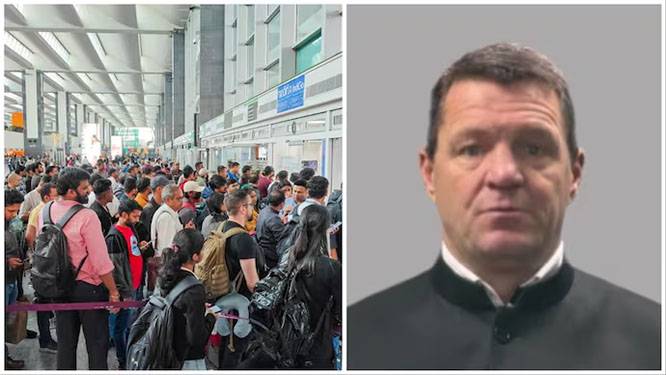
New Delhi, Dec 5: IndiGo CEO Pieter Elbers issued a public apology this evening after more than a thousand flights were cancelled today, making it the "most severely impacted day" in terms of cancellations. The biggest airline of the country cancelled "more than half" of its daily number of flights on Friday, said Elbers. He also said that even though the crisis will persist on Saturday, the airline anticipates fewer than 1,000 flight cancellations.

"Full normalisation is expected between December 10 and 15, though IndiGo cautions that recovery will take time due to the scale of operations," the IndiGo CEO said. 

IndiGo operates around 2,300 domestic and international flights daily.

Pieter Elbers, while apologising for the major inconvenience due to delays and cancellations, said the situation is a result of various causes.

The crisis at IndiGo stems from new regulations that boost pilots' weekly rest requirements by 12 hours to 48 and allow only two night-time landings per week, down from six. IndiGo has attributed the mass cancellations to "misjudgment and planning gaps".

Elbers also listed three lines of action that the airline will adopt to address the issue.

"Firstly, customer communication and addressing your needs, for this, messages have been sent on social media. And just now, a more detailed communication with information, refunds, cancellations and other customer support measures was sent," he said.

The airline has also stepped up its call centre capacity.

"Secondly, due to yesterday's situation, we had customers stranded mostly at the nation's largest airports. Our focus was for all of them to be able to travel today itself, which will be achieved. For this, we also ask customers whose flights are cancelled not to come to the airports as notifications are sent," the CEO said.

"Thirdly, cancellations were made for today to align our crew and planes to be where they need to start tomorrow morning afresh. Earlier measures of the last few days, regrettable, have proven not to be enough, but we have decided today to reboot all our systems and schedules, resulting in the highest numbers of cancellations so far, but imperative for progressive improvements starting from tomorrow," he added.

As airports witnessed chaotic scenes, the Directorate General of Civil Aviation (DGCA) stepped in to grant IndiGo a temporary exemption from stricter night duty rules for pilots. It also allowed substitution of leaves with a weekly rest period. 

Civil Aviation Minister Ram Mohan Naidu has said a high-level inquiry will be ordered and accountability will be fixed.

Comments

Add new comment

  • Coastaldigest.com reserves the right to delete or block any comments.
  • Coastaldigset.com is not responsible for its readers’ comments.
  • Comments that are abusive, incendiary or irrelevant are strictly prohibited.
  • Please use a genuine email ID and provide your name to avoid reject.