Modi govt Refuses to Join SCO’s condemnation of Israeli Strikes on Iran – Here’s Why

News Network
June 16, 2025

New Delhi: The Narendra Modi-led government of India has declined to endorse the Shanghai Cooperation Organisation’s (SCO) condemnation of Israel’s ongoing military strikes on Iran, exposing a potential fault line within the Eurasian bloc over the rapidly escalating conflict.

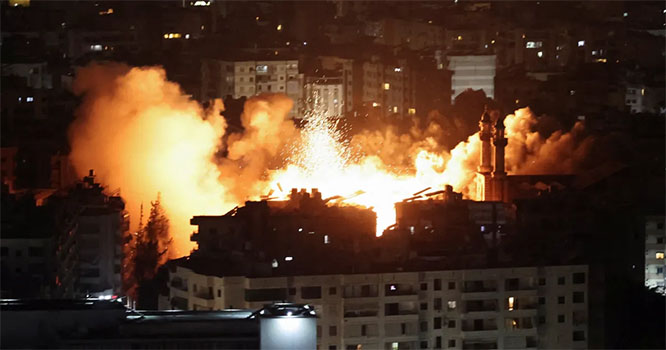
While global leaders have issued urgent calls for restraint, Israel has intensified its offensive against Iran, targeting nuclear and military infrastructure in what many analysts describe as an unprecedented escalation. The latest wave of attacks, which began last Friday, has drawn condemnation from several countries — but not from the Modi government.

The renewed fighting follows two direct confrontations between Iran and Israel earlier in 2024, triggered by Israeli airstrikes on Iranian targets and retaliatory attacks from Tehran. Iran reports that recent Israeli strikes have hit residential and military zones across Tehran and other cities, killing at least 80 people — including civilians, senior commanders of the Revolutionary Guard, and prominent nuclear scientists.

On Saturday, Israeli missiles targeted oil reserves, power stations, and refineries across Iran. In response, Tehran launched a barrage of drones and missiles at Tel Aviv and Haifa, killing at least 13 and injuring many more. Simultaneously, Iran announced a pause in its nuclear negotiations with the United States.

Why Did the Modi Government Stay Silent?

The Modi administration’s refusal to participate in the SCO’s condemnation raises several critical questions: Is New Delhi quietly aligning with Israel? What geopolitical risks does this stance pose for India and the broader region?

What Did the SCO Say?

Founded in 2001, the SCO comprises China, Russia, India, Iran, Pakistan, and several Central Asian nations. Iran, the bloc’s newest member, joined in 2023 under India’s own chairmanship.

Currently chaired by China, the SCO on Saturday issued a joint statement expressing “serious concern” over the rising Israel-Iran tensions and “strongly condemning” Israeli strikes on Iranian territory. The statement called Israel’s attacks on civilian infrastructure and energy facilities “a gross violation of international law and the UN Charter,” warning that such actions threaten global peace and stability.

It further emphasized the bloc’s support for resolving the Iranian nuclear issue through peaceful, diplomatic means, and extended condolences to the Iranian government and people.

New Delhi’s Diplomatic Balancing Act

In the immediate aftermath of Israel’s strikes, Indian External Affairs Minister S. Jaishankar spoke with his Iranian counterpart, Abbas Araghchi, conveying “the deep concern of the international community” and urging restraint and a return to diplomacy. A statement from India’s Ministry of External Affairs reiterated New Delhi’s commitment to “monitoring the evolving situation” and promoting dialogue.

“India enjoys close and friendly relations with both countries and stands ready to extend all possible support,” the statement read.
However, when the SCO released its statement condemning Israel, the Modi-led government clarified that it had not participated in drafting or endorsing the declaration. “The overall position of India as stated above was communicated to other SCO members,” the Foreign Ministry said.

Analysts suggest this reflects a broader strategic calculation.

“Unlike other SCO countries, the Modi government has to juggle defence ties with Israel and economic cooperation with Iran,” said Dr. Shanthie D’Souza, a senior fellow at the University of Massachusetts-Amherst. India is Israel’s largest arms buyer and has reportedly supplied munitions to Israel during the war in Gaza. At the same time, New Delhi is investing in Iran’s Chabahar Port, a critical trade corridor to Central Asia and Afghanistan.

“India is walking a very fine line in this conflict,” D’Souza added.

Quiet Backing for Israel?

Although the Modi government hasn’t openly backed Israel, its refusal to condemn the strikes and its abstention from a recent UN General Assembly vote demanding a ceasefire in Gaza raise questions about its true alignment.

Kabir Taneja, a strategic analyst at the Observer Research Foundation, called the abstention “perplexing,” speculating that it may be linked to India’s growing ties with the United States. India is currently finalizing a trade agreement with Washington, and maintaining strategic harmony with both the US and Israel could be influencing its position.

“India’s reluctance to endorse the SCO’s statement reflects its somewhat outsider status within the bloc,” Taneja noted. “Russia and China are aligned closely with Iran, but New Delhi’s tilt toward the US-Israel axis makes such statements politically sensitive.”

US Pressure on Iran – A Strategic Setback for India?

New Delhi’s balancing act is further complicated by renewed US sanctions under the second Trump administration. These include suspending waivers that previously allowed India to develop Iran’s Chabahar Port — a key part of its regional connectivity strategy.

The port is critical to bypassing Pakistan for trade with landlocked Afghanistan and Central Asian markets. Now, Trump’s sanctions put at risk India’s multimillion-dollar investment in Chabahar and limit its options in Central Asia.

Yet India’s interest in Iran is not just economic. Iran’s geography is a strategic asset, offering India a vital corridor into regions that are central to its energy, trade, and security objectives.

By choosing not to back the SCO’s condemnation of Israel, the Modi-led government has signalled its preference for strategic autonomy — or what some might see as quiet alignment with the West and Israel. This decision may serve short-term interests, but it also risks long-term consequences for India’s role in regional diplomacy and the future cohesion of multilateral forums like the SCO.

Comments

Add new comment

  • Coastaldigest.com reserves the right to delete or block any comments.
  • Coastaldigset.com is not responsible for its readers’ comments.
  • Comments that are abusive, incendiary or irrelevant are strictly prohibited.
  • Please use a genuine email ID and provide your name to avoid reject.
News Network
December 2,2025

DKSsiddu.jpg

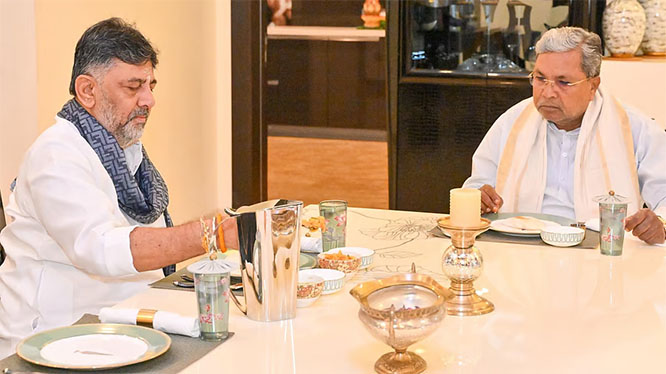
Bengaluru: 'Nati koli saaru' (country chicken curry) considered one of Chief Minister Siddaramaiah’s favourites along with steaming hot idlis was on the breakfast menu at Deputy CM D K Shivakumar’s residence on Tuesday, according to official sources.

The spread also included 'nati koli' fry, vada and pongal, among other items, they said.

In an apparent show of unity, Siddaramaiah visited Shivakumar’s residence for breakfast, just days after the two leaders shared a meal amid a simmering power tussle in the state Congress.

Siddaramaiah drove to the Deputy CM’s residence in Sadashivanagar, where he was received by Shivakumar and his brother D K Suresh, who is a former Congress MP.

Suresh and Kunigal MLA H D Ranganath, a relative of Shivakumar, joined them for breakfast, which featured a mix of vegetarian and non-vegetarian dishes.

Speaking to reporters later, Siddaramaiah said Shivakumar had invited him during his visit to the CM’s residence for breakfast on Saturday.

Asked about the difference between the two meals, the chief minister said, "At his (Shivakumar’s) house it was non-veg, while at my house it was veg. He is a vegetarian, I am a non-vegetarian. I had not prepared non-veg. I told DK to get chicken from the village as you won’t get the original in Bengaluru."

Shivakumar said he had initially invited Siddaramaiah to his residence, but the CM had suggested visiting his place first and reciprocating later. "It was a vegetarian breakfast at the CM’s house on Saturday," he noted.

"Today, I invited him (the CM) to my house. He enjoyed the breakfast, which had his Mysuru taste," Shivakumar added. At this point, Siddaramaiah remarked that Shivakumar’s wife is also from Mysuru.

Saturday’s breakfast at Siddaramaiah’s official residence, held as part of efforts by the Congress high command to ease tensions in the leadership dispute between the two, reportedly included idlis and sambar, according to official sources.

Comments

Add new comment

  • Coastaldigest.com reserves the right to delete or block any comments.
  • Coastaldigset.com is not responsible for its readers’ comments.
  • Comments that are abusive, incendiary or irrelevant are strictly prohibited.
  • Please use a genuine email ID and provide your name to avoid reject.
News Network
November 24,2025

lebanon.jpg

Israel has launched a new act of aggression on a residential neighborhood in Lebanon's capital, Beirut, killing and injuring about two dozen civilians.

The Israeli regime's military said in a statement that its forces carried out a so-called precise strike in a residential apartment in Dahiyeh in the southern suburbs of Beirut on Sunday.

The aggression targeted residential areas, killing at least five people and injuring more than 28 people, Lebanon's Health Ministry said. 

Hezbollah announced the martyrdom of senior Hezbollah commander Haytham Ali Tabatabai and four resistance fighters.

Lebanese President Michel Aoun condemned the airstrike, calling it a clear demonstration of Tel Aviv’s disregard for repeated international calls to halt violations on Lebanese soil.

“Israel refuses to implement international resolutions and all efforts aimed at ending the escalation and restoring stability,” Aoun said, urging the international community to take action to prevent further aggression.

The Palestinian Islamic Jihad movement also condemned the attack, holding the international community accountable. 

“The international community bears responsibility and continues to provide cover for these attacks as long as it does not restrain the occupiers,” said Ali Abu Shahin, a member of the group’s political bureau.

Israeli prime minister Benjamin Netanyahu’s office announced that the Israeli army carried out a strike “in the heart of Beirut."

Netanyahu reportedly approved the operation following recommendations from top Israeli security officials.

Two senior US officials commented on the Israeli strike.

The first official said that Israel did not notify Americans in advance about the attack. "We were informed immediately after the strike was carried out."

The second senior official said that the "US knew for several days that Israel was planning to escalate its strikes in Lebanon, but did not know in advance the timing, location, or target of the strike."

Speaking from the site of the Israeli strike, Lebanese MP Ali Ammar condemned the attack as part of a broader campaign of aggression that has targeted "all of Lebanon since the Washington-sponsored ceasefire."

He stated that "any attack on Lebanon is a violation of red lines; this aggression is part and parcel of the entity that targets Lebanon's dignity, sovereignty, and security of citizens."

Ammar went on to say the resistance is responding with "utmost wisdom, patience, and will confront the enemy at the appropriate time."

"Unfortunately, the enemy is emboldened to commit its aggression by voices within Lebanon that have turned themselves into tools that support its aggression," he added.

The Israeli attack on the southern suburbs of the Lebanese capital is the latest blatant violation of the ceasefire Israel signed with Hezbollah in November 2024, which was intended to end hostilities that had escalated into full-scale war.

An Israeli strike on the Ain al-Hilweh camp near Sidon in southern Lebanon late Tuesday killed at least 14 people. It wounded several others, including young students, according to the Lebanese health ministry.

The military claimed the attack targeted “a Hamas training compound” used to plan and carry out attacks against the regime -- a claim that has frequently been made without evidence.

Hamas rejected the allegations as “a blatant lie aimed at justifying the massacre,” stating it had “no military installations in the Palestinian camps in Lebanon” and that the targeted site was merely “an open sports field.”

According to Lebanese authorities, Israeli attacks have killed approximately 4,000 people and displaced more than 1.2 million residents across the country since October 2023.

Comments

Add new comment

  • Coastaldigest.com reserves the right to delete or block any comments.
  • Coastaldigset.com is not responsible for its readers’ comments.
  • Comments that are abusive, incendiary or irrelevant are strictly prohibited.
  • Please use a genuine email ID and provide your name to avoid reject.
News Network
November 22,2025

Mangaluru: Police Commissioner Sudheer Kumar Reddy C H has warned of strict action against individuals spreading rumours and attempting to create insecurity within the Muslim community and fuel hatred between Hindus and Muslims through social media.

Referring to a recent social media post alleging that police personnel had entered a masjid premises to check whether beef was being cooked, the commissioner said miscreants were attempting to push their communal agenda. 

“A group of people, both from Mangaluru and abroad, are trying hard to spread rumours. For the past 10 days, they have been attempting to rake up old issues, highlight routine matters as controversies, or fabricate news altogether,” he said.

He reiterated that any such attempts to disturb communal harmony would invite legal action. “Cases will be registered and the accused will be brought to book,” he stated.

Comments

Add new comment

  • Coastaldigest.com reserves the right to delete or block any comments.
  • Coastaldigset.com is not responsible for its readers’ comments.
  • Comments that are abusive, incendiary or irrelevant are strictly prohibited.
  • Please use a genuine email ID and provide your name to avoid reject.