‘No material to link with Al-Qaeda’: HC grants bail to Maulana who was in jail for over a year under UAPA

News Network
November 17, 2020

hc.jpg

The Jharkhand High Court has granted bail to a Maulana as he was charged under various sections of the Unlawful Activities (Prevention) Act [UAPA]. The police made out a case that the co-accused met at the house of the Maulana, the petitioner and he received money from Gujarat for committing anti-national work, being a “jihadi”. And thus, arrested him on September 9, 2019 and he has since been in custody.

Maulana Kalimuddin Muzahiri was arrested and charged under sections 121 [Waging, or attempting to wage war against the state], 121(A) [Conspiracy to commit offences punishable by section 121], 124(A) [sedition], 120-B [criminal conspiracy], 34 [Acts done by several persons in furtherance of common intention] of the Indian penal Code (IPC) read with Sections 25(1-B)a [in possession of firearms], 26 [secret contraventions], 35 [Criminal responsibility of persons in occupation of premises in certain cases] of Arms Act, Sections 16 [terrorist act], 17 [Punishment for raising funds for terrorist act], 18 [Punishment for conspiracy], 18-B [Punishment for recruiting of any person or persons for terrorist act], 19 [Punishment for harbouring], 20 [Punishment for being member of terrorist gang or organisation], 21 [Punishment for holding proceeds of terrorism], 23 [enhanced penalties] of U.P.A. Act and Section 17 of C.L.A. Act.

The counsel for the petitioner argued that during the investigation police did not follow through the investigation about the money sent to the petitioner or about any anti-national work being carried out by the petitioner.

The single judge bench of Justice Kailash Prasad Deo accepted the counsel’s contention and agreed that no material has been collected with regard to involvement of the petitioner in any activities of Al-Qaeda outfit, nor Investigating Officer has collected any material with regard to the money given to this petitioner by any Organization, who was involved in unlawful activities.

The Unlawful Activities (Prevention) Act (UAPA) is a national security legislation that gives unbridled powers to the government authorities to detain an individual based on vague and arbitrary grounds such as “in the interest of national security”. After invoking multiple stringent charges against the Maulana, the police were ultimately unable to submit any proof to establish the severe and grave allegations made against the petitioner who had to stay on in prison for about 14 months due to some misguided investigation or merely prejudiced biases of the investigating personnel. One cannot even fathom how many such weak cases of UAPA are waiting to be unravelled before some court of law where the court finds that there was, in fact, no case made out against the accused during the investigation. While the law enforcement agencies wash their hands of such cases after the bail is made, the personal and social life of the accused person effectively stands to be ruined. The law enforcement agencies are not required to establish a substantial case against anybody before deeming them to be involved in terrorist activity which effectively has made the law to be a tool of intimidation against the weaker sections of the society.

The Sessions court in Delhi has had a pattern of denying bails to persons allegedly involved in the north-east Delhi riots of February 2020 basis the accused persons’ act of blocking the road. Individuals like Safoora Zargar, Devangana Kalita, Asif lqbal Tanha were denied bail by the same court in Delhi pertaining to the Delhi riots case for the exact same reason. In an analysis piece done by SabrangIndia it was found that bails under UAPA were granted on basis of logic and of a reasoned and sound order, with basis on rule of law and precedents set out by the Supreme Court. So, most commonly, an order granting bail under UAPA is found to be more reasoned and based on rule of law than orders of denial of bail which seem mechanical in approach and rely solely on prosecution’s version and witness statements in the case.

During the monsoon session of the Parliament, the Ministry of Home Affairs (MHA) was forced to reveal data related to UAPA cases as questions were put forth during the session. The MHA presented data from National Crime Records Bureau (NCRB) 2018 report “Crimes in India”. As per NCRB’s 2018 report, between 2016-18 a total of 3,974 persons were arrested under UAPA and 3,005 cases were registered. Out of these, only 821 chargesheets were filed in three years, i.e. 2016-18.

Comments

Add new comment

  • Coastaldigest.com reserves the right to delete or block any comments.
  • Coastaldigset.com is not responsible for its readers’ comments.
  • Comments that are abusive, incendiary or irrelevant are strictly prohibited.
  • Please use a genuine email ID and provide your name to avoid reject.
News Network
December 7,2025

envoy.jpg

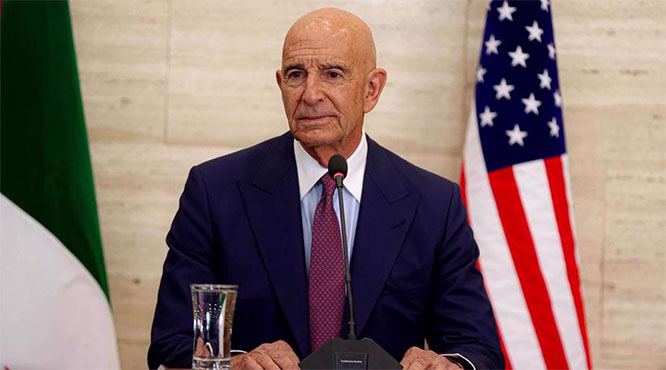
Since 1946, the United States has attempted 93 coups or “regime change” operations across the world — including two in Iran, US Special Envoy for Syria Tom Barrack has admitted.

Speaking to the UAE-based IMI Media Group, in remarks published by The National, Barrack said Washington tried twice to overthrow the Iranian government but failed both times. 

“For (Trump) then to be imputed with regime change — we had two regime changes in Iran already. Neither one worked. So I think wisely leave it to the region to solve,” said Barrack, who also serves as the US ambassador to Turkey.

His comments come six months after the US joined Israel in airstrikes against Iran during ongoing indirect nuclear negotiations between Tehran and Washington.

On June 13, Israel launched an attack on Iran that killed at least 1,064 people and hit civilian infrastructure. Days later, the United States targeted three nuclear facilities — Fordow, Natanz and Isfahan — in what Iran called a clear violation of international law. Iranian retaliation eventually forced a halt to the assault on June 24.

Barrack further claimed that US President Donald Trump and Foreign Secretary Marco Rubio are “not into regime change” and prefer a regional approach driven by Middle Eastern countries themselves. According to him, regional dialogue and non-interference by outside powers offer a more durable path forward.

He added that Washington is still open to an agreement with Tehran if Iranian authorities show “seriousness” and willingness to engage constructively.

However, Iran maintains the US has not shown readiness for meaningful talks. In an interview with Japan’s Kyodo News, Iranian Foreign Minister Abbas Araghchi said negotiations could advance only if Washington acknowledges Iran’s right to peaceful nuclear energy and lifts unilateral sanctions.

Comments

Add new comment

  • Coastaldigest.com reserves the right to delete or block any comments.
  • Coastaldigset.com is not responsible for its readers’ comments.
  • Comments that are abusive, incendiary or irrelevant are strictly prohibited.
  • Please use a genuine email ID and provide your name to avoid reject.
coastaldigest.com news network
November 29,2025

health1.jpg

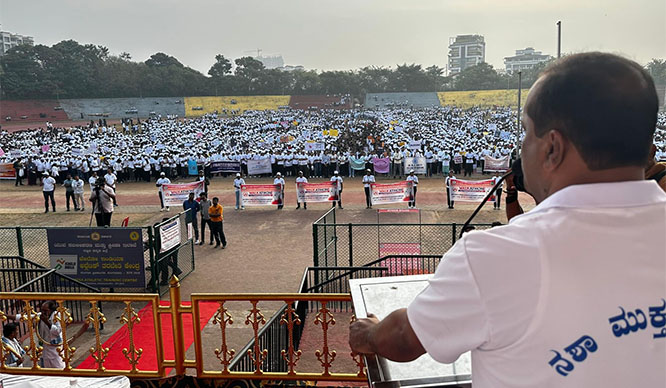
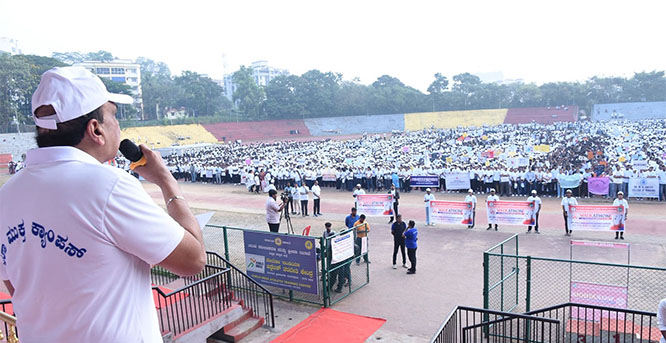
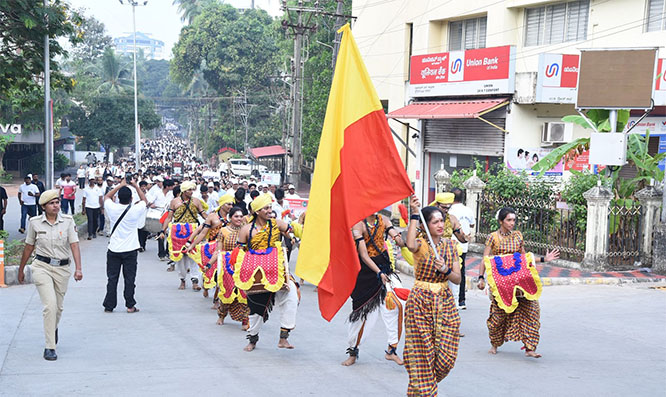
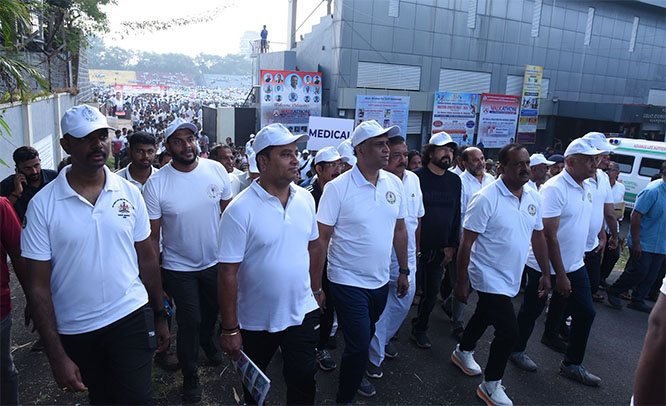
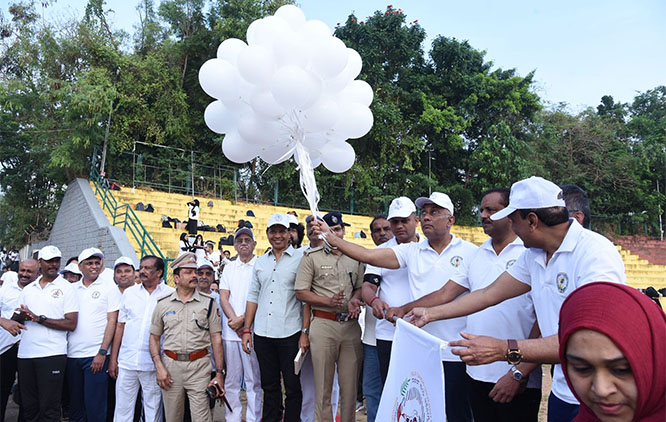
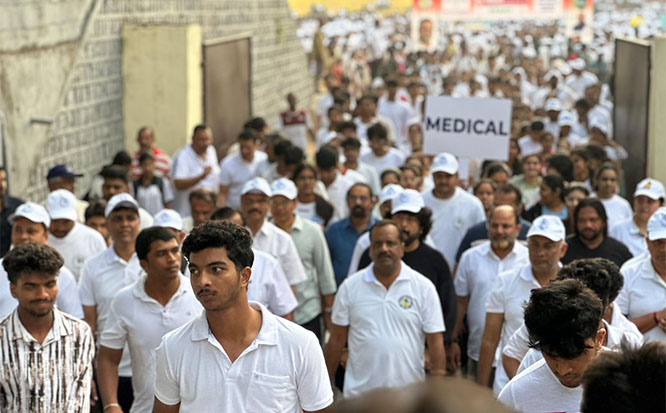
Mangaluru, Nov 29: Around 12,500 healthcare students from Medical, Dental, AYUSH, Pharmacy, Nursing, Physiotherapy and Allied Health Sciences colleges of Dakshina Kannada, affiliated to Rajiv Gandhi University of Health Sciences (RGUHS), took part in a massive walkathon to promote awareness on Organ Donation and Nasha Mukth Bharat.

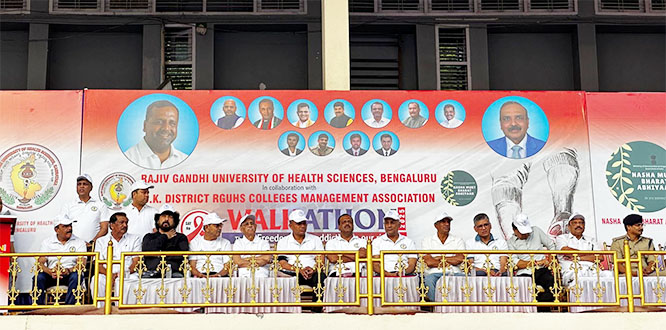
The inaugural ceremony was held at Mangala Stadium. Dr Bhagavan B C, Hon’ble Vice-Chancellor of RGUHS, delivered the welcome address. The walkathon was flagged off by Shri U T Khader, Hon’ble Speaker of the Karnataka Legislative Assembly, and presided over by Shri Dinesh Gundu Rao, Hon’ble Minister for Health, Family Welfare and Dakshina Kannada District In-charge. Dakshina Kannada MP Shri Brijesh Chowta also addressed the students.

Music director Guru Kiran, MLA Dr Bharat Shetty (Mangalore North), Police Commissioner Shri Sudheer Kumar Reddy, Shri Manjunath Bhandary and Shri Harish Kumar were among those present.

Institution heads including Dr Haji U K Monu (Kanachur Colleges), Dr Shantharam Shetty (Tejaswini College), Dr Bhaskar Shetty (City Group of Colleges), Mr Abdul Rahiman (Kanachur Institute of Medical Sciences), and the District Health Officer, Mangalore, also participated.

The vote of thanks was delivered by Prof U T Ifthikar Fareed, Syndicate Member, RGUHS.

The event was organised by Dr U T Ifthikar Ali and Dr Shiva Sharan (Syndicate Members), Prof Vaishali (Senate Member), Prof Mohammad Suhail (Chairman, BOS Physiotherapy), Dr Sharan Shetty (Former Senate Member), along with principals and faculty of various colleges.

Students marched from Mangala Stadium to Karavali Grounds via MCC and Lalbagh signal. The event set a record as one of the largest gatherings of healthcare students for a social cause in the RGUHS Dakshina Kannada Zone.

health7.jpg

health6.jpg

health5.jpg

health4.jpg

health3.jpg

health2.jpg

Comments

Add new comment

  • Coastaldigest.com reserves the right to delete or block any comments.
  • Coastaldigset.com is not responsible for its readers’ comments.
  • Comments that are abusive, incendiary or irrelevant are strictly prohibited.
  • Please use a genuine email ID and provide your name to avoid reject.
News Network
November 26,2025

students.jpg

Bengaluru, Nov 26: Karnataka is taking its first concrete steps towards lifting a three-decade-old ban on student elections in colleges and universities. Deputy Chief Minister D.K. Shivakumar announced Wednesday that the state government will form a small committee to study the reintroduction of campus polls, a practice halted in 1989 following incidents of violence.

Speaking at a 'Constitution Day' event organised by the Karnataka Congress, Mr. Shivakumar underscored the move's aim: nurturing new political leadership from the grassroots.

"Recently, (Leader of the Opposition in Lok Sabha) Rahul Gandhi wrote a letter to me and Chief Minister (Siddaramaiah) asking us to think about restarting student elections," Shivakumar stated. "I'm announcing today that we'll form a small committee and seek a report on this."

Student elections were banned in Karnataka in 1989, largely due to concerns over violence and the infiltration of political party affiliates into campus life. The ban effectively extinguished vibrant student bodies and the pipeline of young leaders they often produced.

Mr. Shivakumar, who also serves as the Karnataka Congress president, said that former student leaders will be consulted to "study the pros and cons" of the re-introduction.

Acknowledging the history of the ban, he added, "There were many criminal activities taking place back then. We’ll see how we can conduct (student) elections by regulating such criminal activities."

The Deputy CM reminisced about his own journey, which began on campus. He recalled his political activism at Sri Jagadguru Renukacharya College leading to his first Assembly ticket in 1985 at the age of 23. "That's how student leadership was at the time. Such leadership has gone today. College elections have stopped," he lamented, adding that for many, college elections were "like a big movement" where leaders were forged.

The move, driven by the Congress high command's push to cultivate young talent, will face scrutiny from academics and university authorities who have, in the past, expressed concern that the return of polls could disrupt the peaceful academic environment and turn campuses into political battlegrounds.

Comments

Add new comment

  • Coastaldigest.com reserves the right to delete or block any comments.
  • Coastaldigset.com is not responsible for its readers’ comments.
  • Comments that are abusive, incendiary or irrelevant are strictly prohibited.
  • Please use a genuine email ID and provide your name to avoid reject.