Reliance Retail second fastest-growing retailer in the world amid pandemic

News Network
May 9, 2021

Billionaire Mukesh Ambani's Reliance Retail Ltd has been ranked second fastest-growing retailer in the world in the 2021 ranking of global retail power houses by Deloitte, down from top rank secured the previous years.

It has been ranked 53rd in the list of Global Powers of Retailing, improvement from 56th earlier, according to the Deloitte report.

The list is topped by US giant Walmart Inc, which retains its position as world's top retailer. Amazon.com Inc improved its position to rank second. Costco Wholesale Corporation of US slipped a rank to be placed third followed by Schwarz Group of Germany.

The top 10 has seven US retailers and one from the UK (Tesco PLC at 10th position). Other US retailers in the top 10 include The Kroger Co (ranked 5th), Walgreens Boots Alliance, Inc (6th) and CVS Health Corporation (ranked 9th). Germany's Aldi Einkauf GmbH & Co. oHG and Aldi International Services GmbH & Co. oHG is placed at 8th position.

Reliance Retail is the only Indian entry in the global list of 250 retailers. It features consecutively for the 4th time in the list of Global Powers of Retailing and World's Fastest Retailers.

"Reliance Retail, last year's Fastest 50 leader, dropped to second place. The company recorded YoY growth of 41.8 per cent, driven primarily by a 13.1 per cent increase in the number of stores in its consumer electronics, fashion and lifestyle and grocery retail chains, to 11,784 stores across 7,000+ towns and cities in India at fiscal year end (FY20)," Deoitte said.

E-commerce, it said, is a second growth driver, through both digital commerce (B2C) and B2B.

"The company is partnering with WhatsApp to further accelerate Reliance Retail's digital commerce business on the JioMart platform using WhatsApp and to support small businesses on WhatsApp," it said. "Reliance Retail acquired the 29 stores of Shri Kannan Departmental Store at the end of FY2019, and in August 2020 announced it would acquire Future Group's retail, wholesale and logistics units for $3.4 billion."

When fully approved, the deal will almost double Reliance Retail's store space.

Reliance Retail also made two e-commerce acquisitions in 2020, buying Vitalic Health and its online pharmacy platform Netmeds in August, and a 96 per cent stake in online home decor company UrbanLadder in November.

On global outlook, Deloitte said in the early months of 2021, the world was faced with both promise and peril.

"On the positive side, the distribution of vaccines for Covid-19 was under way, offering the promise that, sometime later in the year, the negative impact of the virus could abate significantly. On the negative side, the virus continued to threaten economic stability, especially in those parts of the world where it was still prevalent and threatened to be a problem elsewhere if new and virulent strains of the virus were spread widely".

Even in places where the outbreak was limited, there was a negative economic impact from social distancing measures to avoid a further outbreak, it said adding the challenge for policymakers was to control the current outbreak, protect those who have been disrupted by it, and speed up the distribution of approved vaccines.

The speed and success of these three imperatives will determine the path of the global economy in the year ahead, it added. 

Comments

Add new comment

  • Coastaldigest.com reserves the right to delete or block any comments.
  • Coastaldigset.com is not responsible for its readers’ comments.
  • Comments that are abusive, incendiary or irrelevant are strictly prohibited.
  • Please use a genuine email ID and provide your name to avoid reject.
News Network
November 22,2025

gaza.jpg

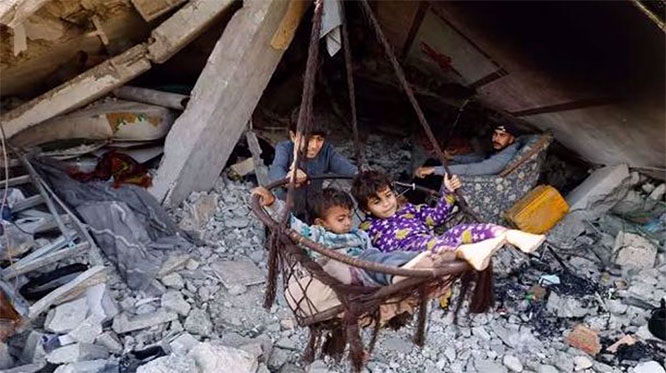
The Israeli regime’s forces have killed two Palestinian children in the Gaza Strip every day since the ceasefire began in early October, UNICEF has warned.

The UN children’s agency said on Friday that Israeli forces continue to attack Palestinians in Gaza even though the agreement was meant to stop the killing.

“Since 11 October, while the ceasefire has been in effect, at least 67 children have been killed in conflict-related incidents in the Gaza Strip. Dozens more have been injured. That is an average of almost two children killed every day since the ceasefire took effect,” UNICEF spokesperson Ricardo Pires said in Geneva, reminding that each number in the statistics represents a child whose life had ended violently.

“These are not statistics,” he said. “Each child had a story, a family, and a future that was stolen from them.”

Data from Palestinian factions, human rights groups, and government bodies recorded since the US-brokered ceasefire deal went into effect on October 10 show that Israeli forces have carried out numerous attacks, each constituting a separate ceasefire violation.

UNICEF teams say they repeatedly continue to witness heart-wrenching scenes of fearful Palestinian children sleeping outdoors with amputated limbs, while others live as orphans in flooded, makeshift shelters.

“I saw this myself in August. There is no safe place for them. The world cannot normalize their suffering,” Pires said, lamenting that the UN could “do a lot more if the aid that is really needed was entering faster.”

The UNICEF spokesperson warned that with the advent of winter, the risks for hundreds of thousands of displaced children will increase.

He warned, “The stakes are incredibly high” for children as winter acts as a threat multiplier, where children have no heating, no insulation, and few blankets. He said respiratory infections rise.

“Too many children have already paid the highest price,” Pires said. “Too many are still paying it, even under a ceasefire. The world promised them it would stop and that we would protect them.”

“Now we must act like it,” the UNICEF spokesperson added.

Since the Israeli regime launched its genocidal war against Palestinians in Gaza in October 2023, it has killed nearly 70,000 people in the territory, most of them women and children, and injured over 170,000 more, while reducing most of the structures in the enclave to rubble.

Comments

Add new comment

  • Coastaldigest.com reserves the right to delete or block any comments.
  • Coastaldigset.com is not responsible for its readers’ comments.
  • Comments that are abusive, incendiary or irrelevant are strictly prohibited.
  • Please use a genuine email ID and provide your name to avoid reject.
News Network
December 2,2025

A major upgrade in safety and monitoring is planned for Haj 2026, with every Indian pilgrim set to receive a Haj Suvidha smart wristband linked to the official Haj Suvidha mobile app. The initiative aims to support pilgrims—especially senior citizens—who may struggle with smartphones during the 45-day journey.

What the Smart Wristband Will Do

Officials said the device will come with:
•    Location tracking
•    Pedometer
•    SOS emergency button
•    Qibla compass
•    Prayer timings
•    Basic health monitoring

SP Tiwari, secretary of the UP State Haj Committee, said the goal is to make the pilgrimage safer and more comfortable.

“Most Hajis are elderly and not comfortable with mobile apps,” he said. “The smartwatch will help locate pilgrims who forget their way or cannot communicate their location.”

The wristbands will be monitored by the Consulate General of India in Saudi Arabia, similar to mobile tracking via the Haj Suvidha App.

Free Distribution and Training

•    Smart wristbands will be given free of cost.
•    Training for pilgrims will be conducted between January and February 2026.
•    Sample units will reach state Haj committees soon.
•    Final devices will be distributed as pilgrims begin their journey.

New Rules for Accommodation

Two major decisions have also been finalised for Haj 2026:
1.    Separate rooms for men and women – including married couples. They may stay on the same floor but must occupy different rooms, following stricter Saudi guidelines.
2.    Cooking banned – gas cylinders will not be allowed; all meals will be provided through official catering services arranged by the Haj Committee of India.

These decisions were finalised during a meeting of the Haj Committee of India and state representatives in Mumbai.

Haj Suvidha App Launched Earlier

The government launched the Haj Suvidha App in 2024, offering:

•    Training modules
•    Accommodation and flight details
•    Baggage information
•    SOS and translation tools
•    Grievance redressal

Haj 2026 Quota and Key States

•    India’s total Haj quota for 2026: 1,75,025 pilgrims
•    70% (1,25,000) allotted to the Haj Committee of India
•    30% (around 50,000) reserved for Haj Group Organisers

Uttar Pradesh has the largest allocation (around 30,000 seats), though approximately 18,000 pilgrims are expected to go this year. States with high pilgrim numbers include Kerala, Maharashtra and Gujarat.

Dates of Haj 2026

The pilgrimage is scheduled to take place from 24 May to 29 May, 2026 (tentative).
Haj is one of the five pillars of Islam and is mandatory for Muslims who meet the required conditions.

Comments

Add new comment

  • Coastaldigest.com reserves the right to delete or block any comments.
  • Coastaldigset.com is not responsible for its readers’ comments.
  • Comments that are abusive, incendiary or irrelevant are strictly prohibited.
  • Please use a genuine email ID and provide your name to avoid reject.
News Network
November 26,2025

students.jpg

Bengaluru, Nov 26: Karnataka is taking its first concrete steps towards lifting a three-decade-old ban on student elections in colleges and universities. Deputy Chief Minister D.K. Shivakumar announced Wednesday that the state government will form a small committee to study the reintroduction of campus polls, a practice halted in 1989 following incidents of violence.

Speaking at a 'Constitution Day' event organised by the Karnataka Congress, Mr. Shivakumar underscored the move's aim: nurturing new political leadership from the grassroots.

"Recently, (Leader of the Opposition in Lok Sabha) Rahul Gandhi wrote a letter to me and Chief Minister (Siddaramaiah) asking us to think about restarting student elections," Shivakumar stated. "I'm announcing today that we'll form a small committee and seek a report on this."

Student elections were banned in Karnataka in 1989, largely due to concerns over violence and the infiltration of political party affiliates into campus life. The ban effectively extinguished vibrant student bodies and the pipeline of young leaders they often produced.

Mr. Shivakumar, who also serves as the Karnataka Congress president, said that former student leaders will be consulted to "study the pros and cons" of the re-introduction.

Acknowledging the history of the ban, he added, "There were many criminal activities taking place back then. We’ll see how we can conduct (student) elections by regulating such criminal activities."

The Deputy CM reminisced about his own journey, which began on campus. He recalled his political activism at Sri Jagadguru Renukacharya College leading to his first Assembly ticket in 1985 at the age of 23. "That's how student leadership was at the time. Such leadership has gone today. College elections have stopped," he lamented, adding that for many, college elections were "like a big movement" where leaders were forged.

The move, driven by the Congress high command's push to cultivate young talent, will face scrutiny from academics and university authorities who have, in the past, expressed concern that the return of polls could disrupt the peaceful academic environment and turn campuses into political battlegrounds.

Comments

Add new comment

  • Coastaldigest.com reserves the right to delete or block any comments.
  • Coastaldigset.com is not responsible for its readers’ comments.
  • Comments that are abusive, incendiary or irrelevant are strictly prohibited.
  • Please use a genuine email ID and provide your name to avoid reject.