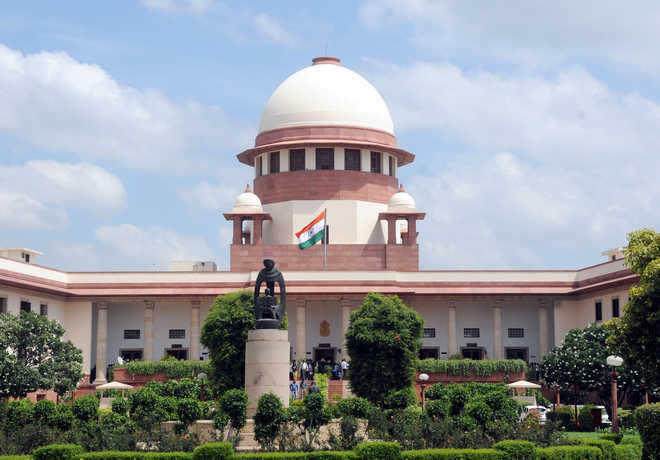
SC slams Modi govt for doing nothing to curb TV programmes having instigating effect

Agencies
January 28, 2021

7012.jpg

New Delhi, Jan 28: The Supreme Court Thursday slammed the Centre for not doing anything to curb TV programmes which have instigating effect and said that control over such news is as important as some preventive measure and to check law and order situation.

Referring to the internet shutdown in some areas of Delhi on January 26 when the tractor parade by farmers protesting against three new farm laws had turned violent, the apex court stressed upon the need for fair and truthful reporting and said that problem arises when it is used to agitate others.

The fact of the matter is that there are programmes which have instigating effect and you being the government is doing nothing about it, a bench headed by Chief Justice S A Bobde told Solicitor General Tushar Mehta, who was appearing for the Centre.

The bench, also comprising Justices A S Bopanna and V Ramasubramanian, made this observation while hearing a batch of pleas which have raised the issue of media reporting of Tablighi Jamaat congregation here last year during the onset of COVID-19 pandemic.

The congregation at Nizamuddin Markaz in the national capital in March last year, attended by thousands of Indian and foreign nationals, was cited as being responsible for accelerating the spread of coronavirus or COVID-19, with its attendees allegedly carrying the infection to different parts of the country.

There are programmes which instigate or impact a community. But as a government, you do nothing, the bench observed.

Yesterday, you shut down the internet and mobile because of the farmers' visit to Delhi. I am using the non-controversial term. You have shut down internet mobile, the CJI said, adding, These are problems that can arise anywhere. I don't know what happened in the TV yesterday .

Fair and truthful reporting is normally not a problem. Problem is when it is used to agitate others. It is as important as providing lathis' to policemen. It is an important preventive part of the law and order situation, the bench said.

The apex court said it is not interested in people saying anything on TV but it is concerned about those programmes which have instigation effect.

Control over some news is as important as some preventive measure and check law and order situation. I don't know why you are blind to this. I don't mean anything offensive but you are doing nothing about it, the CJI said.

People can say anything. We are on broadcast which can instigate and cause riots. There is loss of life. People say anything these days. There are situations which can destroy property, life, the top court said.

Mehta told the bench that there are self-regulatory bodies like the broadcaster associations and News Broadcasters Standards Authority (NBSA) also has its own system.

Now, we are in the era of OTT. There was DTH, cable service etc too. We can lay down all the system before you, Mehta told the bench.

The bench asked the parties to file their affidavits in the matter within three weeks and said the matter will be heard thereafter.

In November last year, the apex court had expressed displeasure over the Centre's affidavit in the case and said that the government should consider setting up a regulatory mechanism to deal with such contents on TV.

Observing that the Ministry of Information and Broadcasting's affidavit did not deal with the applicability of Cable Television Network Act (CTNA) in the case, the top court had said that the government has the power to put a regulatory mechanism in place and it cannot be left to an agency like NBSA.

The top court, which was hearing the pleas filed by Jamiat Ulama-I-Hind and others alleging that a section of the media was spreading communal hatred over Tablighi Jamaat congregation during the onset of pandemic, had asked the Centre to file a fresh affidavit dealing with mechanism to regulate electronic media under the CTNA.

The plea filed by Jamiat Ulama-I-Hind has sought directions to the Centre to stop dissemination of "fake news" related to the Nizamuddin congregation and take strict action against those responsible for it.

Comments

Add new comment

  • Coastaldigest.com reserves the right to delete or block any comments.
  • Coastaldigset.com is not responsible for its readers’ comments.
  • Comments that are abusive, incendiary or irrelevant are strictly prohibited.
  • Please use a genuine email ID and provide your name to avoid reject.
News Network
November 27,2025

DKSvokkaliga.jpg

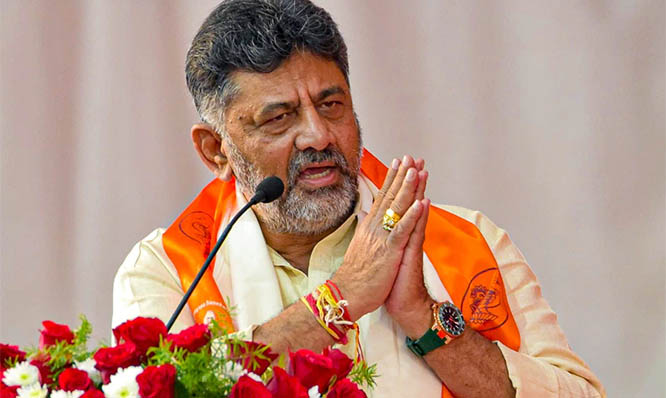
Bengaluru: The Vokkaligara Sangha on Thursday issued a stern warning to the Congress, saying the party could face serious electoral repercussions if Deputy Chief Minister D.K. Shivakumar is not appointed as Chief Minister.

The warning follows the public backing of Shivakumar’s chief ministerial ambition by top Vokkaliga pontiff Nirmalanandanatha Swami, who urged the Congress high command to honor his claim.

“The community supported Congress in the 2023 Assembly elections only because Shivakumar had a real chance to become CM. If he is cheated, we’ll teach the party a big lesson,” said newly elected Sangha president L. Srinivas. He added that Vokkaligas would organize protests under the guidance of community leaders.

General Secretary C.G. Gangadhar pointed out that Congress won more seats in the Vokkaliga-dominated Old Mysuru region due to Shivakumar’s influence, adding, “If Congress wants to retain power, Shivakumar should be made the CM.”

Outgoing president Kenchappa Gowda emphasized Shivakumar’s contribution to Congress’ victory. “Our community voted for Congress thinking he would become CM. Siddaramaiah has also served the party well, but Shivakumar should now be given a chance,” he said.

Former general-secretary Konappa Reddy appealed to Sonia and Rahul Gandhi to recognize Shivakumar’s loyalty and service, saying, “Congress is known to keep its promises. We hope it won’t break the promise made to him.”

Comments

Add new comment

  • Coastaldigest.com reserves the right to delete or block any comments.
  • Coastaldigset.com is not responsible for its readers’ comments.
  • Comments that are abusive, incendiary or irrelevant are strictly prohibited.
  • Please use a genuine email ID and provide your name to avoid reject.
News Network
November 30,2025

airportmetro.jpg

Udupi: The pontiffs of Sri Paryaya Puttige Mutt, the sacred seat of Jagadguru Shrimad Madhvacharya Moola Samsthanam, have submitted a proposal to the Prime Minister seeking comprehensive development for Udupi district. 

Proposal for International Airport

A key request is the establishment of an international airport. Highlighting that around 1,000 acres of land are available and suitable, the pontiffs noted that the existing Mangalore Airport provides limited international connectivity. They suggested the airport be developed under a Public-Private Partnership (PPP) or as a Greenfield Airport to boost trade, education, healthcare, and spiritual tourism.

Metro and Rapid Transit Connectivity

The proposal also calls for Metro Rail or Rapid Transit between Mangaluru and Udupi. The 55 km coastal stretch experiences heavy daily commuter traffic, causing congestion. The district administration is ready to prepare an initial project report for a Mass Rapid Transit corridor and requested inclusion under national urban mobility programmes to ensure safe, green, and time-efficient regional transport.

Port and Coastal Development

The pontiffs urged the development of an international-standard port with a cruise terminal along Udupi’s coast. They also requested fast-tracking of pending coastal tourism projects and revising Coastal Regulation Zone (CRZ) norms to encourage sustainable infrastructure and hospitality investment.

IT, AI and Technological Infrastructure

Support was sought for an IT and AI Innovation Park with incubation facilities under Digital India and Startup India initiatives. The proposal also emphasized the need for strengthened data security and cloud computing infrastructure to boost India’s technological independence.

Sports and Education Initiatives

The pontiffs requested national sports status for Kambala, along with financial and infrastructure support. They also sought the establishment of an AIIMS in Udupi, a new IIT campus, and approval for an IIM to promote higher education in the district.

Representation to the Prime Minister

Sri Sugunendra Tirtha Pontiff and Sri Sushrendra Tirtha Swamiji represented the pontiffs in submitting the comprehensive development proposal to the Prime Minister during his recent visit.

Comments

Add new comment

  • Coastaldigest.com reserves the right to delete or block any comments.
  • Coastaldigset.com is not responsible for its readers’ comments.
  • Comments that are abusive, incendiary or irrelevant are strictly prohibited.
  • Please use a genuine email ID and provide your name to avoid reject.
News Network
December 6,2025

pilot.jpg

New Delhi: IndiGo, India’s largest airline, faced major operational turbulence this week after failing to prepare for new pilot-fatigue regulations issued by the Directorate General of Civil Aviation (DGCA). The stricter rules—designed to improve flight safety—took effect in phases through 2024, with the latest implementation on November 1. IndiGo has acknowledged that inadequate roster planning led to widespread cancellations and delays.

Below are the key DGCA rules that affected IndiGo’s operations:

1. Longer Mandatory Weekly Rest

Weekly rest for pilots has been increased from 36 hours to 48 hours.

The government says the extended break is essential to curb cumulative fatigue. This rule remains in force despite the current crisis.

2. Cap on Night Landings

Pilots can now perform only two night landings per week—a steep reduction from the earlier limit of six.

Night hours, defined as midnight to early morning, are considered the least alert period for pilots.

Given the disruptions, this rule has been temporarily relaxed for IndiGo until February 10.

3. Reduced Maximum Night Flight Duty

Flight duty that stretches into the night is now capped at 10 hours.

This measure has also been kept on hold for IndiGo until February 10 to stabilize operations.

4. Weekly Rest Cannot Be Replaced With Personal Leave

Airlines can no longer count a pilot’s personal leave as part of the mandatory 48-hour rest.

Pilots say this closes a loophole that previously reduced actual rest time.

Currently, all airlines are exempt from this rule to normalise travel.

5. Mandatory Fatigue Monitoring

Airlines must submit quarterly fatigue reports along with corrective actions to DGCA.

This system aims to create a transparent fatigue-tracking framework across the industry.

The DGCA has stressed that these rules were crafted to strengthen flight safety and align India with global fatigue-management standards. The temporary relaxations are expected to remain until February 2025, giving IndiGo time to stabilise its schedules and restore normal air travel.

Comments

Add new comment

  • Coastaldigest.com reserves the right to delete or block any comments.
  • Coastaldigset.com is not responsible for its readers’ comments.
  • Comments that are abusive, incendiary or irrelevant are strictly prohibited.
  • Please use a genuine email ID and provide your name to avoid reject.