Social boycott, depression, money trouble, govt apathy: The faces of India’s covid crisis as deaths near 1 lakh-mark

News Network
October 1, 2020

covidindia.JPG

New Delhi, Oct 1: Eight months after the novel coronavirus arrived in India, the death count due to COVID-19 is inching towards the 100,000-mark. Nearly 6.5 million people have been infected in total, second only to the number in the United States.

Reuters met and interviewed relatives of 30 people who died of the virus in India, from coastal Kerala on the country's southern tip to the Himalayan region of Kashmir in the north.

The 30 victims were ordinary people from all walks of life, and included police officers and doctors on the frontlines of the fight against the virus.

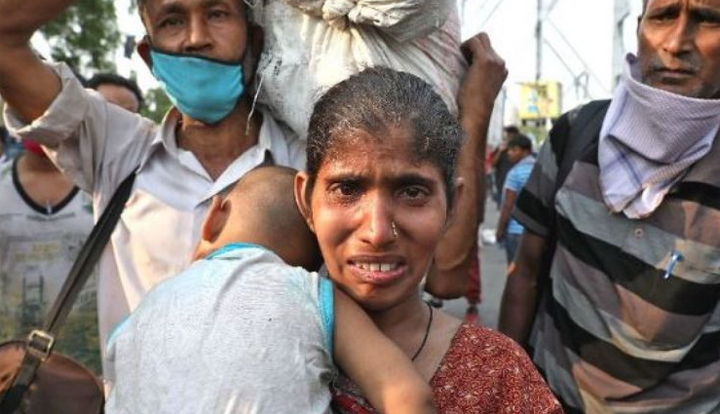
In what is still a conservative and developing country, some of the relatives said they faced ostracism after their loved ones caught the virus. Others said they have suffered from depression and money troubles. All said more could have been done to save the people who died.

Life after

Javed Ali, a 42-year-old doctor in New Delhi, died in July. His wife, Hena Kausar, also a doctor and now the sole carer for their two children, said she doesn't know what she will do without him.

"Our whole life has changed," she said. "I still want to be a doctor (but) I have to choose between my job and kids."

Nineteen-year-old student Fardeen Khan was orphaned after his mother Noor Jahan died in June. His father had died in 2018.

"I have no financial support now," he said. "I have no job"

Some relatives said they found the reaction from authorities and neighbours after their bereavements difficult to bear.

Sunita Patil's husband Vivek, a 46-year-old music teacher, died suddenly at home in Mumbai before a bed at a local hospital became available. The next morning, she said, municipal workers came to the house shouting for them to come outside to be taken to a quarantine centre.

"They were not sensitive to the fact that there has been a death in the family just a day back, and we are in mourning," she said.

Nadeem Akhtar's sister Shabana Ahmed, a 52-year-old architect, died in New Delhi in April.

"What really upsets me more than the healthcare system was the behaviour of society," he said.

"My sister's neighbourhood boycotted her family. There was no emotional or moral support even after her death. Society failed us."

Chances missed

India's rudimentary healthcare system has at times struggled to cope with the huge number of coronavirus cases.

Many of the victims' relatives said there were missed opportunities to cure the infected.

Jamal Khan, a 41-year-old farmer, developed a fever in August in the Bijnor district of Uttar Pradesh.

His brother, Asim, said local doctors failed to realise he was COVID-positive. It was only when he was transferred to Delhi, ten days after he first became ill, that he was diagnosed.

By then, his lungs were badly damaged, and he died soon after, according to Asim.

"If he would have been diagnosed on time in his own native place, he would have surely survived," Asim said.

Rekha Khandait's 58-year-old husband Jayant is one of more than 200 police officers who died from the virus in the western state of Maharashtra alone. She was one of several people who said a lack of oxygen contributed to the death.

"I can't believe that six months have passed, she said. "I still haven't told our son yet about his death."

Tilak Raj, a 38-year-old software engineer, said when his mother Krishna Devi was hospitalized, there was no oxygen in the ambulance. When they arrived at the hospital, the cylinder that was provided was empty in five minutes.

"If we had a better health system, my mother would have survived," he said.

Comments

Add new comment

  • Coastaldigest.com reserves the right to delete or block any comments.
  • Coastaldigset.com is not responsible for its readers’ comments.
  • Comments that are abusive, incendiary or irrelevant are strictly prohibited.
  • Please use a genuine email ID and provide your name to avoid reject.
News Network
December 4,2025

Mangaluru: Chaos erupted at Mangaluru International Airport (MIA) after IndiGo flight 6E 5150, bound for Mumbai, was repeatedly delayed and ultimately cancelled, leaving around 100 passengers stranded overnight. The incident highlights the ongoing country-wide operational disruptions affecting the airline, largely due to the implementation of new Flight Duty Time Limitations (FDTL) norms for crew.

The flight was initially scheduled for 9:25 PM on Tuesday but was first postponed to 11:40 PM, then midnight, before being cancelled around 3:00 AM. Passengers expressed frustration over last-minute communication and the lack of clarity, with elderly and ailing travellers particularly affected. “Though the airline arranged food, there was no proper communication, leaving us confused,” said one family member.

An IndiGo executive at MIA cited the FDTL rules, designed to prevent pilot fatigue by limiting crew working hours, as the cause of the cancellation. While alternative arrangements, including hotel stays, were offered, about 100 passengers chose to remain at the airport, creating tension. A replacement flight was arranged but also faced delays due to the same constraints, finally departing for Mumbai around 1:45 PM on Wednesday. Passengers either flew, requested refunds, or postponed their travel.

The Mangaluru delay is part of a broader crisis for IndiGo. The airline has been forced to make “calibrated schedule adjustments”—a euphemism for widespread cancellations and delays—after stricter FDTL norms came into effect on November 1.

While an IndiGo spokesperson acknowledged unavoidable flight disruptions due to technology issues, operational requirements, and the updated crew rostering rules, the DGCA has intervened, summoning senior airline officials to explain the chaos and outline corrective measures.

The ripple effect has been felt across the country, with major hubs like Bengaluru and Mumbai reporting numerous cancellations. The Mangaluru incident underscores the systemic operational strain currently confronting India’s largest carrier, leaving passengers nationwide grappling with uncertainty and delays.

Comments

Add new comment

  • Coastaldigest.com reserves the right to delete or block any comments.
  • Coastaldigset.com is not responsible for its readers’ comments.
  • Comments that are abusive, incendiary or irrelevant are strictly prohibited.
  • Please use a genuine email ID and provide your name to avoid reject.
News Network
December 3,2025

arrival.jpg

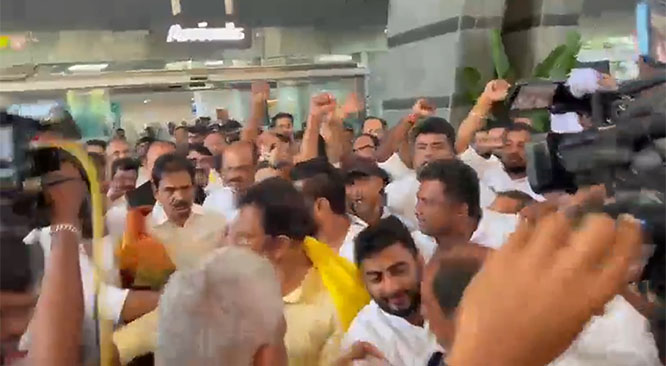
Mangaluru, Dec 3: A group of Congress workers gathered at the Mangaluru International Airport on Wednesday to welcome AICC general secretary K C Venugopal, but the reception quickly turned into a display of support for Deputy Chief Minister D K Shivakumar.

Venugopal arrived in the city to participate in the centenary commemoration of the historic dialogue between Mahatma Gandhi and Narayana Guru. The event, organised by the Sivagiri Mutt, Varkala, in association with the Mangalore University Sri Narayana Guru Study Chair, is being held on the university’s Konaje campus.

KPCC general secretary Mithun Rai and several party workers had assembled at the airport to receive Venugopal. However, the moment he stepped out, workers began raising slogans backing Shivakumar.

The university programme will be inaugurated by Chief Minister Siddaramaiah.

This show of support comes just a day after Siddaramaiah remarked that Shivakumar would lead the government “when the high command decides.” The chief minister made the comment after a breakfast meeting at Shivakumar’s residence—another public display of camaraderie between the two leaders amid ongoing attempts by the party high command to downplay their leadership rivalry.

Comments

Add new comment

  • Coastaldigest.com reserves the right to delete or block any comments.
  • Coastaldigset.com is not responsible for its readers’ comments.
  • Comments that are abusive, incendiary or irrelevant are strictly prohibited.
  • Please use a genuine email ID and provide your name to avoid reject.
News Network
December 2,2025

A major upgrade in safety and monitoring is planned for Haj 2026, with every Indian pilgrim set to receive a Haj Suvidha smart wristband linked to the official Haj Suvidha mobile app. The initiative aims to support pilgrims—especially senior citizens—who may struggle with smartphones during the 45-day journey.

What the Smart Wristband Will Do

Officials said the device will come with:
•    Location tracking
•    Pedometer
•    SOS emergency button
•    Qibla compass
•    Prayer timings
•    Basic health monitoring

SP Tiwari, secretary of the UP State Haj Committee, said the goal is to make the pilgrimage safer and more comfortable.

“Most Hajis are elderly and not comfortable with mobile apps,” he said. “The smartwatch will help locate pilgrims who forget their way or cannot communicate their location.”

The wristbands will be monitored by the Consulate General of India in Saudi Arabia, similar to mobile tracking via the Haj Suvidha App.

Free Distribution and Training

•    Smart wristbands will be given free of cost.
•    Training for pilgrims will be conducted between January and February 2026.
•    Sample units will reach state Haj committees soon.
•    Final devices will be distributed as pilgrims begin their journey.

New Rules for Accommodation

Two major decisions have also been finalised for Haj 2026:
1.    Separate rooms for men and women – including married couples. They may stay on the same floor but must occupy different rooms, following stricter Saudi guidelines.
2.    Cooking banned – gas cylinders will not be allowed; all meals will be provided through official catering services arranged by the Haj Committee of India.

These decisions were finalised during a meeting of the Haj Committee of India and state representatives in Mumbai.

Haj Suvidha App Launched Earlier

The government launched the Haj Suvidha App in 2024, offering:

•    Training modules
•    Accommodation and flight details
•    Baggage information
•    SOS and translation tools
•    Grievance redressal

Haj 2026 Quota and Key States

•    India’s total Haj quota for 2026: 1,75,025 pilgrims
•    70% (1,25,000) allotted to the Haj Committee of India
•    30% (around 50,000) reserved for Haj Group Organisers

Uttar Pradesh has the largest allocation (around 30,000 seats), though approximately 18,000 pilgrims are expected to go this year. States with high pilgrim numbers include Kerala, Maharashtra and Gujarat.

Dates of Haj 2026

The pilgrimage is scheduled to take place from 24 May to 29 May, 2026 (tentative).
Haj is one of the five pillars of Islam and is mandatory for Muslims who meet the required conditions.

Comments

Add new comment

  • Coastaldigest.com reserves the right to delete or block any comments.
  • Coastaldigset.com is not responsible for its readers’ comments.
  • Comments that are abusive, incendiary or irrelevant are strictly prohibited.
  • Please use a genuine email ID and provide your name to avoid reject.