When and which Covid-19 vaccines likely to be available in India and other Asian countries

News Network
November 26, 2020

covaccine.JPG

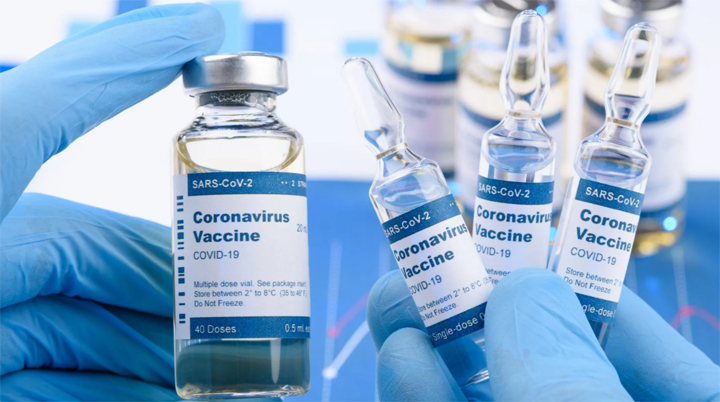
Pfizer Inc with partner BioNTech SE, Moderna Inc and AstraZeneca Plc have released trial data this month showing their experimental vaccines are effective in preventing the disease.

If regulators approve any of the vaccines in coming weeks, the companies have said distribution could begin almost immediately with governments around the world.

But many Asian countries do not expect to receive big amounts initially, and below are estimated distribution timelines, supply deals announced so far and clinical trials underway in the region.

Australia

It has agreed to buy 135 million doses: 34 million from AstraZeneca, 40 million from Novavax Inc, 10 million from Pfizer and 51 million from CSL Ltd.

It expects delivery of 3.8 million doses of AstraZeneca's vaccine in January and February next year.

China

China has not announced supply deals with Western drugmakers, which instead have partnered with private companies.

AstraZeneca's vaccine may be approved in China by mid-2021 and its Chinese partner Shenzhen Kangtai Biological Products plans to have annual production capacity of at least 100 million doses of the vaccine by end-2020.

For the Pfizer/BioNTech vaccine, a unit of Shanghai Fosun Pharmaceutical Group plans a Phase 2 trial.

Tibet Rhodiola Pharmaceutical Holding is bringing in Russian vaccine candidate Sputnik V and plans early and mid-stage trials of the shot in China.

China has also approved three vaccine candidates developed by Sinovac and state-owned Sinopharm for emergency use programme, and Sinopharm is hopeful of its two candidates receiving conditional approval for general public use within this year.

Japan

Japan has deals to purchase 120 million doses from Pfizer/BioNTech in the first half of next year, 120 million from AstraZeneca, of which first 30 million will be shipped by March 2021, and 250 million from Novavax.

It is also in talks with Johnson & Johnson and has a deal with Shionogi & Co.

Experts said vaccine makers would need to conduct at least Phase 1-2 trials in Japan before seeking approval.

South Korea

It aims to secure vaccines for 10 million people from COVAX and 20 million people from separate deals with drugmakers by the end of this year.

It has the "Optional Purchase" arrangement with COVAX that allows it to select vaccines from specific vaccine makers.

The timing of the procurement and the amount depend on the production schedule of those vaccines, according to health officials.

Inoculation is likely to start in the second quarter of next year to allow more time to observe potential side effects.

India

The head of the Serum Institute of India, which makes the AstraZeneca vaccine, said on November 23 the positive late-state trial result of the candidate will allow it to seek emergency use authorisation by year-end, before gaining approval for a full rollout by February or March next year.

India also expects a government-backed vaccine to be launched as early as February, while it is conducting a late-stage trial of Sputnik V.

Taiwan

Taiwan aims to secure around 15 million doses initially, both via the COVAX scheme and by directly purchasing from vaccine makers, and may buy additional 15 million doses.

The government has said it hopes to begin vaccinations in the first quarter of next year.

The Philippines

It is in talks with AstraZeneca for the supply of at least 20 million doses, which may arrive in the country in the second quarter of next year. It hopes to lock in 60 million doses in total and also is in talks with Pfizer and Sinovac.

Vaccine makers can apply for approval with the country's regulators even if no clinical trial is done in the Philippines.

Indonesia

It is one of the countries listed as 92 low and middle-income economies, which means it is entitled to have access to vaccines through COVAX for 20% of its population, or approximately 106-107 million doses if each person gets two injections.

Indonesia is testing Sinovac vaccine and preparing to start mass vaccination for medical staff and other frontline workers as early as late January.

Vietnam

A government official says vaccines from COVAX would cover only 20% of its population and the country is likely to have a chance to secure separate deals soon as overall demand is very high.

Bangladesh

Bangladesh signed a deal with India's Serum to buy 30 million doses of the AstraZeneca vaccine.

It also expects to receive 68 million doses from GAVI at a subsidized rate, a senior health ministry official said.


Comments

Add new comment

  • Coastaldigest.com reserves the right to delete or block any comments.
  • Coastaldigset.com is not responsible for its readers’ comments.
  • Comments that are abusive, incendiary or irrelevant are strictly prohibited.
  • Please use a genuine email ID and provide your name to avoid reject.
News Network
December 6,2025

pilot.jpg

New Delhi: IndiGo, India’s largest airline, faced major operational turbulence this week after failing to prepare for new pilot-fatigue regulations issued by the Directorate General of Civil Aviation (DGCA). The stricter rules—designed to improve flight safety—took effect in phases through 2024, with the latest implementation on November 1. IndiGo has acknowledged that inadequate roster planning led to widespread cancellations and delays.

Below are the key DGCA rules that affected IndiGo’s operations:

1. Longer Mandatory Weekly Rest

Weekly rest for pilots has been increased from 36 hours to 48 hours.

The government says the extended break is essential to curb cumulative fatigue. This rule remains in force despite the current crisis.

2. Cap on Night Landings

Pilots can now perform only two night landings per week—a steep reduction from the earlier limit of six.

Night hours, defined as midnight to early morning, are considered the least alert period for pilots.

Given the disruptions, this rule has been temporarily relaxed for IndiGo until February 10.

3. Reduced Maximum Night Flight Duty

Flight duty that stretches into the night is now capped at 10 hours.

This measure has also been kept on hold for IndiGo until February 10 to stabilize operations.

4. Weekly Rest Cannot Be Replaced With Personal Leave

Airlines can no longer count a pilot’s personal leave as part of the mandatory 48-hour rest.

Pilots say this closes a loophole that previously reduced actual rest time.

Currently, all airlines are exempt from this rule to normalise travel.

5. Mandatory Fatigue Monitoring

Airlines must submit quarterly fatigue reports along with corrective actions to DGCA.

This system aims to create a transparent fatigue-tracking framework across the industry.

The DGCA has stressed that these rules were crafted to strengthen flight safety and align India with global fatigue-management standards. The temporary relaxations are expected to remain until February 2025, giving IndiGo time to stabilise its schedules and restore normal air travel.

Comments

Add new comment

  • Coastaldigest.com reserves the right to delete or block any comments.
  • Coastaldigset.com is not responsible for its readers’ comments.
  • Comments that are abusive, incendiary or irrelevant are strictly prohibited.
  • Please use a genuine email ID and provide your name to avoid reject.
News Network
December 5,2025

indigoCEO.jpg

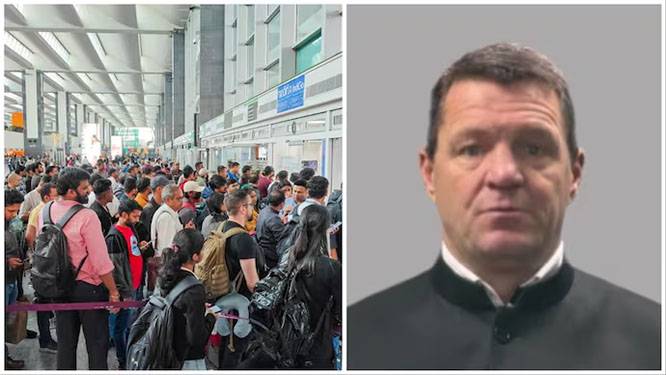
New Delhi, Dec 5: IndiGo CEO Pieter Elbers issued a public apology this evening after more than a thousand flights were cancelled today, making it the "most severely impacted day" in terms of cancellations. The biggest airline of the country cancelled "more than half" of its daily number of flights on Friday, said Elbers. He also said that even though the crisis will persist on Saturday, the airline anticipates fewer than 1,000 flight cancellations.

"Full normalisation is expected between December 10 and 15, though IndiGo cautions that recovery will take time due to the scale of operations," the IndiGo CEO said. 

IndiGo operates around 2,300 domestic and international flights daily.

Pieter Elbers, while apologising for the major inconvenience due to delays and cancellations, said the situation is a result of various causes.

The crisis at IndiGo stems from new regulations that boost pilots' weekly rest requirements by 12 hours to 48 and allow only two night-time landings per week, down from six. IndiGo has attributed the mass cancellations to "misjudgment and planning gaps".

Elbers also listed three lines of action that the airline will adopt to address the issue.

"Firstly, customer communication and addressing your needs, for this, messages have been sent on social media. And just now, a more detailed communication with information, refunds, cancellations and other customer support measures was sent," he said.

The airline has also stepped up its call centre capacity.

"Secondly, due to yesterday's situation, we had customers stranded mostly at the nation's largest airports. Our focus was for all of them to be able to travel today itself, which will be achieved. For this, we also ask customers whose flights are cancelled not to come to the airports as notifications are sent," the CEO said.

"Thirdly, cancellations were made for today to align our crew and planes to be where they need to start tomorrow morning afresh. Earlier measures of the last few days, regrettable, have proven not to be enough, but we have decided today to reboot all our systems and schedules, resulting in the highest numbers of cancellations so far, but imperative for progressive improvements starting from tomorrow," he added.

As airports witnessed chaotic scenes, the Directorate General of Civil Aviation (DGCA) stepped in to grant IndiGo a temporary exemption from stricter night duty rules for pilots. It also allowed substitution of leaves with a weekly rest period. 

Civil Aviation Minister Ram Mohan Naidu has said a high-level inquiry will be ordered and accountability will be fixed.

Comments

Add new comment

  • Coastaldigest.com reserves the right to delete or block any comments.
  • Coastaldigset.com is not responsible for its readers’ comments.
  • Comments that are abusive, incendiary or irrelevant are strictly prohibited.
  • Please use a genuine email ID and provide your name to avoid reject.
News Network
December 5,2025

Mangaluru: In a significant step to curb online hate and intimidation, Mangaluru City Police have registered a suo motu case against multiple Instagram accounts accused of circulating alleged provocative and threatening content.

While monitoring social media activity on Tuesday, Kankanady Town PSI Anitha Nikkam identified the Instagram handle ‘team_targetttt_900’ for posting a hate message alongside images of lethal weapons. Another account, ‘team_nagara_900’, allegedly shared a threatening post targeting activist Bharath Kumdelu, tagging additional pages such as KARAVALI-OFFICIAL.

Several other accounts — including ‘immu_bhai.fan’, ‘target_boy_900’, ‘kings_of_manglore’, ‘team_target_boys.900’, ‘arshad_mangalore’, ‘target_ka19_ullal’, ‘team_target__’, ‘troll_tigersz_900’, ‘tr_group_900’, and ‘team_target_900’ — are also under scrutiny for spreading similar inflammatory material, police said.

Authorities have urged citizens, especially young social media users, to report suspicious pages and avoid engaging with groups that glorify violence or threaten individuals. Online hate can quickly escalate into real-world harm, and police stress that sharing or promoting such content can attract legal consequences.

Comments

Add new comment

  • Coastaldigest.com reserves the right to delete or block any comments.
  • Coastaldigset.com is not responsible for its readers’ comments.
  • Comments that are abusive, incendiary or irrelevant are strictly prohibited.
  • Please use a genuine email ID and provide your name to avoid reject.