‘Will you allow Muslims on Hindu boards?’ Supreme Court grills Modi govt over Waqf

News Network
April 16, 2025

In a powerful courtroom exchange, the Supreme Court of India on Tuesday sharply questioned the Centre over controversial changes in the Waqf Amendment Act, especially the provision that allows non-Muslims to be part of the Central Waqf Council.

The hearing was conducted by a bench led by Chief Justice Sanjiv Khanna, and included Justices Sanjay Kumar and KV Viswanathan. The court is currently hearing 73 petitions filed against the amended law, which has stirred protests in several parts of the country.

Key Questions Raised by the Court

1. Should the Petitions Be Shifted to High Courts?

Chief Justice Khanna opened the hearing by asking:

•    Should these petitions be heard by a High Court?

•    What specific constitutional questions are the petitioners raising?

Petitioners Argue Violation of Religious Freedom

Senior Advocate Kapil Sibal argued that:

•    The new law violates Article 26 of the Constitution, which protects the right to manage religious affairs.

•    Giving the Collector judicial authority under the law is unconstitutional, since the Collector represents the government.

What Is 'Waqf by User' — And Why It's Controversial

•    Sibal explained that ‘Waqf by user’ refers to properties that have long been used for religious or charitable purposes and are thus treated as Waqf, even if no written deed exists.

•    The new law removes this recognition if the property is government land or under dispute — which he said undermines centuries of Islamic tradition.

•    “If a waqf was created 3,000 years ago, they’ll ask for the deed,” Sibal remarked.
Senior Advocate Abhishek Singhvi added that nearly half of India’s 8 lakh Waqf properties (approx. 4 lakh) are based on this concept.

The Chief Justice acknowledged the complexity, noting:

“We are told the Delhi High Court is built on Waqf land. There is misuse, yes—but there are genuine Waqfs too.”

Major Flashpoint: Inclusion of Non-Muslims in Waqf Council

“Will Muslims Be on Hindu Boards? Say It Openly” — Chief Justice Asks Centre

One of the strongest moments in the hearing came when the court questioned the Centre’s move to allow non-Muslims on the Central Waqf Council.

The Chief Justice asked Solicitor General Tushar Mehta:

“Are you saying you will allow Muslims to be part of Hindu endowment boards? Say it openly.”

This pointed question was aimed at highlighting perceived inconsistencies in how religious communities are treated in administrative roles concerning religious institutions.

 Centre Defends the Law

•    Solicitor General Tushar Mehta said the law was thoroughly debated and passed in both Houses of Parliament after review by a Joint Parliamentary Committee.

•    However, the bench asked:

“If a ‘Waqf by user’ was validated earlier by a court, does the new law now void that?”

The court observed that ancient religious structures often have no documentation:

“You cannot undo something that has stood for centuries.”

Petitioners Request Partial Stay

•    The petitioners clarified they are not seeking to block the entire Act, only some controversial provisions.

Concern Over Rising Tensions

The Chief Justice also expressed alarm over violence and tensions triggered by the law.
“It is very disturbing,” he said.

When Mehta said “they think they can pressurize the system,” Sibal responded, “We don’t know who is pressuring whom.”

What Happens Next?
The Supreme Court will continue the hearing tomorrow. The court has emphasized that while there are cases of misuse, many Waqfs are genuine, and religious freedoms must be protected under the Constitution.

Comments

Add new comment

  • Coastaldigest.com reserves the right to delete or block any comments.
  • Coastaldigset.com is not responsible for its readers’ comments.
  • Comments that are abusive, incendiary or irrelevant are strictly prohibited.
  • Please use a genuine email ID and provide your name to avoid reject.
News Network
November 21,2025

Tejas.jpg

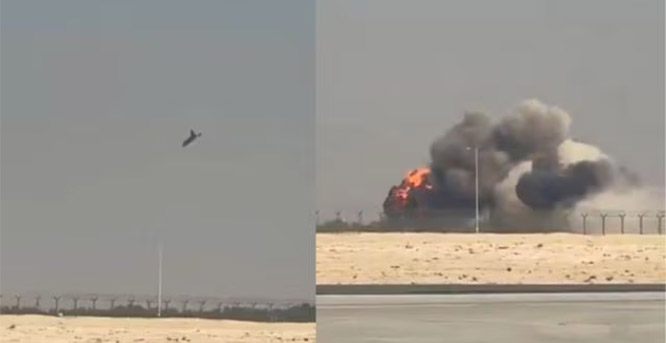
An Indian Air Force (IAF) Tejas fighter jet crashed on Friday, November 21, afternoon during its aerial demonstration at the Dubai Air Show, plunging to the ground at around 2:10 pm local time while performing a manoeuvre before thousands of spectators.

The IAF confirmed the incident, stating that a Tejas aircraft participating in the show had crashed and that further details were being gathered. An Air Force spokesperson said more information would be shared after initial assessments.

The crash sent thick black smoke billowing into the sky near the airport, causing panic among visitors, including families and children who had gathered to watch the display. Authorities have not yet confirmed whether the pilot managed to eject before the aircraft went down. Emergency response teams rushed to the scene, and officials have not released information on casualties or damage so far.

The Tejas is a 4.5-generation, multi-role fighter aircraft developed indigenously by Hindustan Aeronautics Limited (HAL). Designed for versatility, it is capable of offensive air support, close combat, ground attack missions and maritime operations. The aircraft family includes single-seat fighters and twin-seat trainers for both the Air Force and Navy.

HAL describes the latest version, the LCA Mk1A, as the most advanced in the series, featuring an AESA radar, an upgraded electronic warfare suite with radar-warning and self-protection jamming, smart multifunction displays, a digital map generator, a combined interrogator–transponder system and a modern radio altimeter. These enhancements significantly improve the aircraft’s combat capability and survivability.

Further updates from IAF and UAE authorities are awaited.

Comments

Add new comment

  • Coastaldigest.com reserves the right to delete or block any comments.
  • Coastaldigset.com is not responsible for its readers’ comments.
  • Comments that are abusive, incendiary or irrelevant are strictly prohibited.
  • Please use a genuine email ID and provide your name to avoid reject.
News Network
December 4,2025

Mangaluru: Chaos erupted at Mangaluru International Airport (MIA) after IndiGo flight 6E 5150, bound for Mumbai, was repeatedly delayed and ultimately cancelled, leaving around 100 passengers stranded overnight. The incident highlights the ongoing country-wide operational disruptions affecting the airline, largely due to the implementation of new Flight Duty Time Limitations (FDTL) norms for crew.

The flight was initially scheduled for 9:25 PM on Tuesday but was first postponed to 11:40 PM, then midnight, before being cancelled around 3:00 AM. Passengers expressed frustration over last-minute communication and the lack of clarity, with elderly and ailing travellers particularly affected. “Though the airline arranged food, there was no proper communication, leaving us confused,” said one family member.

An IndiGo executive at MIA cited the FDTL rules, designed to prevent pilot fatigue by limiting crew working hours, as the cause of the cancellation. While alternative arrangements, including hotel stays, were offered, about 100 passengers chose to remain at the airport, creating tension. A replacement flight was arranged but also faced delays due to the same constraints, finally departing for Mumbai around 1:45 PM on Wednesday. Passengers either flew, requested refunds, or postponed their travel.

The Mangaluru delay is part of a broader crisis for IndiGo. The airline has been forced to make “calibrated schedule adjustments”—a euphemism for widespread cancellations and delays—after stricter FDTL norms came into effect on November 1.

While an IndiGo spokesperson acknowledged unavoidable flight disruptions due to technology issues, operational requirements, and the updated crew rostering rules, the DGCA has intervened, summoning senior airline officials to explain the chaos and outline corrective measures.

The ripple effect has been felt across the country, with major hubs like Bengaluru and Mumbai reporting numerous cancellations. The Mangaluru incident underscores the systemic operational strain currently confronting India’s largest carrier, leaving passengers nationwide grappling with uncertainty and delays.

Comments

Add new comment

  • Coastaldigest.com reserves the right to delete or block any comments.
  • Coastaldigset.com is not responsible for its readers’ comments.
  • Comments that are abusive, incendiary or irrelevant are strictly prohibited.
  • Please use a genuine email ID and provide your name to avoid reject.
News Network
November 30,2025

airportmetro.jpg

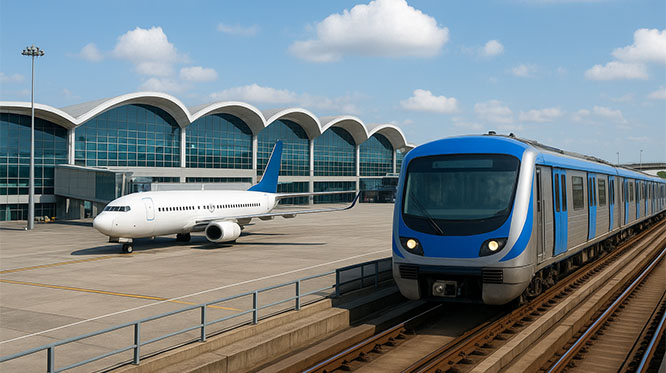
Udupi: The pontiffs of Sri Paryaya Puttige Mutt, the sacred seat of Jagadguru Shrimad Madhvacharya Moola Samsthanam, have submitted a proposal to the Prime Minister seeking comprehensive development for Udupi district. 

Proposal for International Airport

A key request is the establishment of an international airport. Highlighting that around 1,000 acres of land are available and suitable, the pontiffs noted that the existing Mangalore Airport provides limited international connectivity. They suggested the airport be developed under a Public-Private Partnership (PPP) or as a Greenfield Airport to boost trade, education, healthcare, and spiritual tourism.

Metro and Rapid Transit Connectivity

The proposal also calls for Metro Rail or Rapid Transit between Mangaluru and Udupi. The 55 km coastal stretch experiences heavy daily commuter traffic, causing congestion. The district administration is ready to prepare an initial project report for a Mass Rapid Transit corridor and requested inclusion under national urban mobility programmes to ensure safe, green, and time-efficient regional transport.

Port and Coastal Development

The pontiffs urged the development of an international-standard port with a cruise terminal along Udupi’s coast. They also requested fast-tracking of pending coastal tourism projects and revising Coastal Regulation Zone (CRZ) norms to encourage sustainable infrastructure and hospitality investment.

IT, AI and Technological Infrastructure

Support was sought for an IT and AI Innovation Park with incubation facilities under Digital India and Startup India initiatives. The proposal also emphasized the need for strengthened data security and cloud computing infrastructure to boost India’s technological independence.

Sports and Education Initiatives

The pontiffs requested national sports status for Kambala, along with financial and infrastructure support. They also sought the establishment of an AIIMS in Udupi, a new IIT campus, and approval for an IIM to promote higher education in the district.

Representation to the Prime Minister

Sri Sugunendra Tirtha Pontiff and Sri Sushrendra Tirtha Swamiji represented the pontiffs in submitting the comprehensive development proposal to the Prime Minister during his recent visit.

Comments

Add new comment

  • Coastaldigest.com reserves the right to delete or block any comments.
  • Coastaldigset.com is not responsible for its readers’ comments.
  • Comments that are abusive, incendiary or irrelevant are strictly prohibited.
  • Please use a genuine email ID and provide your name to avoid reject.