



New Delhi, Aug 7: India will boycott a Commonwealth Parliamentary Union meeting in Islamabad next month in protest against Pakistan not inviting the Speaker of Jammu and Kashmir Assembly, a decision that comes in the midst of tensions over two terror attacks in Punjab and J and K.
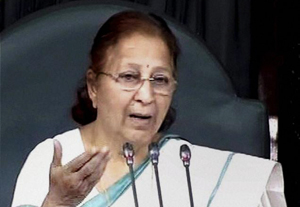
"A meeting of Speakers of all states here today unanimously decided that India will boycott the meeting of the CPU if the Speaker of the Jammu and Kashmir Assembly is not invited," Lok Sabha Speaker Sumitra Mahajan told reporters after the meeting.
This follows Pakistan not sending an invitation to J and Kashmir Speaker to the Inter Parliamentary Union meeting to be held from Sept 30 to Oct 8 in Islamabad while invitations have been sent to all the other Speakers in India.
The decision of the Speakers come against the backdrop of simmering tensions between the two countries over the recent terror attacks in Gurdaspur in Punjab and near Udhampur in J and K by terrorists, perpetrated by terrorists who had infiltrated from Pakistan.
Mahajan said this was against a rule in the CPU in which all the Speakers, who are members of the Commonwealth Parliamentary Association (CPA), have to be extended an invitation to the CPU meeting.
"It is wrong (on the part of Pakistan). They cited an old rule of 1951-57 regarding their having raised an issue in the UN Security Council for not inviting J and K Speaker," she said adding it had lost relevance.
The Speaker said Pakistan gave this reply when India took up the matter strongly with the CPA Chairperson and Secretary General against leaving out J and K Speaker.
"We (31 Speakers) reviewed this issue and felt this was wrong. We reject this decision (of Pakistan). We are writing to the CPA Chairperson that if I and K Speaker is not invited then India will not attend the meeting or change the venue (for us to attend)," she said.
Welcoming the decision J and K Speaker Ravindra Gupta, who attended the meeting, thanked the Speakers for the decision saying it was a question of unity and integrity of the country. He called Pakistan a terrorist state.
Gupta said Pakistan has done this (not inviting J and K Speaker) "deliberately" and added today's decision is a strong message to that country.
Mahajan made it clear that to ensure participation of the Speaker of Lok Sabha and those of Indian Assemblies, J and K Speaker will have to be invited or the venue should be changed to some other country.
She said Pakistan had expressed "constraint" in inviting Jammu and Kashmir Speaker citing an old rule which was "irrelevant" now as the state had participated in such a conference in 2007.
Describing Pakistan's decision as "wrong", she said she had called today's meeting to consult Speakers of the Assemblies before taking a decision.
The meeting noted that since Speakers of all the state Assemblies are members of the 'India Region of Commonwealth Parliamentary Association (CPA)', it was wrong to single out Jammu and Kashmir Assembly and not invite its Speaker.
After detailed discussions at the meeting attended by Speakers of 31 Assemblies, a resolution was adopted "unanimously", condemning the unilateral decision of Pakistan for not inviting Jammu and Kashmir Assembly Speaker to the 61st Conference.
The resolution said Pakistani decisions violates the "provisions of the CPA Constitution, keeping the Executive Committee and the General Assembly of CPA in the dark while acting against the century-old tradition of CPA which is a membership organisation that has constitutionally been bound to invite all its member branches to the CPA annual conference so long as a Branch is in good financial standing with the Association."
"The meeting resolved to call upon Dr Shirin Chaudhury, Speaker of Bangladesh Parliament and Chairperson of the CPA Executive Committee to use her good offices to immediately resolve the matter and ensure issue of invitation to the Jammu and Kashmir 'CPA Branch' failing which 'CPA India Region' including the Union and State Branches' (will) boycott the 61st Commonwealth Parliamentary Conference in Islamabad, Pakistan from September 30 to October 8...," the resolution said.
India's Parliament and Assemblies are treated as 'India region' and all the Assemblies are the members of the CPA.
The resolution underlined that Jammu and Kashmir "fulfills all conditions" of CPA membership. "The meeting further resolved that Chairperson and members of the Executive Committee of CPA view this matter in all seriousness and insist that Pakistan CPA Branch forfeit its right to host the 61st CP conference for not inviting Jammu and Kashmir CPA Branch to the conference in violation of Article 8 of the CPA Constitution and that the venue of the conference be shifted to another country," it said.
Article 8 of the CPA Constitution says that each 'Branch' (meaning Parliament and State Assemblies) "shall be entitled to send prescribed number of delegates and officials to each plenary conference and accordingly Jammu and Kashmir Branch is entitled to send one delegate to the Conference."
The meeting authorised Lok Sabha Speaker, who is the chairperson of CPA India Region, to take "such further action as may be deemed necessary in the matter".
The Speaker said India took up the issue with the Commonwealth Parliamentary Association Secretariat after Jammu and Kashmir was not invited while all other states of India received the invitations.
The CPA Secretariat talked to Pakistan Assembly Speaker who expressed "constraint" in inviting Jammu and Kashmir. Invitations for the conference are sent by the host country. Gupta said Pakistan deliberately wanted to keep his state away from the conference to "humiliate" India.
He said Jammu and Kashmir is an integral part of India and thanked the Lok Sabha Speaker and Speakers of other Assemblies on taking the stand.
Gupta added that "Pakistan is a terrorist state and many countries do not want to go there" to attend the Conference. PTI AKK "The meeting resolved to call upon Dr Shirin Chaudhury, Speaker of Bangladesh Parliament and Chairperson of the CPA Executive Committee to use her good offices to immediately resolve the matter and ensure issue of invitation to the Jammu and Kashmir 'CPA Branch' failing which 'CPA India Region' including the Union and State Branches' (will) boycott the 61st Commonwealth Parliamentary Conference in Islamabad, Pakistan from September 30 to October 8...," the resolution said.
India's Parliament and Assemblies are treated as 'India region' and all the Assemblies are the members of the CPA.
The resolution underlined that Jammu and Kashmir "fulfils all conditions" of CPA membership. "The meeting further resolved that Chairperson and members of the Executive Committee of CPA view this matter in all seriousness and insist that Pakistan CPA Branch forfeit its right to host the 61st CP conference for not inviting Jammu and Kashmir CPA Branch to the conference in violation of Article 8 of the CPA Constitution and that the venue of the conference be shifted to another country," it said.
Article 8 of the CPA Constitution says that each 'Branch' (meaning Parliament and State Assemblies) "shall be entitled to send prescribed number of delegates and officials to each plenary conference and accordingly Jammu and Kashmir Branch is entitled to send one delegate to the Conference."
The meeting authorised Lok Sabha Speaker, who is the chairperson of CPA India Region, to take "such further action as may be deemed necessary in the matter".
The Speaker said India took up the issue with the Commonwealth Parliamentary Association Secretariat after Jammu and Kashmir was not invited while all other states of India received the invitations.
The CPA Secretariat talked to Pakistan Assembly Speaker who expressed "constraint" in inviting Jammu and Kashmir. Invitations for the conference are sent by the host country. Gupta said Pakistan deliberately wanted to keep his state away from the conference to "humiliate" India. He said Jammu and Kashmir is an integral part of India and thanked the Lok Sabha Speaker and Speakers of other Assemblies on taking the stand.
Gupta added that "Pakistan is a terrorist state and many countries do not want to go there" to attend the Conference.

Comments
Add new comment