Indian police uncovered a plot, but Sri Lanka didn’t act

Agencies
April 28, 2019

Colombo, Apr 28: While monitoring the usual channels, Indian police stumbled upon something extraordinary: a detailed plot for what would become the bloodiest attack linked to the Daesh group in South Asia.

Police were investigating suspected sympathizers of the withered caliphate in southern India when a name they had no record of surfaced — National Towheed Jamaat, the Sri Lankan Daesh-backed militant organization that authorities say conducted the coordinated Easter Sunday attacks on churches and hotels in Sri Lanka that killed more than 250 people.

Indian police managed to break into the group’s communications and began tapping into the plot, according to Ajai Sahni, executive director of the Institute for Conflict Management in New Delhi.

“That is why the kind of detailing of the incident they received was very, very specific,” Sahni said. “They knew the group, they knew the targets, they knew the time, they knew the whereabouts of the suicide bombers, and all of this was communicated to the Sri Lankan government.”

Top Sri Lankan officials have acknowledged that some of the island nation’s intelligence units were given advance notice about the attacks — starting weeks ago and up until the morning of the bombings — but that little was done to prevent them.

Both President Maithripala Sirisena, who is also Sri Lanka’s minister of defense and in charge of national police, and Prime Minister Ranil Wickremesinghe, who has been kept out of high-level security meetings since Sirisena tried to oust him last fall, said they only learned about the plot after it had been carried out.

“The fact is, it’s very, very specific information and that has been conveyed to everyone in writing. That is the action that was missing in some cases. That’s what we’re investigating,” Wickremesinghe said.

The first intelligence brief from India arrived April 4, more than two weeks before the bombings. It said a suicide terrorist attack was planned against “some important churches” and listed six people likely to be involved.

The deputy inspector of police shared the report with at least four security unit directors, including those responsible for “VIPs” and foreign embassies, along with a memo, urging the directors to pay extra attention to the places and people in their care.

India’s final intelligence warning came just before the Easter morning blasts, Sahni said.

Why the warnings went unheeded is the subject of intense public debate, with some blaming the dismantling of a system built by former strongman President Mahinda Rajapaksa for rapid response to rebel activity during Sri Lanka’s long civil war.

For 26 years, the Tamil Tigers militants from Sri Lanka’s minority Tamil ethnic community fought for independence from the Buddhist, ethnically Sinhalese-majority state. Military forces under Rajapaksa’s brother, then-Secretary of Defense Gotabhaya Rajapaksa, brutally crushed them in 2009.

The current state minister of defense, Ruwan Wijewardene, said “weakness” within Sri Lanka’s security apparatus led to the failure to prevent the Easter bombings.

Sirisena, while campaigning for the 2015 election to defeat Rajapaksa, had stressed the need for fresh investigations of military officials, including intelligence officers accused of abducting and killing civilians, political opponents and journalists during the civil war.

Since then, some military officials have been arrested on charges related to their actions during the war and remanded in detention facilities. Court cases are ongoing.

But on Friday, Sirisena, perhaps with an eye toward the 2020 election, said that arresting military intelligence officials after the civil war had weakened national security. He promised a shake-up, asking for the resignations of both his secretary of defense and inspector general of police.

Some experts believe Sri Lankan security forces may not have given much credence to Indian intelligence because of its controversial role in the civil war.

India’s Research and Analysis Wing, or RAW, the country’s external intelligence group, initially supported Tamil separatists, training and arming the Liberation Tigers of Tamil Eelman in the 1970s. But after the group’s terrorist activities in the 1980s, RAW withdrew its support.

New Delhi made a pact with Colombo in 1987 to send peacekeeping forces to the island on its southern tip, and they ended up fighting the rebels. They were asked to withdraw a few years later amid allegations of abuses against Tamils. In 1991, Indian Prime Minister Rajiv Gandhi was assassinated by a Tamil Tiger suicide bomber.

India questioned Sri Lanka’s heavy-handed approach to defeating the Tigers in the final months of the war, when tens of thousands of civilians were reportedly killed by government troops. Thousands more are still missing. Ethnic minority Tamils in the country’s north and east are still reeling from the effects of the war.

Indian security and intelligence agencies lost some of their “moral authority” with the Sri Lankans, said M.K. Narayanan, the former head of India’s external intelligence service.

“What really happened was India lost moral authority. India did not accept the policies that were being followed, so they lost a lot of support in Sri Lanka,” he said.

Genealogical and cultural ties between Sri Lanka and India date back thousands of years. According to folklore, the island’s majority Sinhalese are descendants of an Indian prince banished there 2,000 years ago.

The nation’s minority Tamils, meanwhile, are in part the descendants of more than a million tea and rubber plantation workers brought to Sri Lanka from southern India by British colonial rulers in the 18th and 19th centuries.

And India shares intelligence with its neighbors in part to keep them within its sphere of influence, Narayanan said.

Located just 23 kilometers (14 miles) off its southeast coast, India sees Sri Lanka as a bulwark in its military defenses to ward off potential Chinese incursions. Soon after the Easter attacks, India deployed naval and coast guard ships along the narrow Palk Strait.

Comments

Add new comment

  • Coastaldigest.com reserves the right to delete or block any comments.
  • Coastaldigset.com is not responsible for its readers’ comments.
  • Comments that are abusive, incendiary or irrelevant are strictly prohibited.
  • Please use a genuine email ID and provide your name to avoid reject.
News Network
December 3,2025

arrival.jpg

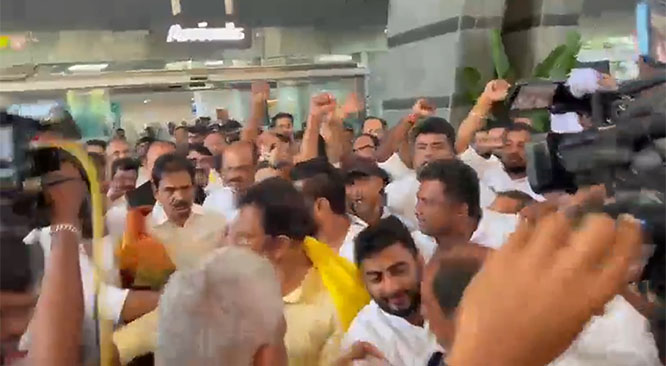
Mangaluru, Dec 3: A group of Congress workers gathered at the Mangaluru International Airport on Wednesday to welcome AICC general secretary K C Venugopal, but the reception quickly turned into a display of support for Deputy Chief Minister D K Shivakumar.

Venugopal arrived in the city to participate in the centenary commemoration of the historic dialogue between Mahatma Gandhi and Narayana Guru. The event, organised by the Sivagiri Mutt, Varkala, in association with the Mangalore University Sri Narayana Guru Study Chair, is being held on the university’s Konaje campus.

KPCC general secretary Mithun Rai and several party workers had assembled at the airport to receive Venugopal. However, the moment he stepped out, workers began raising slogans backing Shivakumar.

The university programme will be inaugurated by Chief Minister Siddaramaiah.

This show of support comes just a day after Siddaramaiah remarked that Shivakumar would lead the government “when the high command decides.” The chief minister made the comment after a breakfast meeting at Shivakumar’s residence—another public display of camaraderie between the two leaders amid ongoing attempts by the party high command to downplay their leadership rivalry.

Comments

Add new comment

  • Coastaldigest.com reserves the right to delete or block any comments.
  • Coastaldigset.com is not responsible for its readers’ comments.
  • Comments that are abusive, incendiary or irrelevant are strictly prohibited.
  • Please use a genuine email ID and provide your name to avoid reject.
News Network
November 27,2025

imrankhan.jpg

Authorities at Pakistan’s high-security Adiala Jail in Rawalpindi on Wednesday dismissed speculation about the condition of imprisoned former Pakistan Prime Minister Imran Khan, rejecting rumours that he had been moved out of the facility or was in danger. Officials said Khan was in “good health” and described the viral death claims as “baseless.”

“There is no truth to reports about his transfer from Adiala Jail,” the Rawalpindi prison administration said in a statement, according to Geo News. “He is fully healthy and receiving complete medical attention.”

Amid swirling rumours on social media, Imran Khan’s party, Pakistan Tehreek-e-Insaf (PTI), urged the federal government to issue an official clarification and demanded that authorities allow his family to meet him immediately, Dawn reported.

The frenzy began after Khan’s three sisters called for an impartial probe into what they described as a “brutal” police assault on them and other PTI supporters outside Adiala Jail last week. Soon after, several social media handles circulated unverified claims alleging that Khan had been “killed” inside the prison.

The rumours intensified when a handle named “Afghanistan Times” claimed that “credible sources” had confirmed Khan’s “murder” and that his body had been moved out of the jail — allegations that have not been verified by any credible agency.

Imran Khan, PTI’s patron-in-chief, has been lodged in the Rawalpindi prison since August 2023 in multiple cases. For over a month, an undeclared restriction has prevented family members and senior PTI leaders from meeting him. Khyber-Pakhtunkhwa Chief Minister Sohail Afridi has reportedly been denied access despite making seven attempts.

In a letter to Punjab Police Chief Usman Anwar, Khan’s sisters — Noreen Niazi, Aleema Khan, and Dr. Uzma Khan — said they were “peacefully protesting” outside the jail when police allegedly launched an unprovoked assault after streetlights were switched off.

“At 71, I was seized by my hair, thrown to the ground and dragged across the road,” Noreen Niazi said, alleging that other women present were also slapped and manhandled.

Adiala Jail officials reiterated that speculation over Imran Khan’s health was unfounded and insisted that his well-being was being ensured, Geo News reported.

Comments

Add new comment

  • Coastaldigest.com reserves the right to delete or block any comments.
  • Coastaldigset.com is not responsible for its readers’ comments.
  • Comments that are abusive, incendiary or irrelevant are strictly prohibited.
  • Please use a genuine email ID and provide your name to avoid reject.
News Network
December 6,2025

pilot.jpg

New Delhi: IndiGo, India’s largest airline, faced major operational turbulence this week after failing to prepare for new pilot-fatigue regulations issued by the Directorate General of Civil Aviation (DGCA). The stricter rules—designed to improve flight safety—took effect in phases through 2024, with the latest implementation on November 1. IndiGo has acknowledged that inadequate roster planning led to widespread cancellations and delays.

Below are the key DGCA rules that affected IndiGo’s operations:

1. Longer Mandatory Weekly Rest

Weekly rest for pilots has been increased from 36 hours to 48 hours.

The government says the extended break is essential to curb cumulative fatigue. This rule remains in force despite the current crisis.

2. Cap on Night Landings

Pilots can now perform only two night landings per week—a steep reduction from the earlier limit of six.

Night hours, defined as midnight to early morning, are considered the least alert period for pilots.

Given the disruptions, this rule has been temporarily relaxed for IndiGo until February 10.

3. Reduced Maximum Night Flight Duty

Flight duty that stretches into the night is now capped at 10 hours.

This measure has also been kept on hold for IndiGo until February 10 to stabilize operations.

4. Weekly Rest Cannot Be Replaced With Personal Leave

Airlines can no longer count a pilot’s personal leave as part of the mandatory 48-hour rest.

Pilots say this closes a loophole that previously reduced actual rest time.

Currently, all airlines are exempt from this rule to normalise travel.

5. Mandatory Fatigue Monitoring

Airlines must submit quarterly fatigue reports along with corrective actions to DGCA.

This system aims to create a transparent fatigue-tracking framework across the industry.

The DGCA has stressed that these rules were crafted to strengthen flight safety and align India with global fatigue-management standards. The temporary relaxations are expected to remain until February 2025, giving IndiGo time to stabilise its schedules and restore normal air travel.

Comments

Add new comment

  • Coastaldigest.com reserves the right to delete or block any comments.
  • Coastaldigset.com is not responsible for its readers’ comments.
  • Comments that are abusive, incendiary or irrelevant are strictly prohibited.
  • Please use a genuine email ID and provide your name to avoid reject.