Iran: Protesters killed in anti-govt rallies

Al Jazeera
December 31, 2017

At least two protesters have been killed in rare anti-government protests in Iran, according to a semi-official Iranian news agency. 

The Mehr news agency said on Sunday that at least two people died on Saturday night in Dorud, a city in western Iran.

Habibollah Khojastepour, security deputy of the governor of Lorestan province, said the presence of "agitators" prevented a peaceful end to the protest, according to Mehr.

Khojastepour said neither police nor security forces fired at the protesters. He did not provide a reason for their deaths.

News of the fatalities came as Interior Minister Abdolrahman Rahmani Fazli warned demonstrators against disruptive behavior.

"Those who damage public property, disrupt order and break the law must be responsible for their behaviour and pay the price," Abdolrahman Rahmani Fazli said on state television early on Sunday.

Iranians began protesting on Thursday in the second city of Masshad, rallying against high prices.

The rallies have since gained momentum, spread to other cities, and are described as the largest in nearly a decade.

Saturday marked the third day of anti-government protests across Iran, when students and police clashed in Tehran.

Videos posted on Twitter by the New-York based Center for Human Rights in Iran appeared to show police in riot gear clashing with protesters outside the gates to the Tehran University.

A second video showed smoke-shrouded streets, purportedly from tear gas, in the same area.

Al Jazeera could not authenticate the footage, but semi-state news agency Fars also reported confrontations between police and protesters at Tehran University.

Meanwhile, tens of thousands of people across Iran attended preplanned pro-government rallies on Saturday to mark the end of unrest following the country's 2009 election.

State TV aired footage showing people in several cities waving flags and carrying banners bearing the image of Supreme Leader Ayatollah Ali Khamenei.

The large demonstrations, which were organised weeks ago, are held every year.

'They no longer fear security forces'

Potkin Azarmehr, a blogger who focuses on the secular pro-democracy struggle in Iran, told Al Jazeera that several groups have been protesting for some time "and now their slogans have become more radical". 

"They no longer seem to have that fear from security forces," he said.

Mahan Abedin, an Iran analyst at Middle East Eye, said the protests reflect the gap between ordinary Iranians and the political elite.

The protests appeared to be "articulated by people who ostensibly have purely economic motives", he said.

"I think in keeping with longstanding culture, inevitably these protests have become political.

"[President Hassan] Rouhani has the right attitude but his government riles people. This is a very elitist government, they are bureaucratic elites, technocratic elites - they are very distant from grievances of ordinary people."

Reports said activists on social media have called for a fourth day of protests on Sunday.

Meanwhile, the US has been quick to respond to developments, warning Tehran against arresting peaceful protesters.

US President Donald Trump has posted a series of tweets on Iran, most recently writing: "Oppressive regimes cannot endure forever. The world is watching!"

Under Trump's administration, Washington and Tehran have grown further apart, clashing on foreign policy issues such as the wars in Syria and Yemen and over the 2015 nuclear deal with world powers.

In response to Trump, Bahram Qassemi, spokesman for Iran's foreign ministry, called the US president's warnings "cheap, worthless and invalid", according to the semi-state news agency Fars.

"Iranian people feel no value for the opportunistic claims of the US officials and Mr. Trump, himself", Qassemi was quoted as saying.

Comments

Add new comment

  • Coastaldigest.com reserves the right to delete or block any comments.
  • Coastaldigset.com is not responsible for its readers’ comments.
  • Comments that are abusive, incendiary or irrelevant are strictly prohibited.
  • Please use a genuine email ID and provide your name to avoid reject.
News Network
November 27,2025

imrankhan.jpg

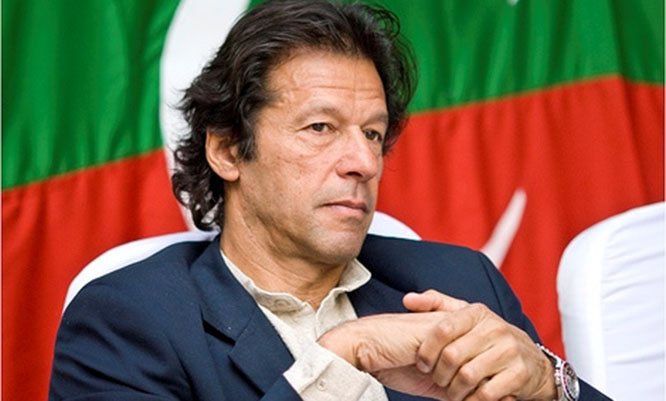
Authorities at Pakistan’s high-security Adiala Jail in Rawalpindi on Wednesday dismissed speculation about the condition of imprisoned former Pakistan Prime Minister Imran Khan, rejecting rumours that he had been moved out of the facility or was in danger. Officials said Khan was in “good health” and described the viral death claims as “baseless.”

“There is no truth to reports about his transfer from Adiala Jail,” the Rawalpindi prison administration said in a statement, according to Geo News. “He is fully healthy and receiving complete medical attention.”

Amid swirling rumours on social media, Imran Khan’s party, Pakistan Tehreek-e-Insaf (PTI), urged the federal government to issue an official clarification and demanded that authorities allow his family to meet him immediately, Dawn reported.

The frenzy began after Khan’s three sisters called for an impartial probe into what they described as a “brutal” police assault on them and other PTI supporters outside Adiala Jail last week. Soon after, several social media handles circulated unverified claims alleging that Khan had been “killed” inside the prison.

The rumours intensified when a handle named “Afghanistan Times” claimed that “credible sources” had confirmed Khan’s “murder” and that his body had been moved out of the jail — allegations that have not been verified by any credible agency.

Imran Khan, PTI’s patron-in-chief, has been lodged in the Rawalpindi prison since August 2023 in multiple cases. For over a month, an undeclared restriction has prevented family members and senior PTI leaders from meeting him. Khyber-Pakhtunkhwa Chief Minister Sohail Afridi has reportedly been denied access despite making seven attempts.

In a letter to Punjab Police Chief Usman Anwar, Khan’s sisters — Noreen Niazi, Aleema Khan, and Dr. Uzma Khan — said they were “peacefully protesting” outside the jail when police allegedly launched an unprovoked assault after streetlights were switched off.

“At 71, I was seized by my hair, thrown to the ground and dragged across the road,” Noreen Niazi said, alleging that other women present were also slapped and manhandled.

Adiala Jail officials reiterated that speculation over Imran Khan’s health was unfounded and insisted that his well-being was being ensured, Geo News reported.

Comments

Add new comment

  • Coastaldigest.com reserves the right to delete or block any comments.
  • Coastaldigset.com is not responsible for its readers’ comments.
  • Comments that are abusive, incendiary or irrelevant are strictly prohibited.
  • Please use a genuine email ID and provide your name to avoid reject.
News Network
December 7,2025

envoy.jpg

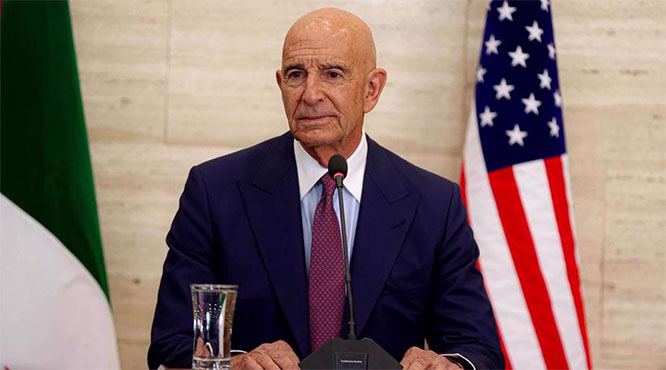
Since 1946, the United States has attempted 93 coups or “regime change” operations across the world — including two in Iran, US Special Envoy for Syria Tom Barrack has admitted.

Speaking to the UAE-based IMI Media Group, in remarks published by The National, Barrack said Washington tried twice to overthrow the Iranian government but failed both times. 

“For (Trump) then to be imputed with regime change — we had two regime changes in Iran already. Neither one worked. So I think wisely leave it to the region to solve,” said Barrack, who also serves as the US ambassador to Turkey.

His comments come six months after the US joined Israel in airstrikes against Iran during ongoing indirect nuclear negotiations between Tehran and Washington.

On June 13, Israel launched an attack on Iran that killed at least 1,064 people and hit civilian infrastructure. Days later, the United States targeted three nuclear facilities — Fordow, Natanz and Isfahan — in what Iran called a clear violation of international law. Iranian retaliation eventually forced a halt to the assault on June 24.

Barrack further claimed that US President Donald Trump and Foreign Secretary Marco Rubio are “not into regime change” and prefer a regional approach driven by Middle Eastern countries themselves. According to him, regional dialogue and non-interference by outside powers offer a more durable path forward.

He added that Washington is still open to an agreement with Tehran if Iranian authorities show “seriousness” and willingness to engage constructively.

However, Iran maintains the US has not shown readiness for meaningful talks. In an interview with Japan’s Kyodo News, Iranian Foreign Minister Abbas Araghchi said negotiations could advance only if Washington acknowledges Iran’s right to peaceful nuclear energy and lifts unilateral sanctions.

Comments

Add new comment

  • Coastaldigest.com reserves the right to delete or block any comments.
  • Coastaldigset.com is not responsible for its readers’ comments.
  • Comments that are abusive, incendiary or irrelevant are strictly prohibited.
  • Please use a genuine email ID and provide your name to avoid reject.
News Network
November 26,2025

students.jpg

Bengaluru, Nov 26: Karnataka is taking its first concrete steps towards lifting a three-decade-old ban on student elections in colleges and universities. Deputy Chief Minister D.K. Shivakumar announced Wednesday that the state government will form a small committee to study the reintroduction of campus polls, a practice halted in 1989 following incidents of violence.

Speaking at a 'Constitution Day' event organised by the Karnataka Congress, Mr. Shivakumar underscored the move's aim: nurturing new political leadership from the grassroots.

"Recently, (Leader of the Opposition in Lok Sabha) Rahul Gandhi wrote a letter to me and Chief Minister (Siddaramaiah) asking us to think about restarting student elections," Shivakumar stated. "I'm announcing today that we'll form a small committee and seek a report on this."

Student elections were banned in Karnataka in 1989, largely due to concerns over violence and the infiltration of political party affiliates into campus life. The ban effectively extinguished vibrant student bodies and the pipeline of young leaders they often produced.

Mr. Shivakumar, who also serves as the Karnataka Congress president, said that former student leaders will be consulted to "study the pros and cons" of the re-introduction.

Acknowledging the history of the ban, he added, "There were many criminal activities taking place back then. We’ll see how we can conduct (student) elections by regulating such criminal activities."

The Deputy CM reminisced about his own journey, which began on campus. He recalled his political activism at Sri Jagadguru Renukacharya College leading to his first Assembly ticket in 1985 at the age of 23. "That's how student leadership was at the time. Such leadership has gone today. College elections have stopped," he lamented, adding that for many, college elections were "like a big movement" where leaders were forged.

The move, driven by the Congress high command's push to cultivate young talent, will face scrutiny from academics and university authorities who have, in the past, expressed concern that the return of polls could disrupt the peaceful academic environment and turn campuses into political battlegrounds.

Comments

Add new comment

  • Coastaldigest.com reserves the right to delete or block any comments.
  • Coastaldigset.com is not responsible for its readers’ comments.
  • Comments that are abusive, incendiary or irrelevant are strictly prohibited.
  • Please use a genuine email ID and provide your name to avoid reject.