



Israeli air strikes hit sites across Gaza Strip

Agencies
March 26, 2019

Tel Aviv, Mar 26: Israeli air strikes hit sites across the Gaza Strip on Monday in retaliation for a rare rocket attack that hit a house near Tel Aviv, before Hamas said a ceasefire was reached.

Hamas, the Islamist movement that runs the Gaza Strip, said Egypt had brokered the ceasefire following the escalation that came just two weeks before Israel's April 9 elections.

Israel, whose strikes began around the same time Israeli Prime Minister Benjamin Netanyahu met US President Donald Trump in Washington, has not yet commented on the claim.

"Egyptian efforts succeeded with a ceasefire between the occupation and the resistance factions," Hamas spokesman Fawzi Barhoum said.

The ceasefire claim came after Israeli air strikes hit the office of Hamas's leader and dozens of other targets across the Gaza Strip on Monday evening.

Those strikes were in response to a rocket from the Palestinian enclave that hit a home north of Tel Aviv and wounded seven people early Monday morning.

On Monday night, a barrage of rockets were fired from the Gaza Strip toward Israel in response to the strikes, causing air raid sirens to ring out in southern Israel.

There were no immediate reports of damage or injuries due to those rockets.

Seven people were wounded in Gaza, the enclave's health ministry said, as explosions rocked areas of the Gaza Strip and balls of fire rose into the sky.

There was no indication Hamas leader Ismail Haniya was at his office at the time it was hit.

In comments from the White House, Netanyahu said "Israel is responding forcefully to this wanton aggression," while Trump spoke of Israel's "right to defend itself".

Netanyahu said he would return home after meeting Trump, cancelling an address to pro-Israel lobby AIPAC's annual conference on Tuesday.

Gaza City buildings hit

One Israeli strike destroyed a building in Gaza City that Israel alleged was a secret headquarters for Hamas security and intelligence.

Residents of Gaza said the building was known to house the Hamas-linked Multasim insurance company.

Hamas's interior security office in Gaza City was also hit.

A joint statement from militant groups in Gaza, including Hamas and Islamic Jihad, took responsibility for the barrage of rockets fired in response to the Israeli strikes later Monday night.

The rocket from Gaza that hit a house in Israel early Monday was a rare long-distance strike and Israel's army said it was fired by Hamas.

A Hamas official, speaking to AFP on condition of anonymity, denied the group was behind the rocket, evoking the possibility it was caused by "bad weather".

The Israeli house hit was located in the community of Mishmeret, around 20 kilometres (12 miles) north of Tel Aviv, police said.

The rocket would have had to travel some 120 kilometres (75 miles) from Rafah in the southern Gaza Strip, where Israel said it was fired from.

The hospital treating the wounded said seven Israelis were injured lightly by burns and shrapnel, including three children.

One of the wounded was a six-month-old child and six of them were members of the same British-Israeli family.

The house was destroyed in the wake of the rocket and subsequent fire, with burnt wood, a children's toy and other debris piled at the site.

Israel and Hamas have fought three wars since 2008, and Netanyahu is believed to want to avoid another one with unpredictable results ahead of the elections.

But he faces a tough challenge from a centrist political alliance led by former military chief Benny Gantz and came under pressure to react firmly.

Gantz asked on Twitter, referring to corruption allegations against Netanyahu, whether the prime minister would "finally focus on the security of the citizens of Israel instead of dealing only with his legal concerns."

One-year anniversary

Monday's rocket followed another rare incident on March 14 in which two rockets were fired from Gaza towards Tel Aviv.

No damage or injuries were caused, but Israel responded to that and further rocket fire by hitting what it said were around 100 Hamas targets across the Gaza Strip.

Four Palestinians were reported wounded in those strikes.

Both Hamas and Islamic Jihad denied they were behind the March 14 rocket fire towards Tel Aviv, raising the possibility they were launched by fringe groups.

Israel's military said they were launched by Hamas, but later Israeli media reported the army's preliminary assessment was that they had been fired by mistake during maintenance work.

Even if the ceasefire announced by Hamas holds, there could soon be further tensions.

Saturday marks the first anniversary of Palestinian protests and clashes along the Gaza Strip's border with Israel.

An informal truce between Hamas and Israel had led to relative calm along the border, but recent weeks have seen another uptick in violence.

Comments

Add new comment

  • Coastaldigest.com reserves the right to delete or block any comments.
  • Coastaldigset.com is not responsible for its readers’ comments.
  • Comments that are abusive, incendiary or irrelevant are strictly prohibited.
  • Please use a genuine email ID and provide your name to avoid reject.
News Network
February 1,2026

Bengaluru: Karnataka Deputy Chief Minister D K Shivakumar on Sunday criticised the Union Budget presented by Finance Minister Nirmala Sitharaman, claiming it offered no tangible benefit to the state.

Though he said he was yet to study the budget in detail, Shivakumar asserted that Karnataka had gained little from it. “There is no benefit for our state from the central budget. I was observing it. They have now named a programme after Mahatma Gandhi, after repealing the MGNREGA Act that was named after him,” he said.

Speaking to reporters here, the Deputy Chief Minister demanded the restoration of MGNREGA, and made it clear that the newly enacted rural employment scheme — VB-G RAM G — which proposes a 60:40 fund-sharing formula between the Centre and the states, would not be implemented in Karnataka.

“I don’t see any major share for our state in this budget,” he added.

Shivakumar, who also holds charge of Bengaluru development, said there were high expectations for the city from the Union Budget. “The Prime Minister calls Bengaluru a ‘global city’, but what has the Centre done for it?” he asked.

He also drew attention to the problems faced by sugar factories, particularly those in the cooperative sector, alleging a lack of timely decisions and support from the central government.

Noting that the Centre has the authority to fix the minimum support price (MSP) for agricultural produce, Shivakumar said the Union government must take concrete steps to protect farmers’ interests.

Comments

Add new comment

  • Coastaldigest.com reserves the right to delete or block any comments.
  • Coastaldigset.com is not responsible for its readers’ comments.
  • Comments that are abusive, incendiary or irrelevant are strictly prohibited.
  • Please use a genuine email ID and provide your name to avoid reject.
News Network
February 1,2026

Bengaluru, Feb 1: For travelers landing at Kempegowda International Airport (KIA), the sleek, wood-paneled curves of Terminal 2 promise a world-class welcome. But the famed “Garden City” charm quickly withers at the curb. As India’s aviation sector swells to record numbers—handling over 43 million passengers in Bengaluru alone this past year—the “last mile” has turned into a marathon of frustration.

The Bengaluru Logjam: Rules vs Reality

While the city awaits the 2027 completion of the Namma Metro Blue Line, the interim has been chaotic. Recent “decongestion” rules at Terminal 1 have pushed app-based cab pickups to distant parking zones, forcing weary passengers into a 20-minute walk with luggage.

“I landed after ten months away and felt like a stranger in my own city,” says Ruchitha Jain, a Koramangala resident. “My driver couldn’t find me, staff couldn’t guide me, and the so-called ‘Premium’ lane is just a fancy tax on convenience.”

•    The Cost of Distance: A 40-km cab ride can now easily cross ₹1,500, driven by demand pricing and airport surcharges.

•    The Bus Gap: While Vayu Vajra remains a lifeline, its ₹300–₹400 fare is often cited as the most expensive airport bus service in the country.

A National Pattern of Disconnect

The struggle is not unique to Karnataka. From Chennai’s coast to Hyderabad’s plateau, India’s airports tell a familiar story: brilliant runways, broken exits.

City:    Primary Issue   |    Recent Development

Bengaluru:    Cab pickup restrictions & distance  |    App-based taxis shifted to far parking zones; long walks and fare spikes reported

Chennai:    Multi-Level Parking (MLCP) hike  |    Passengers report 40-minute walks to reach cab pickup points

Hyderabad:    “Taxi mafia” & touting  |    Over 440 touting cases reported; security presence intensified

Mumbai:    Fare scams  |     Tourists charged ₹18,000 for just 400 metres, triggering police action

In Hyderabad, travelers continue to battle entrenched local groups that intimidate Uber and Ola drivers, pushing passengers toward overpriced private taxis. Chennai flyers, meanwhile, complain that reaching the designated pickup zones now takes longer than short-haul flights from cities like Coimbatore.

The ‘Budget Day’ Hope

As Finance Minister Nirmala Sitharaman presents the Union Budget 2026 today, the aviation sector is watching closely. With the government’s renewed emphasis on multimodal integration, there is cautious hope for funding toward seamless airport-metro-bus hubs.

The vision is clear: a future where planes, trains, and metros speak the same language. Until then, passengers at KIA—and airports across India—will continue to discover that the hardest part of flying isn’t the thousands of kilometres in the air, but the last few on the ground.

Comments

Add new comment

  • Coastaldigest.com reserves the right to delete or block any comments.
  • Coastaldigset.com is not responsible for its readers’ comments.
  • Comments that are abusive, incendiary or irrelevant are strictly prohibited.
  • Please use a genuine email ID and provide your name to avoid reject.
News Network
January 20,2026

iran.jpg

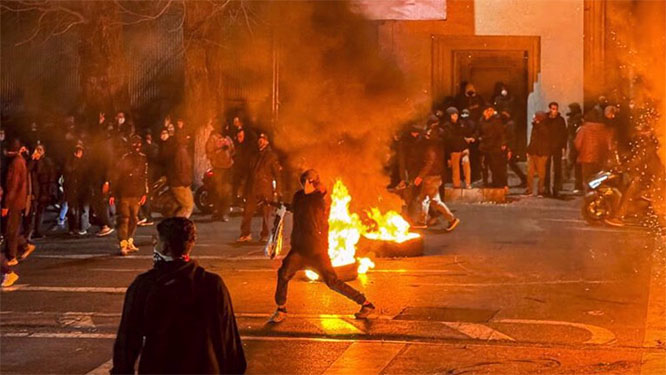
Iranian security and intelligence forces have captured more than 470 individuals in three provinces, identified as key figures behind the recent wave of violent unrest and terrorist activities linked to foreign-backed networks.

The Intelligence Ministry's provincial office in Khorasan Razavi announced on Monday the arrest of 192 armed terrorists, identified as the main agents behind recent riots in the region. 

According to an official statement, the detainees were involved in the killing of several security personnel and civilians, setting fire to mosques, public service facilities, and buses, as well as attacks on military and law enforcement centers.

The seized items from the group include several bulletproof vests, Kalashnikov rifles, hunting weapons, Winchester rifles, and various cold weapons such as daggers, swords, brass knuckles, tactical knives, crossbows, and chains.

Evidence indicates that some of the individuals were tied to hostile movements and terrorist organizations, with links overseas. Others were identified as members of violent criminal gangs, actively taking part in the unrest alongside their associates.

Simultaneously, in the western province of Lorestan, the IRGC announced the arrest of 134 individuals as the main leaders and influential field agents of a US-Israeli terrorist network.

The IRGC statement stated that these individuals formed terrorist cells during the recent unrest, committing "Daesh-like" acts.

They wounded security forces with firearms and cold weapons, and burned and destroyed public and private properties, including mosques, shops, banks, and private and public vehicles.

In the northwestern province of Zanjan, the police reported detaining 150 people identified as principal leaders and agents behind recent riots.

Authorities noted that these individuals were responsible for destroying public and private property and intentionally setting fire to vehicles in the province's squares.

Their crimes include shedding the blood of innocent people, destroying public and private property, attempting to enter military sites, disrupting public order, and spreading terror among citizens.

A variety of cold weapons were reportedly seized from the detainees.

What began late last month as peaceful protests over economic hardship across Iran turned violent after public statements by US and Israeli regime figures encouraged vandalism and disorder.

During the unrest, foreign-backed mercenaries rampaged through cities, killing security forces and civilians and damaging public property.

Comments

Add new comment

  • Coastaldigest.com reserves the right to delete or block any comments.
  • Coastaldigset.com is not responsible for its readers’ comments.
  • Comments that are abusive, incendiary or irrelevant are strictly prohibited.
  • Please use a genuine email ID and provide your name to avoid reject.