



IT department seizes Rs 992.5-cr assets in FY18; tax-to-GDP ratio improves: Government

Agencies
December 29, 2018

New Delhi, Dec 29: The income tax department seized assets worth Rs 992.52 crore during 2017-18, while 582 search and seizure operations were conducted during the financial year, Parliament was informed Friday.
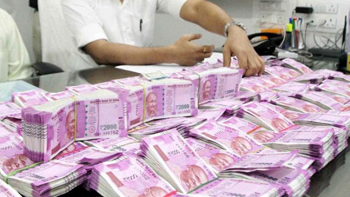
In a written reply to the Lok Sabha, Minister of State for Finance Shiv Pratap Shukla said the income tax department seizes unaccounted/ undisclosed/ unexplained assets during the search and seizure operations.

The values of assets seized during the past two financial year are Rs 1,469.62 crore in 2016-17 and Rs 992.52 crore in 2017-18, Shukla said.

The total number of search and seizure operations conducted by the I-T department stood at 1,152, and 582 during 2016-17 and 2017-18, respectively.

In a separate reply, Shukla said the direct tax-GDP ratio improved to 5.98 per cent in 2017-18, from 5.57 per cent in 2016-17 and 5.47 per cent in 2015-16.

The central indirect tax-GDP ratio was at 5.43 per cent in fiscal 2017-18, against 5.65 per cent in 2016-17 and 5.16 per cent in 2015-16.

"As per Budget Estimate, the indirect tax (including CGST, IGST and compensation cess) to GDP ratio for 2018-19 has been fixed at 5.96 per cent," Shukla said.

He added that several legislative steps, including simplification of tax collection rules, have been taken to increase the tax-GDP ratio.

The measures include tax collection at source at 1 per cent on the sale of minerals such as coal, lignite and iron ore for trading purposes and 1 per cent tax deduction at source on the acquisition of immovables worth Rs 50 lakh or more.

Also, a new tax in the form of equalisation levy at 6 per cent has been imposed on e-commerce transactions and a 5 per cent TDS on rent payment of over Rs 50,000 a month has also been brought in to improve the tax-GDP ratio.

"Further, to improve revenue collection, steps which are being taken include introduction of e-way bill, simplification of measures for filing tax returns, steps to capture invoice details of transactions so that the same could be matched with credit taken and verification of transition credit availed by taxpayers," Shukla said.

He said the tax base has significantly increased after the rollout of the goods and services tax and over 1.16 crore taxpayers are registered under the new indirect tax regime.

Comments

Add new comment

  • Coastaldigest.com reserves the right to delete or block any comments.
  • Coastaldigset.com is not responsible for its readers’ comments.
  • Comments that are abusive, incendiary or irrelevant are strictly prohibited.
  • Please use a genuine email ID and provide your name to avoid reject.
News Network
December 13,2025

New Delhi: School-going children are picking up drug and smoking habits and engaging in consumption of alcohol, with the average age of introduction to such harmful substances found to be around 13 years, suggesting a need for earlier interventions as early as primary school, a multi-city survey by AIIMS-Delhi said.

The findings also showed substance use increased in higher grades, with grade XI/XII students two times more likely to report use of substances when compared with grade VIII students. This emphasised the importance of continued prevention and intervention through middle and high school.

The study led by Dr Anju Dhawan of AIIMS's National Drug Dependence Treatment Centre, published in the National Medical Journal of India this month, looks at adolescent substance use across diverse regions.

The survey included 5,920 students from classes 8, 9, 11 and 12 in urban government, private and rural schools across 10 cities -- Bengaluru, Chandigarh, Delhi, Dibrugarh, Hyderabad, Imphal, Jammu, Lucknow, Mumbai, and Ranchi. The data were collected between May 2018 and June 2019.

The average age of initiation for any substance was 12.9 (2.8) years. It was lowest for inhalants (11.3 years) followed by heroin (12.3 years) and opioid pharmaceuticals (without prescription; 12.5 years).

Overall, 15.1 per cent of participants reported lifetime use, 10.3 per cent reported past year use, and 7.2 per cent reported use in the past month of any substance, the study found.

The most common substances used in the past year, after tobacco (4 per cent) and alcohol (3.8 per cent), were opioids (2.8 per cent), followed by cannabis (2 per cent) and inhalants (1.9 per cent). Use of non-prescribed pharmaceutical opioids was most common among opioid users (90.2 per cent).

On being asked, 'Do you think this substance is easily available for a person of your age' separately for each substance category, nearly half the students (46.3 per cent) endorsed that tobacco products and more than one-third of the students (36.5 per cent) agreed that a person of their age can easily procure alcohol products.

Similarly, for Bhang (21.9 per cent), ganja/charas (16.1 per cent), inhalants (15.2 per cent), sedatives (13.7 per cent), opium and heroin (10 per cent each), the students endorsed that these can be easily procured.

About 95 per cent of the children, irrespective of their grade, agreed with the statement that 'drug use is harmful'.

The rates of substance use (any) among boys were significantly higher than those of girls for substance use (ever), use in the past year and use in the past 30 days. Compared to grade VIII students, grade IX students were more likely, and grade XI/XII students were twice as likely to have used any substance (ever).

The likelihood of past-year use of any substance was also higher for grade IX students and for grade XI/XII students as compared to grade VIII students.

About 40 per cent of students mentioned that they had a family member who used tobacco or alcohol each. The use of cannabis (any product) and opioid (any product) by a family member was reported by 8.2 per cent and 3.9 per cent of students, respectively, while the use of other substances, such as inhalants/sedatives by family was 2-3 per cent, the study found.

A relatively smaller percentage of students reported use of tobacco or alcohol among peers as compared to among family members, while a higher percentage reported inhalants, sedatives, cannabis or opioid use among peers.

Children using substances (past year) compared to non-users reported significantly higher any substance use by their family members and peers.

There were 25.7 per cent students who replied 'yes' to the question 'conflicts/fights often occur in your family'. Most students also replied affirmatively to 'family members are aware of how their time is being spent' and 'damily members are aware of with whom they spend their time'.

Comments

Add new comment

  • Coastaldigest.com reserves the right to delete or block any comments.
  • Coastaldigset.com is not responsible for its readers’ comments.
  • Comments that are abusive, incendiary or irrelevant are strictly prohibited.
  • Please use a genuine email ID and provide your name to avoid reject.
News Network
December 19,2025

Saudi Arabia has abolished fees on expatriate workers employed in licensed industrial establishments, signaling a strong push to empower national factories and enhance the Kingdom’s global industrial competitiveness. The move reflects the leadership’s commitment to building a sustainable and resilient industrial economy under Saudi Vision 2030.

The decision was approved by the Council of Ministers, chaired by Crown Prince and Prime Minister Mohammed bin Salman, following a recommendation from the Council of Economic and Development Affairs (CEDA). It forms part of a broader strategy to support, modernize, and strengthen the industrial sector.

By removing fees on foreign workers, industrial establishments gain greater operational flexibility and relief from financial pressures. This is expected to help factories expand production, improve efficiency, and compete more effectively in international markets, while reinforcing long-term sustainability.

The initiative aligns closely with Saudi Vision 2030, which identifies industry as a key pillar of economic diversification. A competitive and resilient industrial base is viewed as essential for driving innovation, attracting investment, and sustaining long-term economic growth.

Overall, the fee exemption underscores the Kingdom’s commitment to creating a supportive environment for industrial development and ensuring that Saudi factories remain globally competitive and capable of leading the nation’s economic transformation.

Comments

Add new comment

  • Coastaldigest.com reserves the right to delete or block any comments.
  • Coastaldigset.com is not responsible for its readers’ comments.
  • Comments that are abusive, incendiary or irrelevant are strictly prohibited.
  • Please use a genuine email ID and provide your name to avoid reject.
News Network
December 19,2025

Mangaluru: The Mangaluru CEN police have arrested a 23-year-old man for allegedly posting provocative and misleading content on an Instagram page named “mr_a_titude”, targeting the Bajpe police.

Mangaluru Commissioner of Police Sudheer Kumar Reddy C H identified the arrested as Abhishek M, a resident of Katipalla in Mangaluru.

A case has been registered at the Bajpe Police Station under Sections 353(1)(c), 353(2), 56, and 57 read with Section 189 of the Bharatiya Nyaya Sanhita (BNS) in connection with the post.

According to police, the accused uploaded a photograph of a hotel on the Instagram page and alleged that accused persons in a murder case under the Bajpe police jurisdiction were being given “royal treatment” by the police, including being served beef meals daily from the hotel.

The post further accused the police of supporting criminals, misusing their authority, and betraying public trust. Police said the content was provocative in nature and aimed at inciting public outrage against the police.

Following the post, a case was registered at the Bajpe police station, and further investigation was transferred to the CEN police station.

Police records indicate that the accused has a criminal history, with multiple cases registered against him, including murder, attempt to murder, assault, and robbery at the Surathkal Police Station, and one case at the Kaup Police Station.

The Commissioner said the accused was traced and arrested using technical evidence.

Comments

Add new comment

  • Coastaldigest.com reserves the right to delete or block any comments.
  • Coastaldigset.com is not responsible for its readers’ comments.
  • Comments that are abusive, incendiary or irrelevant are strictly prohibited.
  • Please use a genuine email ID and provide your name to avoid reject.