



Jaitley rubbishes critics, says note ban effect not adverse

December 29, 2016

New Delhi, Dec 29: Rubbishing critics, Finance Minister Arun Jaitley today said the effects of demonetisation were not as adverse as was predicted and asserted that there has been a sharp jump in tax collections and economic activity including in winter crop sowing.
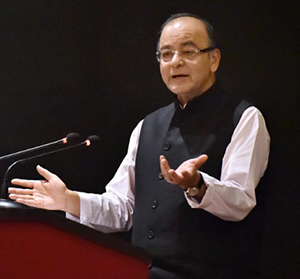
arun

Ahead of expiry of the 50-day deadline for depositing the junked 500 and 1000 rupee notes tomorrow, he said the remonetisation process has substantially advanced, significantly without a single incident of unrest anywhere in the country.

However, talking to PTI the Finance Minister refused to hazard a guess on the GDP growth for the year or the possible impact on tax proposals in the his Budget for 2017-18 on account of increased revenue collections.
Replying to questions on when customers can see easing of curbs on cash withdrawals, Jaitley said: "That is a decision the central bank will take in consultation with everyone."

Asked about fears expressed by critics that the note ban decision will hit the economy and the GDP growth, he said, "I think one is clear, there could have been some adverse impact for a quarter or so. It doesnt appear to be as adverse as it was being predicted.

"But in the long term, you have to plan the economy in the long term, the changes in the system which are coming about will certainly mean more money in the banks, more money with the revenue and probably a much larger and cleaner GDP," he said.
To a query about whether the rising revenue collections would have any impact on taxation in the coming Budget, he said, "I think you will have to wait for that."

Asked whether the government would take a conscious decision to reduce the quantity of money in circulation in the remonetising process, the Finance Minister said: "that is a decision RBI will take and they will be certainly guided by the requirements of the market."

"But obviously one of the intentions as far as government of India is concerned is that the paper currency should shrink and a large part of businesses should be in the alternative digital or cheque mode. Considering the very large increase in digital users that have taken place we seem to be moving in the right direction," he said.

Jaitley said a large part of the Rs 15.4 lakh crore of old high denomination notes in circulation on November 8 have already been replaced and the Reserve Bank of India (RBI) has a very large amount of currency available to support any liquidity need.
"Already a large part of benefits of this historic move are visible. A lot more money has come into the banking system," he said.

While the ability of banks to support economic activity has increased, direct and indirect tax collections have gone up significantly.

Till December 19, net increase in income tax collections has been 14.4 per cent and even after accounting for large refunds, the net rise in collection is 13.6 per cent, he said.

Indirect tax collections soared 26.2 per cent between April 1 and November 30, with revenue from excise jumping 43.5 per cent, that from service tax by 25.7 per cent and customs by 5.6 per cent, he said.

Direct tax collection has jumped to Rs 5.57 lakh crore in April 1 to December 19 period when compared with Rs 4.87 lakh crore collection in the same period a year ago. This makes up for 65 per cent of the Budget estimate.

Advance tax payment till third quarter has gone up by 14 per cent as compared to a growth of 7.3 per cent in the same period of 2015-16 fiscal. TDS has seen a jump of 15 per cent as compared to 11.43 per cent last year while self assessment tax, which last year showed a growth of 6.47 per cent, has soared to 21.14 per cent.

Income tax collection has risen to Rs 2.20 lakh crore till December 19 of the current fiscal as opposed to Rs 1.82 lakh crore in the corresponding period of previous year.
On indirect tax front, revenue has jumped 26.2 per cent till November 30 with central excise showing a surge of 43.5 per cent and customs of 5.6 per cent and service tax of 25.7 per cent.

"On the November 8, the Prime Minister asked for the country to support him notwithstanding several inconveniences being suffered by people during the remonetisation period. We are extremely grateful to the people of India who have in very large measure supported the move," Jaitley said.

The remonetisation process, he said, has substantially advanced. "The RBI has very large amounts of currency available and it will continue to support the market to the extent that the market needs that kind of liquidity."

Stating that a very large part of currency in circulation on November 8 has already been replaced, he said banknotes will "continue to be replaced to the extent that market requires that currency."

"More and more notes of Rs 500 are also being released through the banking and post offices and therefore we can see a lot of currency into recirculation which is enabling the banking system and the ATMs to further augment the supply," he said.
Counting the benefits the demonetisation drive has yielded, Finance Minister said a lot more money has come into the banking system and its impact on taxation and revenue collection is already being seen.

"The ability of the banks (to lend) has now increased," he said.
Stating that the revenue figures itself are more significant, he said, "not withstanding what the critics have predicted in all the categories till November 30, there is a significant increase in indirect taxation. In the central indirect taxes. The increase is 26.2 per cent."

"On the year to year basis, the November of 2016 all the three indirect taxes collection is much high," he said, adding state governments would not see any significant change in numbers.

He said agriculture was one area thought to have been impacted by demonetisation but winter rabi crop sowing is higher by 6.3 per cent than last year.

"Now, the Rabi crop sowing higher than last year, life insurance businesses have increased by 213 per cent, international tourism has increased, air passenger traffic has increased, petroleum consumption has increased, the flow in Mutual Funds has increased by 11 per cent," he said.

"Of course, there would be areas which would be adversely impacted but what was predicted by the critics has to have rationale with the revenue collection. Assessment can be unreal but revenue is real.

And therefore, many of these indicate that now with the critical part of the remonetisation already behind us and there being significant impact in large number of these areas, it should certainly be much better in weeks and months to come than it was in last six weeks," Jaitley said.

Asked if there a conscious attempt to reduce the currency in circulation while remonetising, he said RBI will take that decision after assessing the requirements of the market.

"But obviously one of the intentions as far as government of India is concerned that the paper currency should shrink and a large part of businesses in the alternative digital or cheque mode. Considering the very large increase in digital users that have taken place, we seem to be moving in the right direction," he said.

He acknowledged that there could have been some adverse impact for a quarter or so.

"It doesn't appear to be as adverse as it was being predicted. But in the long term, you have to plan the economy in the long term, the changes in the system which are coming about will certainly mean more money with the banks, more money with the revenue and probably a much larger and cleaner GDP," he added.

Comments

Haris
 - 
Thursday, 29 Dec 2016

Adhani Ambani not effected

Add new comment

  • Coastaldigest.com reserves the right to delete or block any comments.
  • Coastaldigset.com is not responsible for its readers’ comments.
  • Comments that are abusive, incendiary or irrelevant are strictly prohibited.
  • Please use a genuine email ID and provide your name to avoid reject.
News Network
December 6,2025

indigoticket.jpg

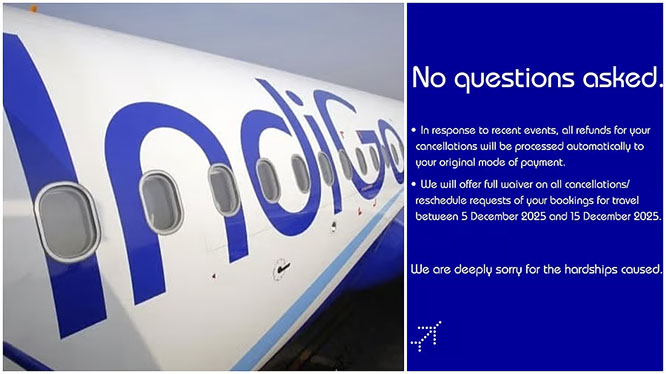
With IndiGo flight disruptions impacting thousands of passengers, the airline on Saturday said that it will offer full waiver on all cancellations/reschedule requests for travel bookings between December 5, 2025 and December 15, 2025.

Earlier in the day, the civil aviation ministry had directed the airline to complete the ticket refund process for the cancelled flights by Sunday evening, as well as ensure baggage separated from the travellers are delivered in the next two days.

In a post on X, titled 'No questions asked', IndiGo wrote, "In response to recent events, all refunds for your cancellations will be processed automatically to your original mode of payment."

"We are deeply sorry for the hardships caused," it further added.

Several passengers, however, complained of not getting full refund as promised by the airline.

Netizens have shared screenchots of getting charged for airline cancellation fee and convenience fee.

"Please tell me why u have did this airline cancellation charges when u say full amount will be refunded (sic)," a user wrote sharing a screenshot of the refund page.

"Well, but you have still debited the convenience charges," wrote another.

Passengers have also raised concerns about the "cancel" option being disabled on the IndiGo app. "First enable the 'Cancel' button on your App & offer full refund on tickets cancelled by customers between the said dates," wrote a user.

A day after the country's largest airline, IndiGo, cancelled more than 1,000 flights and caused disruptions for the fifth day on Saturday, the ministry said that any delay or non-compliance in refund processing will invite immediate regulatory action.

The refund process for all cancelled or disrupted flights must be completed by 8 pm on Sunday, the ministry said in a statement.

"Airlines have also been instructed not to levy any rescheduling charges for passengers whose travel plans were affected by cancellations," it said.

On Saturday, more than 400 flights were cancelled at various airports.

IndiGo has also been instructed to set up dedicated passenger support and refund facilitation cells.

Comments

Add new comment

  • Coastaldigest.com reserves the right to delete or block any comments.
  • Coastaldigset.com is not responsible for its readers’ comments.
  • Comments that are abusive, incendiary or irrelevant are strictly prohibited.
  • Please use a genuine email ID and provide your name to avoid reject.
News Network
December 13,2025

New Delhi: School-going children are picking up drug and smoking habits and engaging in consumption of alcohol, with the average age of introduction to such harmful substances found to be around 13 years, suggesting a need for earlier interventions as early as primary school, a multi-city survey by AIIMS-Delhi said.

The findings also showed substance use increased in higher grades, with grade XI/XII students two times more likely to report use of substances when compared with grade VIII students. This emphasised the importance of continued prevention and intervention through middle and high school.

The study led by Dr Anju Dhawan of AIIMS's National Drug Dependence Treatment Centre, published in the National Medical Journal of India this month, looks at adolescent substance use across diverse regions.

The survey included 5,920 students from classes 8, 9, 11 and 12 in urban government, private and rural schools across 10 cities -- Bengaluru, Chandigarh, Delhi, Dibrugarh, Hyderabad, Imphal, Jammu, Lucknow, Mumbai, and Ranchi. The data were collected between May 2018 and June 2019.

The average age of initiation for any substance was 12.9 (2.8) years. It was lowest for inhalants (11.3 years) followed by heroin (12.3 years) and opioid pharmaceuticals (without prescription; 12.5 years).

Overall, 15.1 per cent of participants reported lifetime use, 10.3 per cent reported past year use, and 7.2 per cent reported use in the past month of any substance, the study found.

The most common substances used in the past year, after tobacco (4 per cent) and alcohol (3.8 per cent), were opioids (2.8 per cent), followed by cannabis (2 per cent) and inhalants (1.9 per cent). Use of non-prescribed pharmaceutical opioids was most common among opioid users (90.2 per cent).

On being asked, 'Do you think this substance is easily available for a person of your age' separately for each substance category, nearly half the students (46.3 per cent) endorsed that tobacco products and more than one-third of the students (36.5 per cent) agreed that a person of their age can easily procure alcohol products.

Similarly, for Bhang (21.9 per cent), ganja/charas (16.1 per cent), inhalants (15.2 per cent), sedatives (13.7 per cent), opium and heroin (10 per cent each), the students endorsed that these can be easily procured.

About 95 per cent of the children, irrespective of their grade, agreed with the statement that 'drug use is harmful'.

The rates of substance use (any) among boys were significantly higher than those of girls for substance use (ever), use in the past year and use in the past 30 days. Compared to grade VIII students, grade IX students were more likely, and grade XI/XII students were twice as likely to have used any substance (ever).

The likelihood of past-year use of any substance was also higher for grade IX students and for grade XI/XII students as compared to grade VIII students.

About 40 per cent of students mentioned that they had a family member who used tobacco or alcohol each. The use of cannabis (any product) and opioid (any product) by a family member was reported by 8.2 per cent and 3.9 per cent of students, respectively, while the use of other substances, such as inhalants/sedatives by family was 2-3 per cent, the study found.

A relatively smaller percentage of students reported use of tobacco or alcohol among peers as compared to among family members, while a higher percentage reported inhalants, sedatives, cannabis or opioid use among peers.

Children using substances (past year) compared to non-users reported significantly higher any substance use by their family members and peers.

There were 25.7 per cent students who replied 'yes' to the question 'conflicts/fights often occur in your family'. Most students also replied affirmatively to 'family members are aware of how their time is being spent' and 'damily members are aware of with whom they spend their time'.

Comments

Add new comment

  • Coastaldigest.com reserves the right to delete or block any comments.
  • Coastaldigset.com is not responsible for its readers’ comments.
  • Comments that are abusive, incendiary or irrelevant are strictly prohibited.
  • Please use a genuine email ID and provide your name to avoid reject.
News Network
December 16,2025

jordan.jpg

Prime Minister Narendra Modi on Monday held talks with Jordan’s King Abdullah II in Amman, during which the two leaders discussed ways to further strengthen bilateral relations, with the Prime Minister outlining an eight-point vision covering key areas of cooperation.

Describing the meeting as “productive”, PM Modi said he shared a roadmap focused on trade and economy, fertilisers and agriculture, information technology, healthcare, infrastructure, critical and strategic minerals, civil nuclear cooperation, and people-to-people ties.

In a post on social media platform X, the Prime Minister praised King Abdullah II’s personal commitment to advancing India–Jordan relations, particularly as both countries mark the 75th anniversary of the establishment of diplomatic ties this year.

“Held productive discussions with His Majesty King Abdullah II in Amman. His personal commitment towards vibrant India-Jordan relations is noteworthy. This year, we are celebrating the 75th anniversary of our bilateral diplomatic relations,” PM Modi said.

The meeting took place at the Al Husseiniya Palace, where the two leaders also exchanged views on regional and global issues of mutual interest. According to the Ministry of External Affairs (MEA), both sides agreed to further deepen cooperation in areas including trade and investment, defence and security, counter-terrorism and de-radicalisation, fertilisers and agriculture, infrastructure, renewable energy, tourism, and heritage.

The MEA said both leaders reaffirmed their united stand against terrorism.

PM Modi arrived in Amman earlier on Monday and was received by Jordanian Prime Minister Jafar Hassan, who accorded him a formal welcome. Following the talks, King Abdullah II hosted a banquet dinner in honour of the Prime Minister, reflecting the warmth of bilateral ties.

Jordan is the first leg of PM Modi’s three-nation tour. From Amman, the Prime Minister will travel to Ethiopia at the invitation of Prime Minister Abiy Ahmed Ali, marking his first official visit to the African nation. The tour will conclude with a visit to Oman.

Comments

Add new comment

  • Coastaldigest.com reserves the right to delete or block any comments.
  • Coastaldigset.com is not responsible for its readers’ comments.
  • Comments that are abusive, incendiary or irrelevant are strictly prohibited.
  • Please use a genuine email ID and provide your name to avoid reject.
