



Justice Chelameswar red flags govt interference, asks CJI to convene full court

DHNS
March 30, 2018

New Delhi, Mar 30: Any "bonhomie" between the judiciary and the government would sound the "death knell" for democracy, senior-most Supreme Court judge Justice J Chelameswar has told the Chief Justice of India (CJI) and urged him to convene a full court to deal with the alleged executive interference in the judiciary.
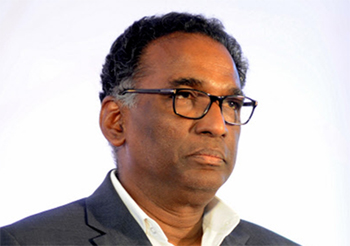
In an unprecedented letter to the CJI, copies of which were also sent to 22 other apex court judges on March 21, Justice Chelameswar has questioned the probe initiated by Karnataka High Court Chief Justice Dinesh Maheshwari against District and Sessions Judge Krishna Bhat at the request of the Union Ministry of Law and Justice, despite his name being recommended for elevation twice by the Collegium.

Efforts to get a response to the letter from the office of CJI Dipak Misra did not fructify, while several legal luminaries, when contacted, chose not to comment on the matter.

Justice Chelameswar, who had held the unprecedented January 12 press conference along with three other senior judges raising issues including the allocation of cases by the CJI, expressed concern over the executive directly asking the Karnataka Chief Justice to conduct a probe against Bhat, saying this was done even after his name was recommended twice for judgeship by the apex court collegium.

In 2016, then Chief Justice of India T S Thakur had asked the then high court chief justice S K Mukherjee to hold an inquiry against Bhat on certain allegations levelled by a subordinate woman judicial officer. After the probe had given him a clean chit, Bhat's name was recommended by the collegium for elevation.

"Someone from Bangalore (sic) has already beaten us in the race to the bottom. The Chief Justice of Karnataka High Court is more than willing to do the executive bidding, behind our back," Justice Chelameswar wrote in his six-page letter.

Raising the issue of judicial independence, he said, "We, the judges of the Supreme Court of India, are being accused of ceding our independence and our institutional integrity to the Executive's incremental encroachment.

"The executive is always impatient and brooks no disobedience even of the judiciary if it can. Attempts were always made to treat the Chief Justices as the Departmental Heads in the Secretariat. So much for our 'independence and pre-eminence' as a distinct State organ."

The letter said: "Let us also not forget that the bonhomie between the judiciary and the government in any State sounds the death knell to democracy. We both are mutual watchdogs, so to say, no mutual admirers, much less constitutional cohorts".

Justice Chelameswar referred to the "unhappy experience" where the government sat tight over the files even after the Collegium recommends names for appointment in the higher judiciary.

"For some time, our unhappy experience has been that the government's accepting our recommendations is an exception and sitting on them is the norm. 'Inconvenient' but able judges or judges to be are being bypassed through this route," he alleged.

The apex court judge, who demits office on June 22, took serious note of the communication between the Karnataka High Court chief justice and the executive saying, "the role of the High Court ceases with its recommendation".

He said that any correspondence, clarificatory or otherwise, has to be between the executive and the Supreme Court.

The top court judge also said the day may not be "far off" when the executive would directly communicate with the High Court about pending cases and ask what orders are to be passed.

While referring to Bhat's case, he said, "To my mind, I could recollect no instance from the past, of the executive bypassing the Supreme Court, more particularly while its recommendations are pending, to look into the allegations already falsified and conclusively rejected by us.

"Asking the High Court to re-evaluate our recommendation in this matter has to be deemed improper and contumacious."

Beseeching the CJI to take up the issue of executive interference in judiciary by convening a full court on the judicial side, he said this was necessary in order to ensure that the institution (Supreme Court) remained relevant under the scheme of the Constitution.

He also referred to a past instance when the apex court had taken serious note of a direct communication of the then Law Minister to the High Courts on the issue of judges' transfer which had finally led to the judgement in first judges case in 1981. Later, the Collegium had assumed power with regard to judges' appointment in the higher judiciary.


Comments

Add new comment

  • Coastaldigest.com reserves the right to delete or block any comments.
  • Coastaldigset.com is not responsible for its readers’ comments.
  • Comments that are abusive, incendiary or irrelevant are strictly prohibited.
  • Please use a genuine email ID and provide your name to avoid reject.
News Network
December 15,2025

Udupi, Dec 15: What was meant to be a post-pilgrimage gathering turned tragic in Padukere village of Brahmavar taluk, Udupi district, late Sunday night, when a clash among youths escalated into a fatal assault, leaving one man dead.

The victim has been identified as 30-year-old Santosh Mogaveera, a resident of Padukere.

According to preliminary information, the incident took place during a late-night drinking party involving a group of local youths who had recently returned after completing their pilgrimage to the Sabarimala shrine. An argument reportedly broke out among the group and soon escalated into a violent confrontation.

During the ensuing brawl, Santosh Mogaveera was allegedly assaulted and collapsed at the spot after sustaining serious injuries. He was rushed by local residents to a private hospital in Brahmavar, where doctors declared him dead.

On receiving information, senior police officials, including Brahmavar Circle Inspector Gopikrishna, Kota Police Sub-Inspector Praveen Kumar T, Station ASI Manthesh Jabagoudar, and head constables Pradeep and Ashok, visited the spot and conducted an inspection.

Police have taken four youths into custody in connection with the incident. A case has been registered at the Kota police station, and further investigation is underway to ascertain the exact sequence of events leading to the death.

Comments

Add new comment

  • Coastaldigest.com reserves the right to delete or block any comments.
  • Coastaldigset.com is not responsible for its readers’ comments.
  • Comments that are abusive, incendiary or irrelevant are strictly prohibited.
  • Please use a genuine email ID and provide your name to avoid reject.
News Network
December 13,2025

New Delhi: School-going children are picking up drug and smoking habits and engaging in consumption of alcohol, with the average age of introduction to such harmful substances found to be around 13 years, suggesting a need for earlier interventions as early as primary school, a multi-city survey by AIIMS-Delhi said.

The findings also showed substance use increased in higher grades, with grade XI/XII students two times more likely to report use of substances when compared with grade VIII students. This emphasised the importance of continued prevention and intervention through middle and high school.

The study led by Dr Anju Dhawan of AIIMS's National Drug Dependence Treatment Centre, published in the National Medical Journal of India this month, looks at adolescent substance use across diverse regions.

The survey included 5,920 students from classes 8, 9, 11 and 12 in urban government, private and rural schools across 10 cities -- Bengaluru, Chandigarh, Delhi, Dibrugarh, Hyderabad, Imphal, Jammu, Lucknow, Mumbai, and Ranchi. The data were collected between May 2018 and June 2019.

The average age of initiation for any substance was 12.9 (2.8) years. It was lowest for inhalants (11.3 years) followed by heroin (12.3 years) and opioid pharmaceuticals (without prescription; 12.5 years).

Overall, 15.1 per cent of participants reported lifetime use, 10.3 per cent reported past year use, and 7.2 per cent reported use in the past month of any substance, the study found.

The most common substances used in the past year, after tobacco (4 per cent) and alcohol (3.8 per cent), were opioids (2.8 per cent), followed by cannabis (2 per cent) and inhalants (1.9 per cent). Use of non-prescribed pharmaceutical opioids was most common among opioid users (90.2 per cent).

On being asked, 'Do you think this substance is easily available for a person of your age' separately for each substance category, nearly half the students (46.3 per cent) endorsed that tobacco products and more than one-third of the students (36.5 per cent) agreed that a person of their age can easily procure alcohol products.

Similarly, for Bhang (21.9 per cent), ganja/charas (16.1 per cent), inhalants (15.2 per cent), sedatives (13.7 per cent), opium and heroin (10 per cent each), the students endorsed that these can be easily procured.

About 95 per cent of the children, irrespective of their grade, agreed with the statement that 'drug use is harmful'.

The rates of substance use (any) among boys were significantly higher than those of girls for substance use (ever), use in the past year and use in the past 30 days. Compared to grade VIII students, grade IX students were more likely, and grade XI/XII students were twice as likely to have used any substance (ever).

The likelihood of past-year use of any substance was also higher for grade IX students and for grade XI/XII students as compared to grade VIII students.

About 40 per cent of students mentioned that they had a family member who used tobacco or alcohol each. The use of cannabis (any product) and opioid (any product) by a family member was reported by 8.2 per cent and 3.9 per cent of students, respectively, while the use of other substances, such as inhalants/sedatives by family was 2-3 per cent, the study found.

A relatively smaller percentage of students reported use of tobacco or alcohol among peers as compared to among family members, while a higher percentage reported inhalants, sedatives, cannabis or opioid use among peers.

Children using substances (past year) compared to non-users reported significantly higher any substance use by their family members and peers.

There were 25.7 per cent students who replied 'yes' to the question 'conflicts/fights often occur in your family'. Most students also replied affirmatively to 'family members are aware of how their time is being spent' and 'damily members are aware of with whom they spend their time'.

Comments

Add new comment

  • Coastaldigest.com reserves the right to delete or block any comments.
  • Coastaldigset.com is not responsible for its readers’ comments.
  • Comments that are abusive, incendiary or irrelevant are strictly prohibited.
  • Please use a genuine email ID and provide your name to avoid reject.
News Network
December 16,2025

jordan.jpg

Prime Minister Narendra Modi on Monday held talks with Jordan’s King Abdullah II in Amman, during which the two leaders discussed ways to further strengthen bilateral relations, with the Prime Minister outlining an eight-point vision covering key areas of cooperation.

Describing the meeting as “productive”, PM Modi said he shared a roadmap focused on trade and economy, fertilisers and agriculture, information technology, healthcare, infrastructure, critical and strategic minerals, civil nuclear cooperation, and people-to-people ties.

In a post on social media platform X, the Prime Minister praised King Abdullah II’s personal commitment to advancing India–Jordan relations, particularly as both countries mark the 75th anniversary of the establishment of diplomatic ties this year.

“Held productive discussions with His Majesty King Abdullah II in Amman. His personal commitment towards vibrant India-Jordan relations is noteworthy. This year, we are celebrating the 75th anniversary of our bilateral diplomatic relations,” PM Modi said.

The meeting took place at the Al Husseiniya Palace, where the two leaders also exchanged views on regional and global issues of mutual interest. According to the Ministry of External Affairs (MEA), both sides agreed to further deepen cooperation in areas including trade and investment, defence and security, counter-terrorism and de-radicalisation, fertilisers and agriculture, infrastructure, renewable energy, tourism, and heritage.

The MEA said both leaders reaffirmed their united stand against terrorism.

PM Modi arrived in Amman earlier on Monday and was received by Jordanian Prime Minister Jafar Hassan, who accorded him a formal welcome. Following the talks, King Abdullah II hosted a banquet dinner in honour of the Prime Minister, reflecting the warmth of bilateral ties.

Jordan is the first leg of PM Modi’s three-nation tour. From Amman, the Prime Minister will travel to Ethiopia at the invitation of Prime Minister Abiy Ahmed Ali, marking his first official visit to the African nation. The tour will conclude with a visit to Oman.

Comments

Add new comment

  • Coastaldigest.com reserves the right to delete or block any comments.
  • Coastaldigset.com is not responsible for its readers’ comments.
  • Comments that are abusive, incendiary or irrelevant are strictly prohibited.
  • Please use a genuine email ID and provide your name to avoid reject.