




KSA-born expats seek citizenship

[email protected] (Arab News)
November 30, 2013

saud
Jeddah, Nov 30: Many expatriates born in the Kingdom are facing a real identity crisis because they have little affinity to their ancestral countries and are not regarded as Saudis.

A large percentage of second and third generation expatriates born and raised here would prefer to get special concessions or Saudi citizenship. Many feel they belong here because they speak fluent Arabic in the local dialect and have adopted the customs of the country.

However, the labor inspection campaign that started on Nov. 4 does not discriminate between expatriates born in the Kingdom and those only seeking to work here for a few years.

There are more than 8.4 million expatriates in Saudi Arabia. Of these, over 2 million are estimated to have been born in the country and spent their entire lives here.

There are an estimated 30,000 third-generation Saudi-born Indians in the Kingdom. If a similar percentage exists in other expatriate communities, then there are about 820,000 living in the Kingdom.

The numbers are probably higher. According to official figures in 2009, over 14.4 percent of births in the Kingdom were registered to foreign parents. More specifically, the majority of the one million Palestinians living in the Kingdom were born here.

Arab expatriates born in Saudi Arabia say they cannot return to the countries of their ancestors because they have no real ties there. At the same time, they face many obstacles in finding jobs in the Kingdom. Making matters more confusing are the rumors that expatriates born here will be considered Saudis under the Nitaqat program.

A source at the Ministry of Labor said that all residents born in the Kingdom are the responsibility of the Interior Ministry and that special concessions were made for certain categories. For example, four Palestinians with travel documents are equal to one expatriate employee, according to a local newspaper.

At the same time, the Saudi government has granted certain privileges to the sons of Saudi mothers married to foreigners. There are 584 Saudi women married to expatriates in the Makkah region, 543 in Riyadh and 490 in the Eastern Province. Approximately 2,000 Saudi women married foreigners in 2011, according to a recent statistical report released by the Ministry of Justice.

Expatriate sons of Saudi women can now benefit from Saudi citizenship privileges and remain under the sponsorship of their mothers. They are effectively Saudis and will have access to various public services including education and health, according to a decision taken by the Cabinet.

The Ministry of Labor will also consider them Saudis under the Nitaqat system to help them find jobs in the private sector. Many expatriates born here hope to have similar privileges so they can continue living here and provide a good future for their children.

A prominent Saudi scholar has urged the government to grant citizenship to expatriates born in the Kingdom. “Expats born in Saudi Arabia should be granted Saudi citizenship or be allowed to stay without a sponsor. There should be a new system that will give them special treatment,” said Sheikh Mohammed Al-Areefi recently on his Twitter account.

Ahmed Abu Khaled, an Eritrean expatriate who has a son and a daughter, told Arab News he is in a “complicated” situation. “My son knows very well that both his mother and I were born and educated in the Kingdom. He has no connections whatsoever with his original country and does not know anything about it other than the fact that his grandfather lived there for some time before coming to the Kingdom.”

Abu Khaled said he doesn't know what to say to them when they grow up. “Do I consider my children Saudis or foreigners? They were born here and so was I. I have no answer to this question,” he said.

Abu Khaled said there was no chance his children would ever go back to Eritrea. “All connections with our ancestors' country were severed. We belong to Saudi Arabia where we were born, raised, educated, married and had our children.” He said the situation would become worse as many more generations are born in the Kingdom and are treated as foreigners.

Second and third-generation expatriates said this situation would make it difficult for them to find jobs or gain entry into schools and universities. They are also upset at not being able to benefit from government services provided to citizens.

Saeed Radwan, a Syrian born in the Kingdom, said he has forgotten that he is from Syria. “My father came to this country more than 50 years ago. I'm worried about my future and the future of my children who see themselves as Saudis and are no different from their Saudi counterparts at school. Our sense of belonging to the Kingdom has been reflected in our dress, customs and dialect. We are citizens in every sense of the word except that we do not have citizenship,” he said.

Radwan said his eldest son, who is 17 years old, has never been to Syria and that his life is determined by the renewal of his iqama every two years. “My son is not concerned about the difficulties we face every time we want to renew our iqamas. He does not know any other home apart from the Kingdom. If he goes back to Syria he will feel like a complete stranger. He will be different in terms of his dialect, customs and dress. The Syrians will think he is a Saudi while the Saudis consider him a foreigner,” he said.

Umm Ahmed, a Yemeni mother of three, said she fears for the future of her children. “My children were born in Jeddah, the same as myself and their father. They spent all their lives in this Red Sea coastal city and know nothing about Yemen but are still treated at school as foreigners,” she said. Umm Ahmed said she has had no difficulty raising her children according to Saudi customs and traditions because they are similar to those in Yemen. “We do not have anything to allow us to stay here permanently, maybe the long years we spent here may help,” she said.

Umm Saeed, another Yemeni woman, struggles to find money to renew her iqama every year. “I was born in the Kingdom. My husband and three daughters were also born here. My husband's monthly salary is only SR3,500. We have financial problems every time we want to renew our iqamas. We have to borrow money from our friends and relatives,” she said.

One would never say that Ibrahim Abdul Aziz, a 28-year-old marketer, has Pakistani heritage. He wears a thobe like a Saudi and speaks Arabic with a Saudi accent. “I was born in Jeddah but I'm still considered an expatriate. One day, I hope I'll get Saudi nationality. That will guarantee a good future for my sons.”

Comments

Add new comment

  • Coastaldigest.com reserves the right to delete or block any comments.
  • Coastaldigset.com is not responsible for its readers’ comments.
  • Comments that are abusive, incendiary or irrelevant are strictly prohibited.
  • Please use a genuine email ID and provide your name to avoid reject.
News Network
December 15,2025

Mangaluru police have arrested a 27-year-old NRI on his return from Saudi Arabia in connection with an Instagram post allegedly containing derogatory and provocative remarks about the Hindu religion, officials said on Monday.

The accused, Abdul Khader Nehad, a resident of Ulaibettu in Mangaluru, was working in Saudi Arabia when the post was uploaded, police said.

A suo motu case was registered at the Bajpe police station on October 11 after an allegedly offensive post circulated from the Instagram account ‘team_sdpi_2025’. Police said the content was flagged for being provocative and derogatory in nature.

During the investigation, technical analysis traced the Instagram post to Nehad, who was residing abroad at the time, a senior police officer said. Based on these findings, a Look Out Circular (LOC) was issued against him.

On December 14, Nehad arrived from Saudi Arabia at Calicut International Airport in Kerala, where he was taken into custody on arrival. Police said further investigation is underway.

Comments

Add new comment

  • Coastaldigest.com reserves the right to delete or block any comments.
  • Coastaldigset.com is not responsible for its readers’ comments.
  • Comments that are abusive, incendiary or irrelevant are strictly prohibited.
  • Please use a genuine email ID and provide your name to avoid reject.
News Network
December 16,2025

Mangaluru, Dec 16: The Mangaluru City police have significantly escalated their campaign against drug trafficking, arresting 25 individuals and booking 12 cases under the Narcotic Drugs and Psychotropic Substances (NDPS) Act between November 30 and December 13. The crackdown resulted in the seizure of a substantial quantity of illicit substances, including 685.6 grams of MDMA and 1.5 kg of ganja.

The success of this recent drive has been significantly boosted by the city’s innovative, QR code-based anonymous reporting system.

"The anonymous reporting system has received an encouraging response. Several recent arrests were made based on inputs received through this system, helping police tighten the noose around drug peddlers," said the City Police Commissioner.

The latest arrests contribute to a robust year-to-date record, underscoring the police's relentless commitment to combating the drug menace.

Up to December 14 this year, the police have registered a total of 107 cases of drug peddling, leading to the arrest of 219 peddlers. Furthermore, they have booked 562 cases of drug consumption, resulting in the arrest of 671 individuals.

The scale of the seizure for the year reflects the magnitude of the problem being tackled: police have seized 320.6 kg of ganja worth ₹88.7 lakh and 1.4 kg of MDMA valued at ₹1.2 crore. Other significant seizures include hydro-weed ganja worth ₹94.7 lakh and cocaine worth ₹1.9 lakh, among others.

The Commissioner emphasized a policy of rigorous enforcement: "We ensure that peddlers are caught red-handed so that they cannot later dispute the case or claim innocence."

To counter the rising trend of substance abuse among youth, the Mangaluru City police have rolled out uniform guidelines for random drug testing across educational institutions.

As part of the drive, tests were conducted in approximately 100 institutions, screening an estimated 5,500 to 6,000 students in the first phase. 20 students tested positive for drug consumption during the initial screening.

Students who tested positive have been provided counselling and are scheduled for re-testing in the second quarter. The testing will also be expanded to students not covered in the first phase. In a move to ensure strict implementation, police personnel were deployed in mufti in some institutions. Reiterating a zero-tolerance stance, the Commissioner confirmed that random testing will continue, and colleges have also been instructed to conduct drug tests at the time of admission to deter substance abuse from an early stage.

Comments

Add new comment

  • Coastaldigest.com reserves the right to delete or block any comments.
  • Coastaldigset.com is not responsible for its readers’ comments.
  • Comments that are abusive, incendiary or irrelevant are strictly prohibited.
  • Please use a genuine email ID and provide your name to avoid reject.
News Network
December 7,2025

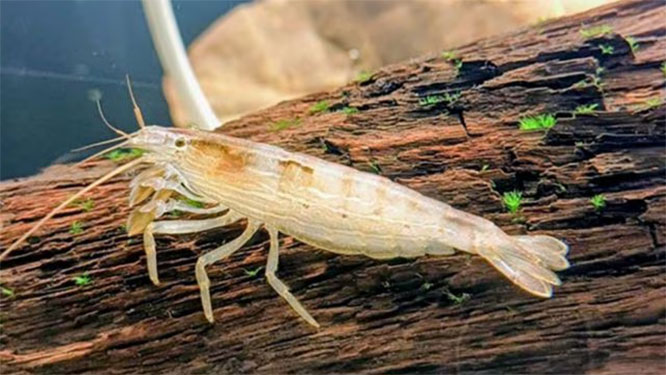
SHRIMP.jpg

Mangaluru, Dec 7: A rare bamboo shrimp has been rediscovered on mainland India more than 70 years after it was last reported, confirming for the first time the presence of Atyopsis spinipes in the country. The find was made by researchers from the Centre for Climate Change Studies at Sathyabama Institute of Science and Technology, Chennai, during surveys in Karnataka and Odisha.

The team — shrimp expert Dr S Prakash, PhD scholar K Kunjulakshmi, and Mangaluru-based researcher Maclean Antony Santos — combined field surveys, ecological assessments and DNA analysis to identify the elusive species. Their findings, published in Zootaxa, resolve decades of taxonomic confusion stemming from a 1951 report that misidentified the species as Atyopsis moluccensis without strong evidence.

The shrimp has now been confirmed at two locations: the Mulki–Pavanje estuary near Mangaluru and the Kuakhai River in Bhubaneswar. Historical specimens from the Andaman Islands, previously labelled as A. moluccensis, were also found to be misidentified and actually belong to A. spinipes.

The rediscovery began after an aquarium hobbyist in Odisha spotted a shrimp in 2022, prompting systematic surveys across Udupi, Karwar and Mangaluru. Four female specimens were collected in Mulki and one in Odisha, all genetically matching.

Researchers warn the species may exist in very small, vulnerable populations as freshwater habitats face increasing pressure from pollution, sand mining and infrastructure development. All verified specimens have been deposited with the Zoological Survey of India for future reference.

Comments

Add new comment

  • Coastaldigest.com reserves the right to delete or block any comments.
  • Coastaldigset.com is not responsible for its readers’ comments.
  • Comments that are abusive, incendiary or irrelevant are strictly prohibited.
  • Please use a genuine email ID and provide your name to avoid reject.