



Las Vegas massacre probe turns to gunman's girlfriend in Philippines

Agencies
October 4, 2017

Las Vegas, Oct 4: The investigation into the motives of a Las Vegas retiree who killed 58 people in the worst mass shooting in modern US history turned on Tuesday to the gunman's girlfriend in the Philippines, where she turned up after the massacre, authorities said.
Stephen Paddock, who killed himself moments before police stormed the hotel suite he had transformed into a sniper's nest on Sunday night, left no clear clues as to why he staged his attack on an outdoor concert below the high-rise building.

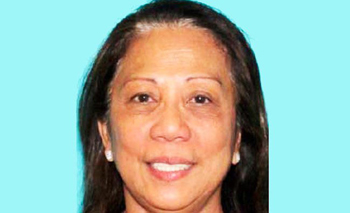
But law enforcement authorities were hoping to obtain some answers from a woman identified as Paddock's live-in companion, Marilou Danley, who Clark County Sheriff Joseph Lombardo said was a "person of interest" in the investigation.

Lombardo, who said on Monday Danley was believed to be in Tokyo, told reporters on Tuesday she had been located in the Philippines and the Federal Bureau of Investigation was in the process of trying to bring her back to the United States.

"We are in conversations with her," he told an afternoon news briefing. He reiterated police had no other suspects in the shooting itself.

Danley, an Australian citizen reported to have been born in the Philippines, had been sharing Paddock's condo at a retirement community in Mesquite, Nevada, about 90 miles (145 km) northeast of Las Vegas, according to police and public records.

Investigators were examining a $100,000 wire transfer Paddock, 64, sent to an account in the Philippines that "appears to have been intended" for Danley, a senior US homeland security official told Reuters on Tuesday.

The official, who has been briefed regularly on the probe but spoke on condition of anonymity, said the working assumption of investigators was that the money was intended as a form of life insurance payment for Danley.

The official said US authorities were eager to question Danley, who described herself on social media websites as a "casino professional," mother and grandmother, about whether Paddock encouraged her to leave the United States before he went on his rampage.

The official said investigators had also uncovered evidence that Paddock may have rehearsed his plans at other venues before ultimately carrying out his attack on the Route 91 Harvest country music festival from the 32nd floor suite of the Mandalay Bay hotel on the Las Vegas Strip.

Arsenal recovered

Fresh details about the massacre and the arsenal Paddock amassed emerged on Tuesday.

Police said Paddock strafed the concert crowd with bullets for nine to 11 minutes before taking his own life, and had set up cameras inside and outside his hotel suite so he could see police as they closed in on his location.

A total of 47 firearms were recovered from three locations searched by investigators - Paddock's hotel suite, his home in Mesquite, and another property associated with him in Reno, Nevada, according to Jill Snyder, special agent for the US Bureau of Alcohol Tobacco and Firearms (ATF).

Snyder said 12 of the guns found in the hotel room were fitted with so-called bump-stock devices that allow the guns to be fired virtually as automatic weapons. The devices are legal under US law, even though fully automatic weapons are for the most part banned.

The rifles, shotguns and pistols were purchased in four states - Nevada, Utah, California and Texas - Snyder told reporters at an evening news conference.

A search of Paddock's car turned up a supply of ammonium nitrate, a fertilizer that can be formed into explosives and was used in the 1995 Oklahoma City bombing of a federal office building that killed 168 people, Lombardo said earlier.

Police also confirmed that photos widely published online showing the gunman's body, his hands in gloves, lying on the floor beside two firearms and spent shell casings, were authentic crime-scene images obtained by media outlets. An internal investigation was under way to determine how they were leaked.

Video footage of the shooting spree on Sunday night caught by those on the ground showed throngs of people screaming in horror, some crouching in the open for cover, hemmed in by fellow concert-goers, and others running for cover as extended bursts of gunfire rained onto the crowd of some 20,000.

Police had put the death toll at 59 earlier on Tuesday, not including the gunman. However, the coroner's office revised the confirmed tally to 58 dead, plus Paddock, on Tuesday night.

More than 500 people were injured, some trampled in the pandemonium. At least 20 of the survivors admitted to one of several hospitals in the area, University Medical Center, remained in critical condition on Tuesday, doctors said.

The union representing firefighters disclosed that a dozen off-duty firefighters who were attending the music festival were shot while trying to render aid to other spectators, two of them while performing cardiopulmonary resuscitation on victims.

"This is a true feat of heroism on their part," said Ray Rahne of the International Association of Fire Fighters.

What drove gunman?

But the central, unanswered question to the bloodshed was what drove the gunman's actions.

Federal, state and local investigators have found no evidence that Paddock had even incidental contacts with foreign or domestic extremist groups, and reviews of his history showed no underlying pattern of criminal behavior or hate speech, the homeland security official said.

While investigators had not ruled out the possibility of mental illness or some form of brain injury, "there's no evidence of that, either," the official said.

Paddock's brother, Eric, has said he was mystified by the attack.

"It just makes less sense the more we use any kind of reason to figure it out," Eric Paddock said in a text message on Tuesday. "I will bet any amount of money that they will not find any link to anything ... he did this completely by himself."

He said the family did not plan to hold a funeral for his brother, who was not religious, saying it could attract unwanted attention. He described his brother as a financially well-off enthusiast of video poker and cruises, with no history of mental health issues.

President Donald Trump told reporters on Tuesday that Paddock had been "a sick man, a demented man."

Gun debate stirred

The attack stirred the fractious debate about gun ownership in the United States, which is protected by the Second Amendment of the Constitution, and about how much that right should be subject to controls.

Sunday's shooting followed the massacre of 26 young children and educators in Newtown, Connecticut, in 2012, and the slaying of 49 people at a gay nightclub in Orlando last year.

The latter attack was previously the deadliest mass shooting in modern US history.

Democrats reiterated what is generally the party's stance, that legislative action is needed to reduce mass shootings. Republicans, who control the White House and both chambers of Congress, argue restrictions on lawful gun ownership cannot deter criminal behavior.

"We'll be talking about gun laws as time goes by," said Trump, who strongly supported gun rights during his presidential campaign.

Paddock seemed unlike the troubled, angry young men who experts said have come to embody the mass-shooter profile in the United States.

Public records on Paddock point to an itinerant existence across the US West and Southeast, including stints as an apartment manager and aerospace industry worker. He appeared to be settling in to a quiet life when he bought a home in a Nevada retirement community a few years ago.

Comments

Add new comment

  • Coastaldigest.com reserves the right to delete or block any comments.
  • Coastaldigset.com is not responsible for its readers’ comments.
  • Comments that are abusive, incendiary or irrelevant are strictly prohibited.
  • Please use a genuine email ID and provide your name to avoid reject.
coastaldigest.com news network
January 19,2026

rizwanzameer.jpg

Bengaluru: As the dust settles on the recent legislative session, the corridors of Vidhana Soudha are buzzing with more than just policy talk. A high-stakes game of political musical chairs has begun, exposing a deepening rift within the Congress party’s Muslim leadership as a major Cabinet reshuffle looms.

With the party hierarchy signaling a "50% refresh" to gear up for the 2028 Assembly elections, the race to fill three projected Muslim ministerial berths has transformed from a strategic discussion into an all-out turf war.

The "Star Son" Spark

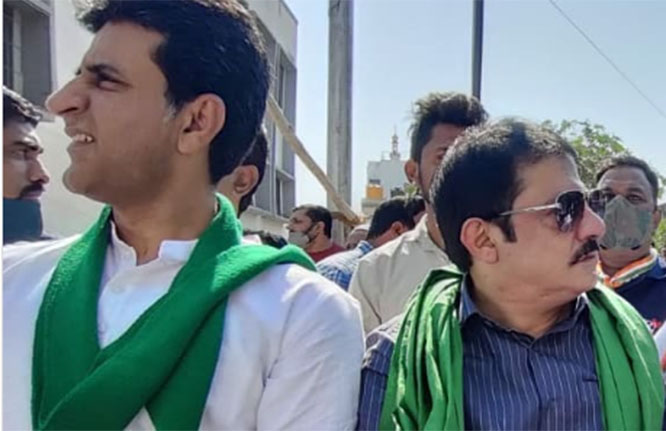
The internal friction turned public this week following provocative remarks by Zaid Khan, actor and son of Wakf Minister Zameer Ahmed Khan. Zaid’s claim—that his father "helped" secure a ticket for Shivajinagar MLA Rizwan Arshad in 2023—has acted as a lightning rod for resentment.

Rizwan’s camp was quick to fire back, dismissing the comment as a desperate attempt by Zameer to manufacture seniority. "Rizwan’s political pedigree was forged in the NSUI and Youth Congress long before Zameer even stepped into the party," a supporter noted, highlighting Rizwan’s tenure as an AICC secretary and his two-term presidency of the State Youth Congress.

A Tale of Two Loyalists

While both Zameer Ahmed Khan and Rizwan Arshad are staunch allies of Chief Minister Siddaramaiah and represent Bengaluru strongholds, their political DNA could not be more different:

•    Zameer Ahmed Khan: A four-time MLA who crossed over from JD(S) in 2018. Known for his "overzealous" and often polarizing outreach during communal flashpoints—from the DJ Halli riots to the recent Wakf land notice controversy—his style has frequently left the Congress high command in a state of "discomfort."

•    Rizwan Arshad: A homegrown organizational man. Seen as a "quiet performer," Arshad represents the sophisticated, moderate face of the party, preferred by those who find Zameer’s brand of politics too volatile.

The Outsiders Looking In

The bickering isn't limited to a duo. The "Beary" community, represented by leaders like N A Haris and Saleem Ahmed, is demanding its pound of flesh. Saleem Ahmed, the Chief Whip in the Legislative Council, has dropped the veil of diplomacy, openly declaring his ministerial aspirations.

"I was the only working president not included in the Cabinet last time," Saleem noted pointedly, signaling that the "loyalty quota" is no longer enough to keep the peace.

As Chief Minister Siddaramaiah prepares to finalize the list, he faces a delicate balancing act: rewarding the aggressive grassroots mobilization of Zameer’s camp without alienating the organizational stalwarts and minority sub-sects who feel increasingly sidelined by the "Chamarajpet-Shivajinagar" binary.

Comments

Add new comment

  • Coastaldigest.com reserves the right to delete or block any comments.
  • Coastaldigset.com is not responsible for its readers’ comments.
  • Comments that are abusive, incendiary or irrelevant are strictly prohibited.
  • Please use a genuine email ID and provide your name to avoid reject.
News Network
January 23,2026

Mangaluru: The Karnataka Government Polytechnic (KPT), Mangaluru, has achieved autonomous status from the All India Council for Technical Education (AICTE), becoming the first government polytechnic in the country to receive such recognition in its 78-year history. The status was granted by AICTE, New Delhi, and subsequently approved by the Karnataka Board of Technical Education in October last year.

Officials said the autonomy was conferred a few months ago. Until recently, AICTE extended autonomous status only to engineering colleges, excluding diploma institutions. However, with a renewed national focus on skill development, several government polytechnics across India have now been granted autonomy.

KPT, the second-largest polytechnic in Karnataka, was established in 1946 with four branches and has since expanded to offer eight diploma programmes, including computer science and polymer technology. The institution is spread across a 19-acre campus.

Ravindra M Keni, the first dean of the institution, told The Times of India that AICTE had proposed autonomous status for polytechnic institutions that are over 25 years old. “Many colleges applied. In the first round, 100 institutions were shortlisted, which was further narrowed down to 15 in the second round. We have already completed one semester after becoming an autonomous institution,” he said. He added that nearly 500 students are admitted annually across eight three-year diploma courses.

Explaining the factors that helped KPT secure autonomy, Keni said the institution has consistently recorded 100 per cent admissions and placements for its graduates. He also noted its strong performance in sports, with the college emerging champions for 12 consecutive years, along with active student participation in NCC and NSS activities.

Autonomous status allows KPT to design industry-oriented curricula, conduct examinations, prepare question papers, and manage academic documentation independently. The institution can also directly collaborate with industries and receive priority funding from AICTE or the Ministry of Education. While academic autonomy has been granted, financial control will continue to rest with the state government.

“There will be separate committees for examinations, question paper setting, boards of studies, and boards of examiners. The institution will now have the freedom to conduct admissions without government notifications and issue its own marks cards,” Keni said, adding that new academic initiatives would be planned after a year of functioning under the autonomous framework.

Comments

Add new comment

  • Coastaldigest.com reserves the right to delete or block any comments.
  • Coastaldigset.com is not responsible for its readers’ comments.
  • Comments that are abusive, incendiary or irrelevant are strictly prohibited.
  • Please use a genuine email ID and provide your name to avoid reject.
News Network
February 1,2026

Bengaluru, Feb 1: For travelers landing at Kempegowda International Airport (KIA), the sleek, wood-paneled curves of Terminal 2 promise a world-class welcome. But the famed “Garden City” charm quickly withers at the curb. As India’s aviation sector swells to record numbers—handling over 43 million passengers in Bengaluru alone this past year—the “last mile” has turned into a marathon of frustration.

The Bengaluru Logjam: Rules vs Reality

While the city awaits the 2027 completion of the Namma Metro Blue Line, the interim has been chaotic. Recent “decongestion” rules at Terminal 1 have pushed app-based cab pickups to distant parking zones, forcing weary passengers into a 20-minute walk with luggage.

“I landed after ten months away and felt like a stranger in my own city,” says Ruchitha Jain, a Koramangala resident. “My driver couldn’t find me, staff couldn’t guide me, and the so-called ‘Premium’ lane is just a fancy tax on convenience.”

•    The Cost of Distance: A 40-km cab ride can now easily cross ₹1,500, driven by demand pricing and airport surcharges.

•    The Bus Gap: While Vayu Vajra remains a lifeline, its ₹300–₹400 fare is often cited as the most expensive airport bus service in the country.

A National Pattern of Disconnect

The struggle is not unique to Karnataka. From Chennai’s coast to Hyderabad’s plateau, India’s airports tell a familiar story: brilliant runways, broken exits.

City:    Primary Issue   |    Recent Development

Bengaluru:    Cab pickup restrictions & distance  |    App-based taxis shifted to far parking zones; long walks and fare spikes reported

Chennai:    Multi-Level Parking (MLCP) hike  |    Passengers report 40-minute walks to reach cab pickup points

Hyderabad:    “Taxi mafia” & touting  |    Over 440 touting cases reported; security presence intensified

Mumbai:    Fare scams  |     Tourists charged ₹18,000 for just 400 metres, triggering police action

In Hyderabad, travelers continue to battle entrenched local groups that intimidate Uber and Ola drivers, pushing passengers toward overpriced private taxis. Chennai flyers, meanwhile, complain that reaching the designated pickup zones now takes longer than short-haul flights from cities like Coimbatore.

The ‘Budget Day’ Hope

As Finance Minister Nirmala Sitharaman presents the Union Budget 2026 today, the aviation sector is watching closely. With the government’s renewed emphasis on multimodal integration, there is cautious hope for funding toward seamless airport-metro-bus hubs.

The vision is clear: a future where planes, trains, and metros speak the same language. Until then, passengers at KIA—and airports across India—will continue to discover that the hardest part of flying isn’t the thousands of kilometres in the air, but the last few on the ground.

Comments

Add new comment

  • Coastaldigest.com reserves the right to delete or block any comments.
  • Coastaldigset.com is not responsible for its readers’ comments.
  • Comments that are abusive, incendiary or irrelevant are strictly prohibited.
  • Please use a genuine email ID and provide your name to avoid reject.