Longer, stronger heat predicted for India

June 9, 2015

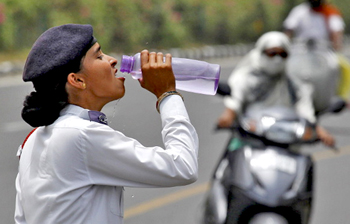
New Delhi, Jun 9: With more than 2,300 dead in extremely hot weather across India, a recent Indian Institute of Technology-Bombay (IIT-B) study predicts more intense and longer heat waves, more often and earlier in the year in future.
Heat predicted
In a changing climate, newer areas, including large swathes of southern India and both coasts - hitherto unaffected - will be severely hit, resulting in more heat stress and deaths, said the study, published in the journal Regional Environmental Change.

"From climate model projections, we have pointed out that there is a possibility of high occurrences of heat waves in South India in future," Subimal Ghosh, associate professor at the Department of Civil Engineering, IIT-B, and one of the paper's authors, told IndiaSpend.

Heat waves in a warming world

Such a forecast is in line with global and Indian studies.

Other recent assessments have predicted that intense heat waves will grow with rising global temperatures, up by 0.9 degrees Celsius since the start of the 20th century.

The Intergovernmental Panel on Climate Change (IPCC) records that from 1906 to 2005, the mean annual global surface-air temperature increased by about 0.74 degrees (land-surface air temperature increases more than sea-surface temperature). As a result, there will be significant changes in the frequency and intensity of extreme weather events, including heat waves, as IPCC's 2014 report warns.

"It is difficult to directly link this present single-year high heat-wave occurrence to climate change," said Ghosh. "However, there is a good possibility that such heat waves may indicate the adverse impacts of global warming."

A rise in the frequency and intensity of heat waves would increase the risk of heat stroke and heat exhaustion, and even deaths from hot weather, the IIT-B team predicted, echoing concerns raised by IPCC scientists.

With a large proportion of people without sufficient access to water, electricity and primary healthcare facilities, India could be very vulnerable to heat waves, the study noted.

"Heat waves are an important class of climate hazard that may have serious consequences on health and ecosystem, keeping existing vulnerabilities of population in mind," says Kamal Kumar Murari, the lead author of the study and an IIT-B doctoral candidate. "Our findings highlight the need to better understand the direct temperature-related consequences in order to develop better adaptation strategies."

Multiple data sources, one result: Heat's coming

The IIT-B study is important because it is particularly exhaustive.

Murari and his colleagues used daily temperature data over 40 years (1969-2009) from 395 weather stations across India. They also used climate-change simulations of seven EarthSystem Models (ESM), which combine the interactions of atmosphere, ocean, land, ice, and biosphere under a wide variety of conditions. In addition, they used US National Center for Atmospheric Research data on daily relative humidity and data on heat-stress analysis.

Based on these datasets, the IIT-B team estimated the potential impact of future heat waves on mortality using historical data from India's ministry of home affairs.

The team projected intensity, duration and frequency of severe heat waves for low, middle and high range rates of climate change as shown in long-term projections called representative concentration pathways (RCPs) - four greenhouse gas concentration trajectories that climate modellers use to describe possible climate futures. Each pathway notes how much the planet has heated up and the concentration of greenhouse gases doing the heating.

The IIT-B team took RCP26, a projection consistent with the goal to hold global warming to 2 degrees, showing a peak and a decline in warming; RCP45, considered the most probable case; and RCP85, possibly the worst-case scenario.

Future hot zones: South India and both coasts

Under the most probable-case and the worst-case scenarios, 2070 onward, there could be an increase in intensity, duration and frequency of severe heat waves.

In particular, a large part of southern India, east and west coasts, which have been unaffected by heat waves, are projected to be severely affected after 2070.

Severe heat waves are expected to appear early in future years, starting in early April, under the worst-case scenario. A sizeable part of India is also projected to be exposed to extreme heat-stress conditions, intensification of heat wave and heat-stress leading to increased mortality.

Heat-stress is a condition in which the body cannot cool off to maintain a healthy temperature - resulting in rashes, cramps, dizziness or fainting, exhaustion, heat stroke, and a worsening of existing medical conditions.

Other studies, similar conclusion

The IIT-B study follows other studies that have also shown an increasing trend in heat waves.

Dr. D.S. Pai, who heads the Long Range Forecasting division at the National Climate Centre, Pune, and his colleagues at the India Meteorological Department (IMD), have shown a noticeable increase in the heat wave and severe heat-wave days over the country during 2001-2010 - the warmest decade recorded - compared to the previous four decades.

The IMD team used heat-wave information from 103 stations on the Indian mainland during the hot-weather season of March to July over the past 50 years (1961-2010). They examined various statistical aspects of heat waves and severe heat waves, such as long-term climatology, decadal variation, and long-term trends.

Pai and colleagues also found heat waves linked with El Niño-Southern Oscillation (ENSO), denoting fluctuating ocean temperatures in the equatorial Pacific, known for its global impact. The study indicates the complexity of future weather predictions.

They found that heat waves of eight or more days peak a year after the El Nino (warm) phase of this cycle and are at a minimum a year after the La Nina (cool) phase.

The IMD team found other factors linked to heat-wave dynamics, including the annual path of the sun; moisture distribution across India and how it is influenced by seas on its either side and the arrival of the monsoon.

The arrival of the monsoon over north India marks the end of the hot weather season. In 1998 and 2002 when the monsoon was delayed, long heat-wave conditions prevailed here.

As the geographic spread of heat waves and trends change, weather scientists stress the need for better forecasts and more rigorous research.

"The present assessment could be a good starting point for considering heat waves as a disaster, even though they do not yet appears in the priorities of disaster-management plans of the Government of India," said Murari.

Comments

Add new comment

  • Coastaldigest.com reserves the right to delete or block any comments.
  • Coastaldigset.com is not responsible for its readers’ comments.
  • Comments that are abusive, incendiary or irrelevant are strictly prohibited.
  • Please use a genuine email ID and provide your name to avoid reject.
News Network
December 6,2025

indigoticket.jpg

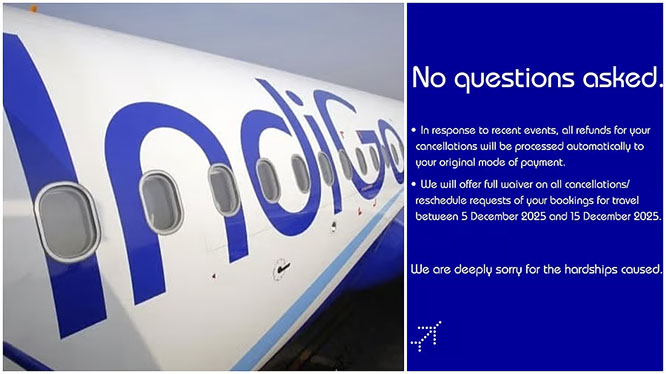
With IndiGo flight disruptions impacting thousands of passengers, the airline on Saturday said that it will offer full waiver on all cancellations/reschedule requests for travel bookings between December 5, 2025 and December 15, 2025.

Earlier in the day, the civil aviation ministry had directed the airline to complete the ticket refund process for the cancelled flights by Sunday evening, as well as ensure baggage separated from the travellers are delivered in the next two days.

In a post on X, titled 'No questions asked', IndiGo wrote, "In response to recent events, all refunds for your cancellations will be processed automatically to your original mode of payment."

"We are deeply sorry for the hardships caused," it further added.

Several passengers, however, complained of not getting full refund as promised by the airline.

Netizens have shared screenchots of getting charged for airline cancellation fee and convenience fee.

"Please tell me why u have did this airline cancellation charges when u say full amount will be refunded (sic)," a user wrote sharing a screenshot of the refund page.

"Well, but you have still debited the convenience charges," wrote another.

Passengers have also raised concerns about the "cancel" option being disabled on the IndiGo app. "First enable the 'Cancel' button on your App & offer full refund on tickets cancelled by customers between the said dates," wrote a user.

A day after the country's largest airline, IndiGo, cancelled more than 1,000 flights and caused disruptions for the fifth day on Saturday, the ministry said that any delay or non-compliance in refund processing will invite immediate regulatory action.

The refund process for all cancelled or disrupted flights must be completed by 8 pm on Sunday, the ministry said in a statement.

"Airlines have also been instructed not to levy any rescheduling charges for passengers whose travel plans were affected by cancellations," it said.

On Saturday, more than 400 flights were cancelled at various airports.

IndiGo has also been instructed to set up dedicated passenger support and refund facilitation cells.

Comments

Add new comment

  • Coastaldigest.com reserves the right to delete or block any comments.
  • Coastaldigset.com is not responsible for its readers’ comments.
  • Comments that are abusive, incendiary or irrelevant are strictly prohibited.
  • Please use a genuine email ID and provide your name to avoid reject.
News Network
December 16,2025

jordan.jpg

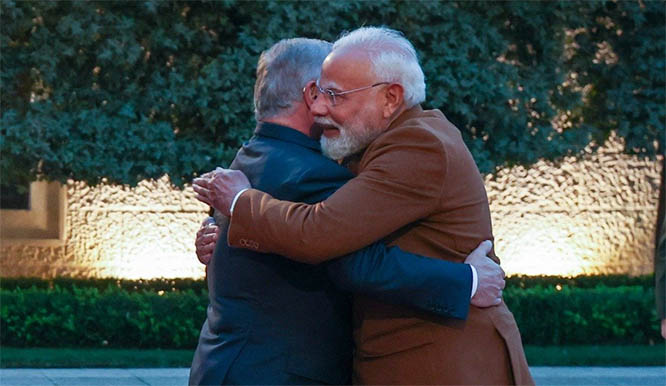
Prime Minister Narendra Modi on Monday held talks with Jordan’s King Abdullah II in Amman, during which the two leaders discussed ways to further strengthen bilateral relations, with the Prime Minister outlining an eight-point vision covering key areas of cooperation.

Describing the meeting as “productive”, PM Modi said he shared a roadmap focused on trade and economy, fertilisers and agriculture, information technology, healthcare, infrastructure, critical and strategic minerals, civil nuclear cooperation, and people-to-people ties.

In a post on social media platform X, the Prime Minister praised King Abdullah II’s personal commitment to advancing India–Jordan relations, particularly as both countries mark the 75th anniversary of the establishment of diplomatic ties this year.

“Held productive discussions with His Majesty King Abdullah II in Amman. His personal commitment towards vibrant India-Jordan relations is noteworthy. This year, we are celebrating the 75th anniversary of our bilateral diplomatic relations,” PM Modi said.

The meeting took place at the Al Husseiniya Palace, where the two leaders also exchanged views on regional and global issues of mutual interest. According to the Ministry of External Affairs (MEA), both sides agreed to further deepen cooperation in areas including trade and investment, defence and security, counter-terrorism and de-radicalisation, fertilisers and agriculture, infrastructure, renewable energy, tourism, and heritage.

The MEA said both leaders reaffirmed their united stand against terrorism.

PM Modi arrived in Amman earlier on Monday and was received by Jordanian Prime Minister Jafar Hassan, who accorded him a formal welcome. Following the talks, King Abdullah II hosted a banquet dinner in honour of the Prime Minister, reflecting the warmth of bilateral ties.

Jordan is the first leg of PM Modi’s three-nation tour. From Amman, the Prime Minister will travel to Ethiopia at the invitation of Prime Minister Abiy Ahmed Ali, marking his first official visit to the African nation. The tour will conclude with a visit to Oman.

Comments

Add new comment

  • Coastaldigest.com reserves the right to delete or block any comments.
  • Coastaldigset.com is not responsible for its readers’ comments.
  • Comments that are abusive, incendiary or irrelevant are strictly prohibited.
  • Please use a genuine email ID and provide your name to avoid reject.
News Network
December 4,2025

indigoflight.jpg

Domestic carrier IndiGo has cancelled over 180 flights from three major airports — Mumbai, Delhi and Bengaluru — on Thursday, December 4, as the airline struggles to secure the required crew to operate its flights in the wake of new flight-duty and rest-period norms for pilots.

While the number of cancellations at Mumbai airport stands at 86 (41 arrivals and 45 departures) for the day, at Bengaluru, 73 flights have been cancelled, including 41 arrivals, according to a PTI report that quoted sources.

"IndiGo cancelled over 180 flights on Thursday at three airports-Mumbai, Delhi and Bengaluru," the source told the news agency.

Besides, it had cancelled as many as 33 flights at Delhi airport for Thursday, the source said, adding, "The number of cancellations is expected to be higher by the end of the day."

The Gurugram-based airline's On-Time Performance (OTP) nosedived to 19.7 per cent at six key airports — Delhi, Mumbai, Chennai, Kolkata, Bengaluru and Hyderabad — on December 3, as it struggled to get the required crew to operate its services, down from almost half of December 2, when it was 35 per cent.

"IndiGo has been facing acute crew shortage since the implementation of the second phase of the FDTL (Flight Duty Time Limitations) norms, leading to cancellations and huge delays in its operations across the airports," a source had told PTI on Wednesday.

Chaos continued at several major airports for the third day on Thursday because of the cancellations.

A spokesperson for the Kempegowda International Airport (KIA) in Bengaluru said that 73 IndiGo flights had been cancelled on Thursday.

At least 150 flights were cancelled and dozens of others delayed on Wednesday, airport sources said, leaving thousands of travellers stranded, according to news agency Reuters.

The Directorate General of Civil Aviation (DGCA) has said it is investigating IndiGo flight disruptions and has asked the airline to submit the reasons for the current situation, as well as its plans to reduce flight cancellations and delays.

It may be mentioned here that the pilots' body, Federation of Indian Pilots (FIP), has alleged that IndiGo, despite getting a two-year preparatory window before the full implementation of new flight duty and rest period norms for cockpit crew, "inexplicably" adopted a "hiring freeze".

The FIP said it has urged the safety regulator, the DGCA, not to approve airlines' seasonal flight schedules unless they have adequate staff to operate their services "safely and reliably" in accordance with the New Flight Duty Time Limitations (FDTL) norms.

In a letter to the DGCA late on Wednesday, the FIP urged the DGCA to consider re-evaluating and reallocating slots to other airlines, which have the capacity to operate them without disruption during the peak holiday and fog season if IndiGo continues to "fail in delivering on its commitments to passengers due to its own avoidable staffing shortages."

Comments

Add new comment

  • Coastaldigest.com reserves the right to delete or block any comments.
  • Coastaldigset.com is not responsible for its readers’ comments.
  • Comments that are abusive, incendiary or irrelevant are strictly prohibited.
  • Please use a genuine email ID and provide your name to avoid reject.