



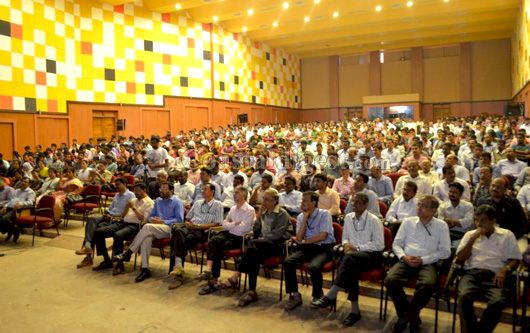
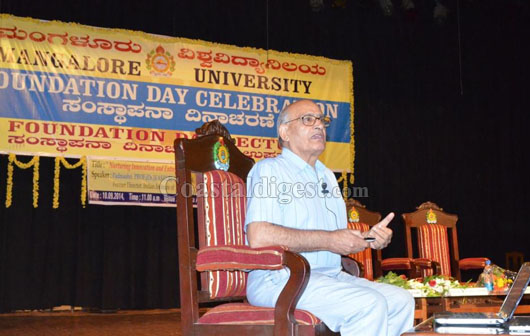
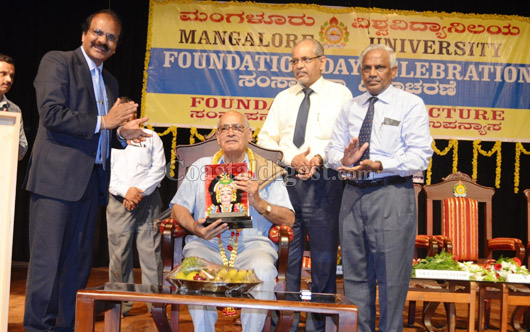
Mangalore, Sept 10: Universities should provide higher education to nurture human capital as an agent of growth of social good for a knowledge society said Prof. Kasturi L Chopra, former director, Indian Institute of Technology, Khargpur.
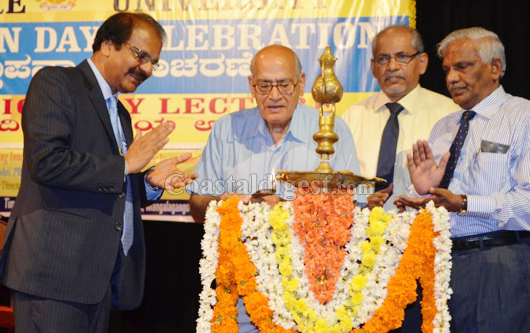
He was delivering 34th Foundation Day lecture on the topic Nurturing innovation and entrepreneurship in academic institutions' on September 10 at Mangala auditorium in Mangalore University today.
“A close interaction with entrepreneurs, communities and industry needs to be mandated as an integral part of higher education institutions,” he added.
Learn to create knowledge and innovations for the betterment of society, he said. He said that creation of knowledge through human resources, innovations through research and development, creation of wealth through Intellectual Property Rights and entrepreneurship, nurturing eco-friendly, holistic and inclusive development should be the priorities of Indian higher education.
Knowledge is power to create, innovate usable and exploitable information to provide new solutions for human needs, he said.
He said that new age universities have to be a place to learn not to teach. It should be a place for self-learning through interaction and technology rather than broadcast learning or mass learning. “Higher education must be a platform to learn what a student wants to, and learn to learn; learn to do and learn to work together,” he said.
He lamented that very little academic autonomy in most universities, little or no administrative and financial autonomy, zero accountability in learning or knowledge generation processes, inflexible and outdated governance and management systems, absence of competitive spirit among academic institutions, lack of accreditation by credible autonomous, non-govt. bodies, control freak regulatory bodies, misconceived social engineering through quotas in all govt. institutions irrespective of the required visionary and innovation goals of institutions are major problems affecting the higher education in India.
He also said, “Knowledge power helps economic growth. GDP of many developed nations is primarily due to the creation, diffusion and utilization of innovative knowledge. Knowledge power contributes about 20% to the GDP of India and knowledge has created most of the recent Indian and global billionaires.”
He called upon the teachers and students to make India knowledge republic. “Radical educational, management and governance reforms are required in total system of higher education. Academic institutions in India must be mandated to create an ecosystem for integration of the culture of knowledge-based innovations into the educational system among all its stake holders for propelling India to create a knowledge and economic power house” he said.
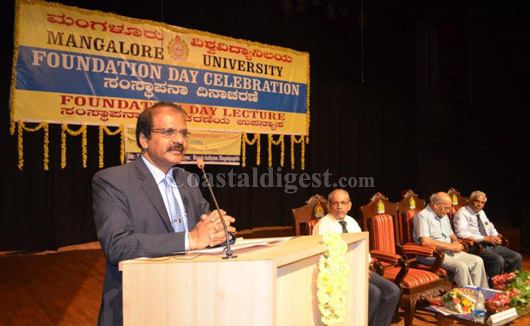
In his presidential address, Prof K Byrappa, Vice Chancellor of Mangalore University said that the University would honour alumni who have achieved in various fields. He said that University is contemplating to organize Open-house', conferences to share the knowledge.
“We will collaborate with industries to support and facilitate the aspirations of local people as well as national level,” he said.
Prof A M Khan compered the programme. Registrar (Evaluation) Prof B Narayana welcomed the gathering. Finance Officer Prof P Pakkeerappa proposed a vote of thanks.
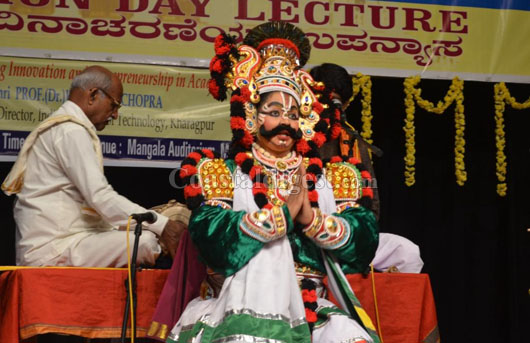
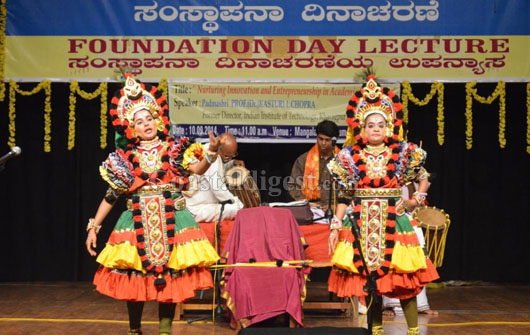
Mangalore University women employees performed Veeramani Kalaga', a Yakshagana prasanga at the end of the programme.


Comments
Add new comment