



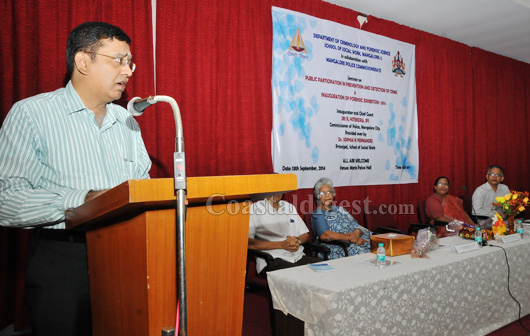
Mangalore, Sep 13: Mangalore City Police Commissioner R Hitendra said that collection of forensic evidence and traces of DNA samples from the crime scenes was important, which could prove the guilt of the offenders, especially in the Indian context where witnesses did not come forward easily to testify.
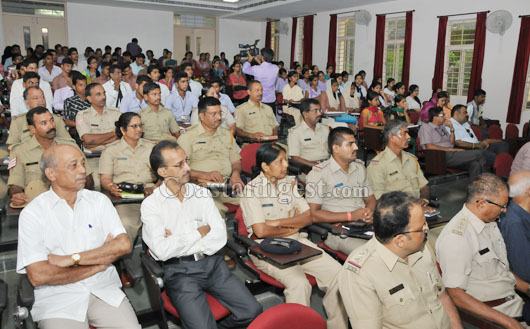
Delivering the inaugural address at a seminar on Public Participation in Prevention and Detection of Crime' organised by Department of Criminology and Forensic Science, School of Social Work, Roshni Nilaya, in collaboration with Mangalore Police Commissionerate, in the college premises here on Saturday, he said that there was a greater need for public involvement in detection of crimes as it was not viable for police force to keep a track on all persons or offenders. People can help the police department in detection of crimes by coming forward as complainants, witnesses, informants or observers, he said.
Speaking on the need to develop tools of forensic analysis, he said that it was possible to get convictions in cases where there is enough forensic evidence and it is important to develop scientific aids in the detection of crime and during investigation, he said.
Speaking on the occasion, Head of Department of Criminology and Forensic Science Prof B Ashok said that there was a need to create awareness among the public about the importance of public participation and need to preserve forensic evidence from crime scenes. It is important to bring awareness among people who are becoming ignorant and falling prey to cyber crime and economic crimes of the new age, in order to avoid them from occurring.
With regard to cases of sexual assaults, which are rising in number, in 48 percent of cases, it is usually done by persons known to the victim. Hence, it is the need of the hour for public participation in order to detect and prevent crimes, he said.
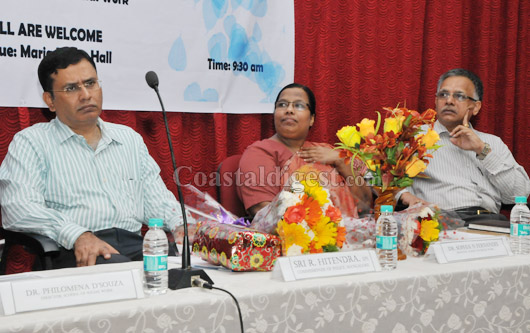
Principal of the college Dr Sophie N Fernandes, presided over the inauguration. She stressed on the need for public safety education to increase public participation and to detect, tackle and prevent crimes and violence in the society.
Director of the institution Dr Philomena D'Souza also spoke on the occasion.
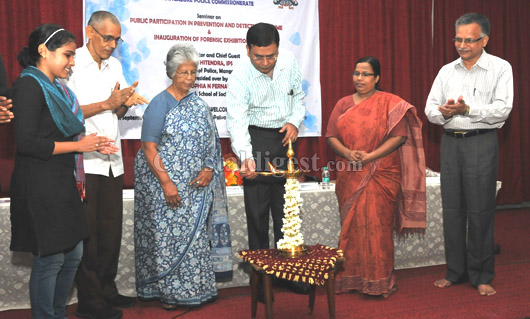
As part of the seminar, an exhibition with exhibits detailing the study and use of forensic science such as forgery, serology, toxicology, cyber crime, pathology, anthropology, crime scene investigation and other criminalistics was inaugurated by Mr Hithendra.

Comments
Add new comment