Masood Azhar was shaken, rattled by just a slap from Army jawan

Agencies
February 19, 2019

New Delhi, Feb 19: The dreaded architect of some of the most gruesome terror attacks in India, Maulana Masood Azhar, was a "easy man" to handle in custody and he got shaken up on the first "slap" from an army jawan prompting him to blurt out details of his movements, says a former police officer who interrogated him after his arrest in 1994.
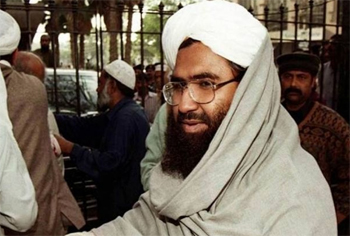
Azhar, who had used a Portuguese passport to enter India through Bangladesh and reach Kashmir, was arrested in February 1994 in Anantnag in South Kashmir. In the custody, the intelligence agencies did not have to do much work on Azhar who started speaking after the first slap from an army officer and gave deep insights into the functioning of terror groups operating from Pakistan, the officer said.

"He was an easy man to handle and a slap from an army officer had shaken him completely," former Director General of Sikkim Police Avinash Mohananey, who interrogated Azhar many a times during his two-decade tenure in the Intelligence Bureau, told PTI.

After his release in exchange of passengers of hijacked IC-814 flight of Indian Airlines in 1999 by the then BJP government, Azhar formed Jaish-e-Mohammed and scripted many audacious terror strikes in India, including on the Parliament House, Pathankot air force base, army camps in Jammu and Uri, and the latest suicide attack on CRPF in Pulwama which claimed the lives of 40 personnel.

While in custody, Azhar, in his early 50's now, shared information about recruitment process and functioning of terror groups in Pakistan at a time when the intelligence agencies were still grappling to understand the proxy-war unleashed by Pakistan's espionage agency ISI, said Mohananey, a 1985-batch IPS officer who headed the Kashmir desk in the agency at that time.

"There were several occasions when I met him in Kot Balwal jail and interrogated him for hours together. We did not have to use any coercive method as information flowed consistently from him," he said.

Azhar gave the Indian agencies vital insights into diversion of Afghan terrorists into Kashmir Valley and merger of Harkat-ul-Mujahideen and Harkat-ul-Jehad-e-Islami (HuJI) into Harkat-ul-Ansar, represented by him as its general secretary, he said. After his arrival into India from Bangladesh in 1994, Azhar had travelled to Saharanpur before reaching Kashmir where he held meetings of warring factions of HuM and HuJI to formulate a common policy, Mohananey said.

"I came on a forged Portuguese passport for ensuring that HuM and HuJI are together in the valley. It was not possible for me to cross the Line of Control on foot," the police officer recalled Azhar telling them. A man of mannerism and etiquette during questioning sessions, Azhar used to give a detailed description to any question that was asked to him, he said.

The Jaish chief, during his stint as a journalist with 'Sada-e-Mujahid', a tabloid published from Karachi, had travelled in 1993 with a group of Pakistani scribes to some countries drumming up support for "Kashmir cause', he said. Mohananey recalled that Azhar would often boast that police could not keep him in custody for long as he was important for Pakistan and the ISI.

"You are underestimating my popularity. The ISI would ensure that I am back in Pakistan," the police officer recalled him as saying. Surprisingly, some foreigners were kidnapped from Delhi 10 months after his arrest in February 1994 and the kidnappers had demanded his release.

The plan failed with the arrest of Omar Sheikh, who was also released in exchange of the 1999 hijacking, and was later involved in the gruesome beheading of Wall Street Journal reporter Daniel Pearl in Pakistan. Another attempt to release him was made by a shadow group of Harkat-ul-Ansar, Al-Faran, which demanded his release in exchange of five foreigners kidnapped in Kashmir in July 1995. Before shifting out to another posting, the officer said, "I met him again in 1997 when he was in the same jail. I informed him that I was proceeding out to a new posting to which he wished me good luck."

"I was at new posting when I heard about his release on December 31, 1999 in exchange for passengers of IC-814. He really meant that we will not be able to keep him for long," he said.

The then BJP-led NDA government had released Azhar, along with Omar Sheikh and Mushtaq Ahmed Zargar alias 'Latram', in exchange of passengers of Indian Airlines flight IC-814 from Kathmandu to New Delhi which was taken to Kandahar in Afghanistan.

After the negotiations failed with hijackers, the government succumbed to their demands and the then external affairs minister Jaswant Singh took the three terrorists to Kandahar in Afghanistan in a special plane to ensure the release of passengers of the hijacked plane.


Comments

Add new comment

  • Coastaldigest.com reserves the right to delete or block any comments.
  • Coastaldigset.com is not responsible for its readers’ comments.
  • Comments that are abusive, incendiary or irrelevant are strictly prohibited.
  • Please use a genuine email ID and provide your name to avoid reject.
News Network
December 6,2025

pilot.jpg

New Delhi: IndiGo, India’s largest airline, faced major operational turbulence this week after failing to prepare for new pilot-fatigue regulations issued by the Directorate General of Civil Aviation (DGCA). The stricter rules—designed to improve flight safety—took effect in phases through 2024, with the latest implementation on November 1. IndiGo has acknowledged that inadequate roster planning led to widespread cancellations and delays.

Below are the key DGCA rules that affected IndiGo’s operations:

1. Longer Mandatory Weekly Rest

Weekly rest for pilots has been increased from 36 hours to 48 hours.

The government says the extended break is essential to curb cumulative fatigue. This rule remains in force despite the current crisis.

2. Cap on Night Landings

Pilots can now perform only two night landings per week—a steep reduction from the earlier limit of six.

Night hours, defined as midnight to early morning, are considered the least alert period for pilots.

Given the disruptions, this rule has been temporarily relaxed for IndiGo until February 10.

3. Reduced Maximum Night Flight Duty

Flight duty that stretches into the night is now capped at 10 hours.

This measure has also been kept on hold for IndiGo until February 10 to stabilize operations.

4. Weekly Rest Cannot Be Replaced With Personal Leave

Airlines can no longer count a pilot’s personal leave as part of the mandatory 48-hour rest.

Pilots say this closes a loophole that previously reduced actual rest time.

Currently, all airlines are exempt from this rule to normalise travel.

5. Mandatory Fatigue Monitoring

Airlines must submit quarterly fatigue reports along with corrective actions to DGCA.

This system aims to create a transparent fatigue-tracking framework across the industry.

The DGCA has stressed that these rules were crafted to strengthen flight safety and align India with global fatigue-management standards. The temporary relaxations are expected to remain until February 2025, giving IndiGo time to stabilise its schedules and restore normal air travel.

Comments

Add new comment

  • Coastaldigest.com reserves the right to delete or block any comments.
  • Coastaldigset.com is not responsible for its readers’ comments.
  • Comments that are abusive, incendiary or irrelevant are strictly prohibited.
  • Please use a genuine email ID and provide your name to avoid reject.
News Network
December 2,2025

Mangaluru, Dec 2: Mangaluru International Airport responded to a medical emergency late on Monday night. Air India Express flight IX 522, travelling from Riyadh to Thiruvananthapuram, was diverted to Mangaluru Airport after a passenger in his late 30s experienced a medical emergency on board.

The Airport’s Operations Control Centre received an alert regarding the passenger’s health condition. The airport activated its emergency response protocol, mobilising the airport medical team and coordinating with stakeholders including CISF, immigration, and customs. 

Upon landing, airport medical personnel attended to the passenger, assessed his condition, and arranged to shift him to a local tertiary-care hospital for further treatment. The passenger’s relatives accompanied the passenger, who incidentally received necessary medical care on board, which helped stabilise the situation.

Following the handling of the emergency, the flight departed for Thiruvananthapuram at 2:05 am on Tuesday.

"We appreciate the cooperation of all parties involved, and this incident reaffirms our ongoing commitment to prioritising passenger safety and readiness to respond to unforeseen emergencies with professionalism and care," the Airport spokesperson said. 

Comments

Add new comment

  • Coastaldigest.com reserves the right to delete or block any comments.
  • Coastaldigset.com is not responsible for its readers’ comments.
  • Comments that are abusive, incendiary or irrelevant are strictly prohibited.
  • Please use a genuine email ID and provide your name to avoid reject.
News Network
December 5,2025

indigoCEO.jpg

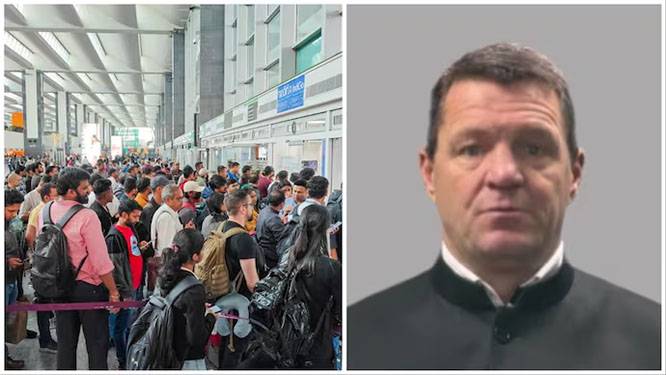
New Delhi, Dec 5: IndiGo CEO Pieter Elbers issued a public apology this evening after more than a thousand flights were cancelled today, making it the "most severely impacted day" in terms of cancellations. The biggest airline of the country cancelled "more than half" of its daily number of flights on Friday, said Elbers. He also said that even though the crisis will persist on Saturday, the airline anticipates fewer than 1,000 flight cancellations.

"Full normalisation is expected between December 10 and 15, though IndiGo cautions that recovery will take time due to the scale of operations," the IndiGo CEO said. 

IndiGo operates around 2,300 domestic and international flights daily.

Pieter Elbers, while apologising for the major inconvenience due to delays and cancellations, said the situation is a result of various causes.

The crisis at IndiGo stems from new regulations that boost pilots' weekly rest requirements by 12 hours to 48 and allow only two night-time landings per week, down from six. IndiGo has attributed the mass cancellations to "misjudgment and planning gaps".

Elbers also listed three lines of action that the airline will adopt to address the issue.

"Firstly, customer communication and addressing your needs, for this, messages have been sent on social media. And just now, a more detailed communication with information, refunds, cancellations and other customer support measures was sent," he said.

The airline has also stepped up its call centre capacity.

"Secondly, due to yesterday's situation, we had customers stranded mostly at the nation's largest airports. Our focus was for all of them to be able to travel today itself, which will be achieved. For this, we also ask customers whose flights are cancelled not to come to the airports as notifications are sent," the CEO said.

"Thirdly, cancellations were made for today to align our crew and planes to be where they need to start tomorrow morning afresh. Earlier measures of the last few days, regrettable, have proven not to be enough, but we have decided today to reboot all our systems and schedules, resulting in the highest numbers of cancellations so far, but imperative for progressive improvements starting from tomorrow," he added.

As airports witnessed chaotic scenes, the Directorate General of Civil Aviation (DGCA) stepped in to grant IndiGo a temporary exemption from stricter night duty rules for pilots. It also allowed substitution of leaves with a weekly rest period. 

Civil Aviation Minister Ram Mohan Naidu has said a high-level inquiry will be ordered and accountability will be fixed.

Comments

Add new comment

  • Coastaldigest.com reserves the right to delete or block any comments.
  • Coastaldigset.com is not responsible for its readers’ comments.
  • Comments that are abusive, incendiary or irrelevant are strictly prohibited.
  • Please use a genuine email ID and provide your name to avoid reject.