Media completing ignoring issues of rural India, says Sainath

coastaldigest.com news network
August 21, 2017

Udupi, Aug 21: Veteran journalist P Sainath has expressed frustration over Indian media’s reluctance to cover rural issues.

The Magsaysay award winner was delivering a special lecture on the topic — “The story of rural India in digital age”— here on Sunday. The lecture was organised as part of the endowment lecture series “Talluru Nudimale – 2017” by the Tallur Family Trust.

Mr. Sainath said that the front page of average national dailies dedicated space of just 0.67% to stories of rural India. This was an average of five years. This meant that 69% of the population was marginalised in the media. This also meant that there was an ill-informed society.

Rural India is incredibly complex having 833 million people speaking over 718 different languages, he said and added that six of those languages were being spoken by 50 million people and three languages were spoken by over 80 million people, while one language was spoken by 500 million people. Inequalities in India had grown faster in the last 20 years than in any other country in the world. Some of the finest skills in the country were dying.

The Skills Development Project was taking the weavers of Kanjeevaram, one of the greatest traditions in Indian history, and was making them autorickshaw drivers. The Tamil weavers had given up. Now, it was Padmashalis from Telangana who are doing the work of weaving. A giant de-skilling was taking place in rural India.

Millions of children were entering schools, where they could not own textbooks. But the newspapers, magazines and television channels were silent on it. Even the education sector was getting commercialised and privatised. The high-rung IIMs were charging Rs. 22 lakh as fees. The low-rung IIMs were charging Rs. 10 lakh and above. Though there were only a few freedom fighters living now, the media had not bothered to take their opinion on the freedom movement during the 70th Independence Day. Instead, one of the newspapers had taken the views of CEOs of big companies and Bollywood celebrities on it, he said. Mr. Sainath released “Nunnanabetta”, a collection of articles written by Rajaram Tallur.

G.N. Mohan and Nagesh Hegde, journalists, M.S. Sriram, writer and economist, Narayana A., Professor, Azim Premji University, gave their responses to Mr. Sainath’s lecture.

 

Comments

Vinod Acharya
 - 
Monday, 21 Aug 2017

The solo warrier... well said sir. Real face of media..

AR Shetty
 - 
Monday, 21 Aug 2017

I'm a big fan of you sir. 

Hari
 - 
Monday, 21 Aug 2017

Sir, Including you only few people doing true journalism

Danish
 - 
Monday, 21 Aug 2017

Smooth running of media, needed capital. so media cant neglect corperators and MNCs. without them media wont get capital and advts..

Kumar
 - 
Monday, 21 Aug 2017

I remember sir, you told once in a workshop regarding media neglected farmer issues and went for fashion show coverage

Ganesh
 - 
Monday, 21 Aug 2017

Sir, Media and media people (except you) needed more publicity, so they will do unwanted controversy issues. 

Add new comment

  • Coastaldigest.com reserves the right to delete or block any comments.
  • Coastaldigset.com is not responsible for its readers’ comments.
  • Comments that are abusive, incendiary or irrelevant are strictly prohibited.
  • Please use a genuine email ID and provide your name to avoid reject.
News Network
January 20,2026

Mangaluru: In a major step towards strengthening rural innovation, the Office of the Principal Scientific Adviser (PSA) to the Government of India is supporting the establishment of RuTAGe Smart Village Centres (RSVCs) across the country through collaborations with academic institutions, civil society organisations and philanthropic partners.

As part of this national initiative, Nitte (Deemed to be University) will set up the first RSVCs in the region at Nitte GP in Udupi district and at the Nitte Health Centre, Sevanjali Trust, Farangipete, in Dakshina Kannada district. The centres will be inaugurated on January 21. In South India, the programme is being implemented by the Section Infin-8 Foundation (SI-8).

Speaking to reporters on Monday, SI-8 founder-director Vishwas US said experts from Nitte University and SI-8 would work closely with farmers, students, youth and local entrepreneurs to adapt and deploy technologies tailored to local needs.

Project head Prof Iddya Karunasagar, representing Nitte DU, said the RSVCs at Nitte and Farangipete would serve as demonstration hubs for a wide range of agriculture, energy, skill-development and assistive technologies. These include solar dryers for fruits, vegetables and crops; soil-testing solutions; power weeders and women-friendly farm tools; wind-powered devices for rural artisans; grain storage systems; grass-cutting and tree-climbing equipment; and liquid fertiliser production using cowshed waste.

SI-8 CEO Aravind C Kumar said the centres would also provide access to digital and knowledge-based platforms such as ISRO applications, government scheme portals, market linkage tools and gamified learning resources, along with assistive technologies for persons with visual impairments.

Highlighting the broader impact of the initiative, Principal Scientific Adviser Prof Ajay Kumar Sood said it demonstrated how applied research could bridge the rural–urban divide and help create self-reliant, technology-enabled villages.

The initiative has been made possible through philanthropic support from Dr NC Murthy of ACM Business Solutions, LLC, USA. Dr Sapna Poti, Director (Strategic Alliances) at the Office of the Principal Scientific Adviser, said the long-term objective is to build self-sufficient, technology-driven communities capable of generating sustainable livelihoods on their own.

Comments

Add new comment

  • Coastaldigest.com reserves the right to delete or block any comments.
  • Coastaldigset.com is not responsible for its readers’ comments.
  • Comments that are abusive, incendiary or irrelevant are strictly prohibited.
  • Please use a genuine email ID and provide your name to avoid reject.
News Network
January 23,2026

oscar.jpg

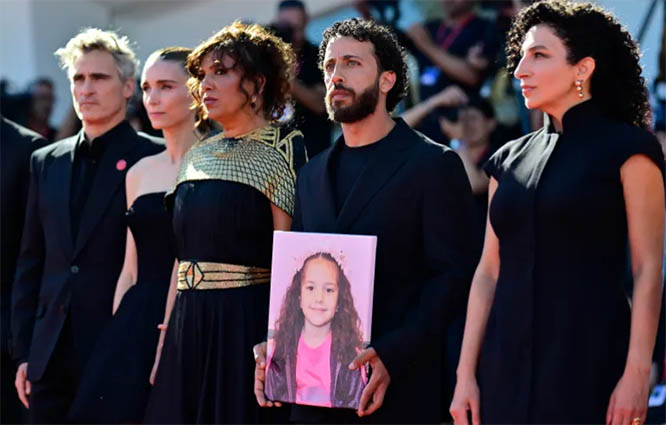
The Voice of Hind Rajab, inspired by the tragic final moments of a young Palestinian girl killed by Israeli fire in Gaza, has been nominated for an Academy Award in the Best International Feature Film category.

Directed by Tunisian filmmaker Kaouther Ben Hania, the film recounts the true story of five-year-old Hind Rajab, who lost her life in January 2024 while fleeing Israeli bombardment with her family.

The film features the real audio of Hind’s desperate call to the Palestinian Red Crescent Society, where she pleaded for help moments before the vehicle she was in was struck by 355 bullets.

The haunting narrative begins with a brief call made from the besieged Tel al-Hawa neighborhood of Gaza, where gunfire and armored vehicles drowned out every sound.

After witnessing the brutal killing of her family, she made a trembling call, her voice reduced to a whisper as she spoke of the massacre and her unbearable loneliness as the sole survivor.

Premiering at the Venice International Film Festival in September 2025, The Voice of Hind Rajab garnered widespread acclaim, receiving a record-setting 23-minute standing ovation and the Silver Lion Grand Jury Prize, the festival’s second-highest honor.

In her acceptance speech, Ben Hania dedicated the film to humanitarian workers and first responders in Gaza, emphasizing that Hind's voice symbolizes countless civilians affected by war.

She aims to give voice to victims often reduced to mere statistics, highlighting the broader suffering of civilians in war zones.

The film’s Oscar nomination underscores its powerful storytelling and ethical approach to depicting real-life tragedy, making it a crucial piece of contemporary cinema.

It serves not only as a narration of individual tragedy but also as an artistic and documentary response to the silence and censorship that often overshadow West Asian struggles and wars.

Using an innovative method she calls docufiction, Ben Hania bridges unvarnished reality and narrative structure, creating a work that is both artistically valuable and socially impactful.

Born in 1977 in Sidi Bouzid—later the epicenter of the Arab revolution—her background profoundly influenced her worldview and artistic approach.

She is a graduate of the Higher School of Audiovisual Arts of Tunis, Pantheon-Sorbonne University, and La Fémis in Paris, where her studies equipped her with the technical and theoretical tools needed to address complex subjects. 

Comments

Add new comment

  • Coastaldigest.com reserves the right to delete or block any comments.
  • Coastaldigset.com is not responsible for its readers’ comments.
  • Comments that are abusive, incendiary or irrelevant are strictly prohibited.
  • Please use a genuine email ID and provide your name to avoid reject.