Over a million pilgrims pack Mount Arafat for climax of biggest covid-era Hajj

News Network
July 8, 2022

arafat.jpg

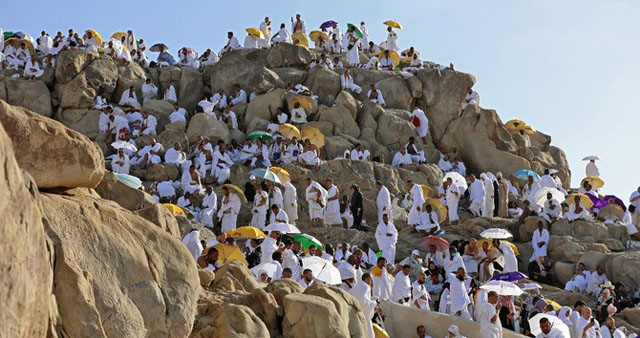
Mount Arafat, July 8: Huge crowds of robed Muslim pilgrims prayed on Saudi Arabia’s Mount Arafat on Friday, the climax of the biggest Hajj pilgrimage since the pandemic forced drastic cuts in numbers two years in a row.

Groups of worshippers, many holding umbrellas against the fierce sun, recited verses from the Qur'an on the rocky rise, where the Prophet Muhammad is believed to have given his final sermon.

Prayers on Mount Arafat, also known as the “Mount of Mercy,” are the highlight of the pilgrimage, capped this year at one million people including 850,000 from abroad after Covid greatly reduced numbers over 2020 and 2021.

Pilgrims, many of them in simple white robes and chanting “Oh God, here I am,” reached Mount Arafat on foot or in buses from the tents nearby where they spent the night.

After sunset, they will journey the short distance to Muzdalifah, where they will sleep under the stars before performing the symbolic “stoning of the devil” ceremony on Saturday.

“I am so happy to be here, like everyone else. This is the biggest Hajj in the coronavirus era, but it isn’t big enough yet,” Egyptian pilgrim Saad Farhat Khalil, 49, said.

“There are one million here today, but if the Saudis allowed more, 10 million would have came,” he added.

Entry roads were packed with worshippers as helicopters buzzed overhead and volunteers handed out bottles of water and collected rubbish in green plastic bags.

“Let’s keep the purest of all lands clean,” read a sign on a large garbage container.

The Hajj, usually one of the world’s largest annual religious gatherings, is among the five pillars of Islam and must be undertaken by all Muslims with the means at least once in their lives.

In 2019, as in previous years, some 2.5 million Muslims from around the world took part, a figure that dropped to a few thousand in 2020 and 60,000 in 2021.

Even though the crowds are back, Covid fears remain and the Hajj is taking place against the backdrop of a resurgence in the region, with some Gulf countries tightening restrictions to keep outbreaks in check.

All participants were required to submit proof of full vaccination and negative PCR tests. On reaching their white-tent encampment at Mina on Thursday, they were handed small bags containing masks and sanitiser.

The pilgrimage can be physically draining even in ideal conditions, but worshippers this year have faced an added challenge: scorching sun and temperatures rising to 42 degrees Celsius (108 degrees Fahrenheit).

Islam forbids men from wearing hats once the rites start, and many have been seen shielding themselves with umbrellas, prayer mats and even, in one case, a small bucket filled with water.

Women, meanwhile, are obliged to cover their heads with scarves.

“We can tolerate (the heat). We are here for the Hajj. The more we tolerate, the more our pilgrimage is accepted,” Laila, a 64-year-old Iraqi pilgrim who gave only her first name, told AFP in Makkah, where the rituals started.

Saudi officials have touted their preparations for the extreme conditions, highlighting the hundreds of hospital beds allocated for heatstroke patients and the “large number of misting fans” they have provided.

A truck has also been allocated to distribute umbrellas, water bottles and small fans.

Nevertheless, the National Center for Meteorology, which has set up an office in Mina, is sending warnings to pilgrims on their mobile phones, urging them to avoid outdoor rituals at certain times of the day, especially at noon.

On Saturday, Muslim pilgrims will take part in the “stoning,” the last major ritual of the Hajj which has previously led to deadly stampedes, as hundreds of thousands of participants converge on a small space.

After the stoning ritual, pilgrims return to the Grand Mosque in Makkah to perform a final “tawaf” or circling of the Kaaba, the cubic structure draped in a gold-embroidered black cloth that is the focal point of Islam.

Eid Al-Adha, the feast of the sacrifice that begins on Saturday, marks the end of Hajj.

Comments

Add new comment

  • Coastaldigest.com reserves the right to delete or block any comments.
  • Coastaldigset.com is not responsible for its readers’ comments.
  • Comments that are abusive, incendiary or irrelevant are strictly prohibited.
  • Please use a genuine email ID and provide your name to avoid reject.
News Network
November 28,2025

ministerPM.jpg

Mangaluru, Nov 28: Karnataka Health Minister and Dakshina Kannada district in-charge minister Dinesh Gundu Rao on Friday handed over Chief Minister Siddaramaiah’s letter to Prime Minister Narendra Modi, highlighting the severe distress faced by farmers due to crashing crop prices.

PM Modi arrived at the Mangaluru International Airport en route to Udupi, where Gundu Rao welcomed him and submitted the letter. The chief minister’s message stressed that farmers are suffering heavy losses because maize and green gram are being bought far below the Minimum Support Price (MSP). The state urged the Centre to immediately begin procurement at MSP.

According to the letter, Karnataka has a bumper harvest this year—over 54.74 lakh metric tons of maize and 1.98 lakh metric tons of green gram—yet farmers are unable to secure fair prices. Against the MSP of ₹2,400/MT for maize and ₹8,768/MT for green gram, market rates have plunged to ₹1,600–₹1,800 and ₹5,400 respectively.

The chief minister has requested the Centre to:

• Direct NAFED, FCI and NCCF to start MSP procurement immediately.
• Ensure ethanol units purchase maize directly from farmers or FPOs.
• Increase Karnataka’s ethanol allocation, citing high production capacity.
• Stop maize imports, which have depressed domestic prices.
• Relax quality norms for green gram, allowing up to 10% discoloration due to rains.

The letter stresses that MSP is crucial for farmer dignity and income stability and calls for swift central intervention to prevent a deepening crisis.

Comments

Add new comment

  • Coastaldigest.com reserves the right to delete or block any comments.
  • Coastaldigset.com is not responsible for its readers’ comments.
  • Comments that are abusive, incendiary or irrelevant are strictly prohibited.
  • Please use a genuine email ID and provide your name to avoid reject.
News Network
November 27,2025

Bengaluru, Nov 27: Karnataka Chief Minister Siddaramaiah’s camp is reportedly on alert as the Congress leadership tussle in the state intensifies, particularly amid speculation over the potential promotion of Deputy Chief Minister D.K. Shivakumar. Siddaramaiah is said to be in a “wait-and-watch” mode after admitting to “confusion” earlier this week and urging the party to “put a full stop” to it.

Sources say his supporters are ready to act if senior leaders — including party chief Mallikarjun Kharge, Sonia Gandhi, and Rahul Gandhi — give any indication of backing Shivakumar. If the party insists on a leadership change, Siddaramaiah’s camp has a list of alternatives, underscoring the deep rift between the two leaders. One possible candidate is Home Minister G. Parameshwara, a Siddaramaiah loyalist and influential Dalit leader.

The strategy was reportedly finalized at a meeting led by PWD Minister Satish Jarkiholi, another Siddaramaiah supporter, who stressed that Delhi leaders need to resolve the issue. Kharge and the Gandhis are expected to meet soon, after which Siddaramaiah and Shivakumar may be summoned to Delhi.

Shivakumar has largely stayed non-confrontational, publicly endorsing Siddaramaiah and downplaying speculation about his own ambitions. However, he has made pointed comments emphasizing the importance of honoring promises, directed at Siddaramaiah.

The feud traces back to the 2023 state election, when Siddaramaiah was chosen as Chief Minister while Shivakumar, who led the party’s campaign, was made Deputy CM and state party chief — a departure from the Congress’ usual “one post per person” rule.

There were also hints of a prior understanding that Siddaramaiah would step down midway through the term. As the halfway mark passed last week, Shivakumar-aligned lawmakers have ramped up pressure on the party for a leadership change, with Shivakumar himself hinting at stepping down as state party chief to pursue the top job.

Comments

Add new comment

  • Coastaldigest.com reserves the right to delete or block any comments.
  • Coastaldigset.com is not responsible for its readers’ comments.
  • Comments that are abusive, incendiary or irrelevant are strictly prohibited.
  • Please use a genuine email ID and provide your name to avoid reject.
News Network
November 24,2025

israelsyra.jpg

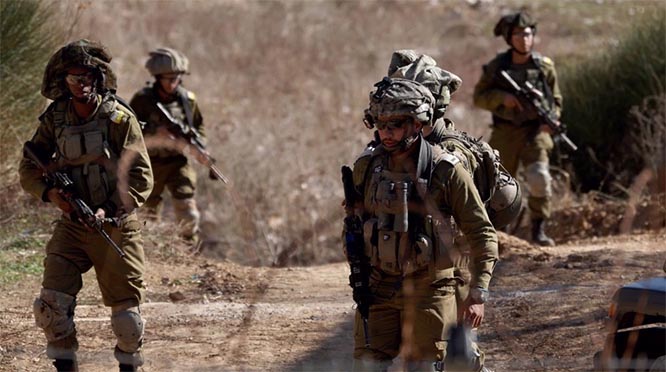
Israeli forces have pushed over the Syrian frontier, erecting a checkpoint and stopping vehicles in the southwestern city of Quneitra, in yet another breach of the Arab country’s sovereignty.

The violation took place on Sunday, when the troops made their way across the border, setting up the outpost near the Ain al-Bayda junction in northern Quneitra, Syrian outlets reported.

According to the al-Ikhbariya paper, an Israeli detachment positioned itself at the junction, halting cars and conducting searches.

The Syrian Arab News Agency (SANA) reported that three Israeli military vehicles then moved further into the northern countryside, deploying between the town of Jubata al-Khashab and the villages of Ofaniya and Ain al-Bayda. The agency added that a separate Israeli unit mounted a new incursion in the central region, approaching the villages of Umm Batina and al-Ajraf.

Residents said such activities have surged in recent months, pointing to Israeli advances onto farmland, leveling of extensive forested areas, arrests, and spread of mobile checkpoints.

The Israeli regime began markedly increasing its military aggression against Syria last year.

The escalation coincided with increasingly ferocious onslaughts throughout the country by the so-called Hay'at Tahrir al-Sham (HTS) Takfiri terrorist group, which the government of President Bashar al-Assad had confined to northwestern Syria. The HTS, however, managed to overthrow the government as the Israeli attacks would pummel the country’s civilian and defensive infrastructure.

Various reports have shown that, during the escalation, the regime conducted more than 1,000 airstrikes on the Syrian territory and over 400 ground raids into the south.

Following the collapse of the Assad government, Tel Aviv also widened its grip over the occupied Golan Heights by taking control of a demilitarized buffer zone, in defiance of a 1974 Disengagement Agreement. Earlier this month, senior Israeli officials, including Prime Minister Benjamin Netanyahu, visited the buffer zone, prompting expressions of alarm on the part of the United Nations.

The United States, the regime’s biggest ally, has, meanwhile, been fraternizing the HTS head Abu Mohammed al-Jolani amid the widely reported prospect of rapprochement with Tel Aviv.

Comments

Add new comment

  • Coastaldigest.com reserves the right to delete or block any comments.
  • Coastaldigset.com is not responsible for its readers’ comments.
  • Comments that are abusive, incendiary or irrelevant are strictly prohibited.
  • Please use a genuine email ID and provide your name to avoid reject.