12-day war against Iran costs Israel an estimated $20 billion

News Network
June 26, 2025

israeldamaged.jpg

Israel has suffered an estimated $12 billion in direct losses from its 12-day war of aggression against Iran, with total losses potentially rising to $20 billion, according to Israeli media and economic reports.

The losses encompass military expenditures, missile strike damages, payouts to affected individuals and businesses, and infrastructure repairs.

Experts warn the final tally may reach $20 billion once indirect economic impacts and civilian compensation claims are fully calculated.

According to Israeli newspaper Yedioth Ahronoth, the regime’s treasury has already sustained 22 billion shekels ($6.46 billion) in damages.

The Israeli military is now seeking an extra 40 billion shekels ($11.7 billion) to restock arms supplies, purchase additional interceptors and offensive weapons, and maintain reserve units, following pre-war requests of 10 billion and later 30 billion shekels.

Israel’s budget deficit is expected to rise to approximately 6 percent amid challenges to finance war expenses, building on deficits already accumulated during the Gaza war.

The move coincides with forecasts of at least a 0.2 percent economic slowdown, which would further reduce tax revenues.

Massive military spending

Israeli business daily Calcalist reported that the regime’s cabinet had spent roughly $5 billion, around $725 million per day, on offensive operations against Iran and defensive measures to intercept Tehran’s missile and drone barrages

Compensation alone is expected to cost at least five billion shekels ($1.5 billion).

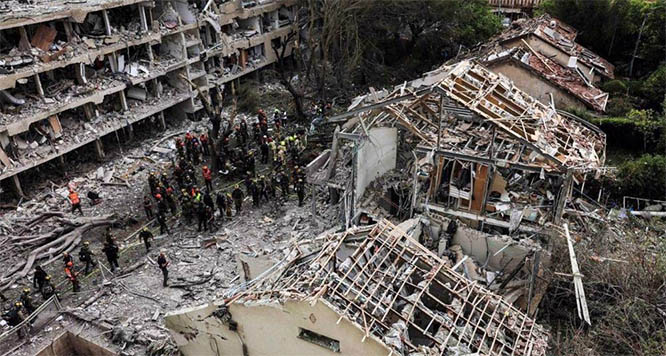
TheMarker confirmed on Monday that physical damage from Iranian missile attacks has already surpassed 5 billion shekels ($1.5 billion).

Economic analysts had cautioned that prolonging the war could have pushed Israel's embattled economy to the brink of collapse.

According to property tax estimates, approximately 15,000 Israeli settlers were forced to evacuate their units due to damages caused by Iranian retaliatory operations, with many relocating to hotels across the occupied territories.

The cost of their hotel accommodation is currently estimated at around 100 million shekels ($29 million. The regime will have to pay rent for an unknown period of time to hundreds or thousands of families, some of them long-term, until the collapsed buildings are rebuilt - a process that could take years.”

So far, more than 41,000 claims have been submitted to the regime’s compensation fund, with many more expected, according to data published by the right-wing newspaper Israel Hayom.

Of these, approximately 33,000 claims were for damage to buildings, while over 8,000 related to damage to vehicles, property, and equipment. The majority of claims - around 26,000 - were submitted by residents of Tel Aviv.

Before October 7, 2023, around 6,000 settlers were receiving permanent compensation from the regime. That number rose sharply to 25,000 following the Hamas-led operation inside southern settlements.

According to TheMarker, this figure is expected to increase further in the aftermath of the war on Iran.

Calls for US support

According to a report, citing a finance ministry insider, Israel is considering asking Washington for additional financial backing, whether as aid or guaranteed loans, to mitigate war costs and fund pressing military priorities.

On June 13, Israel launched an unprovoked aggression against Iran, targeting nuclear facilities and assassinating senior military commanders and scientists along with ordinary civilians.

In response, Iran launched hundreds of ballistic missiles and drones that struck multiple sensitive and strategic Israeli locations, as confirmed by Israeli media outlets.

The Israeli health ministry confirmed 29 fatalities and 3,238 injuries from the Iranian retaliatory attacks, though observers say the figure is likely to be much higher due to Israel's history of censoring casualty statistics.

The Marker characterized the missile strikes as creating “apocalyptic'” devastation, with preliminary damage assessments reaching at least 5 billion shekels ($1.4 billion).

Israel was forced to unilaterally accept a US-proposed ceasefire after incurring heavy losses and failing to destroy Iran’s nuclear infrastructure.

After the ceasefire went into effect on Tuesday, Israel’s extremist finance minister Bezalel Smotrich was quoted as saying “There is no doubt that this morning leaves a bitter taste.”

Comments

Add new comment

  • Coastaldigest.com reserves the right to delete or block any comments.
  • Coastaldigset.com is not responsible for its readers’ comments.
  • Comments that are abusive, incendiary or irrelevant are strictly prohibited.
  • Please use a genuine email ID and provide your name to avoid reject.
News Network
January 20,2026

Mangaluru: In a major step towards strengthening rural innovation, the Office of the Principal Scientific Adviser (PSA) to the Government of India is supporting the establishment of RuTAGe Smart Village Centres (RSVCs) across the country through collaborations with academic institutions, civil society organisations and philanthropic partners.

As part of this national initiative, Nitte (Deemed to be University) will set up the first RSVCs in the region at Nitte GP in Udupi district and at the Nitte Health Centre, Sevanjali Trust, Farangipete, in Dakshina Kannada district. The centres will be inaugurated on January 21. In South India, the programme is being implemented by the Section Infin-8 Foundation (SI-8).

Speaking to reporters on Monday, SI-8 founder-director Vishwas US said experts from Nitte University and SI-8 would work closely with farmers, students, youth and local entrepreneurs to adapt and deploy technologies tailored to local needs.

Project head Prof Iddya Karunasagar, representing Nitte DU, said the RSVCs at Nitte and Farangipete would serve as demonstration hubs for a wide range of agriculture, energy, skill-development and assistive technologies. These include solar dryers for fruits, vegetables and crops; soil-testing solutions; power weeders and women-friendly farm tools; wind-powered devices for rural artisans; grain storage systems; grass-cutting and tree-climbing equipment; and liquid fertiliser production using cowshed waste.

SI-8 CEO Aravind C Kumar said the centres would also provide access to digital and knowledge-based platforms such as ISRO applications, government scheme portals, market linkage tools and gamified learning resources, along with assistive technologies for persons with visual impairments.

Highlighting the broader impact of the initiative, Principal Scientific Adviser Prof Ajay Kumar Sood said it demonstrated how applied research could bridge the rural–urban divide and help create self-reliant, technology-enabled villages.

The initiative has been made possible through philanthropic support from Dr NC Murthy of ACM Business Solutions, LLC, USA. Dr Sapna Poti, Director (Strategic Alliances) at the Office of the Principal Scientific Adviser, said the long-term objective is to build self-sufficient, technology-driven communities capable of generating sustainable livelihoods on their own.

Comments

Add new comment

  • Coastaldigest.com reserves the right to delete or block any comments.
  • Coastaldigset.com is not responsible for its readers’ comments.
  • Comments that are abusive, incendiary or irrelevant are strictly prohibited.
  • Please use a genuine email ID and provide your name to avoid reject.
News Network
January 20,2026

iran.jpg

Iranian security and intelligence forces have captured more than 470 individuals in three provinces, identified as key figures behind the recent wave of violent unrest and terrorist activities linked to foreign-backed networks.

The Intelligence Ministry's provincial office in Khorasan Razavi announced on Monday the arrest of 192 armed terrorists, identified as the main agents behind recent riots in the region. 

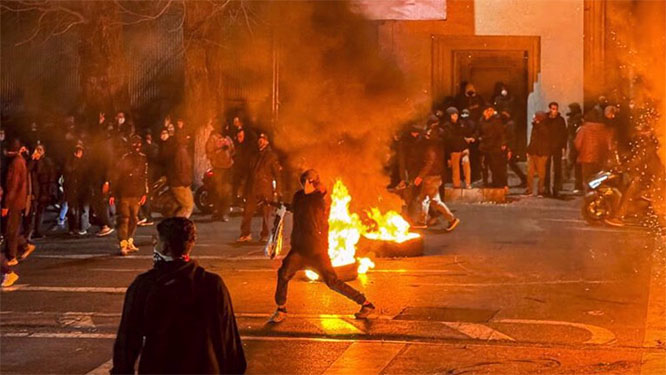
According to an official statement, the detainees were involved in the killing of several security personnel and civilians, setting fire to mosques, public service facilities, and buses, as well as attacks on military and law enforcement centers.

The seized items from the group include several bulletproof vests, Kalashnikov rifles, hunting weapons, Winchester rifles, and various cold weapons such as daggers, swords, brass knuckles, tactical knives, crossbows, and chains.

Evidence indicates that some of the individuals were tied to hostile movements and terrorist organizations, with links overseas. Others were identified as members of violent criminal gangs, actively taking part in the unrest alongside their associates.

Simultaneously, in the western province of Lorestan, the IRGC announced the arrest of 134 individuals as the main leaders and influential field agents of a US-Israeli terrorist network.

The IRGC statement stated that these individuals formed terrorist cells during the recent unrest, committing "Daesh-like" acts.

They wounded security forces with firearms and cold weapons, and burned and destroyed public and private properties, including mosques, shops, banks, and private and public vehicles.

In the northwestern province of Zanjan, the police reported detaining 150 people identified as principal leaders and agents behind recent riots.

Authorities noted that these individuals were responsible for destroying public and private property and intentionally setting fire to vehicles in the province's squares.

Their crimes include shedding the blood of innocent people, destroying public and private property, attempting to enter military sites, disrupting public order, and spreading terror among citizens.

A variety of cold weapons were reportedly seized from the detainees.

What began late last month as peaceful protests over economic hardship across Iran turned violent after public statements by US and Israeli regime figures encouraged vandalism and disorder.

During the unrest, foreign-backed mercenaries rampaged through cities, killing security forces and civilians and damaging public property.

Comments

Add new comment

  • Coastaldigest.com reserves the right to delete or block any comments.
  • Coastaldigset.com is not responsible for its readers’ comments.
  • Comments that are abusive, incendiary or irrelevant are strictly prohibited.
  • Please use a genuine email ID and provide your name to avoid reject.
coastaldigest.com news network
January 19,2026

rizwanzameer.jpg

Bengaluru: As the dust settles on the recent legislative session, the corridors of Vidhana Soudha are buzzing with more than just policy talk. A high-stakes game of political musical chairs has begun, exposing a deepening rift within the Congress party’s Muslim leadership as a major Cabinet reshuffle looms.

With the party hierarchy signaling a "50% refresh" to gear up for the 2028 Assembly elections, the race to fill three projected Muslim ministerial berths has transformed from a strategic discussion into an all-out turf war.

The "Star Son" Spark

The internal friction turned public this week following provocative remarks by Zaid Khan, actor and son of Wakf Minister Zameer Ahmed Khan. Zaid’s claim—that his father "helped" secure a ticket for Shivajinagar MLA Rizwan Arshad in 2023—has acted as a lightning rod for resentment.

Rizwan’s camp was quick to fire back, dismissing the comment as a desperate attempt by Zameer to manufacture seniority. "Rizwan’s political pedigree was forged in the NSUI and Youth Congress long before Zameer even stepped into the party," a supporter noted, highlighting Rizwan’s tenure as an AICC secretary and his two-term presidency of the State Youth Congress.

A Tale of Two Loyalists

While both Zameer Ahmed Khan and Rizwan Arshad are staunch allies of Chief Minister Siddaramaiah and represent Bengaluru strongholds, their political DNA could not be more different:

•    Zameer Ahmed Khan: A four-time MLA who crossed over from JD(S) in 2018. Known for his "overzealous" and often polarizing outreach during communal flashpoints—from the DJ Halli riots to the recent Wakf land notice controversy—his style has frequently left the Congress high command in a state of "discomfort."

•    Rizwan Arshad: A homegrown organizational man. Seen as a "quiet performer," Arshad represents the sophisticated, moderate face of the party, preferred by those who find Zameer’s brand of politics too volatile.

The Outsiders Looking In

The bickering isn't limited to a duo. The "Beary" community, represented by leaders like N A Haris and Saleem Ahmed, is demanding its pound of flesh. Saleem Ahmed, the Chief Whip in the Legislative Council, has dropped the veil of diplomacy, openly declaring his ministerial aspirations.

"I was the only working president not included in the Cabinet last time," Saleem noted pointedly, signaling that the "loyalty quota" is no longer enough to keep the peace.

As Chief Minister Siddaramaiah prepares to finalize the list, he faces a delicate balancing act: rewarding the aggressive grassroots mobilization of Zameer’s camp without alienating the organizational stalwarts and minority sub-sects who feel increasingly sidelined by the "Chamarajpet-Shivajinagar" binary.

Comments

Add new comment

  • Coastaldigest.com reserves the right to delete or block any comments.
  • Coastaldigset.com is not responsible for its readers’ comments.
  • Comments that are abusive, incendiary or irrelevant are strictly prohibited.
  • Please use a genuine email ID and provide your name to avoid reject.