Bahrain’s long-serving PM Khalifa bin Salman Al Khalifa, 84, passes away

News Network
November 11, 2020

Manama, Nov 11: Bahrain’s long-serving Prime Minister Sheikh Khalifa bin Salman Al Khalifa has died, the state media reported. He was 84.

“The Royal Court mourns His Royal Highness … who passed away this morning at Mayo Clinic Hospital in the United States of America,” the Bahrain News Agency said on Wednesday, without elaborating.

The Gulf state’s King Sheikh Hamad bin Isa Al Khalifa announced official mourning for a week during which flags will be flown at half-mast, the agency said.

The burial ceremony will take place upon the repatriation of his body and the funeral will be limited to a specific number of relatives, it said.

Sheikh Khalifa was one of the world’s longest-serving prime ministers who led his island nation’s government for decades and survived the 2011 Arab Spring protests that demanded his removal over corruption allegations.

His stern response to the pro-democracy protests and criticism of similar unrest across the Arab world underlined what for many was the defining characteristic of his career, namely a stalwart defence of dynastic rule. The Al Khalifa family has ruled Bahrain since 1783.

In August, Sheikh Khalifa left the kingdom for what official media called at the time “a private visit abroad”. Earlier this year, he spent time in Germany for unspecified medical treatment, returning to Bahrain in March.

Bahrain, a staunch ally of neighbouring Saudi Arabia and the United States, is also the home base of the US Navy’s Fifth Fleet.

Controversial figure

Sheikh Khalifa’s power and wealth could be seen everywhere in Bahrain. His official portrait hung for decades on walls alongside the country’s ruler.

He had his own private island where he met foreign dignitaries, complete with a marina and a park that had peacocks and gazelle roam its grounds.

“Khalifa bin Salman represented the old guard in more ways than just age and seniority,” said Kristin Smith Diwan, a senior resident scholar at the Washington-based Arab Gulf States Institute.

“He represented an old social understanding rooted in royal privilege and expressed through personal patronage.”

The son of Bahrain’s former ruler, Sheikh Salman bin Hamad Al Khalifa, who ruled from 1942 to 1961, Sheikh Khalifa learned governance at his father’s side as the island remained a British protectorate.

His brother, Sheikh Isa bin Salman Al Khalifa, took power in 1961 and served as monarch when Bahrain gained its independence from Britain in 1971. Under an informal arrangement, Sheikh Isa handled the island’s diplomacy and ceremonial duties while Sheikh Khalifa ran the government and economy.

The years that followed saw Bahrain develop rapidly as it sought to move beyond its dependence on dwindling oil reserves. Manama at that time served as what Dubai in the United Arab Emirates ultimately became, a regional financial, service and tourism hub.

The opening of the King Fahd Causeway in 1986 gave the island nation its first land link with its rich and powerful neighbour, Saudi Arabia, and offered an escape for Westerners in the kingdom who wanted to enjoy Bahrain’s alcohol-soaked nightclubs and beaches.

But Sheikh Khalifa increasingly saw his name entangled in corruption allegations, such as a major foreign corruption practices case against aluminium producer Alcoa over using a London-based middleman to facilitate bribes for Bahraini officials. Alcoa agreed to pay $384m in fines to the US government to settle the case in 2014.

The US embassy in Manama similarly had its own suspicions about Sheikh Khalifa, writing in cables that the prince had “off-the-books access to income from the state-owned enterprises” such as the Bahrain Petroleum Co and Aluminium Bahrain, the country’s aluminium producer.

“I believe that Shaikh Khalifa is not wholly a negative influence,” wrote former US Ambassador Ronald E Neumann in 2004 in a cable released by WikiLeaks. “While certainly corrupt, he has built much of modern Bahrain.”

Those corruption allegations fuelled discontent, particularly among Bahrain’s Shia majority. In February 2011, protesters inspired by the Arab Spring demonstrations across the Middle East filled the streets and occupied the capital Manama’s Pearl Roundabout to demand political reforms and a greater say in the country’s future.

While some called for a constitutional monarchy, many others pressed for the removal of the long-ruling prime minister and other members of the Sunni royal family altogether, including King Hamad bin Isa Al Khalifa.

At one point during the height of the unrest in March 2011, thousands of protesters besieged the prime minister’s office while officials met inside, demanding Sheikh Khalifa step down.

Protesters also took to waving one Bahraini dinar notes over allegations the prime minister bought the land on which Bahrain’s Financial Harbour development sits for just a single dinar.

Bahraini officials soon crushed the protests with the backing of troops from neighbouring Saudi Arabia and the UAE. Low-level unrest continued in the years that followed, with Shia protesters frequently clashing with riot police.

In recent years, Sheikh Khalifa’s influence waned as he faced unexplained health problems.

Comments

Nasir ahmmed
 - 
Thursday, 26 Nov 2020

Please sir i need green signal because i need go back abudhabi please sir

Add new comment

  • Coastaldigest.com reserves the right to delete or block any comments.
  • Coastaldigset.com is not responsible for its readers’ comments.
  • Comments that are abusive, incendiary or irrelevant are strictly prohibited.
  • Please use a genuine email ID and provide your name to avoid reject.
coastaldigest.com news network
January 19,2026

rizwanzameer.jpg

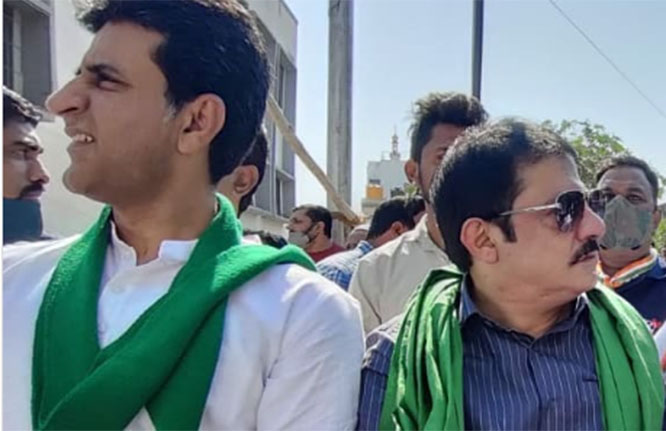
Bengaluru: As the dust settles on the recent legislative session, the corridors of Vidhana Soudha are buzzing with more than just policy talk. A high-stakes game of political musical chairs has begun, exposing a deepening rift within the Congress party’s Muslim leadership as a major Cabinet reshuffle looms.

With the party hierarchy signaling a "50% refresh" to gear up for the 2028 Assembly elections, the race to fill three projected Muslim ministerial berths has transformed from a strategic discussion into an all-out turf war.

The "Star Son" Spark

The internal friction turned public this week following provocative remarks by Zaid Khan, actor and son of Wakf Minister Zameer Ahmed Khan. Zaid’s claim—that his father "helped" secure a ticket for Shivajinagar MLA Rizwan Arshad in 2023—has acted as a lightning rod for resentment.

Rizwan’s camp was quick to fire back, dismissing the comment as a desperate attempt by Zameer to manufacture seniority. "Rizwan’s political pedigree was forged in the NSUI and Youth Congress long before Zameer even stepped into the party," a supporter noted, highlighting Rizwan’s tenure as an AICC secretary and his two-term presidency of the State Youth Congress.

A Tale of Two Loyalists

While both Zameer Ahmed Khan and Rizwan Arshad are staunch allies of Chief Minister Siddaramaiah and represent Bengaluru strongholds, their political DNA could not be more different:

•    Zameer Ahmed Khan: A four-time MLA who crossed over from JD(S) in 2018. Known for his "overzealous" and often polarizing outreach during communal flashpoints—from the DJ Halli riots to the recent Wakf land notice controversy—his style has frequently left the Congress high command in a state of "discomfort."

•    Rizwan Arshad: A homegrown organizational man. Seen as a "quiet performer," Arshad represents the sophisticated, moderate face of the party, preferred by those who find Zameer’s brand of politics too volatile.

The Outsiders Looking In

The bickering isn't limited to a duo. The "Beary" community, represented by leaders like N A Haris and Saleem Ahmed, is demanding its pound of flesh. Saleem Ahmed, the Chief Whip in the Legislative Council, has dropped the veil of diplomacy, openly declaring his ministerial aspirations.

"I was the only working president not included in the Cabinet last time," Saleem noted pointedly, signaling that the "loyalty quota" is no longer enough to keep the peace.

As Chief Minister Siddaramaiah prepares to finalize the list, he faces a delicate balancing act: rewarding the aggressive grassroots mobilization of Zameer’s camp without alienating the organizational stalwarts and minority sub-sects who feel increasingly sidelined by the "Chamarajpet-Shivajinagar" binary.

Comments

Add new comment

  • Coastaldigest.com reserves the right to delete or block any comments.
  • Coastaldigset.com is not responsible for its readers’ comments.
  • Comments that are abusive, incendiary or irrelevant are strictly prohibited.
  • Please use a genuine email ID and provide your name to avoid reject.
News Network
January 19,2026

trump.jpg

Donald Trump has linked his repeated threats to seize Greenland to his failure to win the Nobel Peace Prize, in a letter to Norwegian Prime Minister Jonas Gahr Støre.

The authenticity of the letter, in which Trump says he no longer feels obligated to “think purely of peace,” was confirmed by Støre to the Norwegian newspaper VG.

“Considering your country decided not to give me the Nobel Peace Prize for having stopped eight wars plus, I no longer feel an obligation to think purely of peace,” Trump wrote, adding he can now “think about what is good and proper for the United States.”

Støre said Trump’s letter was in response to a short message he had sent earlier, on behalf of himself and Finland’s President Alexander Stubb.

Trump has escalated rhetoric toward Greenland, a self-governing Danish territory, insisting the US will take control “one way or the other.” Over the weekend, he tweeted: “Now it is time, and it will be done!!!”

On Saturday, Trump threatened a 10% tariff on imports from Denmark, Norway, Sweden, France, Germany, the UK, the Netherlands, and Finland from 1 February until the US is allowed to purchase the island. EU diplomats met for emergency talks on possible retaliatory tariffs and sanctions.

In his letter, Trump argued Denmark “cannot protect” Greenland from Russia or China, questioning Danish ownership: “There are no written documents; it’s only that a boat landed there hundreds of years ago.” He added that NATO should support the US, claiming the world is “not secure unless we have complete and total control of Greenland.”

Trump’s stance has unsettled the EU and NATO, as he refused to rule out military action to take control of the mineral-rich island.

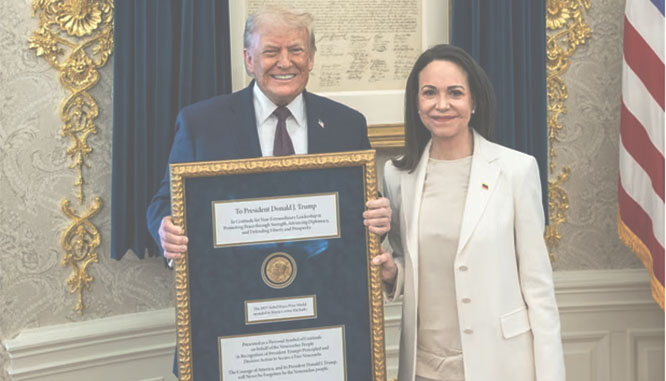
The Nobel Peace Prize is awarded by the independent Norwegian Nobel Committee, not the government. Trump had campaigned for last year’s prize, which went to Venezuelan opposition leader María Corina Machado, who dedicated her award to him.

Støre reiterated that the Nobel Prize decision rests solely with the committee.

Comments

Add new comment

  • Coastaldigest.com reserves the right to delete or block any comments.
  • Coastaldigset.com is not responsible for its readers’ comments.
  • Comments that are abusive, incendiary or irrelevant are strictly prohibited.
  • Please use a genuine email ID and provide your name to avoid reject.
News Network
January 23,2026

oscar.jpg

The Voice of Hind Rajab, inspired by the tragic final moments of a young Palestinian girl killed by Israeli fire in Gaza, has been nominated for an Academy Award in the Best International Feature Film category.

Directed by Tunisian filmmaker Kaouther Ben Hania, the film recounts the true story of five-year-old Hind Rajab, who lost her life in January 2024 while fleeing Israeli bombardment with her family.

The film features the real audio of Hind’s desperate call to the Palestinian Red Crescent Society, where she pleaded for help moments before the vehicle she was in was struck by 355 bullets.

The haunting narrative begins with a brief call made from the besieged Tel al-Hawa neighborhood of Gaza, where gunfire and armored vehicles drowned out every sound.

After witnessing the brutal killing of her family, she made a trembling call, her voice reduced to a whisper as she spoke of the massacre and her unbearable loneliness as the sole survivor.

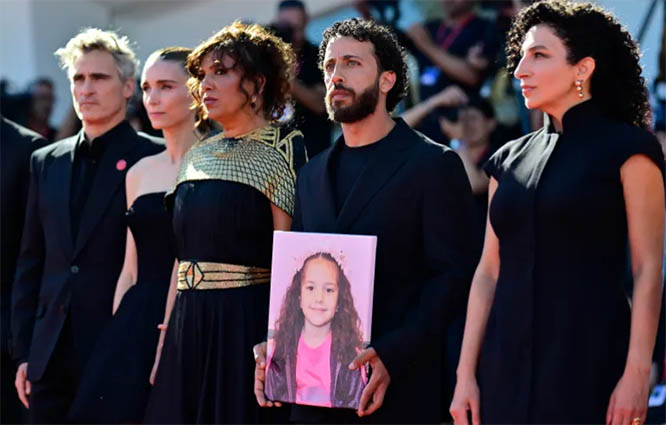
Premiering at the Venice International Film Festival in September 2025, The Voice of Hind Rajab garnered widespread acclaim, receiving a record-setting 23-minute standing ovation and the Silver Lion Grand Jury Prize, the festival’s second-highest honor.

In her acceptance speech, Ben Hania dedicated the film to humanitarian workers and first responders in Gaza, emphasizing that Hind's voice symbolizes countless civilians affected by war.

She aims to give voice to victims often reduced to mere statistics, highlighting the broader suffering of civilians in war zones.

The film’s Oscar nomination underscores its powerful storytelling and ethical approach to depicting real-life tragedy, making it a crucial piece of contemporary cinema.

It serves not only as a narration of individual tragedy but also as an artistic and documentary response to the silence and censorship that often overshadow West Asian struggles and wars.

Using an innovative method she calls docufiction, Ben Hania bridges unvarnished reality and narrative structure, creating a work that is both artistically valuable and socially impactful.

Born in 1977 in Sidi Bouzid—later the epicenter of the Arab revolution—her background profoundly influenced her worldview and artistic approach.

She is a graduate of the Higher School of Audiovisual Arts of Tunis, Pantheon-Sorbonne University, and La Fémis in Paris, where her studies equipped her with the technical and theoretical tools needed to address complex subjects. 

Comments

Add new comment

  • Coastaldigest.com reserves the right to delete or block any comments.
  • Coastaldigset.com is not responsible for its readers’ comments.
  • Comments that are abusive, incendiary or irrelevant are strictly prohibited.
  • Please use a genuine email ID and provide your name to avoid reject.