



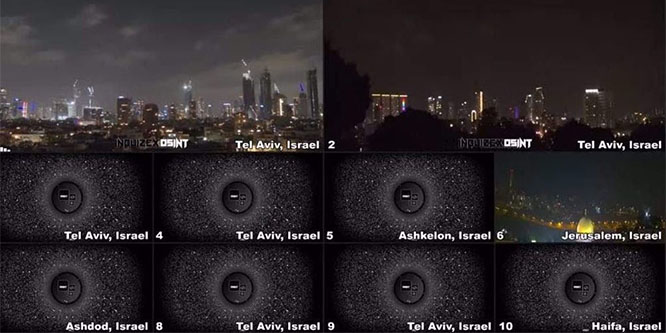
Tehran, June 17: After Iran launched the ninth phase of its retaliatory military campaign, Operation True Promise III, on Monday night, the Israeli government imposed a sweeping media blackout across the country — halting live aerial coverage from multiple cities amid ongoing missile and drone strikes.
Live Feeds Abruptly Cut Off
Reports confirm that live broadcasts from over Tel Aviv and Haifa were suddenly interrupted as waves of Iranian missiles lit up the night sky. The order to halt aerial coverage appears to have come directly from Israeli authorities, in an effort to suppress real-time visibility of impact zones and defense response.
Western networks, including CNN, also pulled their live aerial streams from key locations in Israeli-held areas shortly after the blackout was initiated. While no formal explanation was issued, the move coincided with escalating Iranian strikes.
Censorship on Social Media Platforms
As the bombardment continued, several independent livestreams on platforms such as YouTube and Instagram — some of which showed the skies over Tel Aviv, Herzliya, and the Jerusalem corridor — were taken down without explanation. The removals sparked criticism from viewers who accused platforms of complying with state-level censorship.
Journalist Crackdown Intensifies
The media clampdown was not limited to digital coverage. Several journalists — both Israeli and foreign — were reportedly detained for filming or attempting to broadcast images of missile impacts and air defense activity.
Israeli military officials had earlier warned that recording and disseminating footage of missile strikes — particularly details such as location or timing — would be treated as aiding the enemy during wartime.
Details of Iranian Strikes
According to Iranian military sources, Monday’s attacks targeted command and control centers inside Israel, with the Islamic Revolutionary Guard Corps (IRGC) employing advanced missile systems and precision drones guided by upgraded intelligence systems.
These strikes are part of a broader campaign that began on Friday. Since then, Iran’s IRGC Aerospace Division has conducted nine waves of missile and drone attacks under Operation True Promise III, focusing on military and strategic assets.
On Sunday, Iran claimed to have hit Israeli fighter jet fuel production facilities and energy infrastructure in Haifa, in what it called one of the most significant drone-missile operations of the war so far.
Why the Blackout?
Analysts say the media blackout reflects growing concern within the Israeli military establishment over the psychological and strategic impact of Iranian strikes. Visibility of precision hits, coupled with growing civilian unease, threatens to undermine confidence in the regime’s military capabilities.
“The blackout is aimed at damage control — not just physical, but reputational,” said a West Asian security analyst. “The strikes have punctured a long-maintained image of invulnerability.”

Comments
Add new comment