



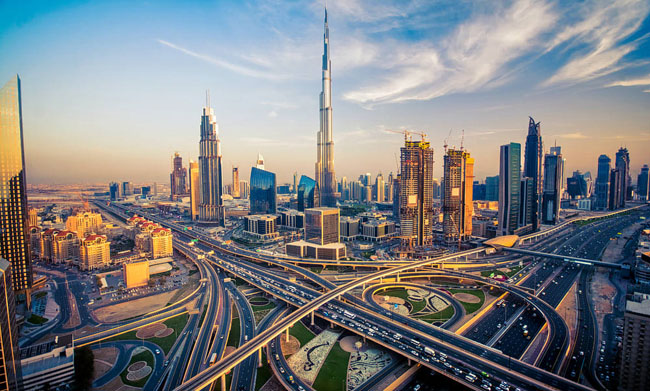
Dubai turns page on pandemic with hottest jobs market in 2 years

Agencies
September 24, 2021

dubaicity.jpg

What may have been the steepest population decline in the Gulf region is giving way to the hottest jobs market Dubai has seen since China detected its first coronavirus case in December 2019.

A turnaround in employment took hold this summer and spread as looser travel restrictions revived business. But while headcounts are swelling with freshly recruited cooks and cabin crew, the economy of the Middle East’s commercial center is facing a fraught path to normalcy.

“We’re bringing people back but managing that carefully along with how we see occupancy moving,” Mark Kirby, chief operating officer of Emaar Hospitality Group, said in an interview. “Now we’re ramping up because the fourth quarter for us is an important time of year.”

Owned by the builder of the world’s tallest tower, the hotel company is looking to employ 200 to 300 people for a range of posts and is hiring both within the United Arab Emirates and from Asian countries that have been slow to reopen amid longer shutdowns. 

As Dubai prepares to kick off the World Expo fair next month, the city’s flagship airline, Emirates, is planning to recruit 3,000 cabin crew and 500 airport services employees to join its hub over the next six months. Amazon is meanwhile looking to create 1,500 jobs in the UAE this year.

The lifting of curbs between Dubai and countries such as the UK, the US, and Saudi Arabia will have a “massive impact,” with about 27 million people passing through this year alone, Dubai Airports CEO Paul Griffiths told Bloomberg Television this week.

While labor shortages and hiring difficulties hold back the labor market in parts of Europe and employment is dropping in countries like Australia after the delta variant of coronavirus forced lockdowns, the oil-rich Gulf region can lean on foreign workers to fill most private-sector jobs. 

Businesses in Dubai’s travel and tourism industry in August saw the sharpest increases in activity and new work in over two years, according to a Purchasing Managers’ Index compiled by IHS Markit.

‘Good Summer’

In the Middle East, “we had a really good summer, well above expectations” as travel corridors gradually opened amid rising vaccination rates, Mark Willis, Accor’s CEO for India, Middle East, Africa & Turkey.

The hospitality industry “has been rehiring across the board for the past three months,” Guy Hutchinson, president, and CEO of Abu Dhabi-based hotel operator Rotana said in an interview. 

In the past three months, Rotana hired about 400 staff across the UAE and will continue to recruit as it opens new hotels, he said. Rotana was forced to lay off less than 5 per cent of its workforce at the start of the pandemic and by the end of February, it rehired 70 per cent of those who were let go.

Research firm STR Global estimated last year that about 30 per cent of jobs in Dubai’s hotel industry were likely to be lost until demand recovers from the pandemic. 

Occupancy at Emaar’s hotels is hovering around 54 per cent while the average daily rate has held up at over 1,000 dirhams per night, Kirby said. 

Emaar’s Plans

Emaar is opening six hotels this year, including its first property in Istanbul and another in Bahrain. It opened three beach hotels in the UAE last year and will open five others in 2022.  

It’s having “active discussions” to open three to four Armani hotels in a number of key cities in Saudi Arabia and Europe, Kirby said, declining to elaborate as the agreements haven’t been signed yet. Emaar Hospitality operates two Armani hotels, one in the world’s tallest tower in Dubai and another in Milan. 

While Emaar isn’t currently in talks to sell any of its properties, the company is “looking at an asset-light model strategy” for its hotel division, Kirby said. In 2018, Emaar Hospitality Group sold five hotels, including the flagship Address Dubai Mall and Address Boulevard to Abu Dhabi National Hotels.

Comments

Add new comment

  • Coastaldigest.com reserves the right to delete or block any comments.
  • Coastaldigset.com is not responsible for its readers’ comments.
  • Comments that are abusive, incendiary or irrelevant are strictly prohibited.
  • Please use a genuine email ID and provide your name to avoid reject.
News Network
February 1,2026

Bengaluru, Feb 1: For travelers landing at Kempegowda International Airport (KIA), the sleek, wood-paneled curves of Terminal 2 promise a world-class welcome. But the famed “Garden City” charm quickly withers at the curb. As India’s aviation sector swells to record numbers—handling over 43 million passengers in Bengaluru alone this past year—the “last mile” has turned into a marathon of frustration.

The Bengaluru Logjam: Rules vs Reality

While the city awaits the 2027 completion of the Namma Metro Blue Line, the interim has been chaotic. Recent “decongestion” rules at Terminal 1 have pushed app-based cab pickups to distant parking zones, forcing weary passengers into a 20-minute walk with luggage.

“I landed after ten months away and felt like a stranger in my own city,” says Ruchitha Jain, a Koramangala resident. “My driver couldn’t find me, staff couldn’t guide me, and the so-called ‘Premium’ lane is just a fancy tax on convenience.”

•    The Cost of Distance: A 40-km cab ride can now easily cross ₹1,500, driven by demand pricing and airport surcharges.

•    The Bus Gap: While Vayu Vajra remains a lifeline, its ₹300–₹400 fare is often cited as the most expensive airport bus service in the country.

A National Pattern of Disconnect

The struggle is not unique to Karnataka. From Chennai’s coast to Hyderabad’s plateau, India’s airports tell a familiar story: brilliant runways, broken exits.

City:    Primary Issue   |    Recent Development

Bengaluru:    Cab pickup restrictions & distance  |    App-based taxis shifted to far parking zones; long walks and fare spikes reported

Chennai:    Multi-Level Parking (MLCP) hike  |    Passengers report 40-minute walks to reach cab pickup points

Hyderabad:    “Taxi mafia” & touting  |    Over 440 touting cases reported; security presence intensified

Mumbai:    Fare scams  |     Tourists charged ₹18,000 for just 400 metres, triggering police action

In Hyderabad, travelers continue to battle entrenched local groups that intimidate Uber and Ola drivers, pushing passengers toward overpriced private taxis. Chennai flyers, meanwhile, complain that reaching the designated pickup zones now takes longer than short-haul flights from cities like Coimbatore.

The ‘Budget Day’ Hope

As Finance Minister Nirmala Sitharaman presents the Union Budget 2026 today, the aviation sector is watching closely. With the government’s renewed emphasis on multimodal integration, there is cautious hope for funding toward seamless airport-metro-bus hubs.

The vision is clear: a future where planes, trains, and metros speak the same language. Until then, passengers at KIA—and airports across India—will continue to discover that the hardest part of flying isn’t the thousands of kilometres in the air, but the last few on the ground.

Comments

Add new comment

  • Coastaldigest.com reserves the right to delete or block any comments.
  • Coastaldigset.com is not responsible for its readers’ comments.
  • Comments that are abusive, incendiary or irrelevant are strictly prohibited.
  • Please use a genuine email ID and provide your name to avoid reject.
News Network
January 23,2026

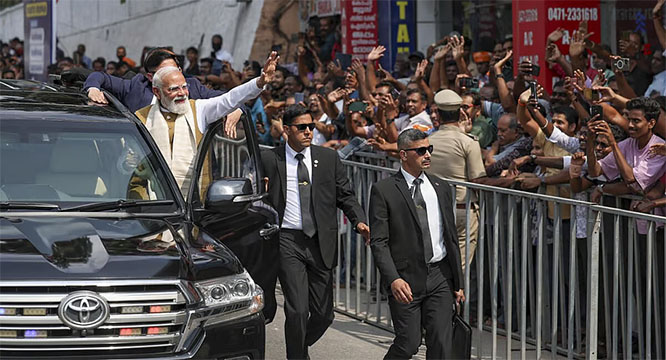
modIKERALA.jpg

Prime Minister Narendra Modi, during his visit to Thiruvananthapuram on Friday, January 23, indicated that the Bharatiya Janata Party (BJP) is aiming to expand its political footprint in Kerala ahead of the Assembly elections scheduled in the coming months.

Speaking at a BJP-organised public meeting, Modi drew parallels between the party’s early electoral gains in Gujarat and its recent victory in the Thiruvananthapuram Municipal Corporation. The civic body win, which ended decades of Left control, was cited by the Prime Minister as a possible starting point for the party’s broader ambitions in the state.

Recalling BJP’s political trajectory in Gujarat, Modi said the party was largely insignificant before 1987 and received little media attention. He pointed out that the BJP’s first major breakthrough came with its victory in the Ahmedabad Municipal Corporation that year.

“Just as our journey in Gujarat began with one city, Kerala’s journey has also started with a single city,” Modi said, suggesting that the party’s municipal-level success could translate into wider electoral acceptance.

The Prime Minister alleged that successive governments led by the Left Democratic Front (LDF) and the United Democratic Front (UDF) had failed to adequately develop Thiruvananthapuram. He accused both fronts of corruption and neglect, claiming that basic infrastructure and facilities were denied to the capital city for decades.

According to Modi, the BJP’s control of the civic body represents a shift driven by public dissatisfaction with the existing political alternatives. He asserted that the BJP administration in Thiruvananthapuram had begun working towards development, though no specific details or timelines were outlined.

Addressing the gathering at Putharikandam Maidan, Modi said the BJP intended to project Thiruvananthapuram as a “model city,” reiterating his party’s commitment to governance-led change.

The Prime Minister’s visit to Kerala also included the inauguration of several development projects and the flagging off of new train services, as the BJP intensifies its political outreach in the poll-bound state.

Comments

Add new comment

  • Coastaldigest.com reserves the right to delete or block any comments.
  • Coastaldigset.com is not responsible for its readers’ comments.
  • Comments that are abusive, incendiary or irrelevant are strictly prohibited.
  • Please use a genuine email ID and provide your name to avoid reject.