Families rejoice as GCC Summit in Saudi cements the ties that bind oil-rich neighbours

Arab News
January 6, 2021

Jeddah, Jan 6: Social media in the Gulf region has been flooded with celebratory joy since news broke that Saudi Arabia had reopened its airspace and land and sea borders with Qatar as part of a deal to end a three-year diplomatic crisis. For many, the story is deeply personal.

On Tuesday Saudi Arabia’s Crown Prince Mohammed bin Salman told the GCC Summit in AlUla that the agreement to mend ties with Qatar underscored the importance of solidarity and security among Gulf, Arab and Muslim states.

A public embrace earlier in the day between the Crown Prince and Qatar’s Emir Sheikh Tamim bin Hamad Al-Thani at AlUla airport capped the Qatari ruler’s arrival on Saudi soil for the first time since 2017.

For hundreds of separated families, the significance of the reopening of borders and resumption of travel between Saudi Arabia and Qatar cannot be overstated, given the unique social fabric of the Gulf region, with its cross-border ties of marriage and blood.

Videos surfaced on social media showing men, women and children dancing and rejoicing at the easing of the crisis. Many said they were looking forward to reunions in the near future with their loved ones on the other side of the border.

In one video, a Qatari boy could be seen jumping with excitement as he spoke with his father over the phone, exchanging promises of a reunion amid laughter, tears of joy visible on the boy’s face. “Yalla (come on), let’s go” the boy said and the father replied something to the effect: Get ready soon, my son.

Equally euphoric were the sentiments of Ismail Mohammed @soom3a70, a forward for Qatar’s Al-Duhail FC football club. Born and raised in Makkah, the city where his mother still resides, he took to the social-media platform to express his delight with the latest developments. “Good news mom, our get-together is near,” he wrote.

Similar scenes were probably playing out among members of many other families separated since 2017. Sara Abdulhakeem Abdullah, a 22-year-old Saudi who married her Qatari husband in 2018, can now freely travel to the Kingdom.

“I was awakened by my husband late last night with the news of the reopening of borders,” she told Arab News. “Words fail me. It is so hard to put my feelings into words. I had been trying for a long time to find an easy way to go back to Jeddah where my parental family resides.”

Despite the restrictions on air travel within the GCC countries on account of the coronavirus pandemic, last month Abdullah was able to briefly visit her loved ones in Jeddah with the support of her Qatari family. But the journey was circuitous and tiring both for her and her daughter, now a year old.

“Moving from one airport to another, waiting in transit for hours, is not the easiest thing,” she said. “The journey was worth it in the end as I had not seen my father or siblings since getting married.”

As a newlywed who had to adjust to a new life abroad for the first time in her life, Sara said it was not easy being unable to meet up with her parental family. The pain of the separation was even more pronounced during her pregnancy, when she was not sure when her parents and siblings would be able to meet the first granddaughter of the family.

Shortly before her due date, she was united with her mother and youngest sister but the reunion was still short of three family members. Although she was relieved to have them by her side, her joy was short-lived as the two visitors had to return to Saudi Arabia within a month.

“It was the most difficult thing one can ever imagine, a feeling I wouldn’t want anyone to experience. Those first few months of marriage were one thing, but not having my mother around when I needed her was the most difficult,” she said. “But it’s all old news now. The good times are soon to come.”

Comments

Add new comment

  • Coastaldigest.com reserves the right to delete or block any comments.
  • Coastaldigset.com is not responsible for its readers’ comments.
  • Comments that are abusive, incendiary or irrelevant are strictly prohibited.
  • Please use a genuine email ID and provide your name to avoid reject.
News Network
January 19,2026

trump.jpg

Donald Trump has linked his repeated threats to seize Greenland to his failure to win the Nobel Peace Prize, in a letter to Norwegian Prime Minister Jonas Gahr Støre.

The authenticity of the letter, in which Trump says he no longer feels obligated to “think purely of peace,” was confirmed by Støre to the Norwegian newspaper VG.

“Considering your country decided not to give me the Nobel Peace Prize for having stopped eight wars plus, I no longer feel an obligation to think purely of peace,” Trump wrote, adding he can now “think about what is good and proper for the United States.”

Støre said Trump’s letter was in response to a short message he had sent earlier, on behalf of himself and Finland’s President Alexander Stubb.

Trump has escalated rhetoric toward Greenland, a self-governing Danish territory, insisting the US will take control “one way or the other.” Over the weekend, he tweeted: “Now it is time, and it will be done!!!”

On Saturday, Trump threatened a 10% tariff on imports from Denmark, Norway, Sweden, France, Germany, the UK, the Netherlands, and Finland from 1 February until the US is allowed to purchase the island. EU diplomats met for emergency talks on possible retaliatory tariffs and sanctions.

In his letter, Trump argued Denmark “cannot protect” Greenland from Russia or China, questioning Danish ownership: “There are no written documents; it’s only that a boat landed there hundreds of years ago.” He added that NATO should support the US, claiming the world is “not secure unless we have complete and total control of Greenland.”

Trump’s stance has unsettled the EU and NATO, as he refused to rule out military action to take control of the mineral-rich island.

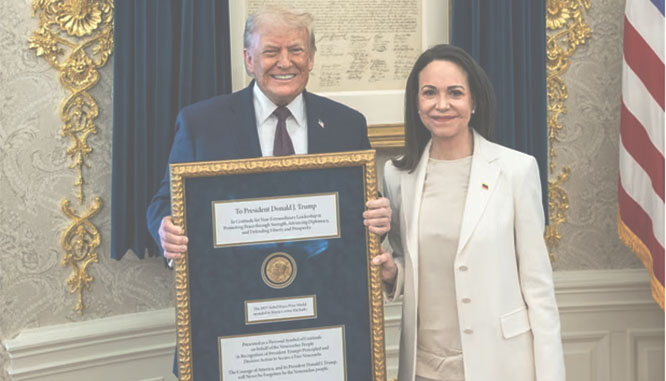
The Nobel Peace Prize is awarded by the independent Norwegian Nobel Committee, not the government. Trump had campaigned for last year’s prize, which went to Venezuelan opposition leader María Corina Machado, who dedicated her award to him.

Støre reiterated that the Nobel Prize decision rests solely with the committee.

Comments

Add new comment

  • Coastaldigest.com reserves the right to delete or block any comments.
  • Coastaldigset.com is not responsible for its readers’ comments.
  • Comments that are abusive, incendiary or irrelevant are strictly prohibited.
  • Please use a genuine email ID and provide your name to avoid reject.
News Network
January 23,2026

modIKERALA.jpg

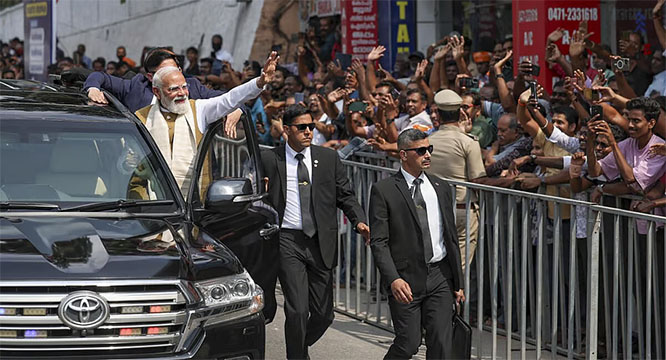
Prime Minister Narendra Modi, during his visit to Thiruvananthapuram on Friday, January 23, indicated that the Bharatiya Janata Party (BJP) is aiming to expand its political footprint in Kerala ahead of the Assembly elections scheduled in the coming months.

Speaking at a BJP-organised public meeting, Modi drew parallels between the party’s early electoral gains in Gujarat and its recent victory in the Thiruvananthapuram Municipal Corporation. The civic body win, which ended decades of Left control, was cited by the Prime Minister as a possible starting point for the party’s broader ambitions in the state.

Recalling BJP’s political trajectory in Gujarat, Modi said the party was largely insignificant before 1987 and received little media attention. He pointed out that the BJP’s first major breakthrough came with its victory in the Ahmedabad Municipal Corporation that year.

“Just as our journey in Gujarat began with one city, Kerala’s journey has also started with a single city,” Modi said, suggesting that the party’s municipal-level success could translate into wider electoral acceptance.

The Prime Minister alleged that successive governments led by the Left Democratic Front (LDF) and the United Democratic Front (UDF) had failed to adequately develop Thiruvananthapuram. He accused both fronts of corruption and neglect, claiming that basic infrastructure and facilities were denied to the capital city for decades.

According to Modi, the BJP’s control of the civic body represents a shift driven by public dissatisfaction with the existing political alternatives. He asserted that the BJP administration in Thiruvananthapuram had begun working towards development, though no specific details or timelines were outlined.

Addressing the gathering at Putharikandam Maidan, Modi said the BJP intended to project Thiruvananthapuram as a “model city,” reiterating his party’s commitment to governance-led change.

The Prime Minister’s visit to Kerala also included the inauguration of several development projects and the flagging off of new train services, as the BJP intensifies its political outreach in the poll-bound state.

Comments

Add new comment

  • Coastaldigest.com reserves the right to delete or block any comments.
  • Coastaldigset.com is not responsible for its readers’ comments.
  • Comments that are abusive, incendiary or irrelevant are strictly prohibited.
  • Please use a genuine email ID and provide your name to avoid reject.
News Network
February 1,2026

Bengaluru, Feb 1: For travelers landing at Kempegowda International Airport (KIA), the sleek, wood-paneled curves of Terminal 2 promise a world-class welcome. But the famed “Garden City” charm quickly withers at the curb. As India’s aviation sector swells to record numbers—handling over 43 million passengers in Bengaluru alone this past year—the “last mile” has turned into a marathon of frustration.

The Bengaluru Logjam: Rules vs Reality

While the city awaits the 2027 completion of the Namma Metro Blue Line, the interim has been chaotic. Recent “decongestion” rules at Terminal 1 have pushed app-based cab pickups to distant parking zones, forcing weary passengers into a 20-minute walk with luggage.

“I landed after ten months away and felt like a stranger in my own city,” says Ruchitha Jain, a Koramangala resident. “My driver couldn’t find me, staff couldn’t guide me, and the so-called ‘Premium’ lane is just a fancy tax on convenience.”

•    The Cost of Distance: A 40-km cab ride can now easily cross ₹1,500, driven by demand pricing and airport surcharges.

•    The Bus Gap: While Vayu Vajra remains a lifeline, its ₹300–₹400 fare is often cited as the most expensive airport bus service in the country.

A National Pattern of Disconnect

The struggle is not unique to Karnataka. From Chennai’s coast to Hyderabad’s plateau, India’s airports tell a familiar story: brilliant runways, broken exits.

City:    Primary Issue   |    Recent Development

Bengaluru:    Cab pickup restrictions & distance  |    App-based taxis shifted to far parking zones; long walks and fare spikes reported

Chennai:    Multi-Level Parking (MLCP) hike  |    Passengers report 40-minute walks to reach cab pickup points

Hyderabad:    “Taxi mafia” & touting  |    Over 440 touting cases reported; security presence intensified

Mumbai:    Fare scams  |     Tourists charged ₹18,000 for just 400 metres, triggering police action

In Hyderabad, travelers continue to battle entrenched local groups that intimidate Uber and Ola drivers, pushing passengers toward overpriced private taxis. Chennai flyers, meanwhile, complain that reaching the designated pickup zones now takes longer than short-haul flights from cities like Coimbatore.

The ‘Budget Day’ Hope

As Finance Minister Nirmala Sitharaman presents the Union Budget 2026 today, the aviation sector is watching closely. With the government’s renewed emphasis on multimodal integration, there is cautious hope for funding toward seamless airport-metro-bus hubs.

The vision is clear: a future where planes, trains, and metros speak the same language. Until then, passengers at KIA—and airports across India—will continue to discover that the hardest part of flying isn’t the thousands of kilometres in the air, but the last few on the ground.

Comments

Add new comment

  • Coastaldigest.com reserves the right to delete or block any comments.
  • Coastaldigset.com is not responsible for its readers’ comments.
  • Comments that are abusive, incendiary or irrelevant are strictly prohibited.
  • Please use a genuine email ID and provide your name to avoid reject.