Gaza carnage: 6 months into ruthless Israel’s bloody war on Palestinians

News Network
April 7, 2024

gazachildren.jpg

Israel's relentless aggression against the Gaza Strip has now stretched over six months, and shows no sign of abating despite international calls for a ceasefire.

Israel launched the war on Gaza on October 7 after the Palestinian resistance movement Hamas waged the surprise Operation Al-Aqsa Storm against the occupying entity in response to the Israeli regime's decades-long campaign of violence against Palestinians.

At that time, the Israeli regime said attacking Gaza had two goals: eliminating Hamas and bringing back the hostages taken by the resistance group to Gaza. None of them have been achieved so far.

About 130 of the 250 Israeli captives taken during Operation Al-Aqsa Storm are still in Gaza after a provisional truce deal in December saw the exchange of a number of prisoners between the two sides.

Death toll

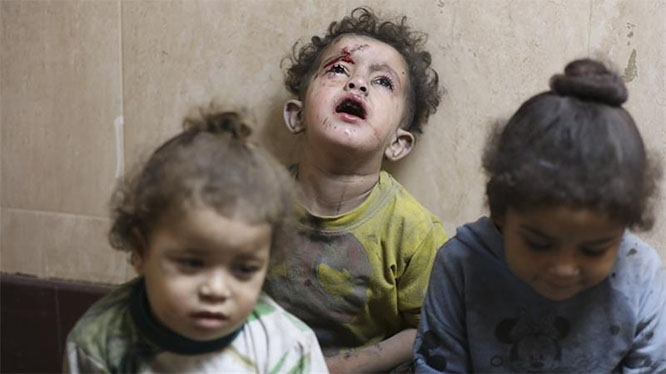
The conflict in Gaza has taken a devastating toll on Palestinians, with over 33,200 people, including 13,800 children, having lost their lives in 180 days of war, according to the Gaza Ministry of Health.

On top of that, around 76,000 people have been wounded – about four out of every 100 people in Gaza. The Palestine Red Crescent Society said this week some 1,000 children in Gaza have lost one or both of their legs.

A record-breaking 176 UN staff members and seven foreign aid workers have been killed in Gaza since October 7.

The Israeli army has killed the largest number of journalists of any modern conflict and detained more than 24. More than 140 journalists have been killed during the six months of war in the Israeli military's raids, bombardments and missile attacks across the Gaza Strip.

The humanitarian situation in Gaza has worsened day by day as the Israeli army continues to prevent aid from reaching the region, resulting in starvation being utilized as a tactic of warfare as over a million are at risk of starvation, with international groups warning of an “imminent” famine.

At least 27 Palestinians have already died from malnutrition and dehydration, according to international NGOs.

Displacement

More than 80 percent of Gaza’s population (Over 1.9 million Palestinians) have been intentionally displaced as the Israeli military ordered Palestinians to “go south” from the start of the war.

Some 1.4 million people are believed to be sheltering in Rafah, a small city on Gaza’s southern border with Egypt which is being bombarded by the Israeli forces every day as they have left no safe zone for the Palestinians to live.

Infrastructure damage

The estimated $18.5 billion in damage has affected public service infrastructure, resulting in 26 million tons of debris and rubble.

Over 290,000 housing units, equivalent to 62 percent of all homes in Gaza, have been damaged or destroyed by the war, leaving more than a million people homeless.

Only a fraction of hospitals, 10 out of 36, are operational following severe damage, leading to overwhelming strain on their limited resources.

Al-Shifa Hospital, the largest medical facility in Gaza, has been left severely damaged and burned after enduring a relentless two-week-long siege. The compound, which witnessed the loss of at least 400 lives and the arrest of hundreds, now faces a dire situation.

With an acute shortage of medicine and healthcare professionals on the brink of exhaustion and starvation, the majority of patients in Gaza are unable to receive the treatment they desperately need.

The scarcity of resources has forced medical teams to carry out operations and amputations without the availability of anesthetic, further exacerbating the already dire circumstances.

Political resolutions

On March 6, South Africa filed an “urgent request” with the International Court of Justice (ICJ) and requested for additional provisional measures issued on January 26.

In January, the ICJ ordered Israel to refrain from any acts that could fall under the Genocide Convention and ensure its troops commit no genocidal acts against Palestinians in Gaza. Israel described the genocide allegation as baseless.

On Friday, the United Nations Human Rights Council adopted a resolution, calling for a halt to all arms sales to Israel, and for the regime to be held accountable for possible war crimes in the Gaza Strip.

Moreover, the UN Security Council adopted a resolution last month, demanding an “immediate ceasefire” for the Muslim holy month of Ramadan. The resolution is the first to be approved by the council after three previous attempts during the past five months of war were vetoed by the US.

Meanwhile, during the months of war, protests around the world have been held in support of Palestine, calling for an immediate ceasefire and halt to arms sales to Israel.

Comments

Add new comment

  • Coastaldigest.com reserves the right to delete or block any comments.
  • Coastaldigset.com is not responsible for its readers’ comments.
  • Comments that are abusive, incendiary or irrelevant are strictly prohibited.
  • Please use a genuine email ID and provide your name to avoid reject.
News Network
November 26,2025

students.jpg

Bengaluru, Nov 26: Karnataka is taking its first concrete steps towards lifting a three-decade-old ban on student elections in colleges and universities. Deputy Chief Minister D.K. Shivakumar announced Wednesday that the state government will form a small committee to study the reintroduction of campus polls, a practice halted in 1989 following incidents of violence.

Speaking at a 'Constitution Day' event organised by the Karnataka Congress, Mr. Shivakumar underscored the move's aim: nurturing new political leadership from the grassroots.

"Recently, (Leader of the Opposition in Lok Sabha) Rahul Gandhi wrote a letter to me and Chief Minister (Siddaramaiah) asking us to think about restarting student elections," Shivakumar stated. "I'm announcing today that we'll form a small committee and seek a report on this."

Student elections were banned in Karnataka in 1989, largely due to concerns over violence and the infiltration of political party affiliates into campus life. The ban effectively extinguished vibrant student bodies and the pipeline of young leaders they often produced.

Mr. Shivakumar, who also serves as the Karnataka Congress president, said that former student leaders will be consulted to "study the pros and cons" of the re-introduction.

Acknowledging the history of the ban, he added, "There were many criminal activities taking place back then. We’ll see how we can conduct (student) elections by regulating such criminal activities."

The Deputy CM reminisced about his own journey, which began on campus. He recalled his political activism at Sri Jagadguru Renukacharya College leading to his first Assembly ticket in 1985 at the age of 23. "That's how student leadership was at the time. Such leadership has gone today. College elections have stopped," he lamented, adding that for many, college elections were "like a big movement" where leaders were forged.

The move, driven by the Congress high command's push to cultivate young talent, will face scrutiny from academics and university authorities who have, in the past, expressed concern that the return of polls could disrupt the peaceful academic environment and turn campuses into political battlegrounds.

Comments

Add new comment

  • Coastaldigest.com reserves the right to delete or block any comments.
  • Coastaldigset.com is not responsible for its readers’ comments.
  • Comments that are abusive, incendiary or irrelevant are strictly prohibited.
  • Please use a genuine email ID and provide your name to avoid reject.
News Network
December 5,2025

indigoCEO.jpg

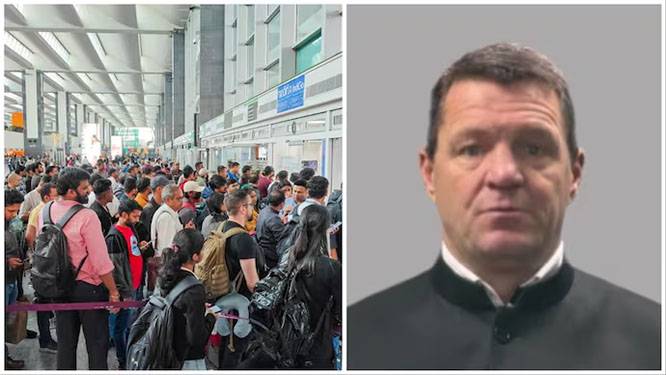
New Delhi, Dec 5: IndiGo CEO Pieter Elbers issued a public apology this evening after more than a thousand flights were cancelled today, making it the "most severely impacted day" in terms of cancellations. The biggest airline of the country cancelled "more than half" of its daily number of flights on Friday, said Elbers. He also said that even though the crisis will persist on Saturday, the airline anticipates fewer than 1,000 flight cancellations.

"Full normalisation is expected between December 10 and 15, though IndiGo cautions that recovery will take time due to the scale of operations," the IndiGo CEO said. 

IndiGo operates around 2,300 domestic and international flights daily.

Pieter Elbers, while apologising for the major inconvenience due to delays and cancellations, said the situation is a result of various causes.

The crisis at IndiGo stems from new regulations that boost pilots' weekly rest requirements by 12 hours to 48 and allow only two night-time landings per week, down from six. IndiGo has attributed the mass cancellations to "misjudgment and planning gaps".

Elbers also listed three lines of action that the airline will adopt to address the issue.

"Firstly, customer communication and addressing your needs, for this, messages have been sent on social media. And just now, a more detailed communication with information, refunds, cancellations and other customer support measures was sent," he said.

The airline has also stepped up its call centre capacity.

"Secondly, due to yesterday's situation, we had customers stranded mostly at the nation's largest airports. Our focus was for all of them to be able to travel today itself, which will be achieved. For this, we also ask customers whose flights are cancelled not to come to the airports as notifications are sent," the CEO said.

"Thirdly, cancellations were made for today to align our crew and planes to be where they need to start tomorrow morning afresh. Earlier measures of the last few days, regrettable, have proven not to be enough, but we have decided today to reboot all our systems and schedules, resulting in the highest numbers of cancellations so far, but imperative for progressive improvements starting from tomorrow," he added.

As airports witnessed chaotic scenes, the Directorate General of Civil Aviation (DGCA) stepped in to grant IndiGo a temporary exemption from stricter night duty rules for pilots. It also allowed substitution of leaves with a weekly rest period. 

Civil Aviation Minister Ram Mohan Naidu has said a high-level inquiry will be ordered and accountability will be fixed.

Comments

Add new comment

  • Coastaldigest.com reserves the right to delete or block any comments.
  • Coastaldigset.com is not responsible for its readers’ comments.
  • Comments that are abusive, incendiary or irrelevant are strictly prohibited.
  • Please use a genuine email ID and provide your name to avoid reject.
News Network
November 29,2025

DKSsiddu.jpg

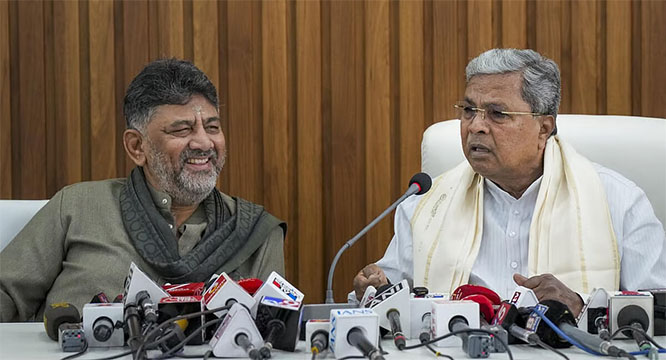
New Delhi: Karnataka chief minister Siddaramaiah and deputy CM DK Shivakumar on Saturday put up a dramatic display of unity at a closely watched joint press briefing, firmly dismissing weeks of speculation about a power-sharing tussle within the Congress. With the high command nudging both leaders to sit together and settle the dust, the meeting became a political spectacle, ending with the duo declaring that there was “no confusion, no differences.”

Calling the reports of a rift “manufactured confusion,” Siddaramaiah said the talks had gone smoothly, even joking about their breakfast. “Breakfast was very good. All three of us enjoyed it,” he said. “We want to end this confusion once and for all. For local elections and for 2028, our mission is clear — Congress must return to power. There is no difference between me and DKS, not now, not before.”

He blamed the media for fuelling rumours and reiterated absolute adherence to the party leadership. “From tomorrow, let there be no confusion. What the high command says, we will follow.”

Siddaramaiah also assured that the Assembly session starting December 8 would run smoothly and vowed that Congress would take on the BJP and JD(S) “together.”

Shivakumar echoed the chief minister word for word, stressing loyalty and discipline. “People have given us a massive mandate. It is our duty to deliver,” he said. “This government was formed under Siddaramaiah’s leadership. We both have complete trust in the high command. If they tell me to wait, I will wait.”

He added that the two leaders had discussed strategy for the 2028 Assembly elections. “Whatever the CM says, I agree. We are loyal soldiers of the party. The party may be facing challenges nationally, but we will keep it strong in Karnataka.”

Shivakumar also said Siddaramaiah would soon visit his home for lunch or dinner — another symbolic gesture meant to underline their unity.

Both leaders later posted on social media describing the breakfast meeting as “productive” and focused on “Karnataka’s priorities.”

The BJP, however, rejected the show of camaraderie as “pure bunkum,” accusing Congress of trying to paper over an internal power struggle. But Siddaramaiah and Shivakumar insisted their united front would continue — and that there was “no confusion” within the state leadership.

Comments

Add new comment

  • Coastaldigest.com reserves the right to delete or block any comments.
  • Coastaldigset.com is not responsible for its readers’ comments.
  • Comments that are abusive, incendiary or irrelevant are strictly prohibited.
  • Please use a genuine email ID and provide your name to avoid reject.