



Killing of Iran's top nuclear scientist, aimed probably at making Tehran retaliate

News Network
December 1, 2020

Nicosia, Dec 1: Mohsen Fakhrizadeh, an Iranian Professor of physics who was the brains behind the Project Amad, Tehran's alleged covert programme for building a nuclear bomb, was killed near the city of Absard, 50 miles from Tehran last Friday in an ambush, by highly trained assassins, believed to be members of Mossad, the Israeli spy agency.

It is unclear how the attack actually took place, as a press report speaks about 12 assassins who exploded a Nissan car when Fakhrizadeh's convoy of three bulletproof cars was passing, and then the gunmen opened fire on the cars, killing the nuclear scientist and his guards. However, Iran's semi-official Fars news agency, quoting Iranian officials, says the assassination was carried out from distance with a remote-controlled automatic machinegun. "No human assets were present at the scene of the assassination and the shooting was carried out only with automatic weapons, " it claimed.

Iran immediately accused Israel of being behind Fakhrizadeh's death and for good reason. Since 2010 Israel had carried out 4 assassinations of scientists who were believed to be involved in Iran's nuclear programme and caused explosions at various facilities associated with the programme. As has been its usual practice, Israel did not publicly admit that it was behind the killings.

It should be mentioned that in 2018, Fakhrizadeh was named by Israeli Prime Minister Benjamin Netanyahu who said that secret documents concerning Iran's nuclear programme, which were stolen by Israel, showed that Fakhrizadeh secretly continued Project Amad.

Ayatollah Ali Khamenei, Iran's supreme leader, promised to retaliate for the killing of the prominent scientist, while President Hassan Rouhani declared that Iran would retaliate for the murder, but pointed out that it would do so at a time of its choosing. "In due time, they will answer for this crime," he said, adding that the assassination shows Iran's enemies despair and depth of their hatred".

An immediate response came from the Iranian Parliament which on Sunday approved a vote to raise the rate of uranium enrichment to 20% (from 4%) and gradually withdraw from the Joint Comprehensive Action Plan (Iran nuclear deal).

BBC reports that John Brennan, former head of the Central Intelligence Agency (CIA) said the killing of the scientist was a "criminal" and "highly reckless" act that "risks lethal retaliation and a new round of regional conflict".

However, although the Israeli government did not publicly admit that the assassination of the top Iranian nuclear scientist was its own doing, a senior Israeli official, speaking on condition of anonymity, told the New York Times on Sunday that the world should "thank Israel for killing the father of Iran's nuclear programme" and added that Israel would keep acting to curtail Iran's nuclear ambitions.

Many analysts believe that US President Donald Trump gave the green light to the Israelis to kill Fakhrizadeh, pointing out that Trump recently sought options for a military strike on Iran's nuclear programme, but was dissuaded from doing so by his senior advisers.

Amos Yadlin, Chairman of the Institute for National Security Studies of Israel told the Army Radio that whoever operated in Tehran "has one eye, maybe two on Washington. If the Iranians respond, it will enable President Donald Trump to order his generals to act against them. And if they don't, it could still possibly block the Biden administration from opening negotiations."

A similar view was expressed by Sweden's former Prime Minister Carl Bildt who said: "It's not unlikely that this targeted killing was part of efforts to prevent the Biden administration from reviving diplomacy with Iran and going back to the nuclear agreement".

Zvi Bar'el, Middle Eastern Affairs Analyst for Haaretz newspaper, points out that the timing of the assassination, "even if it was determined by purely operational considerations, is a clear message to President-elect Joe Biden, intended to show Israel's criticism of the intent to return to the nuclear accord with Iran and other issues, like freezing Iran's ballistic missile programme in return for economic cooperation".

Haaretz newspaper's diplomatic reporter Noa Landau writes that US President Donald Trump has more than a month before he leaves the White House, and on his way, he could set the world on fire. In starting this conflagration, it seems as though he plans to strike every match in the box. Standing beside him, Prime Minister Benjamin Netanyahu would be more than happy to lend him a lighter".

Iranian Government Spokesman Ali Rabiei stated on Sunday that the Islamic Republic "should not fall into the trap of linking the assassination to past nuclear negotiations". He added that the killing of Fakhrizadeh would not remain unanswered, but not at a time that they want or the way and place they expect. "Iran sets the time and the place," he concluded.

What is noteworthy is that President-elect Joe Biden and Vice President-elect Kamala Harris have maintained a deafening silence on the matter and did not utter a word about the assassination.

However, given that they publicly vowed to revive the nuclear deal with Iran, they probably think that by the targeted killing of Fakhrizadeh, the Israeli Prime Minister Benjamin Netanyahu was betting on a harsh response by Iran, and in this way tried to sabotage future US negotiations with Tehran. This is something that it will be difficult for Biden to forget.

Comments

Abdul Rehman
 - 
Wednesday, 9 Dec 2020

who want travel in dubai contact me on whaTsapp num 03117774313

Add new comment

  • Coastaldigest.com reserves the right to delete or block any comments.
  • Coastaldigset.com is not responsible for its readers’ comments.
  • Comments that are abusive, incendiary or irrelevant are strictly prohibited.
  • Please use a genuine email ID and provide your name to avoid reject.
News Network
January 23,2026

Karnataka Governor Thaawarchand Gehlot read only three lines from the 122-paragraph address prepared by the Congress-led state government while addressing the joint session of the Legislature on Thursday, effectively bypassing large sections critical of the BJP-led Union government.

The omitted portions of the customary Governor’s address outlined what the state government described as a “suppressive situation in economic and policy matters” under India’s federal framework. The speech also sharply criticised the Centre’s move to replace the Mahatma Gandhi National Rural Employment Guarantee Act (MGNREGA) with the Viksit Bharat–Guarantee for Rozgar and Ajeevika Mission (Gramin) Act, commonly referred to as the VB-GRAM (G) Act.

Governor Gehlot had earlier conveyed his objection to several paragraphs that were explicitly critical of the Union government. On Thursday, he confined himself to the opening lines — “I extend a warm welcome to all of you to the joint session of the State legislature. I am extremely pleased to address this august House” — before jumping directly to the concluding sentence of the final paragraph.

He ended the address by reading the last line of paragraph 122: “Overall, my government is firmly committed to doubling the pace of the State’s economic, social and physical development. Jai Hind — Jai Karnataka.”

According to the prepared speech, the Karnataka government demanded the scrapping of the VB-GRAM (G) Act, describing it as “contractor-centric” and detrimental to rural livelihoods, and called for the full restoration of MGNREGA. The state government argued that the new law undermines decentralisation, weakens labour protections, and centralises decision-making in violation of constitutional norms.

Key points from the unread sections of the speech:

•    Karnataka facing a “suppressive” economic and policy environment within the federal system

•    Repeal of MGNREGA described as a blow to rural livelihoods

•    VB-GRAM (G) Act accused of protecting corporate and contractor interests

•    New law alleged to weaken decentralised governance

•    Decision-making said to be imposed by the Centre without consulting states

•    Rights of Adivasis, women, backward classes and agrarian communities curtailed

•    Labourers allegedly placed under contractor control

•    States facing mounting fiscal stress due to central policies

•    VB-GRAM (G) Act accused of enabling large-scale corruption

Comments

Add new comment

  • Coastaldigest.com reserves the right to delete or block any comments.
  • Coastaldigset.com is not responsible for its readers’ comments.
  • Comments that are abusive, incendiary or irrelevant are strictly prohibited.
  • Please use a genuine email ID and provide your name to avoid reject.
News Network
January 23,2026

Mangaluru: The Karnataka Government Polytechnic (KPT), Mangaluru, has achieved autonomous status from the All India Council for Technical Education (AICTE), becoming the first government polytechnic in the country to receive such recognition in its 78-year history. The status was granted by AICTE, New Delhi, and subsequently approved by the Karnataka Board of Technical Education in October last year.

Officials said the autonomy was conferred a few months ago. Until recently, AICTE extended autonomous status only to engineering colleges, excluding diploma institutions. However, with a renewed national focus on skill development, several government polytechnics across India have now been granted autonomy.

KPT, the second-largest polytechnic in Karnataka, was established in 1946 with four branches and has since expanded to offer eight diploma programmes, including computer science and polymer technology. The institution is spread across a 19-acre campus.

Ravindra M Keni, the first dean of the institution, told The Times of India that AICTE had proposed autonomous status for polytechnic institutions that are over 25 years old. “Many colleges applied. In the first round, 100 institutions were shortlisted, which was further narrowed down to 15 in the second round. We have already completed one semester after becoming an autonomous institution,” he said. He added that nearly 500 students are admitted annually across eight three-year diploma courses.

Explaining the factors that helped KPT secure autonomy, Keni said the institution has consistently recorded 100 per cent admissions and placements for its graduates. He also noted its strong performance in sports, with the college emerging champions for 12 consecutive years, along with active student participation in NCC and NSS activities.

Autonomous status allows KPT to design industry-oriented curricula, conduct examinations, prepare question papers, and manage academic documentation independently. The institution can also directly collaborate with industries and receive priority funding from AICTE or the Ministry of Education. While academic autonomy has been granted, financial control will continue to rest with the state government.

“There will be separate committees for examinations, question paper setting, boards of studies, and boards of examiners. The institution will now have the freedom to conduct admissions without government notifications and issue its own marks cards,” Keni said, adding that new academic initiatives would be planned after a year of functioning under the autonomous framework.

Comments

Add new comment

  • Coastaldigest.com reserves the right to delete or block any comments.
  • Coastaldigset.com is not responsible for its readers’ comments.
  • Comments that are abusive, incendiary or irrelevant are strictly prohibited.
  • Please use a genuine email ID and provide your name to avoid reject.
News Network
January 23,2026

modIKERALA.jpg

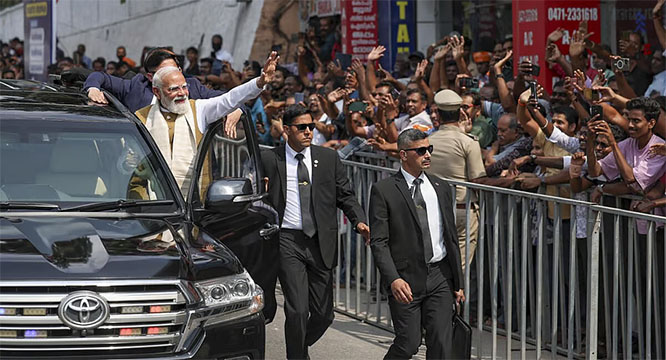
Prime Minister Narendra Modi, during his visit to Thiruvananthapuram on Friday, January 23, indicated that the Bharatiya Janata Party (BJP) is aiming to expand its political footprint in Kerala ahead of the Assembly elections scheduled in the coming months.

Speaking at a BJP-organised public meeting, Modi drew parallels between the party’s early electoral gains in Gujarat and its recent victory in the Thiruvananthapuram Municipal Corporation. The civic body win, which ended decades of Left control, was cited by the Prime Minister as a possible starting point for the party’s broader ambitions in the state.

Recalling BJP’s political trajectory in Gujarat, Modi said the party was largely insignificant before 1987 and received little media attention. He pointed out that the BJP’s first major breakthrough came with its victory in the Ahmedabad Municipal Corporation that year.

“Just as our journey in Gujarat began with one city, Kerala’s journey has also started with a single city,” Modi said, suggesting that the party’s municipal-level success could translate into wider electoral acceptance.

The Prime Minister alleged that successive governments led by the Left Democratic Front (LDF) and the United Democratic Front (UDF) had failed to adequately develop Thiruvananthapuram. He accused both fronts of corruption and neglect, claiming that basic infrastructure and facilities were denied to the capital city for decades.

According to Modi, the BJP’s control of the civic body represents a shift driven by public dissatisfaction with the existing political alternatives. He asserted that the BJP administration in Thiruvananthapuram had begun working towards development, though no specific details or timelines were outlined.

Addressing the gathering at Putharikandam Maidan, Modi said the BJP intended to project Thiruvananthapuram as a “model city,” reiterating his party’s commitment to governance-led change.

The Prime Minister’s visit to Kerala also included the inauguration of several development projects and the flagging off of new train services, as the BJP intensifies its political outreach in the poll-bound state.

Comments

Add new comment

  • Coastaldigest.com reserves the right to delete or block any comments.
  • Coastaldigset.com is not responsible for its readers’ comments.
  • Comments that are abusive, incendiary or irrelevant are strictly prohibited.
  • Please use a genuine email ID and provide your name to avoid reject.