Kuwait govt resigns 3 months after formation as political crisis intensifies

News Network
April 5, 2022

Kuwait's government resigned on Tuesday, just months after its formation, opening up new uncertainty as the tiny country grapples with a worsening political crisis that has blocked critical economic and social reforms.

Kuwaiti Prime Minister Sheikh Sabah Al-Khaled Al Hamad Al Sabah submitted the cabinet's resignation to the crown prince, state-run KUNA news agency reported, ahead of a no confidence vote in Parliament later this week that sought to remove him from office.

It marks Kuwait's third collective government resignation in the past year and a half. A host of new faces, including some picks to appease opposition blocs, had been appointed to ministerial posts as recently as December, with their resignation now reflecting their failure to make reforms.

Opposition has been mounting against Sheikh Sabah. Angry lawmakers hauled him in for extensive interrogations last week over his alleged corruption and mismanagement. They publicly declared him “unsuitable” and called for a new prime minister to tackle the country's problems and secure badly needed reforms.

Cabinet's resignation comes after the defense and interior ministers submitted their resignations earlier this year. Exasperated, the two senior ministers decried their inability to make anything happen in oil-rich Kuwait because of Parliament's rowdy opposition. Lawmakers increasingly in recent months have expressed their political frustrations and mistrust by questioning various unpopular ministers and stalling major projects.

Although soaring oil prices amid Russia's war in Ukraine have recently created a windfall for Kuwait, they've also served as a reminder of the nation's utter dependence on oil revenues and need to diversify. Even if the International Monetary Fund now expects Kuwait to run a budget surplus after years in the red and see its gross domestic product increase by 2.7%, it remains politically stuck.

Years of low oil prices, coupled with the coronavirus pandemic, pushed the country's account deficit to 16.6% of its GDP last year. As financial stress worsened, the government couldn't draw from Kuwait's flush sovereign wealth fund or issue debt because lawmakers have blocked a public debt law.

The parliament, a rarity in the autocratic region of Persian Gulf sheikhdoms, is empowered to pass and block laws, question ministers and submit no-confidence votes against senior officials. However, final authority rests with the ruling emir.

The financial stagnation over the past two years has spread deep disillusionment with the country's political system. 

Comments

Add new comment

  • Coastaldigest.com reserves the right to delete or block any comments.
  • Coastaldigset.com is not responsible for its readers’ comments.
  • Comments that are abusive, incendiary or irrelevant are strictly prohibited.
  • Please use a genuine email ID and provide your name to avoid reject.
News Network
January 20,2026

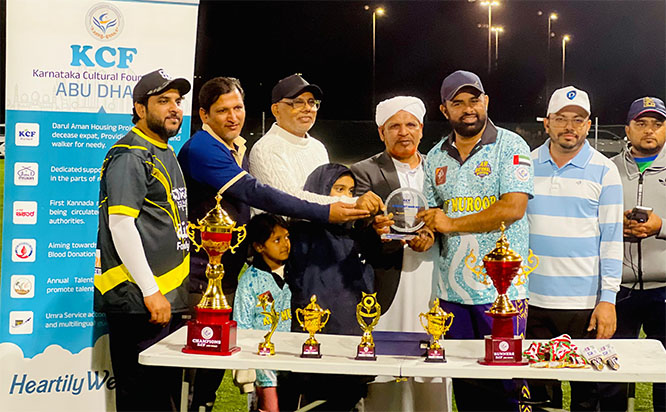
KCFabudhabi.jpg

KCF, a global socio-cultural organisation of Karnataka expatriates, is actively involved in education, humanitarian initiatives and community well-being across several countries. The awardees were selected following a structured evaluation of nominations by the Annual Council Program Committee, based on the depth, consistency and long-term impact of their social service.

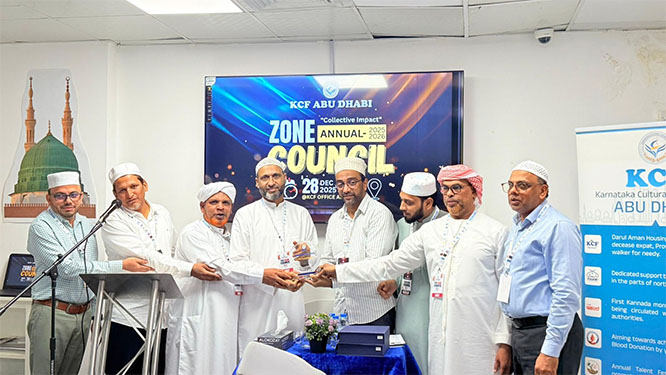
One of the award recipients, Abdul Razak Haji, a prominent UAE-based entrepreneur from the Qamcon Group of Companies, was honoured for his significant contributions to society. Through both his professional journey and personal initiatives, he has supported numerous employees and families, while also extending assistance in education, housing for the underprivileged and various charitable causes, largely carried out quietly over the years. His award was presented earlier during the Annual Council Program held at the KCF Abu Dhabi office.

The second award was conferred on Latheef Kakkinje, a young social worker based in Abu Dhabi, in recognition of his active involvement in community engagement programmes, sports initiatives, talent festivals and family-oriented social activities. His consistent volunteering efforts and commitment to humanitarian causes were highly appreciated by the selection committee.

The award presentation ceremony for Latheef Kakkinje was held at the Zayed Cricket Stadium (Astro Turf Ground) in the presence of Kedumbady Ibrahim Saqafi, President of KCF UAE; Ibrahim, General Secretary; Kabeer Bayambady, President of KCF Abu Dhabi; Ummer Ishwaramangila, General Secretary; along with other members of the KCF Abu Dhabi cabinet.

Congratulating both awardees, KCF leaders reiterated the organisation’s commitment to recognising individuals who selflessly work for social upliftment and community service.

KCFabudhabi1.jpg

Comments

Add new comment

  • Coastaldigest.com reserves the right to delete or block any comments.
  • Coastaldigset.com is not responsible for its readers’ comments.
  • Comments that are abusive, incendiary or irrelevant are strictly prohibited.
  • Please use a genuine email ID and provide your name to avoid reject.
News Network
January 23,2026

Mangaluru: The Karnataka Government Polytechnic (KPT), Mangaluru, has achieved autonomous status from the All India Council for Technical Education (AICTE), becoming the first government polytechnic in the country to receive such recognition in its 78-year history. The status was granted by AICTE, New Delhi, and subsequently approved by the Karnataka Board of Technical Education in October last year.

Officials said the autonomy was conferred a few months ago. Until recently, AICTE extended autonomous status only to engineering colleges, excluding diploma institutions. However, with a renewed national focus on skill development, several government polytechnics across India have now been granted autonomy.

KPT, the second-largest polytechnic in Karnataka, was established in 1946 with four branches and has since expanded to offer eight diploma programmes, including computer science and polymer technology. The institution is spread across a 19-acre campus.

Ravindra M Keni, the first dean of the institution, told The Times of India that AICTE had proposed autonomous status for polytechnic institutions that are over 25 years old. “Many colleges applied. In the first round, 100 institutions were shortlisted, which was further narrowed down to 15 in the second round. We have already completed one semester after becoming an autonomous institution,” he said. He added that nearly 500 students are admitted annually across eight three-year diploma courses.

Explaining the factors that helped KPT secure autonomy, Keni said the institution has consistently recorded 100 per cent admissions and placements for its graduates. He also noted its strong performance in sports, with the college emerging champions for 12 consecutive years, along with active student participation in NCC and NSS activities.

Autonomous status allows KPT to design industry-oriented curricula, conduct examinations, prepare question papers, and manage academic documentation independently. The institution can also directly collaborate with industries and receive priority funding from AICTE or the Ministry of Education. While academic autonomy has been granted, financial control will continue to rest with the state government.

“There will be separate committees for examinations, question paper setting, boards of studies, and boards of examiners. The institution will now have the freedom to conduct admissions without government notifications and issue its own marks cards,” Keni said, adding that new academic initiatives would be planned after a year of functioning under the autonomous framework.

Comments

Add new comment

  • Coastaldigest.com reserves the right to delete or block any comments.
  • Coastaldigset.com is not responsible for its readers’ comments.
  • Comments that are abusive, incendiary or irrelevant are strictly prohibited.
  • Please use a genuine email ID and provide your name to avoid reject.
News Network
January 23,2026

oscar.jpg

The Voice of Hind Rajab, inspired by the tragic final moments of a young Palestinian girl killed by Israeli fire in Gaza, has been nominated for an Academy Award in the Best International Feature Film category.

Directed by Tunisian filmmaker Kaouther Ben Hania, the film recounts the true story of five-year-old Hind Rajab, who lost her life in January 2024 while fleeing Israeli bombardment with her family.

The film features the real audio of Hind’s desperate call to the Palestinian Red Crescent Society, where she pleaded for help moments before the vehicle she was in was struck by 355 bullets.

The haunting narrative begins with a brief call made from the besieged Tel al-Hawa neighborhood of Gaza, where gunfire and armored vehicles drowned out every sound.

After witnessing the brutal killing of her family, she made a trembling call, her voice reduced to a whisper as she spoke of the massacre and her unbearable loneliness as the sole survivor.

Premiering at the Venice International Film Festival in September 2025, The Voice of Hind Rajab garnered widespread acclaim, receiving a record-setting 23-minute standing ovation and the Silver Lion Grand Jury Prize, the festival’s second-highest honor.

In her acceptance speech, Ben Hania dedicated the film to humanitarian workers and first responders in Gaza, emphasizing that Hind's voice symbolizes countless civilians affected by war.

She aims to give voice to victims often reduced to mere statistics, highlighting the broader suffering of civilians in war zones.

The film’s Oscar nomination underscores its powerful storytelling and ethical approach to depicting real-life tragedy, making it a crucial piece of contemporary cinema.

It serves not only as a narration of individual tragedy but also as an artistic and documentary response to the silence and censorship that often overshadow West Asian struggles and wars.

Using an innovative method she calls docufiction, Ben Hania bridges unvarnished reality and narrative structure, creating a work that is both artistically valuable and socially impactful.

Born in 1977 in Sidi Bouzid—later the epicenter of the Arab revolution—her background profoundly influenced her worldview and artistic approach.

She is a graduate of the Higher School of Audiovisual Arts of Tunis, Pantheon-Sorbonne University, and La Fémis in Paris, where her studies equipped her with the technical and theoretical tools needed to address complex subjects. 

Comments

Add new comment

  • Coastaldigest.com reserves the right to delete or block any comments.
  • Coastaldigset.com is not responsible for its readers’ comments.
  • Comments that are abusive, incendiary or irrelevant are strictly prohibited.
  • Please use a genuine email ID and provide your name to avoid reject.