



Makkah Criminal Court acquits 13 defendants in Grand Mosque crane collapse

News Network
December 10, 2020

Dubai, Dec 10: The Makkah Criminal Court on Wednesday issued a new ruling acquitting 13 defendants in the Grand Mosque Crane collapse case, including Saudi Binladin Group, Saudi media such as Okaz/Saudi Gazette reported.

In the new verdict, the court said it had found nothing new than what it had earlier ruled in the case.

It said it would send a copy of the verdict to the Court of Appeal to decide on the issue.

In an earlier verdict delivered on October 1, 2017, the Makkah Criminal Court had acquitted all the 13 defendants who were charged with negligence.

The court had said that the defendants are not criminally responsible for the incident in which 108 people lost their lives and another 238 were injured when a crane involved in the Grand Mosque expansion project collapsed on September 11, 2015.

The disaster was caused by heavy rains and thunderstorms, rather than human error or fault, the court had said in its previous judgement.

“The crane was in an upright, correct and safe position. There was no error committed by the accused, who had taken all the necessary safety precautions,” the court declared in its decision. The Attorney General challenged the decision and appealed against it.

In December 2017, however, the Appeals Court upheld the previous ruling of the Criminal Court. The Appeals Court said that the crane, though placed in a safe position, toppled due to a severe thunderstorm and violent winds. The court also directed the Criminal Court to re-examine the case.

The court issued the new verdict on Wednesday after re-examining the entire aspects of the crane crash.

As per the latest Saudi media reports, the court noted that the General Authority of Meteorology and Environmental Protection had issued a bulletin on weather conditions on the day of the accident and the day before it. The warning showed that the wind speed in the Red Sea ranged between one and 38 kilometres per hour only, and did not include warning of the weather conditions with a possibility of hurricanes.

The court noted that there was no mention in the lawsuit about the warning of the General Authority of Meteorology and Environmental Protection that this disaster would occur. The court also indicated that what happened in Makkah that day could be attached to a celestial phenomenon that was difficult to predict. As such, the defendants cannot be held culpable or the tragedy.

The Court of Appeal had stressed, in its earlier ruling, the need to clarify, define and know precisely the tasks of the safety division of the Haram expansion project. This is because the company which was implementing the project had an integrated department for monitoring weather fluctuations, which means that it was fully responsible for detecting and forecasting weather conditions and did not need to wait for meteorological reports.

The Court of Appeal also drew attention to the response of an official among the defendants that he was not informed of the outbreak of the storm on the day of the crane tragedy, as it occurred on Friday during which he was on leave. The appeals court’s remarks emphasised that none of the accused officials indicated that there was a special meteorology unit associated with the project.

The court also noted the dereliction of duty on the part of the Environmental Department affiliated to the Department of Safety and its role in collecting reports on weather conditions and preparing daily reports. The court also directed a first-grade court to examine this aspect of the incident.

Comments

Sameer koya
 - 
Monday, 21 Dec 2020

I have not yet received approval

Asad
 - 
Wednesday, 16 Dec 2020

When it change
60days red nd green status
Tell me

Add new comment

  • Coastaldigest.com reserves the right to delete or block any comments.
  • Coastaldigset.com is not responsible for its readers’ comments.
  • Comments that are abusive, incendiary or irrelevant are strictly prohibited.
  • Please use a genuine email ID and provide your name to avoid reject.
News Network
January 20,2026

iran.jpg

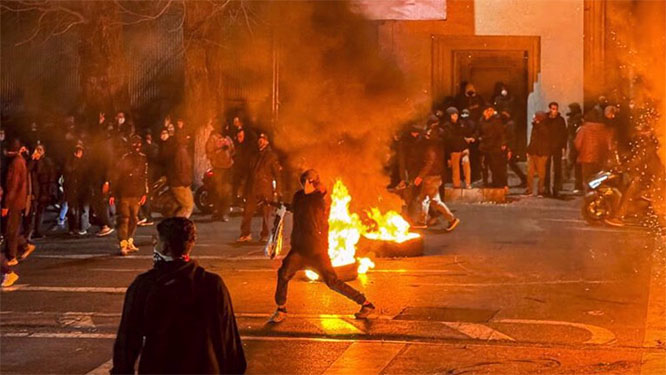
Iranian security and intelligence forces have captured more than 470 individuals in three provinces, identified as key figures behind the recent wave of violent unrest and terrorist activities linked to foreign-backed networks.

The Intelligence Ministry's provincial office in Khorasan Razavi announced on Monday the arrest of 192 armed terrorists, identified as the main agents behind recent riots in the region. 

According to an official statement, the detainees were involved in the killing of several security personnel and civilians, setting fire to mosques, public service facilities, and buses, as well as attacks on military and law enforcement centers.

The seized items from the group include several bulletproof vests, Kalashnikov rifles, hunting weapons, Winchester rifles, and various cold weapons such as daggers, swords, brass knuckles, tactical knives, crossbows, and chains.

Evidence indicates that some of the individuals were tied to hostile movements and terrorist organizations, with links overseas. Others were identified as members of violent criminal gangs, actively taking part in the unrest alongside their associates.

Simultaneously, in the western province of Lorestan, the IRGC announced the arrest of 134 individuals as the main leaders and influential field agents of a US-Israeli terrorist network.

The IRGC statement stated that these individuals formed terrorist cells during the recent unrest, committing "Daesh-like" acts.

They wounded security forces with firearms and cold weapons, and burned and destroyed public and private properties, including mosques, shops, banks, and private and public vehicles.

In the northwestern province of Zanjan, the police reported detaining 150 people identified as principal leaders and agents behind recent riots.

Authorities noted that these individuals were responsible for destroying public and private property and intentionally setting fire to vehicles in the province's squares.

Their crimes include shedding the blood of innocent people, destroying public and private property, attempting to enter military sites, disrupting public order, and spreading terror among citizens.

A variety of cold weapons were reportedly seized from the detainees.

What began late last month as peaceful protests over economic hardship across Iran turned violent after public statements by US and Israeli regime figures encouraged vandalism and disorder.

During the unrest, foreign-backed mercenaries rampaged through cities, killing security forces and civilians and damaging public property.

Comments

Add new comment

  • Coastaldigest.com reserves the right to delete or block any comments.
  • Coastaldigset.com is not responsible for its readers’ comments.
  • Comments that are abusive, incendiary or irrelevant are strictly prohibited.
  • Please use a genuine email ID and provide your name to avoid reject.
News Network
January 20,2026

Mangaluru: In a major step towards strengthening rural innovation, the Office of the Principal Scientific Adviser (PSA) to the Government of India is supporting the establishment of RuTAGe Smart Village Centres (RSVCs) across the country through collaborations with academic institutions, civil society organisations and philanthropic partners.

As part of this national initiative, Nitte (Deemed to be University) will set up the first RSVCs in the region at Nitte GP in Udupi district and at the Nitte Health Centre, Sevanjali Trust, Farangipete, in Dakshina Kannada district. The centres will be inaugurated on January 21. In South India, the programme is being implemented by the Section Infin-8 Foundation (SI-8).

Speaking to reporters on Monday, SI-8 founder-director Vishwas US said experts from Nitte University and SI-8 would work closely with farmers, students, youth and local entrepreneurs to adapt and deploy technologies tailored to local needs.

Project head Prof Iddya Karunasagar, representing Nitte DU, said the RSVCs at Nitte and Farangipete would serve as demonstration hubs for a wide range of agriculture, energy, skill-development and assistive technologies. These include solar dryers for fruits, vegetables and crops; soil-testing solutions; power weeders and women-friendly farm tools; wind-powered devices for rural artisans; grain storage systems; grass-cutting and tree-climbing equipment; and liquid fertiliser production using cowshed waste.

SI-8 CEO Aravind C Kumar said the centres would also provide access to digital and knowledge-based platforms such as ISRO applications, government scheme portals, market linkage tools and gamified learning resources, along with assistive technologies for persons with visual impairments.

Highlighting the broader impact of the initiative, Principal Scientific Adviser Prof Ajay Kumar Sood said it demonstrated how applied research could bridge the rural–urban divide and help create self-reliant, technology-enabled villages.

The initiative has been made possible through philanthropic support from Dr NC Murthy of ACM Business Solutions, LLC, USA. Dr Sapna Poti, Director (Strategic Alliances) at the Office of the Principal Scientific Adviser, said the long-term objective is to build self-sufficient, technology-driven communities capable of generating sustainable livelihoods on their own.

Comments

Add new comment

  • Coastaldigest.com reserves the right to delete or block any comments.
  • Coastaldigset.com is not responsible for its readers’ comments.
  • Comments that are abusive, incendiary or irrelevant are strictly prohibited.
  • Please use a genuine email ID and provide your name to avoid reject.
News Network
February 1,2026

Bengaluru: Karnataka Deputy Chief Minister D K Shivakumar on Sunday criticised the Union Budget presented by Finance Minister Nirmala Sitharaman, claiming it offered no tangible benefit to the state.

Though he said he was yet to study the budget in detail, Shivakumar asserted that Karnataka had gained little from it. “There is no benefit for our state from the central budget. I was observing it. They have now named a programme after Mahatma Gandhi, after repealing the MGNREGA Act that was named after him,” he said.

Speaking to reporters here, the Deputy Chief Minister demanded the restoration of MGNREGA, and made it clear that the newly enacted rural employment scheme — VB-G RAM G — which proposes a 60:40 fund-sharing formula between the Centre and the states, would not be implemented in Karnataka.

“I don’t see any major share for our state in this budget,” he added.

Shivakumar, who also holds charge of Bengaluru development, said there were high expectations for the city from the Union Budget. “The Prime Minister calls Bengaluru a ‘global city’, but what has the Centre done for it?” he asked.

He also drew attention to the problems faced by sugar factories, particularly those in the cooperative sector, alleging a lack of timely decisions and support from the central government.

Noting that the Centre has the authority to fix the minimum support price (MSP) for agricultural produce, Shivakumar said the Union government must take concrete steps to protect farmers’ interests.

Comments

Add new comment

  • Coastaldigest.com reserves the right to delete or block any comments.
  • Coastaldigset.com is not responsible for its readers’ comments.
  • Comments that are abusive, incendiary or irrelevant are strictly prohibited.
  • Please use a genuine email ID and provide your name to avoid reject.