Masks come off in Israel as the country vaunts covid-19 victory

Agencies
April 19, 2021

israel.jpg

Tel Aviv, Apr 19: Israelis stepped into the streets without masks on Sunday for the first time in a year, a key milestone as the country vaccinates its way out of a coronavirus nightmare.

"It's very strange but it's very nice," said Eliana Gamulka, 26, after getting off a bus near the busy Jerusalem shopping boulevard of Jaffa Street and removing her face covering.

"You can't pretend that you don't know anyone any more," she smiled.

With over half the population fully vaccinated in one of the world's fastest anti-Covid 19 inoculation campaigns, the health ministry announced on Thursday that masks would no longer be required in public outdoor spaces.
For Gamulka, a project manager, the good news came at the perfect time: just two weeks before her wedding.

It will be "very nice to celebrate with everyone, now without masks," she said. "The pictures will be great! I'm very relieved. We can start living again."

The vaccination of close to five million people has sent Israel's coronavirus caseload tumbling from some 10,000 new infections per day as recently as mid-January, to around 200 cases a day.

That has allowed the re-opening of schools, bars, restaurants and other indoor gatherings -- although masks are still required in indoor public spaces.

And even before Health Minister Yuli Edelstein's announcement came into effect, punters in the popular bars of Jerusalem's Mahane Yehuda market were mask-free and smiling on Thursday evening.

Yet on Sunday, office worker Ester Malka said she wasn't quite ready to let down her guard.

"We're allowed, but I'm still afraid, I got used to (wearing a mask)," she said.

"I feel like it's part of my life. We'll see what happens when everyone has taken them off. If it goes well for a couple of months, then I'll remove mine."

Israel just months ago had the world's highest infection rate, a coronavirus outbreak that left 6,300 people dead among 836,000 cases.

But the Jewish state sent its coronavirus caseload tumbling after striking a deal for a vast stock of Pfizer/BioNTech jabs.

In exchange, it agreed to pay above market price and share data it gathers on the recipients, using one of the world's most sophisticated medical data systems.

Since December, some 53 per cent of Israel's 9.3 million people have received both doses of the jab, including around four-fifths of the population aged over 20.

As recently as January it was registering 10,000 cases per day.

But as the effects of mass vaccination kicked in, by March it was able to implement a gradual re-opening.

"There's no better advertisement for Pfizer," said Shalom Yatzkan, a computer programmer who had been in quarantine after catching the virus.

"I was sick for three days, I had neck pains and felt weak," he said as he walked through central Jerusalem. "I just hope the new variants don't catch up with us."

Another Sunday landmark in Israel's exit from coronavirus restrictions was the full resumption of the country's educational system, without restrictions on the numbers of pupils in classrooms.

Speaking at a Jerusalem high school, Prime Minister Benjamin Netanyahu hailed the "festivity" of the day for the schools, while warning of complacency.

"We're not done with the coronavirus yet, since it can return," he said, stressing the need to obtain "millions more vaccinations".

"Sooner or later, we'll need another vaccination (dose)," he said.

The situation in Israel is in stark contrast to the occupied West Bank and the blockaded Gaza Strip, where infection rates remain high and vaccinations are low.

Gaza, which is ruled by the Islamist movement Hamas, said on Sunday it had recorded 23 deaths over the past 24 hours -- the highest ever daily coronavirus toll, with 761 deaths since the start of the pandemic.

Rights groups have urged Israel to supply vaccines to the 4.8 million Palestinians living there, but Israel says that falls under the Palestinian Authority's responsibility.

It has however vaccinated over 105,000 Palestinian workers who hold permits for employment in Israel and the settlements.

In Jerusalem, meanwhile, Gamulka was enjoying the simple pleasure of new-found freedoms.

"It's nice not to have something on your face any more," she said.

Comments

Add new comment

  • Coastaldigest.com reserves the right to delete or block any comments.
  • Coastaldigset.com is not responsible for its readers’ comments.
  • Comments that are abusive, incendiary or irrelevant are strictly prohibited.
  • Please use a genuine email ID and provide your name to avoid reject.
News Network
January 23,2026

oscar.jpg

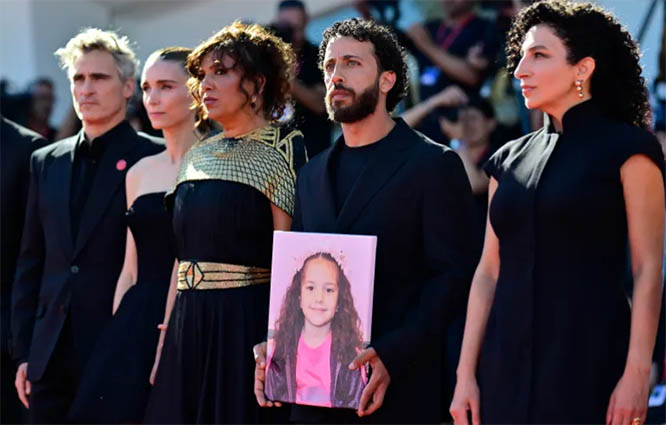
The Voice of Hind Rajab, inspired by the tragic final moments of a young Palestinian girl killed by Israeli fire in Gaza, has been nominated for an Academy Award in the Best International Feature Film category.

Directed by Tunisian filmmaker Kaouther Ben Hania, the film recounts the true story of five-year-old Hind Rajab, who lost her life in January 2024 while fleeing Israeli bombardment with her family.

The film features the real audio of Hind’s desperate call to the Palestinian Red Crescent Society, where she pleaded for help moments before the vehicle she was in was struck by 355 bullets.

The haunting narrative begins with a brief call made from the besieged Tel al-Hawa neighborhood of Gaza, where gunfire and armored vehicles drowned out every sound.

After witnessing the brutal killing of her family, she made a trembling call, her voice reduced to a whisper as she spoke of the massacre and her unbearable loneliness as the sole survivor.

Premiering at the Venice International Film Festival in September 2025, The Voice of Hind Rajab garnered widespread acclaim, receiving a record-setting 23-minute standing ovation and the Silver Lion Grand Jury Prize, the festival’s second-highest honor.

In her acceptance speech, Ben Hania dedicated the film to humanitarian workers and first responders in Gaza, emphasizing that Hind's voice symbolizes countless civilians affected by war.

She aims to give voice to victims often reduced to mere statistics, highlighting the broader suffering of civilians in war zones.

The film’s Oscar nomination underscores its powerful storytelling and ethical approach to depicting real-life tragedy, making it a crucial piece of contemporary cinema.

It serves not only as a narration of individual tragedy but also as an artistic and documentary response to the silence and censorship that often overshadow West Asian struggles and wars.

Using an innovative method she calls docufiction, Ben Hania bridges unvarnished reality and narrative structure, creating a work that is both artistically valuable and socially impactful.

Born in 1977 in Sidi Bouzid—later the epicenter of the Arab revolution—her background profoundly influenced her worldview and artistic approach.

She is a graduate of the Higher School of Audiovisual Arts of Tunis, Pantheon-Sorbonne University, and La Fémis in Paris, where her studies equipped her with the technical and theoretical tools needed to address complex subjects. 

Comments

Add new comment

  • Coastaldigest.com reserves the right to delete or block any comments.
  • Coastaldigset.com is not responsible for its readers’ comments.
  • Comments that are abusive, incendiary or irrelevant are strictly prohibited.
  • Please use a genuine email ID and provide your name to avoid reject.
News Network
January 19,2026

trump.jpg

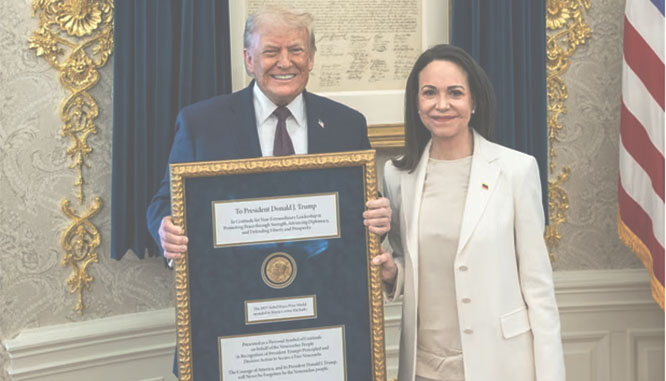
Donald Trump has linked his repeated threats to seize Greenland to his failure to win the Nobel Peace Prize, in a letter to Norwegian Prime Minister Jonas Gahr Støre.

The authenticity of the letter, in which Trump says he no longer feels obligated to “think purely of peace,” was confirmed by Støre to the Norwegian newspaper VG.

“Considering your country decided not to give me the Nobel Peace Prize for having stopped eight wars plus, I no longer feel an obligation to think purely of peace,” Trump wrote, adding he can now “think about what is good and proper for the United States.”

Støre said Trump’s letter was in response to a short message he had sent earlier, on behalf of himself and Finland’s President Alexander Stubb.

Trump has escalated rhetoric toward Greenland, a self-governing Danish territory, insisting the US will take control “one way or the other.” Over the weekend, he tweeted: “Now it is time, and it will be done!!!”

On Saturday, Trump threatened a 10% tariff on imports from Denmark, Norway, Sweden, France, Germany, the UK, the Netherlands, and Finland from 1 February until the US is allowed to purchase the island. EU diplomats met for emergency talks on possible retaliatory tariffs and sanctions.

In his letter, Trump argued Denmark “cannot protect” Greenland from Russia or China, questioning Danish ownership: “There are no written documents; it’s only that a boat landed there hundreds of years ago.” He added that NATO should support the US, claiming the world is “not secure unless we have complete and total control of Greenland.”

Trump’s stance has unsettled the EU and NATO, as he refused to rule out military action to take control of the mineral-rich island.

The Nobel Peace Prize is awarded by the independent Norwegian Nobel Committee, not the government. Trump had campaigned for last year’s prize, which went to Venezuelan opposition leader María Corina Machado, who dedicated her award to him.

Støre reiterated that the Nobel Prize decision rests solely with the committee.

Comments

Add new comment

  • Coastaldigest.com reserves the right to delete or block any comments.
  • Coastaldigset.com is not responsible for its readers’ comments.
  • Comments that are abusive, incendiary or irrelevant are strictly prohibited.
  • Please use a genuine email ID and provide your name to avoid reject.
News Network
February 1,2026

Bengaluru: Karnataka Deputy Chief Minister D K Shivakumar on Sunday criticised the Union Budget presented by Finance Minister Nirmala Sitharaman, claiming it offered no tangible benefit to the state.

Though he said he was yet to study the budget in detail, Shivakumar asserted that Karnataka had gained little from it. “There is no benefit for our state from the central budget. I was observing it. They have now named a programme after Mahatma Gandhi, after repealing the MGNREGA Act that was named after him,” he said.

Speaking to reporters here, the Deputy Chief Minister demanded the restoration of MGNREGA, and made it clear that the newly enacted rural employment scheme — VB-G RAM G — which proposes a 60:40 fund-sharing formula between the Centre and the states, would not be implemented in Karnataka.

“I don’t see any major share for our state in this budget,” he added.

Shivakumar, who also holds charge of Bengaluru development, said there were high expectations for the city from the Union Budget. “The Prime Minister calls Bengaluru a ‘global city’, but what has the Centre done for it?” he asked.

He also drew attention to the problems faced by sugar factories, particularly those in the cooperative sector, alleging a lack of timely decisions and support from the central government.

Noting that the Centre has the authority to fix the minimum support price (MSP) for agricultural produce, Shivakumar said the Union government must take concrete steps to protect farmers’ interests.

Comments

Add new comment

  • Coastaldigest.com reserves the right to delete or block any comments.
  • Coastaldigset.com is not responsible for its readers’ comments.
  • Comments that are abusive, incendiary or irrelevant are strictly prohibited.
  • Please use a genuine email ID and provide your name to avoid reject.