



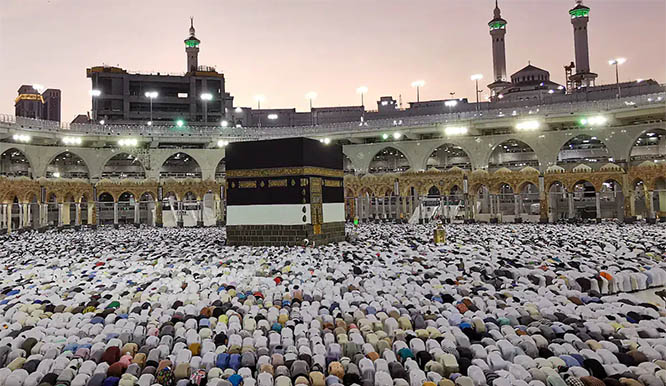
Over 1,300 deaths during Hajj due to intense heat; 83% of them unauthorised pilgrims: Saudi

News Network
June 24, 2024

hajj1300.jpg

Saudi Arabia said Sunday that more than 1,300 faithful died during the hajj pilgrimage which took place during intense heat and that most of them who died did not have official permits.

"Regrettably, the number of mortalities reached 1,301, with 83 percent being unauthorised to perform hajj and having walked long distances under direct sunlight, without adequate shelter or comfort," the official Saudi Press Agency reported.

An AFP tally last week, based on official statements and reports from diplomats involved in their countries' responses, put the count at more than 1,100.

The dead came from more than 10 countries stretching from the United States to Indonesia, and some governments are continuing to update their totals.

Arab diplomats told AFP last week that Egyptians accounted for 658 deaths -- 630 of them unregistered pilgrims. 

The diplomats said the cause of death in most cases was heat-related. 

Temperatures in Mecca this year climbed as high as 51.8 degrees Celsius (125 degrees Fahrenheit), according to Saudi Arabia's national meteorological centre. 

Riyadh had not publicly commented on the deaths or provided its own count until Sunday. 

On Friday, however, a senior Saudi official gave AFP a partial count of 577 deaths for the two busiest days of hajj: June 15, when pilgrims gathered for hours of prayers in the blazing sun on Mount Arafat, and June 16, when they participated in the "stoning of the devil" ritual in Mina.

The official also defended Riyadh's response, saying: "The state did not fail, but there was a misjudgement on the part of people who did not appreciate the risks."

'Heat stress'

The Saudi health minister, Fahd Al-Jalajel, on Sunday described management of the hajj this year as "successful", SPA reported. 

He said the health system "provided more than 465,000 specialised treatment services, including 141,000 services to those who didn't obtain official authorisation to perform hajj," according to SPA, which summarised an interview he gave to the state-affiliated Al-Ekhbariya channel.

Jalajel did not specify how many deaths Saudi officials attributed to heat.

"The health system addressed numerous cases of heat stress this year, with some individuals still under care," SPA reported. 

"Among the deceased were several elderly and chronically ill individuals."

The hajj is one of the five pillars of Islam that all Muslims with the means must complete at least once in their lives.

Saudi officials have said 1.8 million pilgrims took part this year, a similar number to last year, and that 1.6 million came from abroad.

For the past several years the mainly outdoor rituals have fallen during the sweltering Saudi summer.

The timing of the hajj moves forward about 11 days each year in the Gregorian calendar, meaning that next year it will take place earlier in June, potentially in cooler conditions.

A 2019 study by the journal Geophysical Research Letters said because of climate change, heat stress for hajj pilgrims will exceed the "extreme danger threshold" from 2047 to 2052 and 2079 to 2086, "with increasing frequency and intensity as the century progresses".

Off-the-books hajj

Hajj permits are allocated to countries on a quota system and distributed to individuals by lottery.

Even for those who can obtain them, the steep costs spur many to attempt the hajj without a permit, though they risk arrest and deportation if caught.

Saudi authorities said before the hajj that they had cleared hundreds of thousands of unregistered pilgrims from Mecca.

But the Saudi official who spoke to AFP on Friday said around 400,000 unregistered pilgrims took part, and that "almost all of them (were) from one nationality", an apparent reference to Egypt. 

On Saturday, Egyptian Prime Minister Mostafa Madbouly ordered 16 tourism companies stripped of their licences and referred their managers to the public prosecutor over illegal pilgrimages to Mecca, Egypt's cabinet said.

It said the rise in the number of deaths of unregistered Egyptian pilgrims stemmed from some companies which "organised the hajj programmes using a personal visit visa, which prevents its holders from entering Mecca" via official channels.

Unregistered pilgrims in many cases did not have access to amenities meant to make the pilgrimage more bearable, including air-conditioned tents.

Unregistered Egyptian pilgrims told AFP last week that in some cases they struggled to access hospitals or hail ambulances for loved ones, some of whom ended up dying.

Comments

Add new comment

  • Coastaldigest.com reserves the right to delete or block any comments.
  • Coastaldigset.com is not responsible for its readers’ comments.
  • Comments that are abusive, incendiary or irrelevant are strictly prohibited.
  • Please use a genuine email ID and provide your name to avoid reject.
News Network
November 24,2025

israelsyra.jpg

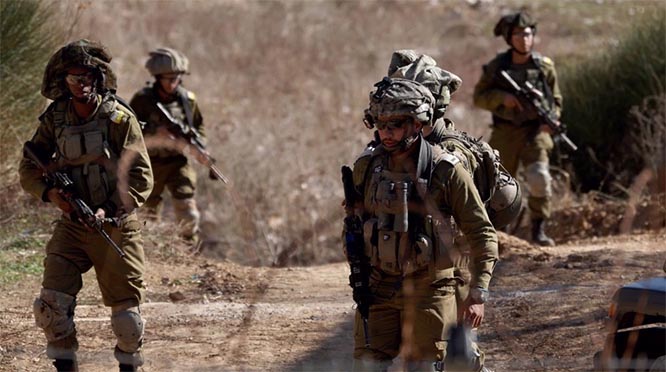
Israeli forces have pushed over the Syrian frontier, erecting a checkpoint and stopping vehicles in the southwestern city of Quneitra, in yet another breach of the Arab country’s sovereignty.

The violation took place on Sunday, when the troops made their way across the border, setting up the outpost near the Ain al-Bayda junction in northern Quneitra, Syrian outlets reported.

According to the al-Ikhbariya paper, an Israeli detachment positioned itself at the junction, halting cars and conducting searches.

The Syrian Arab News Agency (SANA) reported that three Israeli military vehicles then moved further into the northern countryside, deploying between the town of Jubata al-Khashab and the villages of Ofaniya and Ain al-Bayda. The agency added that a separate Israeli unit mounted a new incursion in the central region, approaching the villages of Umm Batina and al-Ajraf.

Residents said such activities have surged in recent months, pointing to Israeli advances onto farmland, leveling of extensive forested areas, arrests, and spread of mobile checkpoints.

The Israeli regime began markedly increasing its military aggression against Syria last year.

The escalation coincided with increasingly ferocious onslaughts throughout the country by the so-called Hay'at Tahrir al-Sham (HTS) Takfiri terrorist group, which the government of President Bashar al-Assad had confined to northwestern Syria. The HTS, however, managed to overthrow the government as the Israeli attacks would pummel the country’s civilian and defensive infrastructure.

Various reports have shown that, during the escalation, the regime conducted more than 1,000 airstrikes on the Syrian territory and over 400 ground raids into the south.

Following the collapse of the Assad government, Tel Aviv also widened its grip over the occupied Golan Heights by taking control of a demilitarized buffer zone, in defiance of a 1974 Disengagement Agreement. Earlier this month, senior Israeli officials, including Prime Minister Benjamin Netanyahu, visited the buffer zone, prompting expressions of alarm on the part of the United Nations.

The United States, the regime’s biggest ally, has, meanwhile, been fraternizing the HTS head Abu Mohammed al-Jolani amid the widely reported prospect of rapprochement with Tel Aviv.

Comments

Add new comment

  • Coastaldigest.com reserves the right to delete or block any comments.
  • Coastaldigset.com is not responsible for its readers’ comments.
  • Comments that are abusive, incendiary or irrelevant are strictly prohibited.
  • Please use a genuine email ID and provide your name to avoid reject.
News Network
November 26,2025

students.jpg

Bengaluru, Nov 26: Karnataka is taking its first concrete steps towards lifting a three-decade-old ban on student elections in colleges and universities. Deputy Chief Minister D.K. Shivakumar announced Wednesday that the state government will form a small committee to study the reintroduction of campus polls, a practice halted in 1989 following incidents of violence.

Speaking at a 'Constitution Day' event organised by the Karnataka Congress, Mr. Shivakumar underscored the move's aim: nurturing new political leadership from the grassroots.

"Recently, (Leader of the Opposition in Lok Sabha) Rahul Gandhi wrote a letter to me and Chief Minister (Siddaramaiah) asking us to think about restarting student elections," Shivakumar stated. "I'm announcing today that we'll form a small committee and seek a report on this."

Student elections were banned in Karnataka in 1989, largely due to concerns over violence and the infiltration of political party affiliates into campus life. The ban effectively extinguished vibrant student bodies and the pipeline of young leaders they often produced.

Mr. Shivakumar, who also serves as the Karnataka Congress president, said that former student leaders will be consulted to "study the pros and cons" of the re-introduction.

Acknowledging the history of the ban, he added, "There were many criminal activities taking place back then. We’ll see how we can conduct (student) elections by regulating such criminal activities."

The Deputy CM reminisced about his own journey, which began on campus. He recalled his political activism at Sri Jagadguru Renukacharya College leading to his first Assembly ticket in 1985 at the age of 23. "That's how student leadership was at the time. Such leadership has gone today. College elections have stopped," he lamented, adding that for many, college elections were "like a big movement" where leaders were forged.

The move, driven by the Congress high command's push to cultivate young talent, will face scrutiny from academics and university authorities who have, in the past, expressed concern that the return of polls could disrupt the peaceful academic environment and turn campuses into political battlegrounds.

Comments

Add new comment

  • Coastaldigest.com reserves the right to delete or block any comments.
  • Coastaldigset.com is not responsible for its readers’ comments.
  • Comments that are abusive, incendiary or irrelevant are strictly prohibited.
  • Please use a genuine email ID and provide your name to avoid reject.
News Network
December 4,2025

Mangaluru: Chaos erupted at Mangaluru International Airport (MIA) after IndiGo flight 6E 5150, bound for Mumbai, was repeatedly delayed and ultimately cancelled, leaving around 100 passengers stranded overnight. The incident highlights the ongoing country-wide operational disruptions affecting the airline, largely due to the implementation of new Flight Duty Time Limitations (FDTL) norms for crew.

The flight was initially scheduled for 9:25 PM on Tuesday but was first postponed to 11:40 PM, then midnight, before being cancelled around 3:00 AM. Passengers expressed frustration over last-minute communication and the lack of clarity, with elderly and ailing travellers particularly affected. “Though the airline arranged food, there was no proper communication, leaving us confused,” said one family member.

An IndiGo executive at MIA cited the FDTL rules, designed to prevent pilot fatigue by limiting crew working hours, as the cause of the cancellation. While alternative arrangements, including hotel stays, were offered, about 100 passengers chose to remain at the airport, creating tension. A replacement flight was arranged but also faced delays due to the same constraints, finally departing for Mumbai around 1:45 PM on Wednesday. Passengers either flew, requested refunds, or postponed their travel.

The Mangaluru delay is part of a broader crisis for IndiGo. The airline has been forced to make “calibrated schedule adjustments”—a euphemism for widespread cancellations and delays—after stricter FDTL norms came into effect on November 1.

While an IndiGo spokesperson acknowledged unavoidable flight disruptions due to technology issues, operational requirements, and the updated crew rostering rules, the DGCA has intervened, summoning senior airline officials to explain the chaos and outline corrective measures.

The ripple effect has been felt across the country, with major hubs like Bengaluru and Mumbai reporting numerous cancellations. The Mangaluru incident underscores the systemic operational strain currently confronting India’s largest carrier, leaving passengers nationwide grappling with uncertainty and delays.

Comments

Add new comment

  • Coastaldigest.com reserves the right to delete or block any comments.
  • Coastaldigset.com is not responsible for its readers’ comments.
  • Comments that are abusive, incendiary or irrelevant are strictly prohibited.
  • Please use a genuine email ID and provide your name to avoid reject.