



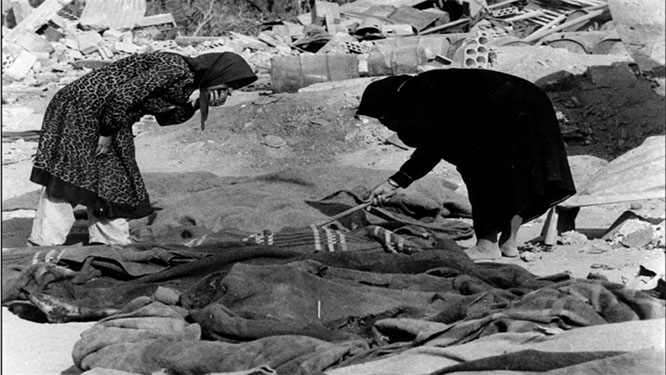
It was dusk on September 16, 1982. In the narrow alleys of Beirut’s Sabra and Shatila refugee camps, the bodies of men, women, and children lay scattered. For 43 relentless hours, the Phalange militia—backed by Israeli occupying forces—turned the camps into a slaughterhouse.
Israeli troops lit the night sky with flares, guiding the militias as they hunted down civilians. From September 16 to 18, nearly 3,500 Palestinians—mostly women, children, and the elderly—were massacred. The killings began at 6 p.m. on Thursday and did not end until 1 p.m. Saturday.
“The stench lingered for more than six months. It was unbearable,” recalled Najib al-Khatib, a refugee who lost his father and ten relatives. Rescuers were unable to recover countless decomposing corpses; bulldozers dug mass graves instead.
One survivor, Umm Abbas, described the horror: “A pregnant woman—her baby was torn from her womb. They sliced her in half.”
Eyewitnesses told of rape, mutilation, and children butchered in front of their families. The United Nations condemned it as an “act of genocide.” A UN commission later concluded that Israeli forces were “involved, directly or indirectly.”
Even Israel’s own Kahan Commission found Ariel Sharon, then defense minister, “personally responsible” for allowing the massacre. Yet Sharon went on to become Prime Minister in 2001.
How the Massacre Was Set in Motion
Between 1947 and 1949, Israel destroyed more than 500 Palestinian villages, displacing 750,000 people. Many ended up in Lebanon’s refugee camps.
In June 1982, Israel invaded Lebanon under Sharon’s command to crush the PLO. By September 1, the PLO withdrew after the US promised that refugees left behind would be protected. A multinational force was deployed but withdrew early on September 10, leaving the camps defenseless.
When Lebanese president-elect Bachir Gemayel was assassinated on September 14, the Phalangists sought revenge. Israeli forces swiftly surrounded Sabra and Shatila, sealing them off. The militias entered with Israeli coordination, and the massacre began.
Reports later revealed Israeli and Phalangist leaders had pre-planned the killings. Afterward, officials even met to strategize how to hide Israel’s role.
America’s Complicity
The Kahan Commission records reveal that the US was fully aware the PLO had left Beirut. Yet Washington ignored Sharon’s lie that “2,000 terrorists” remained and greenlit Israel’s entry into West Beirut.
The US not only supplied Israel with the weapons used but also broke its written guarantee to protect Palestinian civilians. Secret annexes later exposed that Washington knew the camps were defenseless and that massacres would follow if the Phalangists were allowed in.
The Legacy of Ethnic Cleansing
Four decades later, the echoes of Sabra and Shatila remain. Survivors still live with unhealed trauma.
Today, the pattern continues. Since October 7, 2023, Israel’s war on Gaza—armed and shielded diplomatically by the US—has killed more than 41,200 Palestinians, most of them women and children.
As with Sabra and Shatila, the world watches. The names change, but the brutality endures.


Comments
Add new comment