Saudi Arabia announces resumption of Umrah from Oct 4 with limited pilgrims

News Network
September 23, 2020

Jeddah, Sept 23: Saudi Arabia has announced the gradual resumption of Umrah and visits to the Two Holy Mosques with a limited number of pilgrims, starting from Oct. 4, 2020, the Saudi Press Agency reported on Tuesday citing a source at the Ministry of Interior.

The ministry source said that based on the reports of the competent authorities regarding coronavirus developments and in response to the aspirations of many Muslims at home and abroad to perform Umrah, and based on the leadership's keenness on the health and safety of the visitors the Two Holy Mosques, a royal approval has been given to allow the performance of Umrah and visits to the Two Holy Mosques gradually while taking the necessary health preventative measures.

In the first phase, citizens and expatriates from within the Kingdom will be allowed to perform Umrah at a capacity of 30 percent from Oct. 4 that translates to 6,000 pilgrims per day following the health precautionary measures of the Grand Mosque.

In the second phase, citizens and expatriates inside the Kingdom will be allowed to perform Umrah, visit the Rawdah in the Prophet’s Mosque in Madinah, and pray in Two Holy Mosques, starting from Oct. 18, with a 75 percent capacity limit that is equivalent of nearly 15,000 pilgrims per day and 40,000 worshippers per day following the health precautionary measures for the Grand Mosque, as well as 75 percent of the capacity in line with the health precautionary measures for the Rawdah in the Prophet’s Mosque.

In the third phase, pilgrims from abroad would be allowed to perform Umrah as of Nov. 1 with a full capacity of 20,000 pilgrims and 60,000 worshipers per day and it will continue until the official end of the coronavirus pandemic or the official announcement that the danger is over. The arrival of Umrah performers and visitors from outside the Kingdom shall be gradual from the countries that are free from health risks related to the coronavirus pandemic, the source added.

The fourth phase will allow the performance of Umrah, visit and prayers by citizens and expatriates from inside and outside the Kingdom, at 100 percent of the normal capacity of the Grand Mosque and the Prophet's Mosque, when the competent authority decides that the risks of the pandemic has disappeared.

Meanwhile, the entry of pilgrims, worshipers and visitors shall be regulated through the application (Etamarna), which will be launched by the Ministry of Hajj and Umrah, with the aim of implementing the health standards and controls approved by the Ministry of Health and the competent authorities.

The source called upon pilgrims, worshipers and visitors to adhere to preventive measures and apply the health instructions and requirements, including wearing face masks, keeping a safe distance, and avoiding a physical contact.

The source affirmed the Kingdom's keenness to enable the pilgrims from inside and outside the Kingdom to perform the rituals in a safe and healthy manner fulfilling the preventative requirements and spatial distancing in order to ensure human safety and protection from the threats of this pandemic, and achieve the objectives of the Islamic law in preserving human lives.

The source explained that the stages announced in this statement will be subjected to continuous evaluation, according to the developments of the pandemic.

Comments

Add new comment

  • Coastaldigest.com reserves the right to delete or block any comments.
  • Coastaldigset.com is not responsible for its readers’ comments.
  • Comments that are abusive, incendiary or irrelevant are strictly prohibited.
  • Please use a genuine email ID and provide your name to avoid reject.
News Network
January 20,2026

iran.jpg

Iranian security and intelligence forces have captured more than 470 individuals in three provinces, identified as key figures behind the recent wave of violent unrest and terrorist activities linked to foreign-backed networks.

The Intelligence Ministry's provincial office in Khorasan Razavi announced on Monday the arrest of 192 armed terrorists, identified as the main agents behind recent riots in the region. 

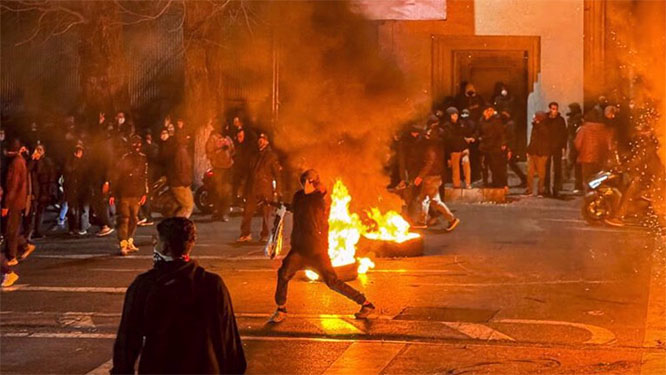
According to an official statement, the detainees were involved in the killing of several security personnel and civilians, setting fire to mosques, public service facilities, and buses, as well as attacks on military and law enforcement centers.

The seized items from the group include several bulletproof vests, Kalashnikov rifles, hunting weapons, Winchester rifles, and various cold weapons such as daggers, swords, brass knuckles, tactical knives, crossbows, and chains.

Evidence indicates that some of the individuals were tied to hostile movements and terrorist organizations, with links overseas. Others were identified as members of violent criminal gangs, actively taking part in the unrest alongside their associates.

Simultaneously, in the western province of Lorestan, the IRGC announced the arrest of 134 individuals as the main leaders and influential field agents of a US-Israeli terrorist network.

The IRGC statement stated that these individuals formed terrorist cells during the recent unrest, committing "Daesh-like" acts.

They wounded security forces with firearms and cold weapons, and burned and destroyed public and private properties, including mosques, shops, banks, and private and public vehicles.

In the northwestern province of Zanjan, the police reported detaining 150 people identified as principal leaders and agents behind recent riots.

Authorities noted that these individuals were responsible for destroying public and private property and intentionally setting fire to vehicles in the province's squares.

Their crimes include shedding the blood of innocent people, destroying public and private property, attempting to enter military sites, disrupting public order, and spreading terror among citizens.

A variety of cold weapons were reportedly seized from the detainees.

What began late last month as peaceful protests over economic hardship across Iran turned violent after public statements by US and Israeli regime figures encouraged vandalism and disorder.

During the unrest, foreign-backed mercenaries rampaged through cities, killing security forces and civilians and damaging public property.

Comments

Add new comment

  • Coastaldigest.com reserves the right to delete or block any comments.
  • Coastaldigset.com is not responsible for its readers’ comments.
  • Comments that are abusive, incendiary or irrelevant are strictly prohibited.
  • Please use a genuine email ID and provide your name to avoid reject.
News Network
January 31,2026

Roy.jpg

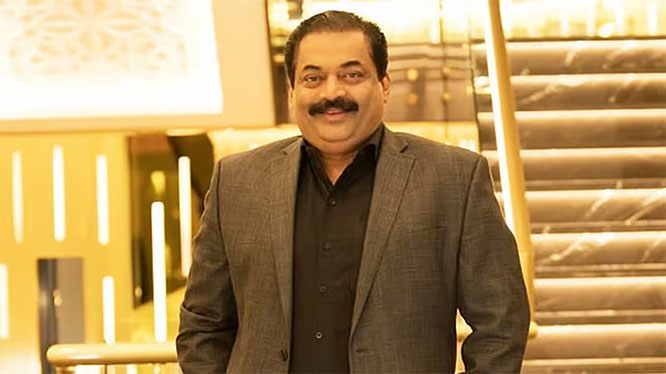
Bengaluru: The shooting incident involving CJ Roy, founder of the Confident Group, has once again put the spotlight on a businessman whose life has swung between flamboyant global success and persistent controversy at home.

Though Roy’s business interests extended across continents, his roots lay firmly in Karnataka. An alumnus of Christ School in Bengaluru, he later moved to Tumakuru to pursue an engineering degree. Those familiar with his early years describe him as intensely ambitious, beginning his career as a salesman at a small electronics firm dealing in computers.

Roy’s entry into large-scale real estate came through the Crystal Group, where he worked closely with Latha Namboothiri and rose from manager to director. However, the launch of the Confident Group in 2005 was clouded by industry speculation. Insiders speak of a fallout involving alleged “benami” properties and claims of deception that ultimately led to his independent venture—an episode Roy spent years trying to distance himself from, according to associates.

A tale of two cities

Roy’s professional trajectory diverged sharply across geographies.

In Dubai, he built a reputation as a bold and efficient developer, completing massive luxury residential projects in record time—some reportedly within 11 months. His rapid project delivery and lavish lifestyle in the Emirates earned him admiration and visibility in the real estate sector.

In Bengaluru, however, his image remained far more fractured. Sources say Roy stayed away from the city for several years amid disputes over unpaid dues to vendors and suppliers. Several projects were allegedly stalled, with accusations of unfulfilled commitments to cement and steel suppliers continuing to follow him.

Roy’s return to Bengaluru’s business and social circles began around 2018, marked by a conscious attempt at rebranding. His appointment as Honorary Consul of the Slovak Republic added diplomatic legitimacy, which he complemented with visible CSR initiatives, including ambulance donations and high-profile charity events.

Heavy police presence in Langford Town

Following the incident, police personnel from the Central division were deployed outside the Confident Group building in Langford Town, which also houses the Slovak Honorary Consulate in Bengaluru.

The otherwise busy premises near Hosur Road wore a deserted look on Friday, reflecting the shock and uncertainty that followed the tragedy.

Comments

Add new comment

  • Coastaldigest.com reserves the right to delete or block any comments.
  • Coastaldigset.com is not responsible for its readers’ comments.
  • Comments that are abusive, incendiary or irrelevant are strictly prohibited.
  • Please use a genuine email ID and provide your name to avoid reject.