



Saudi Arabia is biggest success story of 21st century, says Crown Prince

News Network
September 21, 2023

Saudi.jpg

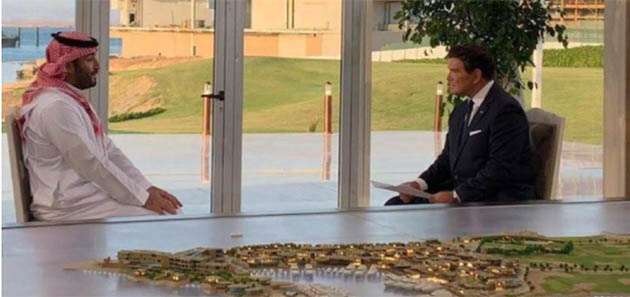
NEOM: Crown Prince and Prime Minister Mohammed bin Salman said that Saudi Arabia is the biggest success story of the 21st century.

In an interview with Bret Baier, chief political anchor of Fox News, at NEOM, the Crown Prince said the Palestinian issue is crucial to normalizing ties with Israel as he wanted to see a good life for the Palestinians. In the interview on “Special Report with Bret Baier” that was aired on Thursday morning, he reiterated that if Iran possessed a nuclear weapon, Saudi Arabia would do the same “for security reasons and the balance of power.”

Saudi Arabia had achieved the fastest growth in gross domestic product (GDP) among the G20 countries for two consecutive years, the Crown Prince said while pointing out about the bid to join G7. “We tried to join the G7, but some countries wanted to dictate their conditions to us,” he said.

In his first interview with a major American news network since 2019, the Crown Prince addressed a wide range of domestic, regional and international issues. Prince Mohammed bin Salman highlighted the robust growth and comprehensive social and economic reforms that Saudi Arabia is witnessing under its Vision 2030. “Saudi Arabia is so big, so I'm quite sure most people in the world, directly or indirectly, have something to do with Saudi Arabia. Our vision is great and we are surprised every day when achieving our goals quickly as our non-oil growth this year will be among the fastest in the G20 countries,” he said.

When asked about efforts to normalize relations with Israel, the Crown Prince emphasized that the Kingdom has no relationship with Israel at present. “Every day we get closer, it seems it's for the first time real one serious. We get to see how it goes," he said. The Crown Prince insisted his country could work with Israel, no matter who is in charge, calling the deal "the biggest historical deal since the end of the Cold War," which he stated would rest upon agreements related to the treatment of the Palestinians. "If we have a breakthrough of reaching a deal that gives the Palestinians their needs and makes the region calm, we're going to work with whoever is there," he said, while reiterating that he wanted to see "a good life for the Palestinians."

When asked about the potential for Iran to obtain a nuclear weapon and what it means for Saudi Arabia, the Crown Prince clearly stated that should Iran ever obtain such a weapon Saudi Arabia would "have to get one, for security reasons, for balancing power." "We are concerned if any country gets a nuclear weapon: That's a bad, that's a bad move," he said. "They don't need to get nuclear weapons because you cannot use them. Any country using a nuclear weapon that means they are having a war with the rest of the world," he said while reiterating the position of Saudi Arabia that the region must be stable for Saudi Arabia to achieve its goals. "The world cannot see another Hiroshima. If the world sees 100,000 people dead that means you are in a war with the rest of the world. So to use this effort to reach a nuclear weapon because you cannot use it if you use it, you got to have a big fight with the rest of the world."

The Crown Prince also spoke about relations with the United States, saying: “We have important security ties with Washington. We have a special relationship with President Joe Biden, and he is very focused and prepares himself well,” he said while adding that Saudi Arabia wants American and foreign companies to come and invest in a safe environment in the Middle East. "We are one of the five largest buyers of American weapons, and our move to buy weapons from countries other than the United States is not in their interest."

He also highlighted the various attacks Osama bin Laden planned and executed against Saudi Arabia in the 1990s. Bin Laden was able to recruit Saudis to help his cause but that it "doesn’t make any sense" for the country itself to help a man actively hurting it. "After that, killing Saudis and foreign people at that time in Saudi Arabia, he's our enemy and he's the American enemy," the Crown Prince said.

Referring to the Khashoggi issue, the Crown Prince said that Saudi Arabia prosecuted those involved in Khashoggi’s killing and made reforms to prevent such things happening again. “Anyone involved in Khashoggi’s killing is serving time in prison and must face the law. We take all the legal measurements that any country took ... We did that in Saudi Arabia and the case was closed," he said. "Also, we try to reform the security system to be sure that these kinds of mistakes do not happen again, and we can see in the past five years nothing of those things happened. It's not part of what Saudi Arabia does." He noted that the country is working to reform some laws and the government does not interfere in the work of the judiciary.

The Crown Prince also touched on economic files, stressing that the Kingdom monitors supply and demand in the oil market and takes the necessary measures to stabilize the energy market. “Our role in OPEC + is to bridge the gap between supply and demand. We are keen on the stability of energy markets and we are doing what is necessary in this regard.”

Referring to the recent deal signed with regard to establishing India – Middle East – Europe Economic Corridor during the G20 Summit, the Crown Prince said that the Economic Corridor that will connect the Middle East with Europe will save time and money and will shorten the distance to Europe to 3-6 days.

Regarding the BRICS group of countries, Prince Mohammed bin Salman said that this group “is not against the United States, as evidenced by the presence of Washington’s allies within it.” The Crown Prince stressed that the BRICS group, which includes Brazil, Russia, India, China and South Africa, is not a political alliance.

The Crown Prince also explained about the measures being taken to make the Kingdom a major global tourism destination. He said that attracting tourism is linked to developing other major sectors, including sports, entertainment and culture. “We do not mind developing the sports sector as it has become effective in economic returns. We are working to ensure that sports contribute 1.5 percent of the gross domestic product (GDP) soon,” he added.

Comments

Add new comment

  • Coastaldigest.com reserves the right to delete or block any comments.
  • Coastaldigset.com is not responsible for its readers’ comments.
  • Comments that are abusive, incendiary or irrelevant are strictly prohibited.
  • Please use a genuine email ID and provide your name to avoid reject.
News Network
November 22,2025

gaza.jpg

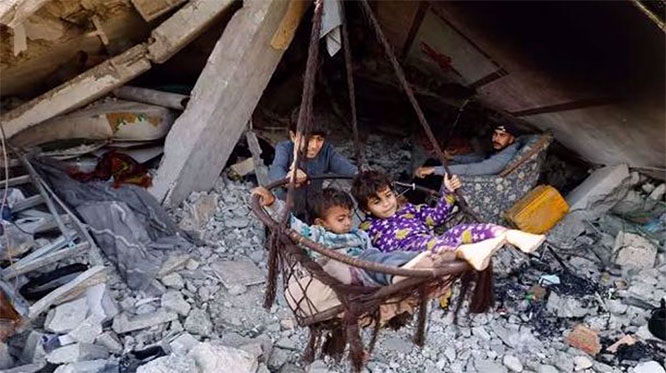
The Israeli regime’s forces have killed two Palestinian children in the Gaza Strip every day since the ceasefire began in early October, UNICEF has warned.

The UN children’s agency said on Friday that Israeli forces continue to attack Palestinians in Gaza even though the agreement was meant to stop the killing.

“Since 11 October, while the ceasefire has been in effect, at least 67 children have been killed in conflict-related incidents in the Gaza Strip. Dozens more have been injured. That is an average of almost two children killed every day since the ceasefire took effect,” UNICEF spokesperson Ricardo Pires said in Geneva, reminding that each number in the statistics represents a child whose life had ended violently.

“These are not statistics,” he said. “Each child had a story, a family, and a future that was stolen from them.”

Data from Palestinian factions, human rights groups, and government bodies recorded since the US-brokered ceasefire deal went into effect on October 10 show that Israeli forces have carried out numerous attacks, each constituting a separate ceasefire violation.

UNICEF teams say they repeatedly continue to witness heart-wrenching scenes of fearful Palestinian children sleeping outdoors with amputated limbs, while others live as orphans in flooded, makeshift shelters.

“I saw this myself in August. There is no safe place for them. The world cannot normalize their suffering,” Pires said, lamenting that the UN could “do a lot more if the aid that is really needed was entering faster.”

The UNICEF spokesperson warned that with the advent of winter, the risks for hundreds of thousands of displaced children will increase.

He warned, “The stakes are incredibly high” for children as winter acts as a threat multiplier, where children have no heating, no insulation, and few blankets. He said respiratory infections rise.

“Too many children have already paid the highest price,” Pires said. “Too many are still paying it, even under a ceasefire. The world promised them it would stop and that we would protect them.”

“Now we must act like it,” the UNICEF spokesperson added.

Since the Israeli regime launched its genocidal war against Palestinians in Gaza in October 2023, it has killed nearly 70,000 people in the territory, most of them women and children, and injured over 170,000 more, while reducing most of the structures in the enclave to rubble.

Comments

Add new comment

  • Coastaldigest.com reserves the right to delete or block any comments.
  • Coastaldigset.com is not responsible for its readers’ comments.
  • Comments that are abusive, incendiary or irrelevant are strictly prohibited.
  • Please use a genuine email ID and provide your name to avoid reject.
News Network
November 30,2025

The United Nations Committee against Torture (CAT) has condemned the Israeli regime for enforcing a policy of “organized torture” against Palestinians.

In a report published on Friday, CAT stated that the occupying regime enforces a deliberate policy of “organized and widespread torture and ill-treatment” against Palestinian abductees, particularly since October 7, 2023, when Israel launched its genocidal war on Gaza.

The committee expressed “deep concern over repeated severe beatings, dog attacks, electrocution, water-boarding, use of prolonged stress positions [and] sexual violence” inflicted on Palestinians.

Palestinian prisoners were degraded by “being made to act like animals or being urinated on,” systematically denied medical care, and subjected to excessive restraints, “in some cases resulting in amputation,” the report added.

CAT also condemned the routine application of “unlawful combatants law” to justify the prolonged detention without trial of thousands of Palestinian men, women, and children.

More than 10,000 Palestinians, including women and children, are currently held in Israeli prisons, according to Palestinian and international human rights groups, with 3,474 Palestinians in “administrative detention,” meaning they are imprisoned without trial for indefinite periods.

The report highlighted the “high proportion of children who are currently detained without charge or on remand,” noting that while Israel sets the age of criminal responsibility at 12, even younger children have been abducted.

Children designated as security prisoners face severe restrictions on family contact, may be subjected to solitary confinement, and are denied access to education, in clear violation of international law.

The committee further suggested that Israel’s policies across the Occupied Territories constitute collective torture against the Palestinian population.

“A range of policies adopted by Israel in the course of its continued unlawful presence in the Occupied Palestinian Territory amounts to cruel, inhuman or degrading living conditions for the Palestinian population,” the report said.

On Thursday, the Palestinian resistance movement Hamas condemned the systematic killing and torture of Palestinian abductees in Israeli prisons, urging international action to halt these abuses.

Citing human rights data, Hamas stated that 94 Palestinians have been killed in Israeli prisons since the start of Tel Aviv’s genocidal war on Gaza.

“This reflects an organized criminal approach that has turned these prisons into direct killing grounds to eliminate our people,” the resistance movement said.

Hamas called on the international community, the UN, and human rights organizations to immediately pressure Israel to end crimes against prisoners and uphold their rights as guaranteed by all international conventions and norms.

Comments

Add new comment

  • Coastaldigest.com reserves the right to delete or block any comments.
  • Coastaldigset.com is not responsible for its readers’ comments.
  • Comments that are abusive, incendiary or irrelevant are strictly prohibited.
  • Please use a genuine email ID and provide your name to avoid reject.
News Network
November 26,2025

students.jpg

Bengaluru, Nov 26: Karnataka is taking its first concrete steps towards lifting a three-decade-old ban on student elections in colleges and universities. Deputy Chief Minister D.K. Shivakumar announced Wednesday that the state government will form a small committee to study the reintroduction of campus polls, a practice halted in 1989 following incidents of violence.

Speaking at a 'Constitution Day' event organised by the Karnataka Congress, Mr. Shivakumar underscored the move's aim: nurturing new political leadership from the grassroots.

"Recently, (Leader of the Opposition in Lok Sabha) Rahul Gandhi wrote a letter to me and Chief Minister (Siddaramaiah) asking us to think about restarting student elections," Shivakumar stated. "I'm announcing today that we'll form a small committee and seek a report on this."

Student elections were banned in Karnataka in 1989, largely due to concerns over violence and the infiltration of political party affiliates into campus life. The ban effectively extinguished vibrant student bodies and the pipeline of young leaders they often produced.

Mr. Shivakumar, who also serves as the Karnataka Congress president, said that former student leaders will be consulted to "study the pros and cons" of the re-introduction.

Acknowledging the history of the ban, he added, "There were many criminal activities taking place back then. We’ll see how we can conduct (student) elections by regulating such criminal activities."

The Deputy CM reminisced about his own journey, which began on campus. He recalled his political activism at Sri Jagadguru Renukacharya College leading to his first Assembly ticket in 1985 at the age of 23. "That's how student leadership was at the time. Such leadership has gone today. College elections have stopped," he lamented, adding that for many, college elections were "like a big movement" where leaders were forged.

The move, driven by the Congress high command's push to cultivate young talent, will face scrutiny from academics and university authorities who have, in the past, expressed concern that the return of polls could disrupt the peaceful academic environment and turn campuses into political battlegrounds.

Comments

Add new comment

  • Coastaldigest.com reserves the right to delete or block any comments.
  • Coastaldigset.com is not responsible for its readers’ comments.
  • Comments that are abusive, incendiary or irrelevant are strictly prohibited.
  • Please use a genuine email ID and provide your name to avoid reject.