Saudi Arabia launches 4 special economic zones to attract international investors

News Network
April 14, 2023

SEZ.jpg

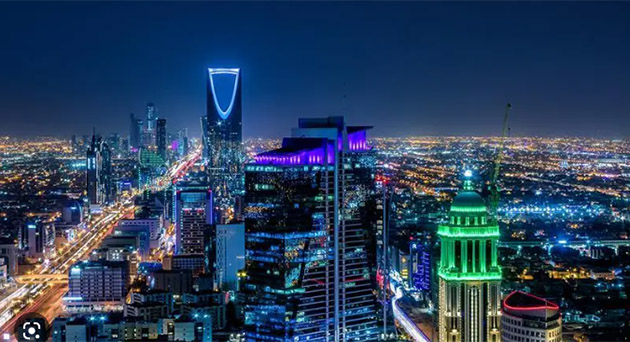
Riyadh: Saudi Arabia has launched four special economic zones that will offer companies financial and non-financial incentives as it seeks to attract more foreign investment and position itself as a global business centre.

The aim of the new zones, which will be located in Riyadh, Jazan, Ras Al-Khair and King Abdullah Economic City, is to open up new opportunities for international investors, the Saudi Press Agency reported.

“Saudi Arabia is open for business and welcomes investors from all around the world to see first-hand the historic opportunities we have to offer,” the Crown Prince Mohammed bin Salman said.

“The new special economic zones launched today will significantly impact how business is done in the country, create tens of thousands of jobs, and contribute billions of riyals to our gross domestic product.”

The zones will take advantage of the Kingdom’s strategic location to create new hubs for businesses across key growth sectors so that they can launch and expand companies and technologies that will help shape the future, according to the SPA.

They will support existing national strategies and create new links with international frameworks, building on the competitive advantages of each region of the country to support key sectors such as logistics, advanced manufacturing, technology, and other priority sectors in the Kingdom, it added.

The benefits to companies of operating in the zones will include: competitive corporate tax rates; exemption from customs duties on imports, production inputs, machinery and raw materials; 100 percent foreign ownership of companies; and flexibility to attract and hire the best talent worldwide.

The zones will also provide tremendous opportunities for developing the local economy, generating jobs, and localizing supply chains, officials said. They are said to represent a continuation of long-running initiatives that aim to transform the Kingdom into a global investment destination and a vital hub for global supply chains, by capitalizing on its position at the heart of global trade routes.

Thanks to a detailed program of regulations and incentives, the zones will offer rewarding and attractive benefits to foreign investors, officials said. The program will also allow for the acceleration of reforms required to facilitate business in all parts of the Kingdom, they added.

The new zones build on previous free-zone initiatives in the Kingdom, including the recent launch of an integrated special zone for logistics at King Salman International Airport in Riyadh. Together, they represent the first phase of a major, long-term program designed to encourage foreign direct investment, attract the most talented professionals from around the world, and promote entrepreneurship and economic development within the Kingdom, officials said.

The zones, which will be regulated by the Economic Cities and Special Zones Authority, will provide fresh solutions to the challenges many global businesses face as they attempt to localize and strengthen supply chains, they added, and help the Kingdom take advantage of key macroeconomic shifts to create a truly differentiated business environment, activating new sectors and value chains.

Saudi Minister of Investment Khalid Al-Falih, who is the chairman of the Economic Cities and Special Zones Authority, said: “This is an exciting moment. We are proud to see the launch of these four special economic zones that offer the chance for foreign investors to have a stake in the world’s fastest growing economy.”

The Secretary-General of the authority, Mr. Nabil Khoja, added, “With hugely attractive financial incentives, world-class infrastructure, business-friendly regulations and streamlined procedures for investors, there has never been a better time to be part of Saudi Arabia’s economic success story. The zones will become engines of growth, increasing the Kingdom’s export competitiveness, attracting talent, boosting technology and improving our global links.”

Special economic zones – or SEZs – are geographically defined areas that facilitate specific economic activities, such as investment, trade and employment, by providing competitive advantages and legislative frameworks that differ from the base economy. 

The newly launched zones cover a wide range of industries:

King Abdullah Economic City (KAEC) SEZ

The premier destination for advanced manufacturing and logistics, from automobile supply chain and assembly to consumer goods, ICT to MedTech. Set in a prime location on the Red Sea, less than 90 minutes from Jeddah Airport, this 60km2 site offers unrivaled access to global trade routes through King Abdullah Port, ranked the world’s most efficient by the World Bank in 2022. Anchor investor Lucid, a leader in the global EV industry, will produce 150,000 EVs a year from its base in KAEC SEZ.

Jazan SEZ

An industrial center and key platform for trade with fast-growing markets in Africa and Asia. Jazan SEZ offers access to the largest port in the region for export of goods and import of materials, helping investors benefit from and contribute to large-scale infrastructure projects in Saudi Arabia and around the world, backed by easy access to both natural and industrial resources. Jazan is part of the Kingdom’s fertile southwestern region, providing opportunities for the manufacturing, processing and distribution of food products to cater for growing regional demand and meet food security challenges across the region.

Ras Al-Khair SEZ

A launchpad on the Arabian Gulf for leaders in the maritime industry, Ras Al-Khair SEZ is a fully integrated marine ecosystem, with a rich network of existing investors – 40% of the zone is already reserved – and myriad opportunities across shipbuilding and repair, offshore drilling and maritime value chains.

Cloud Computing SEZ, located in King Abdulaziz City for Science and Technology (KACST)

In King Abdulaziz City for Science and Technology (KACST), a new Cloud Computing SEZ will serve as  a hub for emerging and disruptive technologies. A direct manifestation of the Kingdom’s ‘Cloud First’ policy, the Cloud Computing SEZ underlines the Kingdom’s commitment to digital innovation and the fast-growing tech sector. The Zone is based around an innovative hybrid model that allows investors to establish physical data centers and cloud computing infrastructure in multiple locations within the Kingdom. 

Comments

Add new comment

  • Coastaldigest.com reserves the right to delete or block any comments.
  • Coastaldigset.com is not responsible for its readers’ comments.
  • Comments that are abusive, incendiary or irrelevant are strictly prohibited.
  • Please use a genuine email ID and provide your name to avoid reject.
News Network
December 4,2025

indigoflight.jpg

Domestic carrier IndiGo has cancelled over 180 flights from three major airports — Mumbai, Delhi and Bengaluru — on Thursday, December 4, as the airline struggles to secure the required crew to operate its flights in the wake of new flight-duty and rest-period norms for pilots.

While the number of cancellations at Mumbai airport stands at 86 (41 arrivals and 45 departures) for the day, at Bengaluru, 73 flights have been cancelled, including 41 arrivals, according to a PTI report that quoted sources.

"IndiGo cancelled over 180 flights on Thursday at three airports-Mumbai, Delhi and Bengaluru," the source told the news agency.

Besides, it had cancelled as many as 33 flights at Delhi airport for Thursday, the source said, adding, "The number of cancellations is expected to be higher by the end of the day."

The Gurugram-based airline's On-Time Performance (OTP) nosedived to 19.7 per cent at six key airports — Delhi, Mumbai, Chennai, Kolkata, Bengaluru and Hyderabad — on December 3, as it struggled to get the required crew to operate its services, down from almost half of December 2, when it was 35 per cent.

"IndiGo has been facing acute crew shortage since the implementation of the second phase of the FDTL (Flight Duty Time Limitations) norms, leading to cancellations and huge delays in its operations across the airports," a source had told PTI on Wednesday.

Chaos continued at several major airports for the third day on Thursday because of the cancellations.

A spokesperson for the Kempegowda International Airport (KIA) in Bengaluru said that 73 IndiGo flights had been cancelled on Thursday.

At least 150 flights were cancelled and dozens of others delayed on Wednesday, airport sources said, leaving thousands of travellers stranded, according to news agency Reuters.

The Directorate General of Civil Aviation (DGCA) has said it is investigating IndiGo flight disruptions and has asked the airline to submit the reasons for the current situation, as well as its plans to reduce flight cancellations and delays.

It may be mentioned here that the pilots' body, Federation of Indian Pilots (FIP), has alleged that IndiGo, despite getting a two-year preparatory window before the full implementation of new flight duty and rest period norms for cockpit crew, "inexplicably" adopted a "hiring freeze".

The FIP said it has urged the safety regulator, the DGCA, not to approve airlines' seasonal flight schedules unless they have adequate staff to operate their services "safely and reliably" in accordance with the New Flight Duty Time Limitations (FDTL) norms.

In a letter to the DGCA late on Wednesday, the FIP urged the DGCA to consider re-evaluating and reallocating slots to other airlines, which have the capacity to operate them without disruption during the peak holiday and fog season if IndiGo continues to "fail in delivering on its commitments to passengers due to its own avoidable staffing shortages."

Comments

Add new comment

  • Coastaldigest.com reserves the right to delete or block any comments.
  • Coastaldigset.com is not responsible for its readers’ comments.
  • Comments that are abusive, incendiary or irrelevant are strictly prohibited.
  • Please use a genuine email ID and provide your name to avoid reject.
News Network
November 24,2025

israelsyra.jpg

Israeli forces have pushed over the Syrian frontier, erecting a checkpoint and stopping vehicles in the southwestern city of Quneitra, in yet another breach of the Arab country’s sovereignty.

The violation took place on Sunday, when the troops made their way across the border, setting up the outpost near the Ain al-Bayda junction in northern Quneitra, Syrian outlets reported.

According to the al-Ikhbariya paper, an Israeli detachment positioned itself at the junction, halting cars and conducting searches.

The Syrian Arab News Agency (SANA) reported that three Israeli military vehicles then moved further into the northern countryside, deploying between the town of Jubata al-Khashab and the villages of Ofaniya and Ain al-Bayda. The agency added that a separate Israeli unit mounted a new incursion in the central region, approaching the villages of Umm Batina and al-Ajraf.

Residents said such activities have surged in recent months, pointing to Israeli advances onto farmland, leveling of extensive forested areas, arrests, and spread of mobile checkpoints.

The Israeli regime began markedly increasing its military aggression against Syria last year.

The escalation coincided with increasingly ferocious onslaughts throughout the country by the so-called Hay'at Tahrir al-Sham (HTS) Takfiri terrorist group, which the government of President Bashar al-Assad had confined to northwestern Syria. The HTS, however, managed to overthrow the government as the Israeli attacks would pummel the country’s civilian and defensive infrastructure.

Various reports have shown that, during the escalation, the regime conducted more than 1,000 airstrikes on the Syrian territory and over 400 ground raids into the south.

Following the collapse of the Assad government, Tel Aviv also widened its grip over the occupied Golan Heights by taking control of a demilitarized buffer zone, in defiance of a 1974 Disengagement Agreement. Earlier this month, senior Israeli officials, including Prime Minister Benjamin Netanyahu, visited the buffer zone, prompting expressions of alarm on the part of the United Nations.

The United States, the regime’s biggest ally, has, meanwhile, been fraternizing the HTS head Abu Mohammed al-Jolani amid the widely reported prospect of rapprochement with Tel Aviv.

Comments

Add new comment

  • Coastaldigest.com reserves the right to delete or block any comments.
  • Coastaldigset.com is not responsible for its readers’ comments.
  • Comments that are abusive, incendiary or irrelevant are strictly prohibited.
  • Please use a genuine email ID and provide your name to avoid reject.
News Network
November 24,2025

lebanon.jpg

Israel has launched a new act of aggression on a residential neighborhood in Lebanon's capital, Beirut, killing and injuring about two dozen civilians.

The Israeli regime's military said in a statement that its forces carried out a so-called precise strike in a residential apartment in Dahiyeh in the southern suburbs of Beirut on Sunday.

The aggression targeted residential areas, killing at least five people and injuring more than 28 people, Lebanon's Health Ministry said. 

Hezbollah announced the martyrdom of senior Hezbollah commander Haytham Ali Tabatabai and four resistance fighters.

Lebanese President Michel Aoun condemned the airstrike, calling it a clear demonstration of Tel Aviv’s disregard for repeated international calls to halt violations on Lebanese soil.

“Israel refuses to implement international resolutions and all efforts aimed at ending the escalation and restoring stability,” Aoun said, urging the international community to take action to prevent further aggression.

The Palestinian Islamic Jihad movement also condemned the attack, holding the international community accountable. 

“The international community bears responsibility and continues to provide cover for these attacks as long as it does not restrain the occupiers,” said Ali Abu Shahin, a member of the group’s political bureau.

Israeli prime minister Benjamin Netanyahu’s office announced that the Israeli army carried out a strike “in the heart of Beirut."

Netanyahu reportedly approved the operation following recommendations from top Israeli security officials.

Two senior US officials commented on the Israeli strike.

The first official said that Israel did not notify Americans in advance about the attack. "We were informed immediately after the strike was carried out."

The second senior official said that the "US knew for several days that Israel was planning to escalate its strikes in Lebanon, but did not know in advance the timing, location, or target of the strike."

Speaking from the site of the Israeli strike, Lebanese MP Ali Ammar condemned the attack as part of a broader campaign of aggression that has targeted "all of Lebanon since the Washington-sponsored ceasefire."

He stated that "any attack on Lebanon is a violation of red lines; this aggression is part and parcel of the entity that targets Lebanon's dignity, sovereignty, and security of citizens."

Ammar went on to say the resistance is responding with "utmost wisdom, patience, and will confront the enemy at the appropriate time."

"Unfortunately, the enemy is emboldened to commit its aggression by voices within Lebanon that have turned themselves into tools that support its aggression," he added.

The Israeli attack on the southern suburbs of the Lebanese capital is the latest blatant violation of the ceasefire Israel signed with Hezbollah in November 2024, which was intended to end hostilities that had escalated into full-scale war.

An Israeli strike on the Ain al-Hilweh camp near Sidon in southern Lebanon late Tuesday killed at least 14 people. It wounded several others, including young students, according to the Lebanese health ministry.

The military claimed the attack targeted “a Hamas training compound” used to plan and carry out attacks against the regime -- a claim that has frequently been made without evidence.

Hamas rejected the allegations as “a blatant lie aimed at justifying the massacre,” stating it had “no military installations in the Palestinian camps in Lebanon” and that the targeted site was merely “an open sports field.”

According to Lebanese authorities, Israeli attacks have killed approximately 4,000 people and displaced more than 1.2 million residents across the country since October 2023.

Comments

Add new comment

  • Coastaldigest.com reserves the right to delete or block any comments.
  • Coastaldigset.com is not responsible for its readers’ comments.
  • Comments that are abusive, incendiary or irrelevant are strictly prohibited.
  • Please use a genuine email ID and provide your name to avoid reject.