Saudi Arabia launches 4 special economic zones to attract international investors

News Network
April 14, 2023

SEZ.jpg

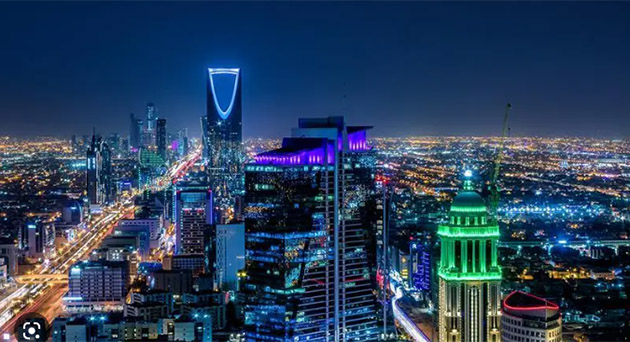
Riyadh: Saudi Arabia has launched four special economic zones that will offer companies financial and non-financial incentives as it seeks to attract more foreign investment and position itself as a global business centre.

The aim of the new zones, which will be located in Riyadh, Jazan, Ras Al-Khair and King Abdullah Economic City, is to open up new opportunities for international investors, the Saudi Press Agency reported.

“Saudi Arabia is open for business and welcomes investors from all around the world to see first-hand the historic opportunities we have to offer,” the Crown Prince Mohammed bin Salman said.

“The new special economic zones launched today will significantly impact how business is done in the country, create tens of thousands of jobs, and contribute billions of riyals to our gross domestic product.”

The zones will take advantage of the Kingdom’s strategic location to create new hubs for businesses across key growth sectors so that they can launch and expand companies and technologies that will help shape the future, according to the SPA.

They will support existing national strategies and create new links with international frameworks, building on the competitive advantages of each region of the country to support key sectors such as logistics, advanced manufacturing, technology, and other priority sectors in the Kingdom, it added.

The benefits to companies of operating in the zones will include: competitive corporate tax rates; exemption from customs duties on imports, production inputs, machinery and raw materials; 100 percent foreign ownership of companies; and flexibility to attract and hire the best talent worldwide.

The zones will also provide tremendous opportunities for developing the local economy, generating jobs, and localizing supply chains, officials said. They are said to represent a continuation of long-running initiatives that aim to transform the Kingdom into a global investment destination and a vital hub for global supply chains, by capitalizing on its position at the heart of global trade routes.

Thanks to a detailed program of regulations and incentives, the zones will offer rewarding and attractive benefits to foreign investors, officials said. The program will also allow for the acceleration of reforms required to facilitate business in all parts of the Kingdom, they added.

The new zones build on previous free-zone initiatives in the Kingdom, including the recent launch of an integrated special zone for logistics at King Salman International Airport in Riyadh. Together, they represent the first phase of a major, long-term program designed to encourage foreign direct investment, attract the most talented professionals from around the world, and promote entrepreneurship and economic development within the Kingdom, officials said.

The zones, which will be regulated by the Economic Cities and Special Zones Authority, will provide fresh solutions to the challenges many global businesses face as they attempt to localize and strengthen supply chains, they added, and help the Kingdom take advantage of key macroeconomic shifts to create a truly differentiated business environment, activating new sectors and value chains.

Saudi Minister of Investment Khalid Al-Falih, who is the chairman of the Economic Cities and Special Zones Authority, said: “This is an exciting moment. We are proud to see the launch of these four special economic zones that offer the chance for foreign investors to have a stake in the world’s fastest growing economy.”

The Secretary-General of the authority, Mr. Nabil Khoja, added, “With hugely attractive financial incentives, world-class infrastructure, business-friendly regulations and streamlined procedures for investors, there has never been a better time to be part of Saudi Arabia’s economic success story. The zones will become engines of growth, increasing the Kingdom’s export competitiveness, attracting talent, boosting technology and improving our global links.”

Special economic zones – or SEZs – are geographically defined areas that facilitate specific economic activities, such as investment, trade and employment, by providing competitive advantages and legislative frameworks that differ from the base economy. 

The newly launched zones cover a wide range of industries:

King Abdullah Economic City (KAEC) SEZ

The premier destination for advanced manufacturing and logistics, from automobile supply chain and assembly to consumer goods, ICT to MedTech. Set in a prime location on the Red Sea, less than 90 minutes from Jeddah Airport, this 60km2 site offers unrivaled access to global trade routes through King Abdullah Port, ranked the world’s most efficient by the World Bank in 2022. Anchor investor Lucid, a leader in the global EV industry, will produce 150,000 EVs a year from its base in KAEC SEZ.

Jazan SEZ

An industrial center and key platform for trade with fast-growing markets in Africa and Asia. Jazan SEZ offers access to the largest port in the region for export of goods and import of materials, helping investors benefit from and contribute to large-scale infrastructure projects in Saudi Arabia and around the world, backed by easy access to both natural and industrial resources. Jazan is part of the Kingdom’s fertile southwestern region, providing opportunities for the manufacturing, processing and distribution of food products to cater for growing regional demand and meet food security challenges across the region.

Ras Al-Khair SEZ

A launchpad on the Arabian Gulf for leaders in the maritime industry, Ras Al-Khair SEZ is a fully integrated marine ecosystem, with a rich network of existing investors – 40% of the zone is already reserved – and myriad opportunities across shipbuilding and repair, offshore drilling and maritime value chains.

Cloud Computing SEZ, located in King Abdulaziz City for Science and Technology (KACST)

In King Abdulaziz City for Science and Technology (KACST), a new Cloud Computing SEZ will serve as  a hub for emerging and disruptive technologies. A direct manifestation of the Kingdom’s ‘Cloud First’ policy, the Cloud Computing SEZ underlines the Kingdom’s commitment to digital innovation and the fast-growing tech sector. The Zone is based around an innovative hybrid model that allows investors to establish physical data centers and cloud computing infrastructure in multiple locations within the Kingdom. 

Comments

Add new comment

  • Coastaldigest.com reserves the right to delete or block any comments.
  • Coastaldigset.com is not responsible for its readers’ comments.
  • Comments that are abusive, incendiary or irrelevant are strictly prohibited.
  • Please use a genuine email ID and provide your name to avoid reject.
News Network
November 21,2025

israel.jpg

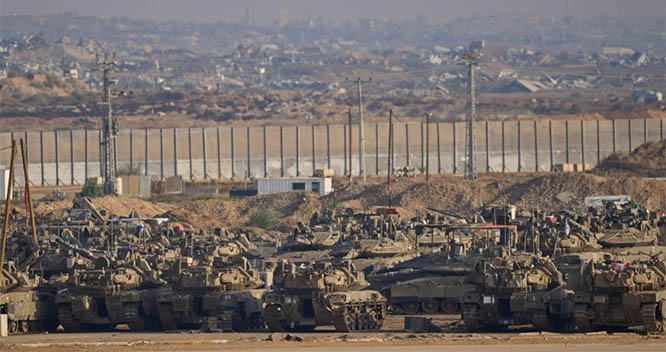
Local authorities say the Israeli military has expanded the so-called “yellow line” truce demarcation in Gaza City and repositioned its forces deeper into the territory in violation of a ceasefire agreement that came into force on October 10, besieging dozens of Palestinian families.

Gaza’s Government Media Office announced in a statement on Thursday that Israeli forces widened the boundary by shifting the markers, and advanced roughly 300 meters (984 feet) into the neighborhoods of Ash-Shaaf, An-Nazzaz and Baghdad Street.

The move pushed further into civilian areas, trapping families who were unable to flee as tanks rolled forward, it added.

“The fate of many of these families remains unknown amidst the shelling that targeted the area,” the office said, adding that the expansion of the yellow line shows a “blatant disregard” for the ceasefire deal.

On Friday, sources said the Israeli military carried out continued air and artillery strikes inside the so-called “yellow line” east of Khan Younis in the southern Gaza Strip.

According to the reports, Israeli warplanes and tanks targeted areas within the zone. One Palestinian was reported killed and several others wounded in the strikes, the sources said.

The fresh aggression came only a day after 25 Palestinians were killed in Israeli airstrikes on Gaza City and Khan Younis on Wednesday.

The media office reported that Israel has consistently violated the truce deal since its implementation last month, with near-daily attacks by air, artillery and direct shootings.

The office said over 400 violations have been documented. These breaches have resulted in the deaths of more than 300 Palestinians and left hundreds injured.

The Government Media Office in Gaza urged the guarantors of the ceasefire — the US, Egypt, Qatar and Turkey — to take swift action to halt the ongoing violations and facilitate the delivery of food, shelter materials, medical aid, and infrastructure equipment.

The so-called “yellow line,” set out in the agreement between Israel and Hamas resistance movement, refers to a non-physical partition where the Israeli military repositioned itself when the truce deal took effect.

It has allowed Israel, which routinely fires at Palestinians who approach the line, to retain control over more than half of the Gaza Strip.

International bodies, including the UN Independent International Commission of Inquiry, the International Association of Genocide Scholars, Amnesty International, Human Rights Watch, B’Tselem, and other rights groups, have concluded that the Israeli war on Gaza amounts to genocide.

In the attacks in Gaza since October 2023, Israel has killed at least 69,546 people and injured 170,833 others, leveling large swaths of the territory and displacing almost all of the population. 

Comments

Add new comment

  • Coastaldigest.com reserves the right to delete or block any comments.
  • Coastaldigset.com is not responsible for its readers’ comments.
  • Comments that are abusive, incendiary or irrelevant are strictly prohibited.
  • Please use a genuine email ID and provide your name to avoid reject.
News Network
December 2,2025

A major upgrade in safety and monitoring is planned for Haj 2026, with every Indian pilgrim set to receive a Haj Suvidha smart wristband linked to the official Haj Suvidha mobile app. The initiative aims to support pilgrims—especially senior citizens—who may struggle with smartphones during the 45-day journey.

What the Smart Wristband Will Do

Officials said the device will come with:
•    Location tracking
•    Pedometer
•    SOS emergency button
•    Qibla compass
•    Prayer timings
•    Basic health monitoring

SP Tiwari, secretary of the UP State Haj Committee, said the goal is to make the pilgrimage safer and more comfortable.

“Most Hajis are elderly and not comfortable with mobile apps,” he said. “The smartwatch will help locate pilgrims who forget their way or cannot communicate their location.”

The wristbands will be monitored by the Consulate General of India in Saudi Arabia, similar to mobile tracking via the Haj Suvidha App.

Free Distribution and Training

•    Smart wristbands will be given free of cost.
•    Training for pilgrims will be conducted between January and February 2026.
•    Sample units will reach state Haj committees soon.
•    Final devices will be distributed as pilgrims begin their journey.

New Rules for Accommodation

Two major decisions have also been finalised for Haj 2026:
1.    Separate rooms for men and women – including married couples. They may stay on the same floor but must occupy different rooms, following stricter Saudi guidelines.
2.    Cooking banned – gas cylinders will not be allowed; all meals will be provided through official catering services arranged by the Haj Committee of India.

These decisions were finalised during a meeting of the Haj Committee of India and state representatives in Mumbai.

Haj Suvidha App Launched Earlier

The government launched the Haj Suvidha App in 2024, offering:

•    Training modules
•    Accommodation and flight details
•    Baggage information
•    SOS and translation tools
•    Grievance redressal

Haj 2026 Quota and Key States

•    India’s total Haj quota for 2026: 1,75,025 pilgrims
•    70% (1,25,000) allotted to the Haj Committee of India
•    30% (around 50,000) reserved for Haj Group Organisers

Uttar Pradesh has the largest allocation (around 30,000 seats), though approximately 18,000 pilgrims are expected to go this year. States with high pilgrim numbers include Kerala, Maharashtra and Gujarat.

Dates of Haj 2026

The pilgrimage is scheduled to take place from 24 May to 29 May, 2026 (tentative).
Haj is one of the five pillars of Islam and is mandatory for Muslims who meet the required conditions.

Comments

Add new comment

  • Coastaldigest.com reserves the right to delete or block any comments.
  • Coastaldigset.com is not responsible for its readers’ comments.
  • Comments that are abusive, incendiary or irrelevant are strictly prohibited.
  • Please use a genuine email ID and provide your name to avoid reject.
News Network
November 24,2025

israelsyra.jpg

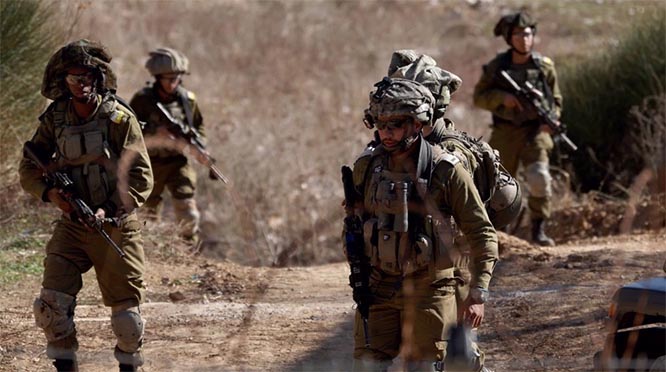
Israeli forces have pushed over the Syrian frontier, erecting a checkpoint and stopping vehicles in the southwestern city of Quneitra, in yet another breach of the Arab country’s sovereignty.

The violation took place on Sunday, when the troops made their way across the border, setting up the outpost near the Ain al-Bayda junction in northern Quneitra, Syrian outlets reported.

According to the al-Ikhbariya paper, an Israeli detachment positioned itself at the junction, halting cars and conducting searches.

The Syrian Arab News Agency (SANA) reported that three Israeli military vehicles then moved further into the northern countryside, deploying between the town of Jubata al-Khashab and the villages of Ofaniya and Ain al-Bayda. The agency added that a separate Israeli unit mounted a new incursion in the central region, approaching the villages of Umm Batina and al-Ajraf.

Residents said such activities have surged in recent months, pointing to Israeli advances onto farmland, leveling of extensive forested areas, arrests, and spread of mobile checkpoints.

The Israeli regime began markedly increasing its military aggression against Syria last year.

The escalation coincided with increasingly ferocious onslaughts throughout the country by the so-called Hay'at Tahrir al-Sham (HTS) Takfiri terrorist group, which the government of President Bashar al-Assad had confined to northwestern Syria. The HTS, however, managed to overthrow the government as the Israeli attacks would pummel the country’s civilian and defensive infrastructure.

Various reports have shown that, during the escalation, the regime conducted more than 1,000 airstrikes on the Syrian territory and over 400 ground raids into the south.

Following the collapse of the Assad government, Tel Aviv also widened its grip over the occupied Golan Heights by taking control of a demilitarized buffer zone, in defiance of a 1974 Disengagement Agreement. Earlier this month, senior Israeli officials, including Prime Minister Benjamin Netanyahu, visited the buffer zone, prompting expressions of alarm on the part of the United Nations.

The United States, the regime’s biggest ally, has, meanwhile, been fraternizing the HTS head Abu Mohammed al-Jolani amid the widely reported prospect of rapprochement with Tel Aviv.

Comments

Add new comment

  • Coastaldigest.com reserves the right to delete or block any comments.
  • Coastaldigset.com is not responsible for its readers’ comments.
  • Comments that are abusive, incendiary or irrelevant are strictly prohibited.
  • Please use a genuine email ID and provide your name to avoid reject.