Small cap stocks post biggest single day jump in 6 years after SEBI circular

Agencies
September 15, 2020

stocks.png

Mumbai, Sept 15: The small cap index posted its biggest single day gain in over six years on Monday after the SEBI circular on multi cap mutual funds triggered buying.

The estimates by analysts and brokerage houses indicate that the net inflow from large caps would be around Rs 27,000 crore into the small caps and around Rs 13,000 crore into the mid caps following the SEBI circular to invest 25 per cent each of assets of multi cap funds into large, mid and small cap stocks.

The huge rally in small cap stocks has come even after fund managers asked investors not to rush to buy small cap stocks in haste and there were clarifications that mutual funds have several options apart from rebalancing their schemes including a merger of schemes to comply with the circular.

Siddhartha Khemka, Head - Retail Research, Motilal Oswal Financial Services said mid-cap and small cap stocks gained sharply.

He said investors were attracted towards Mid/small caps due to the SEBI mandate to Multicap mutual funds to invest a minimum of 25 per cent each in large, mid and small cap stocks. Small Cap Index posted its biggest 1-day gain in over six years.

Deepak Jasani, Head of Retail Research, HDFC Securities said that the recent SEBI circular on allocation by Multicap schemes spurred buying in a lot of small and midcaps in anticipation of fund buying that could emerge later to adhere to the new regulation. The Nifty midcap index ended 2.6 per cent higher while the smallcap index gained 5.6 per cent - the most since May 2014.

Nifty has ended the first day of the week in the negative while the broader market has reacted positively to the latest SEBI circular, he added.

In a note to investors, Sage One has said that SEBI had done a big re-categorization of mutual funds (MFs) in early 2018 which triggered initial rotation from small/midcaps to large caps, and the falling prices created their own snowball effect resulting in the small cap universe correcting by 40-60 per cent. During this period the large cap indices delivered positive returns. In the latest re-categorization of multi-cap MFs, a small part of the 2018 action has been reversed.

As per the note, institutional shareholding (SH) in large cap space is currently 20 per cent above the December 2017 levels whereas it's 41 per cent lower for the small cap space.

The total institutional holding has increased by 10 per cent during this period. Small cap companies make up 10% of the total market capitalization, but the institutional holding is only at 5.3 per cent of their total holding. In December 2017 small cap companies made 16 per cent of the total market capitalization. The biggest contribution in the market drop was the forced selling by the domestic institutions. As prices dropped, it forces other investors to move out and seek performing asset classes such as the large caps, the note said.

The note said that whether MFs actually do the entire re-allocation or whether they merge their multi cap schemes into the large cap schemes is an unknown.

"Irrespective of the amount that actually gets re-allocated, just the anticipation could bring in fresh capital in small/mid cap schemes under MFs, PMS' and AIFs. It doesn't take much inflow to move stocks in this universe," the note said.

The research notes that the impact cost of actual exits was as high as 15 times in the small cap space. This means that if one was to invest fresh capital of Rs 1,000 crore in the small cap companies, on an average their market cap would go up by Rs 15,000 crore. There will not be enough sellers available when the expectation is that this space would do well in presence of forced buyers.

"Even if we assume that only half (Rs 13,500 crore) the capital would be re-allocated by the MFs and assume that there will be no fresh inflows in the small cap companies by other investors and in addition even if we assume that the buying impact would be half (7.5x), the increase in the market cap of the small cap universe would be more than Rs 1 lakh which is around 36% increase in total market cap (currently Rs 2.80 lakh crore) of the small cap companies," the research said.

This step would benefit more than 1000 companies compared to just 100 companies that benefited by the 2018 circular. In an environment when debt raising is multiple times difficult for the smaller companies, this SEBI triggered change would help equity raising capability of these companies.

HDFC Securities said in a note that given the size of multicap funds and higher allocation especially to smallcap stocks; some concerns have been raised about achieving the prescribed investment limits without creating a bubble in small and midcap stocks.

The AUM of smallcap stocks across equity categories (excluding sectoral) as on July 2020 is Rs 68,109 crore – compare this with Rs 28,000 crore worth fresh buying required.

"These stocks have less free float availability, relatively lower volumes, corporate governance issues and higher impact cost (both at the time of getting in and getting out). Also, liquidity issues in smallcap stocks could get compounded in bear markets when these funds face redemption pressure and are required to sell small cap stocks where impact costs could be large," it said.

Schemes requiring the least reshuffling include multicap funds from Invesco, IDFC and Nippon, while schemes requiring the most reshuffling include Kotak Standard, HDFC Equity, Motilal Multicap 35, Axis and Canara Robeco Eq diversified fund, HFDC Securities said.

Comments

Add new comment

  • Coastaldigest.com reserves the right to delete or block any comments.
  • Coastaldigset.com is not responsible for its readers’ comments.
  • Comments that are abusive, incendiary or irrelevant are strictly prohibited.
  • Please use a genuine email ID and provide your name to avoid reject.
News Network
November 24,2025

lebanon.jpg

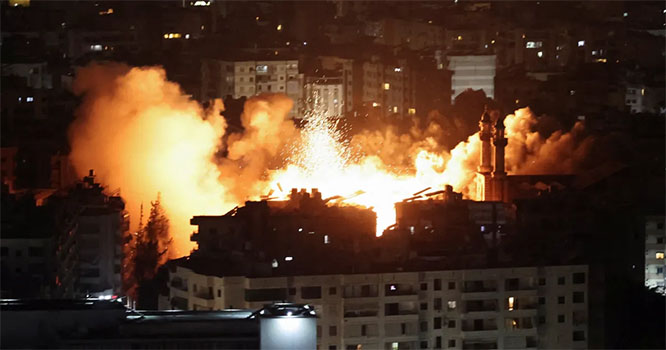
Israel has launched a new act of aggression on a residential neighborhood in Lebanon's capital, Beirut, killing and injuring about two dozen civilians.

The Israeli regime's military said in a statement that its forces carried out a so-called precise strike in a residential apartment in Dahiyeh in the southern suburbs of Beirut on Sunday.

The aggression targeted residential areas, killing at least five people and injuring more than 28 people, Lebanon's Health Ministry said. 

Hezbollah announced the martyrdom of senior Hezbollah commander Haytham Ali Tabatabai and four resistance fighters.

Lebanese President Michel Aoun condemned the airstrike, calling it a clear demonstration of Tel Aviv’s disregard for repeated international calls to halt violations on Lebanese soil.

“Israel refuses to implement international resolutions and all efforts aimed at ending the escalation and restoring stability,” Aoun said, urging the international community to take action to prevent further aggression.

The Palestinian Islamic Jihad movement also condemned the attack, holding the international community accountable. 

“The international community bears responsibility and continues to provide cover for these attacks as long as it does not restrain the occupiers,” said Ali Abu Shahin, a member of the group’s political bureau.

Israeli prime minister Benjamin Netanyahu’s office announced that the Israeli army carried out a strike “in the heart of Beirut."

Netanyahu reportedly approved the operation following recommendations from top Israeli security officials.

Two senior US officials commented on the Israeli strike.

The first official said that Israel did not notify Americans in advance about the attack. "We were informed immediately after the strike was carried out."

The second senior official said that the "US knew for several days that Israel was planning to escalate its strikes in Lebanon, but did not know in advance the timing, location, or target of the strike."

Speaking from the site of the Israeli strike, Lebanese MP Ali Ammar condemned the attack as part of a broader campaign of aggression that has targeted "all of Lebanon since the Washington-sponsored ceasefire."

He stated that "any attack on Lebanon is a violation of red lines; this aggression is part and parcel of the entity that targets Lebanon's dignity, sovereignty, and security of citizens."

Ammar went on to say the resistance is responding with "utmost wisdom, patience, and will confront the enemy at the appropriate time."

"Unfortunately, the enemy is emboldened to commit its aggression by voices within Lebanon that have turned themselves into tools that support its aggression," he added.

The Israeli attack on the southern suburbs of the Lebanese capital is the latest blatant violation of the ceasefire Israel signed with Hezbollah in November 2024, which was intended to end hostilities that had escalated into full-scale war.

An Israeli strike on the Ain al-Hilweh camp near Sidon in southern Lebanon late Tuesday killed at least 14 people. It wounded several others, including young students, according to the Lebanese health ministry.

The military claimed the attack targeted “a Hamas training compound” used to plan and carry out attacks against the regime -- a claim that has frequently been made without evidence.

Hamas rejected the allegations as “a blatant lie aimed at justifying the massacre,” stating it had “no military installations in the Palestinian camps in Lebanon” and that the targeted site was merely “an open sports field.”

According to Lebanese authorities, Israeli attacks have killed approximately 4,000 people and displaced more than 1.2 million residents across the country since October 2023.

Comments

Add new comment

  • Coastaldigest.com reserves the right to delete or block any comments.
  • Coastaldigset.com is not responsible for its readers’ comments.
  • Comments that are abusive, incendiary or irrelevant are strictly prohibited.
  • Please use a genuine email ID and provide your name to avoid reject.
News Network
November 21,2025

israel.jpg

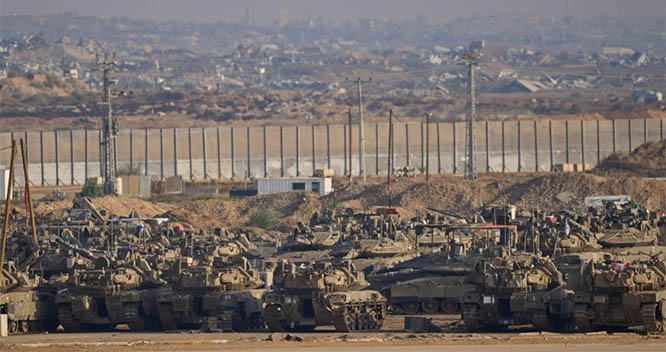
Local authorities say the Israeli military has expanded the so-called “yellow line” truce demarcation in Gaza City and repositioned its forces deeper into the territory in violation of a ceasefire agreement that came into force on October 10, besieging dozens of Palestinian families.

Gaza’s Government Media Office announced in a statement on Thursday that Israeli forces widened the boundary by shifting the markers, and advanced roughly 300 meters (984 feet) into the neighborhoods of Ash-Shaaf, An-Nazzaz and Baghdad Street.

The move pushed further into civilian areas, trapping families who were unable to flee as tanks rolled forward, it added.

“The fate of many of these families remains unknown amidst the shelling that targeted the area,” the office said, adding that the expansion of the yellow line shows a “blatant disregard” for the ceasefire deal.

On Friday, sources said the Israeli military carried out continued air and artillery strikes inside the so-called “yellow line” east of Khan Younis in the southern Gaza Strip.

According to the reports, Israeli warplanes and tanks targeted areas within the zone. One Palestinian was reported killed and several others wounded in the strikes, the sources said.

The fresh aggression came only a day after 25 Palestinians were killed in Israeli airstrikes on Gaza City and Khan Younis on Wednesday.

The media office reported that Israel has consistently violated the truce deal since its implementation last month, with near-daily attacks by air, artillery and direct shootings.

The office said over 400 violations have been documented. These breaches have resulted in the deaths of more than 300 Palestinians and left hundreds injured.

The Government Media Office in Gaza urged the guarantors of the ceasefire — the US, Egypt, Qatar and Turkey — to take swift action to halt the ongoing violations and facilitate the delivery of food, shelter materials, medical aid, and infrastructure equipment.

The so-called “yellow line,” set out in the agreement between Israel and Hamas resistance movement, refers to a non-physical partition where the Israeli military repositioned itself when the truce deal took effect.

It has allowed Israel, which routinely fires at Palestinians who approach the line, to retain control over more than half of the Gaza Strip.

International bodies, including the UN Independent International Commission of Inquiry, the International Association of Genocide Scholars, Amnesty International, Human Rights Watch, B’Tselem, and other rights groups, have concluded that the Israeli war on Gaza amounts to genocide.

In the attacks in Gaza since October 2023, Israel has killed at least 69,546 people and injured 170,833 others, leveling large swaths of the territory and displacing almost all of the population. 

Comments

Add new comment

  • Coastaldigest.com reserves the right to delete or block any comments.
  • Coastaldigset.com is not responsible for its readers’ comments.
  • Comments that are abusive, incendiary or irrelevant are strictly prohibited.
  • Please use a genuine email ID and provide your name to avoid reject.