'Modicare' to cost Rs 11K crore a year, claim govt sources

Agencies
February 3, 2018

New Delhi, Feb 3: Prime Minister Narendra Modi's plan to provide health insurance for about half the country would require an estimated Rs 11, 000 crore in central and state funding each year, sources familiar with the matter said.

The National Health Protection Scheme, which the government dubs "Modicare", was announced in Thursday's budget for 2018/19 and would provide 100 million families, or about 500 million poor people, with health cover of Rs 50, 0000 per year for free treatment of serious illnesses.

Several states now offer health insurance but these schemes are generally small and poorly implemented. Modi faces a national election next year and the new health programme is seen as a signature initiative to woo voters in the countryside, many of whom struggle with high healthcare costs.

The government estimates the cost of insuring each family under the new scheme at about Rs 1,100, said a government official who had direct knowledge of the matter and did not want to be identified.

Officials at NITI Aayog, India's federal think tank, on Friday said the government's estimated premium for insuring each family would be 1,000-1,200 rupees, confirming the funding would be shared between federal and state governments.

"This is a turning point for the health sector," Vinod K Paul, a member of NITI Aayog, told reporters.

Officials have said "the world's largest government funded health care programme" would have a central allocation of 20 billion rupees in 2018-19, but added that more funds would be made available as the programme is rolled out over the year.

Some critics have raised doubts whether 20 billion rupees in federal funding is enough to support the programme for 2018-19.

However, the government official said of the Rs 11000 crore in premiums required to fund the programme, the federal government would contribute about 70 billion rupees with the 29 states providing the rest.

The 50 billion rupees in federal funding on top of the budget allocation of Rs 2, 000 crore would be made available as the scheme details are worked out over the coming months, the official said.

"Government health insurance companies have readily agreed to fund the programme (at this cost)," the official said.

A second source familiar with the planning said the government could also partly use the funds raised from a newly imposed 1 percent health cess on taxable incomes, and the health scheme would also benefit from the planned merger of three state-run insurance firms announced in Thursday's budget.

"It's a big pool (of people). When you have a mammoth insurance company, the task becomes easier," said the source, adding that the government's premium payments for the scheme were expected to be low and manageable.

Modi's government on Thursday also raised the federal health budget by 11.5 percent for 2018-19.

The measures are Modi's latest attempt to reform a public health system that faces a shortage of hospitals and doctors. The government has also in recent years capped prices of critical drugs and medical devices and increased health funding.

Still, India spends only about 1 percent of its GDP on public health, among the world's lowest, and the health ministry estimates such funding leads to "catastrophic" expenses that push 7 percent of the population into poverty each year.

A top official at a state-run insurance company said the government would take 4 to 6 months to finalize the contours of the health plan since it would take time to get hospitals on board.

Nevertheless, a government-sponsored health programme will come as a major boost for the private hospital sector in India. Overburdened public hospitals mean nearly 70 percent of healthcare delivery is in the hands of private players.

The scheme "will be a game changer", said Prathap Reddy, chairman of Apollo Hospitals Enterprise Ltd.

Comments

Add new comment

  • Coastaldigest.com reserves the right to delete or block any comments.
  • Coastaldigset.com is not responsible for its readers’ comments.
  • Comments that are abusive, incendiary or irrelevant are strictly prohibited.
  • Please use a genuine email ID and provide your name to avoid reject.
News Network
December 7,2025

envoy.jpg

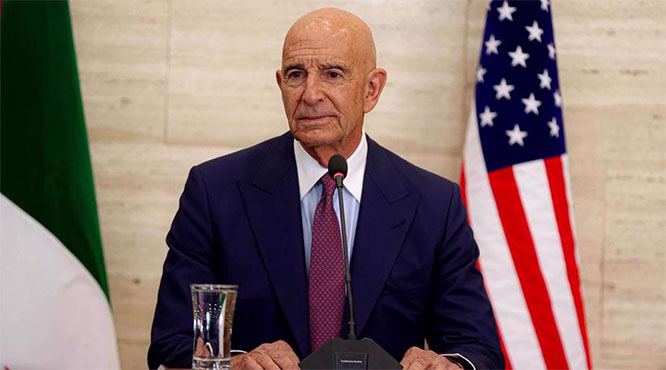
Since 1946, the United States has attempted 93 coups or “regime change” operations across the world — including two in Iran, US Special Envoy for Syria Tom Barrack has admitted.

Speaking to the UAE-based IMI Media Group, in remarks published by The National, Barrack said Washington tried twice to overthrow the Iranian government but failed both times. 

“For (Trump) then to be imputed with regime change — we had two regime changes in Iran already. Neither one worked. So I think wisely leave it to the region to solve,” said Barrack, who also serves as the US ambassador to Turkey.

His comments come six months after the US joined Israel in airstrikes against Iran during ongoing indirect nuclear negotiations between Tehran and Washington.

On June 13, Israel launched an attack on Iran that killed at least 1,064 people and hit civilian infrastructure. Days later, the United States targeted three nuclear facilities — Fordow, Natanz and Isfahan — in what Iran called a clear violation of international law. Iranian retaliation eventually forced a halt to the assault on June 24.

Barrack further claimed that US President Donald Trump and Foreign Secretary Marco Rubio are “not into regime change” and prefer a regional approach driven by Middle Eastern countries themselves. According to him, regional dialogue and non-interference by outside powers offer a more durable path forward.

He added that Washington is still open to an agreement with Tehran if Iranian authorities show “seriousness” and willingness to engage constructively.

However, Iran maintains the US has not shown readiness for meaningful talks. In an interview with Japan’s Kyodo News, Iranian Foreign Minister Abbas Araghchi said negotiations could advance only if Washington acknowledges Iran’s right to peaceful nuclear energy and lifts unilateral sanctions.

Comments

Add new comment

  • Coastaldigest.com reserves the right to delete or block any comments.
  • Coastaldigset.com is not responsible for its readers’ comments.
  • Comments that are abusive, incendiary or irrelevant are strictly prohibited.
  • Please use a genuine email ID and provide your name to avoid reject.
News Network
December 6,2025

pilot.jpg

New Delhi: IndiGo, India’s largest airline, faced major operational turbulence this week after failing to prepare for new pilot-fatigue regulations issued by the Directorate General of Civil Aviation (DGCA). The stricter rules—designed to improve flight safety—took effect in phases through 2024, with the latest implementation on November 1. IndiGo has acknowledged that inadequate roster planning led to widespread cancellations and delays.

Below are the key DGCA rules that affected IndiGo’s operations:

1. Longer Mandatory Weekly Rest

Weekly rest for pilots has been increased from 36 hours to 48 hours.

The government says the extended break is essential to curb cumulative fatigue. This rule remains in force despite the current crisis.

2. Cap on Night Landings

Pilots can now perform only two night landings per week—a steep reduction from the earlier limit of six.

Night hours, defined as midnight to early morning, are considered the least alert period for pilots.

Given the disruptions, this rule has been temporarily relaxed for IndiGo until February 10.

3. Reduced Maximum Night Flight Duty

Flight duty that stretches into the night is now capped at 10 hours.

This measure has also been kept on hold for IndiGo until February 10 to stabilize operations.

4. Weekly Rest Cannot Be Replaced With Personal Leave

Airlines can no longer count a pilot’s personal leave as part of the mandatory 48-hour rest.

Pilots say this closes a loophole that previously reduced actual rest time.

Currently, all airlines are exempt from this rule to normalise travel.

5. Mandatory Fatigue Monitoring

Airlines must submit quarterly fatigue reports along with corrective actions to DGCA.

This system aims to create a transparent fatigue-tracking framework across the industry.

The DGCA has stressed that these rules were crafted to strengthen flight safety and align India with global fatigue-management standards. The temporary relaxations are expected to remain until February 2025, giving IndiGo time to stabilise its schedules and restore normal air travel.

Comments

Add new comment

  • Coastaldigest.com reserves the right to delete or block any comments.
  • Coastaldigset.com is not responsible for its readers’ comments.
  • Comments that are abusive, incendiary or irrelevant are strictly prohibited.
  • Please use a genuine email ID and provide your name to avoid reject.
News Network
December 6,2025

indigoticket.jpg

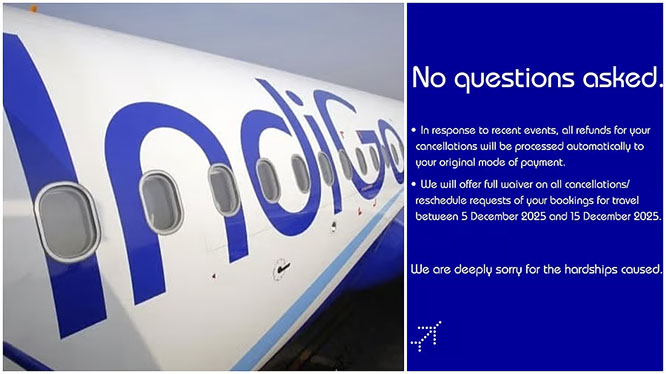
With IndiGo flight disruptions impacting thousands of passengers, the airline on Saturday said that it will offer full waiver on all cancellations/reschedule requests for travel bookings between December 5, 2025 and December 15, 2025.

Earlier in the day, the civil aviation ministry had directed the airline to complete the ticket refund process for the cancelled flights by Sunday evening, as well as ensure baggage separated from the travellers are delivered in the next two days.

In a post on X, titled 'No questions asked', IndiGo wrote, "In response to recent events, all refunds for your cancellations will be processed automatically to your original mode of payment."

"We are deeply sorry for the hardships caused," it further added.

Several passengers, however, complained of not getting full refund as promised by the airline.

Netizens have shared screenchots of getting charged for airline cancellation fee and convenience fee.

"Please tell me why u have did this airline cancellation charges when u say full amount will be refunded (sic)," a user wrote sharing a screenshot of the refund page.

"Well, but you have still debited the convenience charges," wrote another.

Passengers have also raised concerns about the "cancel" option being disabled on the IndiGo app. "First enable the 'Cancel' button on your App & offer full refund on tickets cancelled by customers between the said dates," wrote a user.

A day after the country's largest airline, IndiGo, cancelled more than 1,000 flights and caused disruptions for the fifth day on Saturday, the ministry said that any delay or non-compliance in refund processing will invite immediate regulatory action.

The refund process for all cancelled or disrupted flights must be completed by 8 pm on Sunday, the ministry said in a statement.

"Airlines have also been instructed not to levy any rescheduling charges for passengers whose travel plans were affected by cancellations," it said.

On Saturday, more than 400 flights were cancelled at various airports.

IndiGo has also been instructed to set up dedicated passenger support and refund facilitation cells.

Comments

Add new comment

  • Coastaldigest.com reserves the right to delete or block any comments.
  • Coastaldigset.com is not responsible for its readers’ comments.
  • Comments that are abusive, incendiary or irrelevant are strictly prohibited.
  • Please use a genuine email ID and provide your name to avoid reject.