



Money in Swiss banks: India moves to 73rd place

Agencies
July 1, 2018

Zurich/New Delhi, Jul 1: India has moved up to 73rd place in terms of money parked by its citizens and companies with Swiss banks, while the UK remains on the top.

India had slipped to 88th place with a 44 per cent plunge in such funds during 2016, but the latest data from the Swiss National Bank (SNB) shows an increase of over 50 per cent during 2017 to CHF 1.01 billion (about Rs 7,000 crore).

Pakistan is now placed one place higher than India at 72nd position, down one slot, after 21 per cent dips in funds from that country in Swiss banks during 2017.

The funds, described by SNB as 'liabilities' of Swiss banks or 'amounts due to' their clients, are official figures disclosed by Swiss authorities and do not indicate to the exact quantum of the much-debated alleged black money held in famed safe havens of Switzerland.

The official figures, disclosed annually by Switzerland's central bank, also do not include the money that Indians, NRIs or others might have in Swiss banks in the names of entities from different countries.

It has been often alleged that Indians and other nationals seeking to stash their illicit wealth abroad use multiple layers of various jurisdictions, including tax havens, to shift the money in Swiss banks.

Also, with Switzerland putting in place an automatic information exchange framework with India and various other countries, the famed secrecy walls of Swiss banks are said to have crumbled. India will start getting this automatic data from next year, while it has already been getting information on accounts where proof of illicit funds can be furnished.

However, the increase in Indians' money in Swiss banks has already triggered a sharp opposition attack on the government, which in turn has said that it would be wrong to assume that all funds deposited in Swiss banks were 'black money' and strong action would be taken against wrongdoers.

The funds officially held by Indians with banks in Switzerland now accounts for only 0.07 per cent, though up from 0.04 per cent a year ago, of the total funds kept by all foreign clients in the Swiss banking system, as per an analysis of the latest figures compiled by the SNB (Swiss National Bank) as on 2017-end.

India was placed at 75th position in 2015 and at 61st in the year before, though it used to be among top-50 countries in terms of holdings in Swiss banks till 2007. The country was ranked highest at 37th place in the year 2004.

The total money held in Swiss banks by foreign clients from across the world rose by about 3 per cent to CHF 1.46 trillion (about Rs 100 lakh crore) in 2017.

In terms of individual countries, the UK continued to account for the largest chunk at about CHF 403 billion (over 27 per cent) of the total foreign money with Swiss banks. The UK saw an increase of over 12 per cent in such funds.

The US remains on the second position despite a dip of about 6 per cent in such funds to CHF 166 billion (11 per cent share of all foreign funds). No other country accounted for a double-digit percentage share, while others in the top-ten included West Indies, France, Hong Kong, Bahamas, Germany, Guernsey, Luxembourg and Cayman Islands.

Among BRICS countries, India remains to rank the lowest -- China at 20th place (CHF 160 billion with an increase of 67 per cent during 2017), Russia at 23rd (CHF 135 billion after 13 per cent fall), Brazil 61st (CHF 1.9 billion after 28 per cent fall) and South Africa 67th (CHF 1.5 billion after 31 per cent dip). Among these five, only China and India saw an increase in their funds.

Others ranked higher than India are: Singapore, UAE, Saudi Arabia, Panama, Japan, Jersey, Australia, Netherlands, Italy, Belgium, Cyprus, Israel, Mexico, Bermuda, Turkey, Kuwait, Marshall Islands, Canada, Thailand, South Korea, Malaysia, Belize, Isle of Man, Indonesia, Seychelles, Gibraltar, Samoa, New Zealand, Philippines, Iran, Kazakhstan and Ukraine.

Those ranked below India were Mauritius (77th place), Bangladesh (95th), Sri Lanka (108th), Nepal (112th), Vatican City State (122nd), Iraq (132nd), Afghanistan (155th), Burkina Faso (162nd), Bhutan (203rd), North Korea (205th) and Palau was last at 214th place.

The total money belonging to the developed countries rose 10 per cent to CHF 876 billion, while those from developing nations rose marginally to CHF 209 billion. The offshore financial centres actually saw a dip of 3 per cent to CHF 378 billion.

India was ranked in top-50 continuously between 1996 and 2007, but started declining after that -- 55th in 2008, 59th in 2009 and 2010 each, 55th again in 2011, 71st in 2012 and then to 58th in 2013.

In terms of percentage increase, India's 50 per cent rise was 23rd highest. The maximum increase of as much as 4,000 per cent was seen by Solomon Islands, followed by over 2,200 per cent for Faroe Islands and 1,200 per cent for British Indian Ocean Territory.

The increase was more than 100 per cent for Maldives, Grenada, Turkmenistan, Laos, Lesotho, Qatar, Bonaire, Sint Eustatius and Saba, Federated States of Micronesia, Equatorial Guinea; and Sao Tome and Principe.

Others with higher increase than India's were Guyana, Mongolia, Barbados, Cote d'Ivoire, South Sudan, Bahrain, Kuwait and Ireland.

The jurisdictions that saw the maximum decline in such funds included Palau, St Helena and Gambia, while North Korea, Bhutan, Macao, Burkina Faso and Iraq also recorded significant dips.

Comments

Add new comment

  • Coastaldigest.com reserves the right to delete or block any comments.
  • Coastaldigset.com is not responsible for its readers’ comments.
  • Comments that are abusive, incendiary or irrelevant are strictly prohibited.
  • Please use a genuine email ID and provide your name to avoid reject.
News Network
December 15,2025

Mangaluru, Dec 15: Educational institutions in Mangaluru that rely on the popular Mangala Stadium for their annual sports events are bracing for an inconvenience as the city's key sporting venue is set to close its gates for a significant upgrade. The stadium is expected to be unavailable for approximately two months starting from January 15, 2026.

The closure is necessitated by a proposed overhaul of the stadium's facilities, with a special focus on upgrading the synthetic track. Pradeep Dsouza, Assistant Director of the District of Youth Empowerment and Sports (DYES), Dakshina Kannada, confirmed the development.

"Experts have visited the stadium, conducted a thorough inspection, and have given the go-ahead for a complete makeover," Dsouza stated. "Funds have been allocated for the project, and we are currently awaiting the final green signal from state officials to commence the work. We anticipate that the work will likely begin in the second week of January. Consequently, we have stopped renting out the stadium to colleges and other organizations in preparation for the upgrade."

The timing presents a logistical challenge for colleges, as many schools have already concluded their sports meets.

"Colleges will now be organizing their events and will need to find alternative locations to host their sports meets," Dsouza added. He suggested a few potential venues, including the Dakshina Kannada police ground, University College grounds, Panambur grounds, Swaraj Maidan in Moodbidri, and the Mangalore University sports grounds in Konaje.

However, many institutions note that finding a comparable venue will be difficult. While the DK police ground and University College grounds are closer to the city center, they do not possess the extensive facilities and infrastructure offered by Mangala Stadium.

Dr. P Dayananda Pai - P Satisha Govt First Grade College, Carstreet, is one such institution dependent on the stadium. Principal Jayakar Bhandary expressed hope for a swift completion of the work. "We expect the work to be completed at the earliest. If not, we will be forced to look for other venues to host the sports day for our students," Bhandary said, highlighting the pressing need for the city's main sporting facility.

Comments

Add new comment

  • Coastaldigest.com reserves the right to delete or block any comments.
  • Coastaldigset.com is not responsible for its readers’ comments.
  • Comments that are abusive, incendiary or irrelevant are strictly prohibited.
  • Please use a genuine email ID and provide your name to avoid reject.
News Network
December 16,2025

bengal.jpg

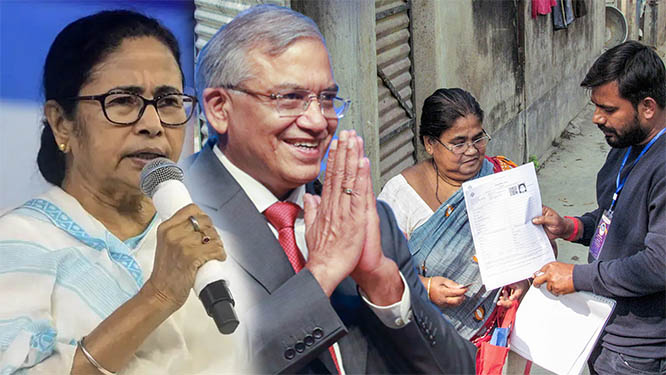
The deletion of over 58 lakh names from West Bengal’s draft electoral rolls following a Special Intensive Revision (SIR) has sparked widespread concern and is likely to deepen political tensions in the poll-bound state.

According to the Election Commission, the revision exercise has identified 24 lakh voters as deceased, 19 lakh as relocated, 12 lakh as missing, and 1.3 lakh as duplicate entries. The draft list, published after the completion of the first phase of SIR, aims to remove errors and duplication from the electoral rolls.

However, the scale of deletions has raised fears that a large number of eligible voters may have been wrongly excluded. The Election Commission has said that individuals whose names are missing can file objections and seek corrections. The final voter list is scheduled to be published in February next year, after which the Assembly election announcement is expected. Notably, the last Special Intensive Revision in Bengal was conducted in 2002.

The development has intensified the political row over the SIR process. Chief Minister Mamata Banerjee and her Trinamool Congress have strongly opposed the exercise, accusing the Centre and the Election Commission of attempting to disenfranchise lakhs of voters ahead of the elections.

Addressing a rally in Krishnanagar earlier this month, Banerjee urged people to protest if their names were removed from the voter list, alleging intimidation during elections and warning of serious consequences if voting rights were taken away.

The BJP, meanwhile, has defended the revision and accused the Trinamool Congress of politicising the issue to protect what it claims is an illegal voter base. Leader of the Opposition Suvendu Adhikari alleged that the ruling party fears losing power due to the removal of deceased, fake, and illegal voters.

The controversy comes amid earlier allegations by the Trinamool Congress that excessive work pressure during the SIR led to the deaths by suicide of some Booth Level Officers (BLOs), for which the party blamed the Election Commission. With the draft list now out, another round of political confrontation appears imminent.

As objections begin to be filed, the focus will be on whether the correction mechanism is accessible, transparent, and timely—critical factors in ensuring that no eligible voter is denied their democratic right ahead of a crucial election.

Comments

Add new comment

  • Coastaldigest.com reserves the right to delete or block any comments.
  • Coastaldigset.com is not responsible for its readers’ comments.
  • Comments that are abusive, incendiary or irrelevant are strictly prohibited.
  • Please use a genuine email ID and provide your name to avoid reject.
News Network
December 16,2025

jordan.jpg

Prime Minister Narendra Modi on Monday held talks with Jordan’s King Abdullah II in Amman, during which the two leaders discussed ways to further strengthen bilateral relations, with the Prime Minister outlining an eight-point vision covering key areas of cooperation.

Describing the meeting as “productive”, PM Modi said he shared a roadmap focused on trade and economy, fertilisers and agriculture, information technology, healthcare, infrastructure, critical and strategic minerals, civil nuclear cooperation, and people-to-people ties.

In a post on social media platform X, the Prime Minister praised King Abdullah II’s personal commitment to advancing India–Jordan relations, particularly as both countries mark the 75th anniversary of the establishment of diplomatic ties this year.

“Held productive discussions with His Majesty King Abdullah II in Amman. His personal commitment towards vibrant India-Jordan relations is noteworthy. This year, we are celebrating the 75th anniversary of our bilateral diplomatic relations,” PM Modi said.

The meeting took place at the Al Husseiniya Palace, where the two leaders also exchanged views on regional and global issues of mutual interest. According to the Ministry of External Affairs (MEA), both sides agreed to further deepen cooperation in areas including trade and investment, defence and security, counter-terrorism and de-radicalisation, fertilisers and agriculture, infrastructure, renewable energy, tourism, and heritage.

The MEA said both leaders reaffirmed their united stand against terrorism.

PM Modi arrived in Amman earlier on Monday and was received by Jordanian Prime Minister Jafar Hassan, who accorded him a formal welcome. Following the talks, King Abdullah II hosted a banquet dinner in honour of the Prime Minister, reflecting the warmth of bilateral ties.

Jordan is the first leg of PM Modi’s three-nation tour. From Amman, the Prime Minister will travel to Ethiopia at the invitation of Prime Minister Abiy Ahmed Ali, marking his first official visit to the African nation. The tour will conclude with a visit to Oman.

Comments

Add new comment

  • Coastaldigest.com reserves the right to delete or block any comments.
  • Coastaldigset.com is not responsible for its readers’ comments.
  • Comments that are abusive, incendiary or irrelevant are strictly prohibited.
  • Please use a genuine email ID and provide your name to avoid reject.
