Muslims hurt as Canada’s Quebec province bans face veil

coastaldigest.com news network
October 20, 2017

Montreal, Oct 20: The Canadian province of Quebec has passed a sweeping ban on face coverings – barring public workers from wearing the niqab or burqa and obliging citizens to unveil when riding public transit or receiving government services – ushering in a law believed to be the first of its kind in North America.

The legislation was adopted on Wednesday, capping off two years of work by the province’s Liberal government to address the issue of state neutrality. The resulting law has been condemned by critics who say it deliberately targets Muslim women and will fuel the province’s simmering debate on identity, religion and tolerance.

Philippe Couillard, the premier of Quebec, was defensive as he addressed the new law. “We are just saying that for reasons linked to communication, identification and safety, public services should be given and received with an open face,” he told reporters. “We are in a free and democratic society. You speak to me, I should see your face, and you should see mine. It’s as simple as that.”

The law was originally meant to ban face coverings for those offering or receiving services from government departments and provincially funded institutions, such as universities.

In August, the legislation was extended to apply to municipalities, school boards, public health services and transit authorities, raising the possibility that women wearing a niqab or burqa in Quebec would not be able to take the metro or ride the city bus. “As long as the service is being rendered, the face should be uncovered,” Stéphanie Vallée, Quebec’s justice minister, said when asked.

The legislation stipulates that exemptions can be made for those who provide spiritual care or religious instruction, as well as those who are forced to cover their faces due to working conditions or occupational hazards.

Amid widespread confusion as to how the new law would be applied and who it would affect, Vallée said the province would now work with municipalities, schools and public daycares to establish clear guidelines.

The Liberal government has long argued that the legislation – which does not specifically mention the niqab or burqa – addresses public safety, noting that it would also apply to masked protesters.

“We are not legislating on clothing,” Vallée said last year. “Public services have to be offered and received with the face uncovered for security, identification and communication purposes.”

Others – citing a 2016 survey that suggested that just 3% of Muslim women in Canada wear the niqab – have accused the provincial government of targeting Muslim women in order to curry votes in the run-up to next year’s provincial election.

“It seems like a made-up solution to an invented problem,” said Ihsaan Gardee of the National Council of Canadian Muslims. “We don’t have a big issue right now with hordes of Muslim women in niqab trying to work in the public service or accessing public services with difficulty.”

The law comes after two attempts by authorities in Quebec to legislate secularism in the public domain in recent years. A 2010 attempt by the Liberals died on the order paper after two years; a bill by the previous separatist government that sought to ban teachers, doctors and other public workers from wearing highly visible religious symbols failed to pass before an election was called.

On Wednesday the Liberals flexed their majority in the provincial government to pass the legislation, fending off calls from the province’s two main opposition parties to put in place tougher laws to address the issue of secularism and religious accommodation.

“I know people would have liked us to go further,” Vallée told the province’s national assembly. “Others think we are going too far. I think a balance has been found.”

Many have voiced concerns that the new law targets a segment of the population that is already marginalised and stigmatised. “We can’t divorce this bill from the larger context in which it falls,” said Gardee. “According to Statistics Canada, hate crimes targeting Canadian Muslims increased from 2012 to 2015 by 253%.”

Earlier this year, the province was left reeling after six men – all of them fathers – were shot dead as they prayed at a mosque in Quebec City. During the eulogy for the men killed, Imam Hassan Guillet drew a direct line between their murders and the political climate facing Muslims in Canada.

“Unfortunately, day after day, week after week, month after month, certain politicians, and certain reporters and certain media, poisoned our atmosphere,” he said.

While Quebec politicians said the ban on receiving services while wearing a face covering would enter into effect immediately, implementation of the law is likely to be hindered by the many questions that remain. “We don’t know how this is going to be applied and how it will be enforced,” said Gardee. “It’s deeply troubling.”

The legislation does note that those affected by the law can put in a request for accommodation, but little explanation is given to the criteria or how exactly it would work. The government said it would use the coming months to better outline how these requests should be treated as well as develop guidelines for those working in the public sector.

Legal observers said they expect several advocacy groups to challenge the new law in courts, pitting it against the country’s Charter of Rights and Freedoms as well as the provincial equivalent.

Gardee said it was an option his organisation would likely be considering in the coming days. “We are of that opinion that the state has no business in the wardrobe of the nations,” he said.

“The state should not be coercing women to undress or dress in any particular fashion.”

Comments

Add new comment

  • Coastaldigest.com reserves the right to delete or block any comments.
  • Coastaldigset.com is not responsible for its readers’ comments.
  • Comments that are abusive, incendiary or irrelevant are strictly prohibited.
  • Please use a genuine email ID and provide your name to avoid reject.
News Network
January 23,2026

Karnataka Governor Thaawarchand Gehlot read only three lines from the 122-paragraph address prepared by the Congress-led state government while addressing the joint session of the Legislature on Thursday, effectively bypassing large sections critical of the BJP-led Union government.

The omitted portions of the customary Governor’s address outlined what the state government described as a “suppressive situation in economic and policy matters” under India’s federal framework. The speech also sharply criticised the Centre’s move to replace the Mahatma Gandhi National Rural Employment Guarantee Act (MGNREGA) with the Viksit Bharat–Guarantee for Rozgar and Ajeevika Mission (Gramin) Act, commonly referred to as the VB-GRAM (G) Act.

Governor Gehlot had earlier conveyed his objection to several paragraphs that were explicitly critical of the Union government. On Thursday, he confined himself to the opening lines — “I extend a warm welcome to all of you to the joint session of the State legislature. I am extremely pleased to address this august House” — before jumping directly to the concluding sentence of the final paragraph.

He ended the address by reading the last line of paragraph 122: “Overall, my government is firmly committed to doubling the pace of the State’s economic, social and physical development. Jai Hind — Jai Karnataka.”

According to the prepared speech, the Karnataka government demanded the scrapping of the VB-GRAM (G) Act, describing it as “contractor-centric” and detrimental to rural livelihoods, and called for the full restoration of MGNREGA. The state government argued that the new law undermines decentralisation, weakens labour protections, and centralises decision-making in violation of constitutional norms.

Key points from the unread sections of the speech:

•    Karnataka facing a “suppressive” economic and policy environment within the federal system

•    Repeal of MGNREGA described as a blow to rural livelihoods

•    VB-GRAM (G) Act accused of protecting corporate and contractor interests

•    New law alleged to weaken decentralised governance

•    Decision-making said to be imposed by the Centre without consulting states

•    Rights of Adivasis, women, backward classes and agrarian communities curtailed

•    Labourers allegedly placed under contractor control

•    States facing mounting fiscal stress due to central policies

•    VB-GRAM (G) Act accused of enabling large-scale corruption

Comments

Add new comment

  • Coastaldigest.com reserves the right to delete or block any comments.
  • Coastaldigset.com is not responsible for its readers’ comments.
  • Comments that are abusive, incendiary or irrelevant are strictly prohibited.
  • Please use a genuine email ID and provide your name to avoid reject.
News Network
January 23,2026

oscar.jpg

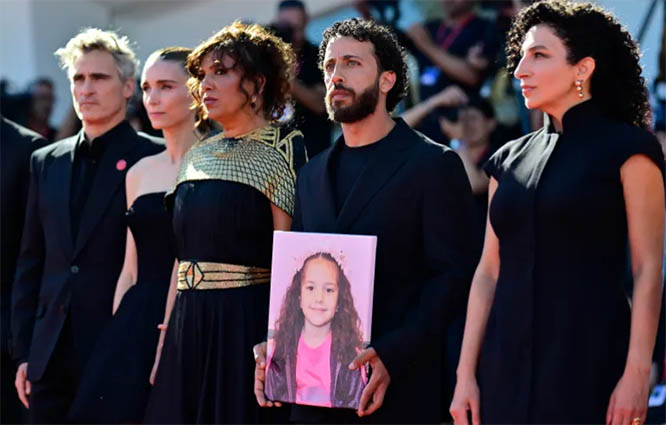
The Voice of Hind Rajab, inspired by the tragic final moments of a young Palestinian girl killed by Israeli fire in Gaza, has been nominated for an Academy Award in the Best International Feature Film category.

Directed by Tunisian filmmaker Kaouther Ben Hania, the film recounts the true story of five-year-old Hind Rajab, who lost her life in January 2024 while fleeing Israeli bombardment with her family.

The film features the real audio of Hind’s desperate call to the Palestinian Red Crescent Society, where she pleaded for help moments before the vehicle she was in was struck by 355 bullets.

The haunting narrative begins with a brief call made from the besieged Tel al-Hawa neighborhood of Gaza, where gunfire and armored vehicles drowned out every sound.

After witnessing the brutal killing of her family, she made a trembling call, her voice reduced to a whisper as she spoke of the massacre and her unbearable loneliness as the sole survivor.

Premiering at the Venice International Film Festival in September 2025, The Voice of Hind Rajab garnered widespread acclaim, receiving a record-setting 23-minute standing ovation and the Silver Lion Grand Jury Prize, the festival’s second-highest honor.

In her acceptance speech, Ben Hania dedicated the film to humanitarian workers and first responders in Gaza, emphasizing that Hind's voice symbolizes countless civilians affected by war.

She aims to give voice to victims often reduced to mere statistics, highlighting the broader suffering of civilians in war zones.

The film’s Oscar nomination underscores its powerful storytelling and ethical approach to depicting real-life tragedy, making it a crucial piece of contemporary cinema.

It serves not only as a narration of individual tragedy but also as an artistic and documentary response to the silence and censorship that often overshadow West Asian struggles and wars.

Using an innovative method she calls docufiction, Ben Hania bridges unvarnished reality and narrative structure, creating a work that is both artistically valuable and socially impactful.

Born in 1977 in Sidi Bouzid—later the epicenter of the Arab revolution—her background profoundly influenced her worldview and artistic approach.

She is a graduate of the Higher School of Audiovisual Arts of Tunis, Pantheon-Sorbonne University, and La Fémis in Paris, where her studies equipped her with the technical and theoretical tools needed to address complex subjects. 

Comments

Add new comment

  • Coastaldigest.com reserves the right to delete or block any comments.
  • Coastaldigset.com is not responsible for its readers’ comments.
  • Comments that are abusive, incendiary or irrelevant are strictly prohibited.
  • Please use a genuine email ID and provide your name to avoid reject.
News Network
January 31,2026

trumpkill.jpg

The US Department of Justice has released millions of new documents linked to the case of convicted child sex offender Jeffrey Epstein, before removing some pages that contained complaints mentioning President Donald Trump.

Deputy Attorney General Todd Blanche said on Friday that approximately 3.5 million files were published to comply with the Epstein Transparency Act, following criticism that the administration had missed a December 19 deadline set by Congress.

The documents include FBI communications and complaints submitted as tips, some of which list comments mentioning Trump and others who had social or professional ties to Epstein.

Trump has repeatedly denied any wrongdoing in relation to his past association with Epstein.

Pages removed from DOJ website

After their publication, pages containing complaints that mentioned Trump were removed from the DOJ website and now return a “page not found” message. Copies of the documents, however, have circulated widely on social media. CNN anchor Jake Tapper was among those who publicly noted that the pages had been taken down.

One complaint, filed by a friend of a victim, says Trump forced a girl aged 13–14 to perform “oral sex” approximately 35 years ago in New Jersey. The document states that an investigator was sent to Washington to conduct an interview.

Another complaint says Trump regularly paid an individual to perform sexual acts and adds that he was present when her newborn child was murdered by a relative. The paperwork notes that there was “no contact made” with the complainant.

A separate complaint, which provided no contact information, said “calendar girls” parties at Trump’s Mar-a-Lago involved children and sexual abuse. The document also names several public figures as present at such events.

In another account, a complainant said they witnessed a “sex trafficking ring” at Trump National Golf Club in Rancho Palos Verdes, California, in the mid-1990s. The person noted “threats” from Trump’s head of security if she spoke publicly about what she had seen.

Other figures mentioned in the files

The latest release also includes a draft email Epstein wrote to himself in 2013, referring to Microsoft co-founder Bill Gates. In the message, Epstein said Gates asked him to delete emails and referenced “personal matters.”

The DOJ has not provided a detailed explanation for why certain pages were removed after publication. The department said the document release was ongoing.

Comments

Add new comment

  • Coastaldigest.com reserves the right to delete or block any comments.
  • Coastaldigset.com is not responsible for its readers’ comments.
  • Comments that are abusive, incendiary or irrelevant are strictly prohibited.
  • Please use a genuine email ID and provide your name to avoid reject.