Muslims hurt as Canada’s Quebec province bans face veil

coastaldigest.com news network
October 20, 2017

Montreal, Oct 20: The Canadian province of Quebec has passed a sweeping ban on face coverings – barring public workers from wearing the niqab or burqa and obliging citizens to unveil when riding public transit or receiving government services – ushering in a law believed to be the first of its kind in North America.

The legislation was adopted on Wednesday, capping off two years of work by the province’s Liberal government to address the issue of state neutrality. The resulting law has been condemned by critics who say it deliberately targets Muslim women and will fuel the province’s simmering debate on identity, religion and tolerance.

Philippe Couillard, the premier of Quebec, was defensive as he addressed the new law. “We are just saying that for reasons linked to communication, identification and safety, public services should be given and received with an open face,” he told reporters. “We are in a free and democratic society. You speak to me, I should see your face, and you should see mine. It’s as simple as that.”

The law was originally meant to ban face coverings for those offering or receiving services from government departments and provincially funded institutions, such as universities.

In August, the legislation was extended to apply to municipalities, school boards, public health services and transit authorities, raising the possibility that women wearing a niqab or burqa in Quebec would not be able to take the metro or ride the city bus. “As long as the service is being rendered, the face should be uncovered,” Stéphanie Vallée, Quebec’s justice minister, said when asked.

The legislation stipulates that exemptions can be made for those who provide spiritual care or religious instruction, as well as those who are forced to cover their faces due to working conditions or occupational hazards.

Amid widespread confusion as to how the new law would be applied and who it would affect, Vallée said the province would now work with municipalities, schools and public daycares to establish clear guidelines.

The Liberal government has long argued that the legislation – which does not specifically mention the niqab or burqa – addresses public safety, noting that it would also apply to masked protesters.

“We are not legislating on clothing,” Vallée said last year. “Public services have to be offered and received with the face uncovered for security, identification and communication purposes.”

Others – citing a 2016 survey that suggested that just 3% of Muslim women in Canada wear the niqab – have accused the provincial government of targeting Muslim women in order to curry votes in the run-up to next year’s provincial election.

“It seems like a made-up solution to an invented problem,” said Ihsaan Gardee of the National Council of Canadian Muslims. “We don’t have a big issue right now with hordes of Muslim women in niqab trying to work in the public service or accessing public services with difficulty.”

The law comes after two attempts by authorities in Quebec to legislate secularism in the public domain in recent years. A 2010 attempt by the Liberals died on the order paper after two years; a bill by the previous separatist government that sought to ban teachers, doctors and other public workers from wearing highly visible religious symbols failed to pass before an election was called.

On Wednesday the Liberals flexed their majority in the provincial government to pass the legislation, fending off calls from the province’s two main opposition parties to put in place tougher laws to address the issue of secularism and religious accommodation.

“I know people would have liked us to go further,” Vallée told the province’s national assembly. “Others think we are going too far. I think a balance has been found.”

Many have voiced concerns that the new law targets a segment of the population that is already marginalised and stigmatised. “We can’t divorce this bill from the larger context in which it falls,” said Gardee. “According to Statistics Canada, hate crimes targeting Canadian Muslims increased from 2012 to 2015 by 253%.”

Earlier this year, the province was left reeling after six men – all of them fathers – were shot dead as they prayed at a mosque in Quebec City. During the eulogy for the men killed, Imam Hassan Guillet drew a direct line between their murders and the political climate facing Muslims in Canada.

“Unfortunately, day after day, week after week, month after month, certain politicians, and certain reporters and certain media, poisoned our atmosphere,” he said.

While Quebec politicians said the ban on receiving services while wearing a face covering would enter into effect immediately, implementation of the law is likely to be hindered by the many questions that remain. “We don’t know how this is going to be applied and how it will be enforced,” said Gardee. “It’s deeply troubling.”

The legislation does note that those affected by the law can put in a request for accommodation, but little explanation is given to the criteria or how exactly it would work. The government said it would use the coming months to better outline how these requests should be treated as well as develop guidelines for those working in the public sector.

Legal observers said they expect several advocacy groups to challenge the new law in courts, pitting it against the country’s Charter of Rights and Freedoms as well as the provincial equivalent.

Gardee said it was an option his organisation would likely be considering in the coming days. “We are of that opinion that the state has no business in the wardrobe of the nations,” he said.

“The state should not be coercing women to undress or dress in any particular fashion.”

Comments

Add new comment

  • Coastaldigest.com reserves the right to delete or block any comments.
  • Coastaldigset.com is not responsible for its readers’ comments.
  • Comments that are abusive, incendiary or irrelevant are strictly prohibited.
  • Please use a genuine email ID and provide your name to avoid reject.
News Network
December 2,2025

A major upgrade in safety and monitoring is planned for Haj 2026, with every Indian pilgrim set to receive a Haj Suvidha smart wristband linked to the official Haj Suvidha mobile app. The initiative aims to support pilgrims—especially senior citizens—who may struggle with smartphones during the 45-day journey.

What the Smart Wristband Will Do

Officials said the device will come with:
•    Location tracking
•    Pedometer
•    SOS emergency button
•    Qibla compass
•    Prayer timings
•    Basic health monitoring

SP Tiwari, secretary of the UP State Haj Committee, said the goal is to make the pilgrimage safer and more comfortable.

“Most Hajis are elderly and not comfortable with mobile apps,” he said. “The smartwatch will help locate pilgrims who forget their way or cannot communicate their location.”

The wristbands will be monitored by the Consulate General of India in Saudi Arabia, similar to mobile tracking via the Haj Suvidha App.

Free Distribution and Training

•    Smart wristbands will be given free of cost.
•    Training for pilgrims will be conducted between January and February 2026.
•    Sample units will reach state Haj committees soon.
•    Final devices will be distributed as pilgrims begin their journey.

New Rules for Accommodation

Two major decisions have also been finalised for Haj 2026:
1.    Separate rooms for men and women – including married couples. They may stay on the same floor but must occupy different rooms, following stricter Saudi guidelines.
2.    Cooking banned – gas cylinders will not be allowed; all meals will be provided through official catering services arranged by the Haj Committee of India.

These decisions were finalised during a meeting of the Haj Committee of India and state representatives in Mumbai.

Haj Suvidha App Launched Earlier

The government launched the Haj Suvidha App in 2024, offering:

•    Training modules
•    Accommodation and flight details
•    Baggage information
•    SOS and translation tools
•    Grievance redressal

Haj 2026 Quota and Key States

•    India’s total Haj quota for 2026: 1,75,025 pilgrims
•    70% (1,25,000) allotted to the Haj Committee of India
•    30% (around 50,000) reserved for Haj Group Organisers

Uttar Pradesh has the largest allocation (around 30,000 seats), though approximately 18,000 pilgrims are expected to go this year. States with high pilgrim numbers include Kerala, Maharashtra and Gujarat.

Dates of Haj 2026

The pilgrimage is scheduled to take place from 24 May to 29 May, 2026 (tentative).
Haj is one of the five pillars of Islam and is mandatory for Muslims who meet the required conditions.

Comments

Add new comment

  • Coastaldigest.com reserves the right to delete or block any comments.
  • Coastaldigset.com is not responsible for its readers’ comments.
  • Comments that are abusive, incendiary or irrelevant are strictly prohibited.
  • Please use a genuine email ID and provide your name to avoid reject.
coastaldigest.com news network
December 2,2025

karkala.jpg

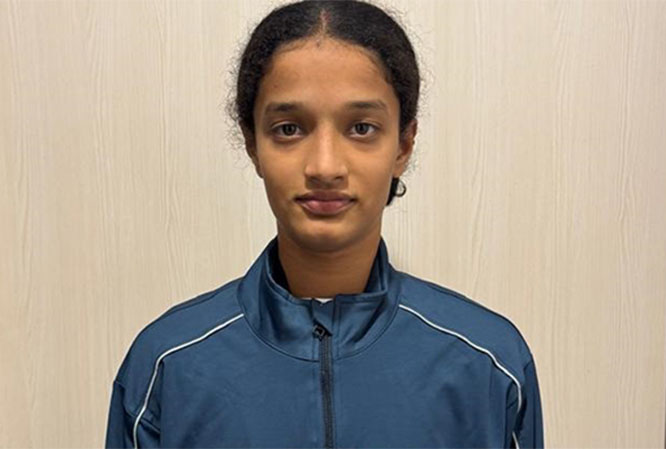
Udupi, Dec 2: A wave of regional pride is sweeping through Udupi district as Shagun S Verma Hegde, a talented Class 9 student from Christ King English Medium High School, Karkala, has been named the captain of the Indian National Team for the Under-15 Girls’ Volleyball Championship.

Shagun holds the unique distinction of being the sole player from Karnataka selected to represent the country in the prestigious international tournament. The championship, organized by the School Games Federation, is scheduled to take place in Shangluo, China, from December 3 to 13, where Shagun will lead the national squad.

A Remarkable Journey to the Top

Shagun’s selection is a testament to her dedication and exceptional skill on the court. Her journey included several rigorous rounds of selection:

•    She was the only player from Udupi district to qualify for the state-level selection camp.

•    Out of eight players from Karnataka who advanced to the national selection camp in Pune, Maharashtra, Shagun was the only one to secure a place in the final national squad.

•    The national camp saw participation from approximately 200 players, which was shortlisted to 23. Shagun not only made the final cut but was also ranked as the second-best player overall, solidifying her leadership role.

Shagun, who is the daughter of Sandesh Verma and Shruthiraj of Kallotte, Karkala, has trained under experienced coaches Santosh D’Souza, Jeevan D’Silva, Jairaj Poojary, and Ramesh. Her selection as the team captain has brought profound honour to her family, school, the Udupi district, and the entire state of Karnataka.

Comments

Add new comment

  • Coastaldigest.com reserves the right to delete or block any comments.
  • Coastaldigset.com is not responsible for its readers’ comments.
  • Comments that are abusive, incendiary or irrelevant are strictly prohibited.
  • Please use a genuine email ID and provide your name to avoid reject.
News Network
November 22,2025

The Karnataka government has announced a 50% rebate on pending traffic and transport fines. The discount is available from November 21 to December 12.

The rebate applies to all traffic e-challans and violation cases booked by the RTO between 1991–92 and 2019–20. Officials clarified that the offer is not applicable to pending tax dues and is restricted only to traffic-violation fines.

Across Karnataka, more than 4 lakh RTO cases remain pending, including those involving transport vehicles. While thousands of vehicle owners have already cleared their dues, the department expects to generate substantial revenue through this limited-period rebate.

How to Pay and Avail the Discount

There are three ways to check and pay your pending fines:

1. Through Mobile Apps
Available on both Play Store and App Store:
•    Karnataka State Police (KSP) app
•    KarnatakaOne app
•    ASTraM app

Steps:
•    Enter your vehicle number in any of the above apps
•    Verify the photo/details of your vehicle
•    Pay the fine with the 50% discount applied

2. Visit a Traffic Police Station

You can pay your pending fine at any nearby traffic police station.

3. Visit the Traffic Management Centre (TMC)

•    Location: First Floor, Infantry Road, near Indian Express, Bengaluru

Transport Commissioner Yogeesh A M said, “We don't issue e-challans, so there's no online payment system.”

The department estimates ₹52 crore in pending RTO fines up to March 2020. “With the 50% rebate, we expect to collect around ₹25 crore if all dues are cleared,” he added.

Comments

Add new comment

  • Coastaldigest.com reserves the right to delete or block any comments.
  • Coastaldigset.com is not responsible for its readers’ comments.
  • Comments that are abusive, incendiary or irrelevant are strictly prohibited.
  • Please use a genuine email ID and provide your name to avoid reject.