



New guidelines for domestic, international travel: Here's all you need to know

News Network
May 24, 2020

New Delhi, May 24: New rules for domestic travel during the lockdown were released by the government today, including advising passengers to download the Aarogya Setu application on their mobile devices and asking states to ensure thermal screening at departure point of airports, railway stations and bus terminals. The guidelines were shared by Civil Aviation Minister Hardeep Singh Puri, who also shared new rules for international travel.

The minister had recently said that international flight operations may start by mid-June or end-July if the COVID-19 virus "behaves in a predictable manner".

"Prescribed clinical protocol will be followed in case any domestic or international traveller shows symptoms of COVID-19. States can also develop their own protocol for quarantine and isolation as per their own assessment," Mr Puri said.

The guidelines come a day before the resumption of air travel after nearly two-months hiatus following lockdown to prevent the spread of coronavirus.

The Indian Railways has also issued a list of 100 pairs of trains that it will operate from June 1, putting in operation popular trains such as Durontos, Sampark Krantis, Jan Shatabdis and Poorva Express.

Dos and Don'ts shall be provided along with tickets to travellers by agencies concerned, said the Health Ministry's guidelines for domestic travel (air/train/inter-state bus travel).

Latest guidelines on domestic & international travel have been issued by @MoHFW_INDIA.

I hope travellers strictly follow these self-regulatory norms & strengthen India's hands in this fight against COVID19. Remember, each one of us is a soldier against the pandemic.@MoCA_GoIpic.twitter.com/xVbTG1K44n

— Hardeep Singh Puri (@HardeepSPuri) May 24, 2020
Travellers shall give 14-day quarantine undertaking before boarding

The states and Union Territories shall ensure that all passengers undergo thermal screening at the point of departure and only asymptomatic passengers are allowed to board the flight, train or bus. Asymptomatic passengers, however, will be permitted to travel after they give an undertaking to self-monitor for 14 days, the ministry said.

Those having moderate or severe symptoms will be admitted to dedicated COVID health facilities and managed accordingly, the guidelines said.

Those having mild symptoms will be given the option of home isolation or isolated in the COVID Care Centre (both public and private facilities) as appropriate and tested as per ICMR protocol, they said.

"If positive, they will continue in COVID Care Centre and will be managed as per clinical protocol. If negative, the passenger may be allowed to go home, isolate himself/herself and self-monitor his/her health for further 7 days," the health ministry said.

In case, any symptoms develop they shall inform the district surveillance officer or the state or the national call centre (1075), it said.

Use of face covers, following respiratory hygine during travel

During boarding and travel, all passengers shall use face covers or masks and will also follow hand hygiene, respiratory hygiene and maintain environmental hygiene, the ministry said in its guidelines.

At airports, railway stations and bus terminals, required measures to ensure social distancing shall be taken, the guidelines said.

Airports, railway stations and bus terminals to be regularly sanitised

Airports, railway stations and bus terminals should be regularly sanitised or disinfected and the availability of soaps and sanitisers shall be ensured, the health ministry said.

The ministry said that states can also develop their own protocol with regards to quarantine and isolation as per their assessment.

Guidelines for International Travel

The guidelines for international travel include mandatory undertaking for quarrantine for 14 days. "Only for exceptional and compelling reasons such as cases of human distress, pregnancy, death in family, serious illness and parent(s) accompanied by children below 10 yrs, as assessed by the receiving states, home quarantine may be permitted for international travellers for 14 days," the Civil Aviation minister said.

Asymptomatic travelers will be allowed to board flight/ship

At the time of boarding the flight or ship, only asymptomatic travellers will be allowed to board after thermal screening, the health ministry said.. Passengers arriving through land borders will also have to undergo the same procedure, it said.

"Self-declaration form in duplicate shall be filled by the person in the flight/ship and a copy of the same will be given to Health and immigration officials present at the airport/seaport/landport. The form will be made available through the Aarogya Setu app," the new order said.

Passengers found to be symtomatic during screening shall be immediately isolated and taken to medical facility as per health protocol. "These passengers will be kept under institutional quarrantine for a minimum period of 7 days and should undergo necessary tests as per ICMR protocol," the guidelines said.

Sanitisation and disinfection must inside flights

Authorities must take adequate measures to such as environmental sanitation and disinfection at the airports as well as within the flights, the guideline said.Suitable announcement about COVID-19 including precautionary measures to be followed shall be made at airports/ports, it added.

While on board flight, ships, passengers and crew required precautions such as wearing of masks, environmental hygiene, respiratory hygiene, hand hygiene, the ministry said.

This morning, India registered the biggest-single day jump in the number of coronavirus cases as 6,767 new patients were reported in the last 24 hours. This is the third consecutive day that India has reported more than 6,000 COVID-19 cases with a record number of new patients each day. The county has officially logged 1,31,868 cases, 3,867 deaths linked to the highly infectious illness since the pandemic began. Of these, 147 patients died in the last 24 hours. The global number of novel coronavirus cases has passed 5.25 million with more than 339,000 deaths. Since the outbreak first emerged in China in December, 5,260,970 cases have been recorded across 196 countries and territories, with 339,758 deaths attributed to the virus.

Comments

Add new comment

  • Coastaldigest.com reserves the right to delete or block any comments.
  • Coastaldigset.com is not responsible for its readers’ comments.
  • Comments that are abusive, incendiary or irrelevant are strictly prohibited.
  • Please use a genuine email ID and provide your name to avoid reject.
News Network
December 3,2025

indigo.jpg

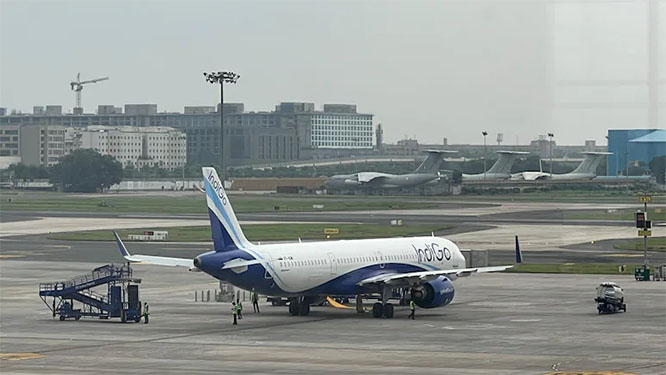
IndiGo, India’s largest airline, is battling one of its worst operational disruptions in recent years, with hundreds of delays and cancellations throwing domestic travel into chaos.

Government data on Tuesday showed its on-time performance plunging to 35%, an unusual dip for a carrier long associated with punctuality.

By Wednesday afternoon, airports in Delhi, Mumbai, Bengaluru and Hyderabad had collectively reported close to 200 cancellations, stranding travellers across the country.

Crew Shortage After New Duty Norms

A major trigger behind the meltdown is a severe crew shortage, especially among pilots, following the rollout of revised Flight Duty Time Limitation (FDTL) norms last month.

The rules mandate longer rest hours and more humane rosters — a shift IndiGo has struggled to incorporate across its vast network.

Sources said several flights were grounded due to lack of cabin crew, while some delays stretched upwards of eight hours.

With IndiGo controlling over 60% of India’s domestic aviation market, the ripple effect has impacted airports nationwide.

IndiGo Issues Apology, Lists “Compounding Factors”

In a statement, IndiGo acknowledged the large-scale disruption:

“We sincerely apologise to customers. A series of unforeseen operational challenges — technology glitches, winter schedule changes, adverse weather, system congestion and updated FDTL norms — created a compounding impact that could not have been anticipated.”

To stabilise operations, the airline has begun calibrated schedule adjustments for the next 48 hours, aiming to restore punctuality. Affected passengers are being offered refunds or alternate travel arrangements, IndiGo said.

What the FDTL Rules Require

The FDTL norms, designed to reduce pilot fatigue, cap duty and flying hours as follows:
•    Maximum 8 hours of flying per day
•    35 hours per week
•    125 hours per month
•    1,000 hours per year

Crew must also receive rest equalling twice the flight duration, with a minimum 10-hour rest period in any 24-hour window.

The DGCA introduced these limits to enhance flight safety.

Hyderabad: 33 Flights Cancelled, Long Queues Reported

Hyderabad’s Rajiv Gandhi International Airport saw heavy early-morning crowds as 33 IndiGo flights (arrivals and departures) were cancelled.

The airport clarified on X that operations were normal, advising passengers to contact IndiGo directly for latest flight status.

Cancellations included flights to and from Visakhapatnam, Goa, Ahmedabad, Delhi, Bengaluru, Chennai, Madurai, Hubli, Bhopal and Bhubaneswar.

Bengaluru: 42 Flights Disrupted

Bengaluru’s Kempegowda International Airport recorded 42 cancellations — 22 arrivals and 20 departures — affecting routes to Delhi, Mumbai, Chennai, Hyderabad, Goa, Kolkata and Lucknow.

Passengers Vent on Social Media

Irate travellers took to X to share their experiences. One passenger stranded in Hyderabad wrote: “I have been here since 3 a.m. and missed an important meeting.”

Another said: “My flight was pushed from 1:55 PM to 2:55 PM and now 4:35 PM. I was informed only three minutes before entering the airport.”

Delhi Airport Hit by Tech Glitch

At Delhi Airport, the disruption deepened due to a slowdown in the Amadeus system — used for reservations, check-ins and departure control.

The technical issue led to longer queues and sluggish processing, adding to delays already worsened by staff shortages.

Comments

Add new comment

  • Coastaldigest.com reserves the right to delete or block any comments.
  • Coastaldigset.com is not responsible for its readers’ comments.
  • Comments that are abusive, incendiary or irrelevant are strictly prohibited.
  • Please use a genuine email ID and provide your name to avoid reject.
News Network
December 16,2025

jordan.jpg

Prime Minister Narendra Modi on Monday held talks with Jordan’s King Abdullah II in Amman, during which the two leaders discussed ways to further strengthen bilateral relations, with the Prime Minister outlining an eight-point vision covering key areas of cooperation.

Describing the meeting as “productive”, PM Modi said he shared a roadmap focused on trade and economy, fertilisers and agriculture, information technology, healthcare, infrastructure, critical and strategic minerals, civil nuclear cooperation, and people-to-people ties.

In a post on social media platform X, the Prime Minister praised King Abdullah II’s personal commitment to advancing India–Jordan relations, particularly as both countries mark the 75th anniversary of the establishment of diplomatic ties this year.

“Held productive discussions with His Majesty King Abdullah II in Amman. His personal commitment towards vibrant India-Jordan relations is noteworthy. This year, we are celebrating the 75th anniversary of our bilateral diplomatic relations,” PM Modi said.

The meeting took place at the Al Husseiniya Palace, where the two leaders also exchanged views on regional and global issues of mutual interest. According to the Ministry of External Affairs (MEA), both sides agreed to further deepen cooperation in areas including trade and investment, defence and security, counter-terrorism and de-radicalisation, fertilisers and agriculture, infrastructure, renewable energy, tourism, and heritage.

The MEA said both leaders reaffirmed their united stand against terrorism.

PM Modi arrived in Amman earlier on Monday and was received by Jordanian Prime Minister Jafar Hassan, who accorded him a formal welcome. Following the talks, King Abdullah II hosted a banquet dinner in honour of the Prime Minister, reflecting the warmth of bilateral ties.

Jordan is the first leg of PM Modi’s three-nation tour. From Amman, the Prime Minister will travel to Ethiopia at the invitation of Prime Minister Abiy Ahmed Ali, marking his first official visit to the African nation. The tour will conclude with a visit to Oman.

Comments

Add new comment

  • Coastaldigest.com reserves the right to delete or block any comments.
  • Coastaldigset.com is not responsible for its readers’ comments.
  • Comments that are abusive, incendiary or irrelevant are strictly prohibited.
  • Please use a genuine email ID and provide your name to avoid reject.
News Network
December 13,2025

New Delhi: School-going children are picking up drug and smoking habits and engaging in consumption of alcohol, with the average age of introduction to such harmful substances found to be around 13 years, suggesting a need for earlier interventions as early as primary school, a multi-city survey by AIIMS-Delhi said.

The findings also showed substance use increased in higher grades, with grade XI/XII students two times more likely to report use of substances when compared with grade VIII students. This emphasised the importance of continued prevention and intervention through middle and high school.

The study led by Dr Anju Dhawan of AIIMS's National Drug Dependence Treatment Centre, published in the National Medical Journal of India this month, looks at adolescent substance use across diverse regions.

The survey included 5,920 students from classes 8, 9, 11 and 12 in urban government, private and rural schools across 10 cities -- Bengaluru, Chandigarh, Delhi, Dibrugarh, Hyderabad, Imphal, Jammu, Lucknow, Mumbai, and Ranchi. The data were collected between May 2018 and June 2019.

The average age of initiation for any substance was 12.9 (2.8) years. It was lowest for inhalants (11.3 years) followed by heroin (12.3 years) and opioid pharmaceuticals (without prescription; 12.5 years).

Overall, 15.1 per cent of participants reported lifetime use, 10.3 per cent reported past year use, and 7.2 per cent reported use in the past month of any substance, the study found.

The most common substances used in the past year, after tobacco (4 per cent) and alcohol (3.8 per cent), were opioids (2.8 per cent), followed by cannabis (2 per cent) and inhalants (1.9 per cent). Use of non-prescribed pharmaceutical opioids was most common among opioid users (90.2 per cent).

On being asked, 'Do you think this substance is easily available for a person of your age' separately for each substance category, nearly half the students (46.3 per cent) endorsed that tobacco products and more than one-third of the students (36.5 per cent) agreed that a person of their age can easily procure alcohol products.

Similarly, for Bhang (21.9 per cent), ganja/charas (16.1 per cent), inhalants (15.2 per cent), sedatives (13.7 per cent), opium and heroin (10 per cent each), the students endorsed that these can be easily procured.

About 95 per cent of the children, irrespective of their grade, agreed with the statement that 'drug use is harmful'.

The rates of substance use (any) among boys were significantly higher than those of girls for substance use (ever), use in the past year and use in the past 30 days. Compared to grade VIII students, grade IX students were more likely, and grade XI/XII students were twice as likely to have used any substance (ever).

The likelihood of past-year use of any substance was also higher for grade IX students and for grade XI/XII students as compared to grade VIII students.

About 40 per cent of students mentioned that they had a family member who used tobacco or alcohol each. The use of cannabis (any product) and opioid (any product) by a family member was reported by 8.2 per cent and 3.9 per cent of students, respectively, while the use of other substances, such as inhalants/sedatives by family was 2-3 per cent, the study found.

A relatively smaller percentage of students reported use of tobacco or alcohol among peers as compared to among family members, while a higher percentage reported inhalants, sedatives, cannabis or opioid use among peers.

Children using substances (past year) compared to non-users reported significantly higher any substance use by their family members and peers.

There were 25.7 per cent students who replied 'yes' to the question 'conflicts/fights often occur in your family'. Most students also replied affirmatively to 'family members are aware of how their time is being spent' and 'damily members are aware of with whom they spend their time'.

Comments

Add new comment

  • Coastaldigest.com reserves the right to delete or block any comments.
  • Coastaldigset.com is not responsible for its readers’ comments.
  • Comments that are abusive, incendiary or irrelevant are strictly prohibited.
  • Please use a genuine email ID and provide your name to avoid reject.
