Bahrain India Society honors Karnataka Assembly Speaker U T Khader

News Network
December 24, 2023

4BIS.jpg

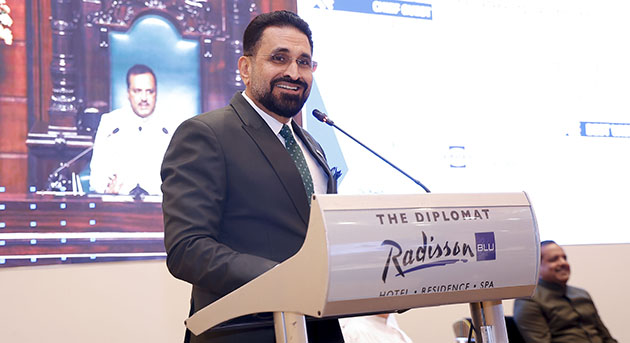
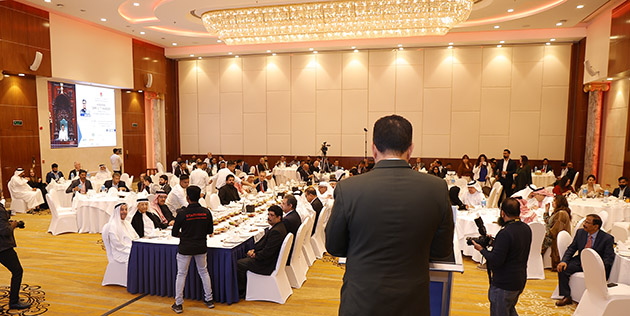
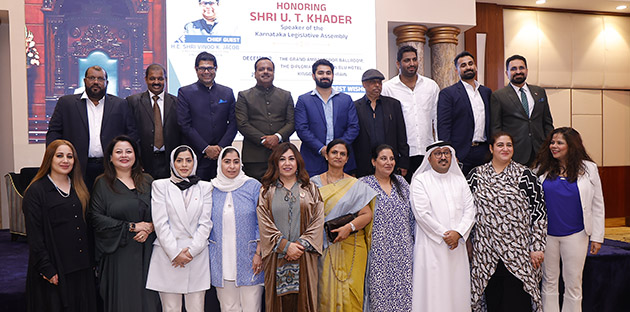
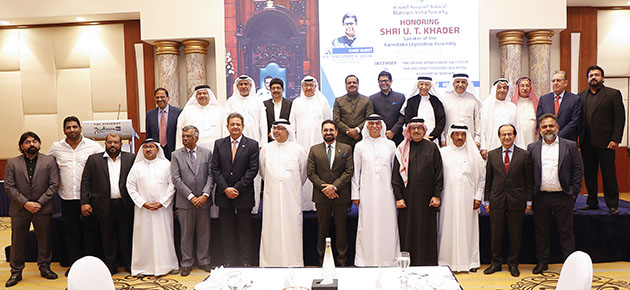
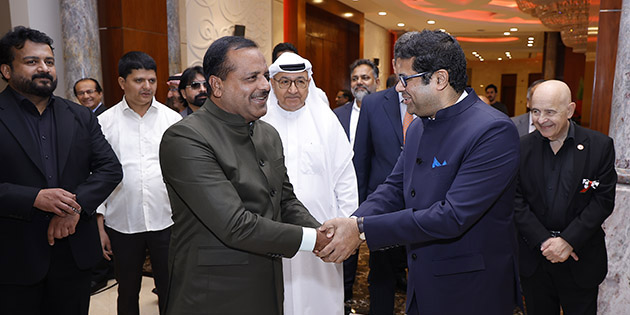
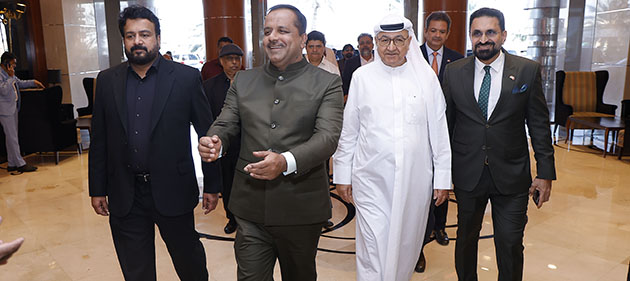
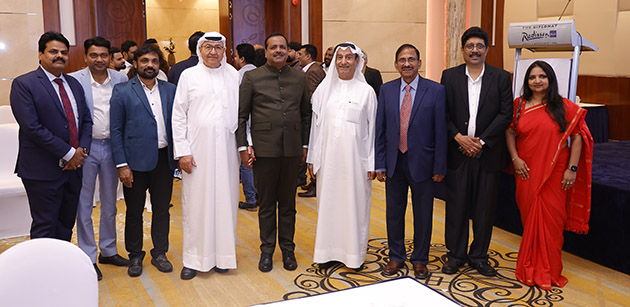
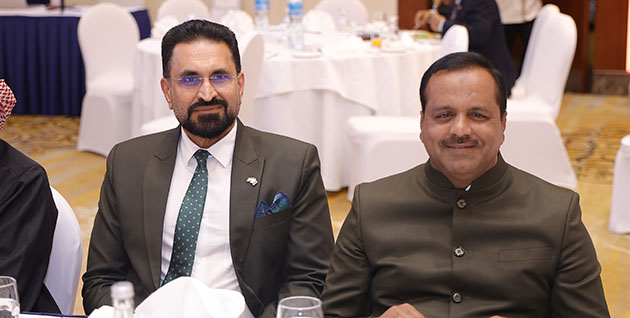
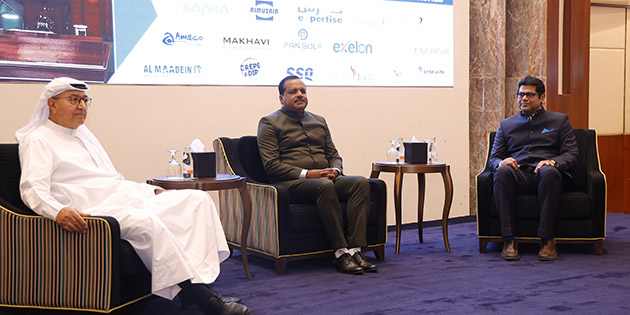
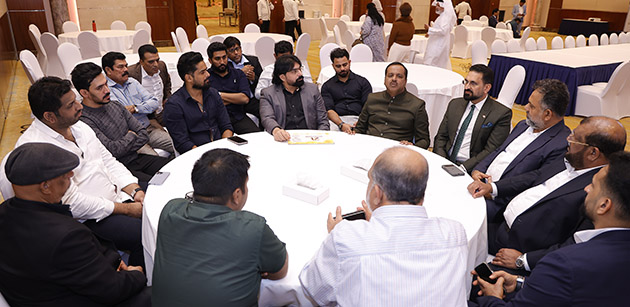
The Diplomat Radisson Hotel in Bahrain was abuzz with excitement as the Bahrain India Society hosted an Honoring Ceremony for U T Khader, Speaker of the Karnataka Legislative Assembly. This event, held on December 21, 2023, was a momentous celebration of Khader's exceptional contributions and achievements throughout his journey from Student Union leader to Speaker.

The Honoring ceremony witnessed the esteemed presence of chief guest Vinod K Jacob, Indian Ambassador, alongside distinguished members of the Bahrain India Society, prominent figures from government entities, private sectors, and esteemed businessmen.

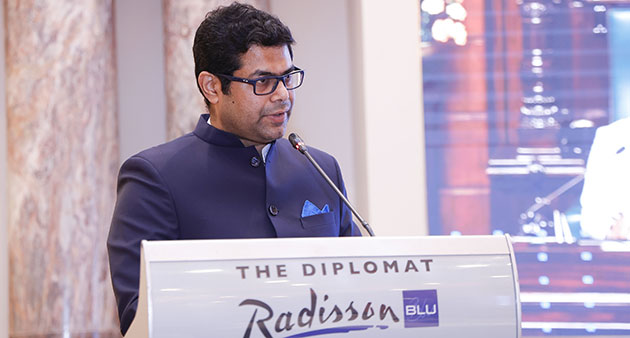
"I had the privilege of spotlighting the remarkable achievements of U.T. Khader, underscoring the Speaker's profound impact on society. From his early days as a Student Union leader to managing crucial portfolios, including Minister of Health, Education, Urban Development, and reaching his current role as the esteemed Speaker, Khader's journey has garnered acclaim for its substantial contributions to societal betterment," said Mohammad Mansoor, Board Member of Bahrain India Society, as he addressed the attending guests, and he also hails from his home town.

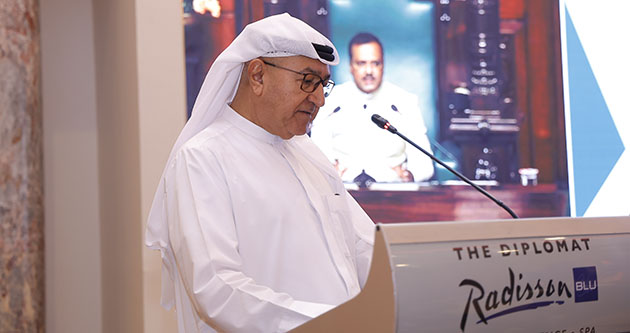
Abdulrahman Juma, President of the Bahrain Indian Society, extended a warm welcome to the Honorable Speaker and expressed gratitude to the members of the House of Representatives, the Bahrain Chamber of Commerce and Industry, and distinguished guests from Bahrain and Saudi Arabia. Juma emphasized the business-friendly atmosphere in Bahrain, supported by the visionary leadership of His Majesty King Hamad and Prince Prime Minister His Royal Highness Sheikh Salman bin Hamad Al Khalifa. He highlighted the facilitation of business setups through financial incentives such as the Tamkeen program, making Bahrain an appealing destination for international investments. Juma urged the Speaker to support investment promotions in the Kingdom of Bahrain.

Vinod Jacob, Indian Ambassador, provided valuable insights into India's achievements, noting that 800,000 Indian tourists visited Bahrain within ten months of the year, with 340,000 Indian citizens actively contributing to Bahrain's economy. He emphasized Bahrain's status as a prime destination for investments.

Khader expressed his heartfelt gratitude to the Royal Family for the longstanding friendly and bilateral relationship between Bahrain and India. He commended the Bahrain India Society for organizing an extraordinary event in a short span, acknowledging the contributions of all NRIs in Bahrain towards the development of India. Shri Khader pledged unwavering support to the visions of Bahrain and Karnataka, promising to act as a bridge between the two nations for cultural, bilateral, and economic development.

The Speaker extended an invitation for a high-level meeting between the Bahrain-India Society and the government of Karnataka. He expressed his commitment to arrange for Bahraini delegates to witness the assembly proceedings in Karnataka, thereby strengthening the ties between the two regions.

Khader, Juma, and Vinod Jacob expressed their gratitude to Mansoor for organizing this exceptional event. The ceremony concluded with a vote of thanks by Vinod Das, followed by a networking lunch that fostered discussions on opportunities for developing cultural, educational, sports, and economic ties between the two friendly countries. Attendees engaged in conversations about establishing new joint projects between Bahraini businessmen and their counterparts in India across various sectors.
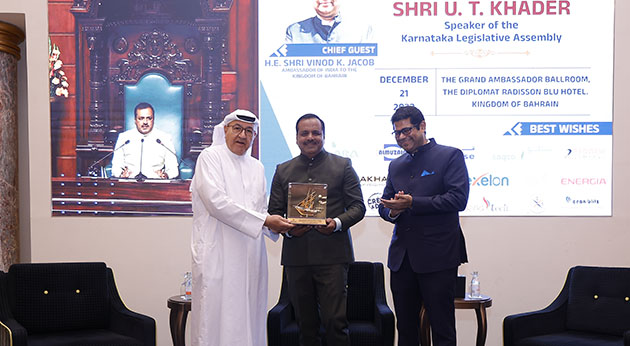
8BIS.jpg
A.R. Juma, Chairman of Bahrain India Society, presenting the memento to U.T. Khader along with Vinod Jacob.

9BIS.jpg

7BIS.jpg

6BIS.jpg

5BIS.jpg

3BIS.jpg

2BIS.jpg

1BIS.jpg

13BIS.jpg

12BIS.jpg

11BIS.jpg

10BIS.jpg

Comments

Shahbaz ahemad…
 - 
Wednesday, 3 Jan 2024

i m hajj vulunteer job waiting for 2024 makkah madina jeddah accept

Add new comment

  • Coastaldigest.com reserves the right to delete or block any comments.
  • Coastaldigset.com is not responsible for its readers’ comments.
  • Comments that are abusive, incendiary or irrelevant are strictly prohibited.
  • Please use a genuine email ID and provide your name to avoid reject.
News Network
February 1,2026

Bengaluru: The Karnataka High Court has refused to quash an investigation against a WhatsApp group administrator accused of allowing the circulation of obscene and offensive images depicting Hindutva politicians and idols in 2021.

Justice M Nagaprasanna observed that, prima facie, the ingredients of the offence under Section 295A of the Indian Penal Code were made out. “The offence under Section 295A of the IPC is met to every word of its ingredient, albeit prima facie,” the judge said.

The petitioner, Sirajuddin, a resident of Belthangady taluk in Dakshina Kannada district, had challenged the FIR registered against him at the CEN (Cyber, Economics and Narcotics) police station, Mangaluru, for offences under Section 295A of the IPC and Section 67 of the Information Technology Act. Section 295A relates to punishment for deliberate and malicious acts intended to outrage the religious feelings of any class of citizens.

According to the complaint filed by K Jayaraj Salian, also a resident of Belthangady taluk, he received a WhatsApp group link from an unknown source and was added to the group after accessing it. The group reportedly had six administrators and around 250 participants, where obscene and offensive images depicting Hindu deities and certain political figures were allegedly circulated repeatedly.

Sirajuddin was arrested in connection with the case and later released on bail on February 16, 2021. He argued before the court that he was being selectively targeted, while other administrators—including the creator of the group—were neither arrested nor investigated. He also contended that the Magistrate could not have taken cognisance of the offence under Section 295A without prior sanction under Section 196(1) of the CrPC.

Rejecting the argument, Justice Nagaprasanna held that prior sanction is required only at the stage of taking cognisance, and not at the stage of registration of the crime or during investigation.

The judge noted that the State had produced the entire investigation material before the court. “A perusal of the material reveals depictions of Hindu deities in an extraordinarily obscene, demeaning and profane manner. The content is such that its reproduction in a judicial order would itself be inappropriate,” the court said, adding that the material, on its face, had the tendency to outrage religious feelings and disturb communal harmony.

Observing that the case was still at the investigation stage, the court said it could not interdict the probe at this juncture. However, it expressed concern that the investigating officer appeared to have not proceeded uniformly against all administrators. The court clarified that if the investigation revealed the active involvement of any member in permitting the circulation of such content, they must also be proceeded against.

“At this investigative stage, any further observation by this Court would be unnecessary,” the order concluded.

Comments

Add new comment

  • Coastaldigest.com reserves the right to delete or block any comments.
  • Coastaldigset.com is not responsible for its readers’ comments.
  • Comments that are abusive, incendiary or irrelevant are strictly prohibited.
  • Please use a genuine email ID and provide your name to avoid reject.
News Network
January 20,2026

Mangaluru: In a major step towards strengthening rural innovation, the Office of the Principal Scientific Adviser (PSA) to the Government of India is supporting the establishment of RuTAGe Smart Village Centres (RSVCs) across the country through collaborations with academic institutions, civil society organisations and philanthropic partners.

As part of this national initiative, Nitte (Deemed to be University) will set up the first RSVCs in the region at Nitte GP in Udupi district and at the Nitte Health Centre, Sevanjali Trust, Farangipete, in Dakshina Kannada district. The centres will be inaugurated on January 21. In South India, the programme is being implemented by the Section Infin-8 Foundation (SI-8).

Speaking to reporters on Monday, SI-8 founder-director Vishwas US said experts from Nitte University and SI-8 would work closely with farmers, students, youth and local entrepreneurs to adapt and deploy technologies tailored to local needs.

Project head Prof Iddya Karunasagar, representing Nitte DU, said the RSVCs at Nitte and Farangipete would serve as demonstration hubs for a wide range of agriculture, energy, skill-development and assistive technologies. These include solar dryers for fruits, vegetables and crops; soil-testing solutions; power weeders and women-friendly farm tools; wind-powered devices for rural artisans; grain storage systems; grass-cutting and tree-climbing equipment; and liquid fertiliser production using cowshed waste.

SI-8 CEO Aravind C Kumar said the centres would also provide access to digital and knowledge-based platforms such as ISRO applications, government scheme portals, market linkage tools and gamified learning resources, along with assistive technologies for persons with visual impairments.

Highlighting the broader impact of the initiative, Principal Scientific Adviser Prof Ajay Kumar Sood said it demonstrated how applied research could bridge the rural–urban divide and help create self-reliant, technology-enabled villages.

The initiative has been made possible through philanthropic support from Dr NC Murthy of ACM Business Solutions, LLC, USA. Dr Sapna Poti, Director (Strategic Alliances) at the Office of the Principal Scientific Adviser, said the long-term objective is to build self-sufficient, technology-driven communities capable of generating sustainable livelihoods on their own.

Comments

Add new comment

  • Coastaldigest.com reserves the right to delete or block any comments.
  • Coastaldigset.com is not responsible for its readers’ comments.
  • Comments that are abusive, incendiary or irrelevant are strictly prohibited.
  • Please use a genuine email ID and provide your name to avoid reject.
News Network
January 23,2026

Mangaluru: The Karnataka Government Polytechnic (KPT), Mangaluru, has achieved autonomous status from the All India Council for Technical Education (AICTE), becoming the first government polytechnic in the country to receive such recognition in its 78-year history. The status was granted by AICTE, New Delhi, and subsequently approved by the Karnataka Board of Technical Education in October last year.

Officials said the autonomy was conferred a few months ago. Until recently, AICTE extended autonomous status only to engineering colleges, excluding diploma institutions. However, with a renewed national focus on skill development, several government polytechnics across India have now been granted autonomy.

KPT, the second-largest polytechnic in Karnataka, was established in 1946 with four branches and has since expanded to offer eight diploma programmes, including computer science and polymer technology. The institution is spread across a 19-acre campus.

Ravindra M Keni, the first dean of the institution, told The Times of India that AICTE had proposed autonomous status for polytechnic institutions that are over 25 years old. “Many colleges applied. In the first round, 100 institutions were shortlisted, which was further narrowed down to 15 in the second round. We have already completed one semester after becoming an autonomous institution,” he said. He added that nearly 500 students are admitted annually across eight three-year diploma courses.

Explaining the factors that helped KPT secure autonomy, Keni said the institution has consistently recorded 100 per cent admissions and placements for its graduates. He also noted its strong performance in sports, with the college emerging champions for 12 consecutive years, along with active student participation in NCC and NSS activities.

Autonomous status allows KPT to design industry-oriented curricula, conduct examinations, prepare question papers, and manage academic documentation independently. The institution can also directly collaborate with industries and receive priority funding from AICTE or the Ministry of Education. While academic autonomy has been granted, financial control will continue to rest with the state government.

“There will be separate committees for examinations, question paper setting, boards of studies, and boards of examiners. The institution will now have the freedom to conduct admissions without government notifications and issue its own marks cards,” Keni said, adding that new academic initiatives would be planned after a year of functioning under the autonomous framework.

Comments

Add new comment

  • Coastaldigest.com reserves the right to delete or block any comments.
  • Coastaldigset.com is not responsible for its readers’ comments.
  • Comments that are abusive, incendiary or irrelevant are strictly prohibited.
  • Please use a genuine email ID and provide your name to avoid reject.