2023 polls will usher in new era in Karnataka; Kannadigas own party will come to power: HDK

News Network
September 27, 2021

Bengaluru, Sept 27: JD(S) leader H D Kumaraswamy on Monday said that the 2023 Assembly polls will usher in a new era in Karnataka with "Kannadigas' own party" coming to power in the state, and set a target of winning at least 123 seats.

The JD(S) has organised "Janata Parva 1.0", a four-day workshop for party leaders near here, aimed at bringing it to power in 2023, that was inaugurated by party patriarch and former Prime Minister H D Deve Gowda.

"...we will work hard for the next 17 months and get involved in various party activities non-stop. We are confident about being successful in bringing a government that will be by Kannadigas for Karnataka in 2023, through the JD(S)," Kumaraswamy said.

Speaking to reporters on the sidelines of the event, he said, "Our party's goal is 123 seats (in 224 member Assembly) for 2023. It can be 123 plus, not minus. With this focus we have started our activities....from 2023 a new era will begin in Karnataka with Kanndaigas' own party coming to power."

Pointing at regional parties gaining power in West Bengal, Jharkhand, Tamil Nadu, Telangana and Andhra Pradesh, he said "bringing a government of regional identity, by Kannadigas, of Kannadigas and for Karnnadigas in Karnataka in 2023 is the target. We want to clear the doubts about the ability of JD(S), a party with regional identity, to come to power in Karnataka."

Noting that party organisation work had taken a back seat in the last two years due to the Covid-19 pandemic, Kumaraswamy pointed out that the 2023 elections are fast approaching and there are only 17 months left for it.

He said the first set of candidates identified from the workshop will be coached on how to be closer to people in their constituencies. They will be given all kinds of training to build leadership qualities in them in a disciplined manner.

"Despite all this training, if the identified candidate is not performing duties as per the party's expectations, there are provisions to change them," he said. The idea behind the training was to update probable candidates on the use of new technology and social media for connecting with the people, aimed at equipping them for the new kind of election system, he said.

Pointing to the rise of DMK in Tamil Nadu, Mamata Banerjee's TMC in West Bengal and BJP's growth from the Jan Sangh established by Shyama Prasad Mukherjee 70 years ago, to it now coming to power under Narendra Modi, he said "ours (JDS or its earlier form Janata Parivar) is a party known for its people friendly programmes. We have set right certain lapses that are there within us."

As a fist step in this process, the JD(S) wants to train cadres to ensure they are actively involved in all party activities in the next 18 months, with an intention to being it to power, he added.

Stating that there is talk within the party that people gather wherever Kumaraswamy goes to various places, but it does not convert into votes, the JD(S) legislature party leader said this "fault" needs to be rectified, during the coming 2023 polls.

Meanwhile, JD(S) supremo Deve Gowda, addressing the inaugural event said several attempts have been made to divide the party, but it has "God's grace".

He questioned the integrity and moral rights of his detractors in the Congress, especially bête noire Siddaramaiah, accusing them of speaking lightly about him and his party and calling JD(S) the "B-team" of BJP.

"...your party (Congress) has an understanding with Shiv Sena... what type of secularism is that? You said Deve Gowda is the B-team of BJP. You want to finish my party, tell the truth Siddaramaiah. Despite doing everything to project me as B-team, you (Congress) got only 78 seats in the 2018 Assembly polls...how long will you say such things? I'm alive.. I will come to every district and tell the truth and relevance of JD(S), he said. Gowda recalled that he began as an ordinary contractor in Hassan and how he organised people and urged the cadres to learn how to organise the party and start working.

"...Don't run away from the responsibility given to you, and work with discipline," he said.

Comments

Add new comment

  • Coastaldigest.com reserves the right to delete or block any comments.
  • Coastaldigset.com is not responsible for its readers’ comments.
  • Comments that are abusive, incendiary or irrelevant are strictly prohibited.
  • Please use a genuine email ID and provide your name to avoid reject.
News Network
December 13,2025

New Delhi: School-going children are picking up drug and smoking habits and engaging in consumption of alcohol, with the average age of introduction to such harmful substances found to be around 13 years, suggesting a need for earlier interventions as early as primary school, a multi-city survey by AIIMS-Delhi said.

The findings also showed substance use increased in higher grades, with grade XI/XII students two times more likely to report use of substances when compared with grade VIII students. This emphasised the importance of continued prevention and intervention through middle and high school.

The study led by Dr Anju Dhawan of AIIMS's National Drug Dependence Treatment Centre, published in the National Medical Journal of India this month, looks at adolescent substance use across diverse regions.

The survey included 5,920 students from classes 8, 9, 11 and 12 in urban government, private and rural schools across 10 cities -- Bengaluru, Chandigarh, Delhi, Dibrugarh, Hyderabad, Imphal, Jammu, Lucknow, Mumbai, and Ranchi. The data were collected between May 2018 and June 2019.

The average age of initiation for any substance was 12.9 (2.8) years. It was lowest for inhalants (11.3 years) followed by heroin (12.3 years) and opioid pharmaceuticals (without prescription; 12.5 years).

Overall, 15.1 per cent of participants reported lifetime use, 10.3 per cent reported past year use, and 7.2 per cent reported use in the past month of any substance, the study found.

The most common substances used in the past year, after tobacco (4 per cent) and alcohol (3.8 per cent), were opioids (2.8 per cent), followed by cannabis (2 per cent) and inhalants (1.9 per cent). Use of non-prescribed pharmaceutical opioids was most common among opioid users (90.2 per cent).

On being asked, 'Do you think this substance is easily available for a person of your age' separately for each substance category, nearly half the students (46.3 per cent) endorsed that tobacco products and more than one-third of the students (36.5 per cent) agreed that a person of their age can easily procure alcohol products.

Similarly, for Bhang (21.9 per cent), ganja/charas (16.1 per cent), inhalants (15.2 per cent), sedatives (13.7 per cent), opium and heroin (10 per cent each), the students endorsed that these can be easily procured.

About 95 per cent of the children, irrespective of their grade, agreed with the statement that 'drug use is harmful'.

The rates of substance use (any) among boys were significantly higher than those of girls for substance use (ever), use in the past year and use in the past 30 days. Compared to grade VIII students, grade IX students were more likely, and grade XI/XII students were twice as likely to have used any substance (ever).

The likelihood of past-year use of any substance was also higher for grade IX students and for grade XI/XII students as compared to grade VIII students.

About 40 per cent of students mentioned that they had a family member who used tobacco or alcohol each. The use of cannabis (any product) and opioid (any product) by a family member was reported by 8.2 per cent and 3.9 per cent of students, respectively, while the use of other substances, such as inhalants/sedatives by family was 2-3 per cent, the study found.

A relatively smaller percentage of students reported use of tobacco or alcohol among peers as compared to among family members, while a higher percentage reported inhalants, sedatives, cannabis or opioid use among peers.

Children using substances (past year) compared to non-users reported significantly higher any substance use by their family members and peers.

There were 25.7 per cent students who replied 'yes' to the question 'conflicts/fights often occur in your family'. Most students also replied affirmatively to 'family members are aware of how their time is being spent' and 'damily members are aware of with whom they spend their time'.

Comments

Add new comment

  • Coastaldigest.com reserves the right to delete or block any comments.
  • Coastaldigset.com is not responsible for its readers’ comments.
  • Comments that are abusive, incendiary or irrelevant are strictly prohibited.
  • Please use a genuine email ID and provide your name to avoid reject.
coastaldigest.com news network
December 2,2025

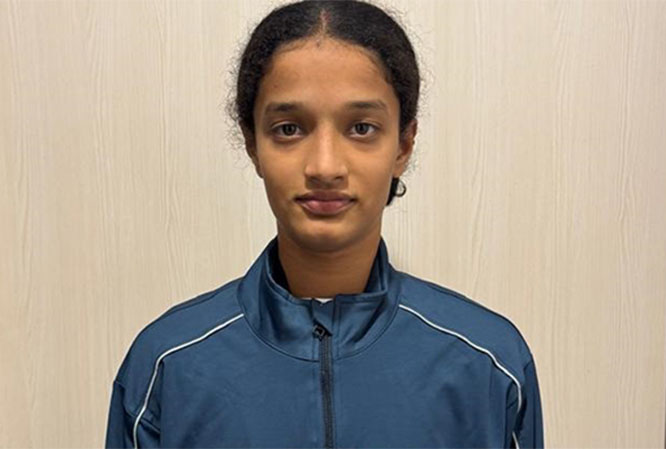
karkala.jpg

Udupi, Dec 2: A wave of regional pride is sweeping through Udupi district as Shagun S Verma Hegde, a talented Class 9 student from Christ King English Medium High School, Karkala, has been named the captain of the Indian National Team for the Under-15 Girls’ Volleyball Championship.

Shagun holds the unique distinction of being the sole player from Karnataka selected to represent the country in the prestigious international tournament. The championship, organized by the School Games Federation, is scheduled to take place in Shangluo, China, from December 3 to 13, where Shagun will lead the national squad.

A Remarkable Journey to the Top

Shagun’s selection is a testament to her dedication and exceptional skill on the court. Her journey included several rigorous rounds of selection:

•    She was the only player from Udupi district to qualify for the state-level selection camp.

•    Out of eight players from Karnataka who advanced to the national selection camp in Pune, Maharashtra, Shagun was the only one to secure a place in the final national squad.

•    The national camp saw participation from approximately 200 players, which was shortlisted to 23. Shagun not only made the final cut but was also ranked as the second-best player overall, solidifying her leadership role.

Shagun, who is the daughter of Sandesh Verma and Shruthiraj of Kallotte, Karkala, has trained under experienced coaches Santosh D’Souza, Jeevan D’Silva, Jairaj Poojary, and Ramesh. Her selection as the team captain has brought profound honour to her family, school, the Udupi district, and the entire state of Karnataka.

Comments

Add new comment

  • Coastaldigest.com reserves the right to delete or block any comments.
  • Coastaldigset.com is not responsible for its readers’ comments.
  • Comments that are abusive, incendiary or irrelevant are strictly prohibited.
  • Please use a genuine email ID and provide your name to avoid reject.
News Network
December 2,2025

A major upgrade in safety and monitoring is planned for Haj 2026, with every Indian pilgrim set to receive a Haj Suvidha smart wristband linked to the official Haj Suvidha mobile app. The initiative aims to support pilgrims—especially senior citizens—who may struggle with smartphones during the 45-day journey.

What the Smart Wristband Will Do

Officials said the device will come with:
•    Location tracking
•    Pedometer
•    SOS emergency button
•    Qibla compass
•    Prayer timings
•    Basic health monitoring

SP Tiwari, secretary of the UP State Haj Committee, said the goal is to make the pilgrimage safer and more comfortable.

“Most Hajis are elderly and not comfortable with mobile apps,” he said. “The smartwatch will help locate pilgrims who forget their way or cannot communicate their location.”

The wristbands will be monitored by the Consulate General of India in Saudi Arabia, similar to mobile tracking via the Haj Suvidha App.

Free Distribution and Training

•    Smart wristbands will be given free of cost.
•    Training for pilgrims will be conducted between January and February 2026.
•    Sample units will reach state Haj committees soon.
•    Final devices will be distributed as pilgrims begin their journey.

New Rules for Accommodation

Two major decisions have also been finalised for Haj 2026:
1.    Separate rooms for men and women – including married couples. They may stay on the same floor but must occupy different rooms, following stricter Saudi guidelines.
2.    Cooking banned – gas cylinders will not be allowed; all meals will be provided through official catering services arranged by the Haj Committee of India.

These decisions were finalised during a meeting of the Haj Committee of India and state representatives in Mumbai.

Haj Suvidha App Launched Earlier

The government launched the Haj Suvidha App in 2024, offering:

•    Training modules
•    Accommodation and flight details
•    Baggage information
•    SOS and translation tools
•    Grievance redressal

Haj 2026 Quota and Key States

•    India’s total Haj quota for 2026: 1,75,025 pilgrims
•    70% (1,25,000) allotted to the Haj Committee of India
•    30% (around 50,000) reserved for Haj Group Organisers

Uttar Pradesh has the largest allocation (around 30,000 seats), though approximately 18,000 pilgrims are expected to go this year. States with high pilgrim numbers include Kerala, Maharashtra and Gujarat.

Dates of Haj 2026

The pilgrimage is scheduled to take place from 24 May to 29 May, 2026 (tentative).
Haj is one of the five pillars of Islam and is mandatory for Muslims who meet the required conditions.

Comments

Add new comment

  • Coastaldigest.com reserves the right to delete or block any comments.
  • Coastaldigset.com is not responsible for its readers’ comments.
  • Comments that are abusive, incendiary or irrelevant are strictly prohibited.
  • Please use a genuine email ID and provide your name to avoid reject.