‘Economically most backward’: Caste census reveals livelihood crisis among Karnataka’s Muslims

coastaldigest.com news network
May 18, 2025

muslimsbackward.jpg

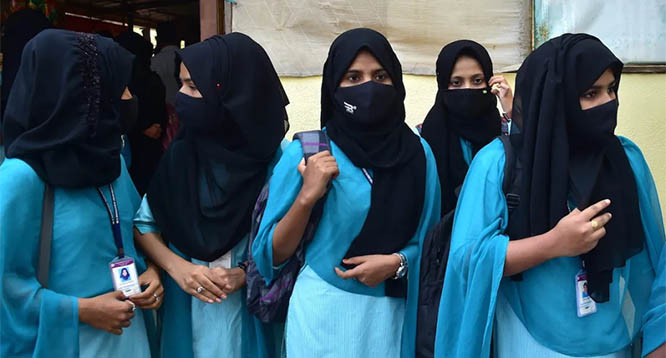
The recent caste census in Karnataka has revealed a sobering truth: while the state's Muslim community enjoys strong social standing, it remains among the most economically marginalized. The report suggests a widening gap between societal perception and lived reality for the state's largest religious minority.

Despite being socially respected, Karnataka’s Muslims face significant hardships in education, jobs, and overall livelihood—pushing the government to consider doubling their reservation from 4% to 8%.
_____________________

A Conflicting Reality: Respected Yet Struggling

Karnataka’s Social and Educational Survey paints a contrasting picture of the Muslim community. On one hand, they have a social score of 19.71 out of 100—almost identical to Jains, one of the most forward groups in the state. This reflects a relatively high level of societal acceptance, respect, and integration.

But this status masks deeper vulnerabilities.

The overall backwardness score for Muslims stands at 89.25 out of 200, putting them among the “more backward” communities, just a fraction below the threshold that would classify them as “most backward.”

_____________________

The Real Struggle: Education and Employment

Education

Education continues to be a major challenge:

•    Only 11.7% of Muslims reported having passed Class 10.

•    Just 5.5% said they had attended college or university.

This is reflected in their education score of 42.60 out of 68, indicating significant gaps in access, attainment, and opportunity.

Livelihood

It’s in livelihood, however, that the crisis is most severe. With a score of 26.94 out of 32, Muslims rank as the most economically backward community in the state.

Key findings:

•    Only 1.03% of Muslims have a government job.

•    Just 1.39% work in the private sector.

•    A large section relies on family-run businesses or informal jobs—puncture repair, petty retail, scrap trading, etc.

“Unlike other communities, we don’t have a specific traditional occupation,” said Congress MLA Tanveer Sait. “We are scattered across trades, many of which offer no long-term security.”
_____________________

How Do Other Communities Compare?

The contrast becomes sharper when placed against other groups:

•    Jains have a total score of 34.99, making them one of the most forward.

•    Christians, with 24.68, are the second-most progressed after Brahmins.

•    In stark contrast, Muslims hover just below the “most backward” threshold at 89.25.

_____________________

What the Data Means for Policy

The findings give fresh momentum to Chief Minister Siddaramaiah’s proposal to raise the Muslim reservation quota from 4% to 8% under Category 2B. The BJP opposes the move, claiming that religion-based quotas are unconstitutional.

But government officials argue that the demand is not about religion, but deprivation.

“The Sachar Committee had already warned about the low socio-economic status of Muslims,” said Tanveer Sait. “We’re not asking for the same schemes as SC/STs—just fair support in education, jobs, and health.”

____________________

Categories Explained:

•    Communities scoring 90+: Most Backward (Category 1A & 1B)

•    50–89: More Backward (Category 2A & 2B) → Muslims fall here

•    20–49: Backward (Category 3A & 3B)

_____________________

Beyond the Numbers

The numbers tell a story of contradiction. Muslims in Karnataka have social recognition, but no corresponding economic empowerment. They are not invisible—but they are clearly underserved.

As debates around reservation intensify, one thing is clear: if dignity is not matched by opportunity, social respect becomes a hollow achievement.

Comments

Add new comment

  • Coastaldigest.com reserves the right to delete or block any comments.
  • Coastaldigset.com is not responsible for its readers’ comments.
  • Comments that are abusive, incendiary or irrelevant are strictly prohibited.
  • Please use a genuine email ID and provide your name to avoid reject.
P A Hameed Padubidri
November 26,2025

CD.jpg

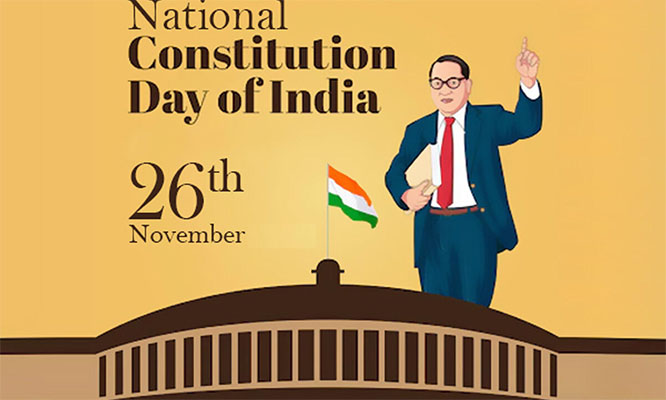
Constitution Day, also known as Samvidhan Divas, is observed every year on November 26 to honor the adoption of the Constitution of India and to recognize the visionary effort that shaped the world’s largest democracy.

Historical Background

It’s on November 26, 1949, the Constituent Assembly of India formally adopted the Constitution.This date is commemorated to acknowledge the completion of nearly three years of drafting, debate, and refinement.

On January 26, 1950, the Constitution came into force, marking India’s transition from a dominion to a sovereign republic.

The date 26 January was chosen to honor the “Purna Swaraj” declaration made in 1930 that marked the relentless efforts & sacrifices of the many. 

Why Constitution Day is Celebrated

* To honor & remember the framers of the Constitution, especially Dr. B. R. Ambedkar, the Chairman of the Drafting Committee, & many others. 

* To remind the citizens of the values, responsibilities, and rights enshrined in the Constitution.

* To promote constitutional values & literacy among students, institutions, and the general public.

* To reaffirm the nation’s commitment to justice, equality, liberty, fraternity and secular values. 

Vision and Significance of the Constitution

It establishes the fundamental political and legal framework for the nation.

Defines the structure, powers and functions of:
    •    The Executive
    •    The Legislature
    •    The Judiciary
    •    Guarantees a comprehensive set of Fundamental Rights, including:

-Equality before law
-Freedom of speech & expression
-Protection of life and personal liberty
-Freedom of religion
-Embeds Directive Principles of State Policy, guiding governance toward social justice and welfare.
-Introduces Fundamental Duties to ensure civic responsibility among citizens.

Key Features Celebrated on Constitution Day

-The Indian constitution is considered one of the longest written constitutions of the world. It’s systematically drafted considering almost all aspects that properly fits to the country. 

-Blend of multiple global constitutional principles while staying rooted in Indian values and realities.

-Framework that balances Federalism, Secularism, Democracy and Rule of Law. This makes everyone-from President to common man-below the law & are equal in the sight of law. 

-Another feature is that it’s based on built-in mechanisms for amendments, ensuring the Constitution grows with changing needs.

Message of the Day

The core ethos of this  Constitution Day is not merely about looking back at history-it’s a reminder of the continuous duty to protect democratic values, respect diversity and uphold the principles that define India as a sovereign, socialist, secular and democratic republic.

Happy Constitution Day to all my compatriots

Comments

Add new comment

  • Coastaldigest.com reserves the right to delete or block any comments.
  • Coastaldigset.com is not responsible for its readers’ comments.
  • Comments that are abusive, incendiary or irrelevant are strictly prohibited.
  • Please use a genuine email ID and provide your name to avoid reject.
News Network
November 22,2025

gaza.jpg

The Israeli regime’s forces have killed two Palestinian children in the Gaza Strip every day since the ceasefire began in early October, UNICEF has warned.

The UN children’s agency said on Friday that Israeli forces continue to attack Palestinians in Gaza even though the agreement was meant to stop the killing.

“Since 11 October, while the ceasefire has been in effect, at least 67 children have been killed in conflict-related incidents in the Gaza Strip. Dozens more have been injured. That is an average of almost two children killed every day since the ceasefire took effect,” UNICEF spokesperson Ricardo Pires said in Geneva, reminding that each number in the statistics represents a child whose life had ended violently.

“These are not statistics,” he said. “Each child had a story, a family, and a future that was stolen from them.”

Data from Palestinian factions, human rights groups, and government bodies recorded since the US-brokered ceasefire deal went into effect on October 10 show that Israeli forces have carried out numerous attacks, each constituting a separate ceasefire violation.

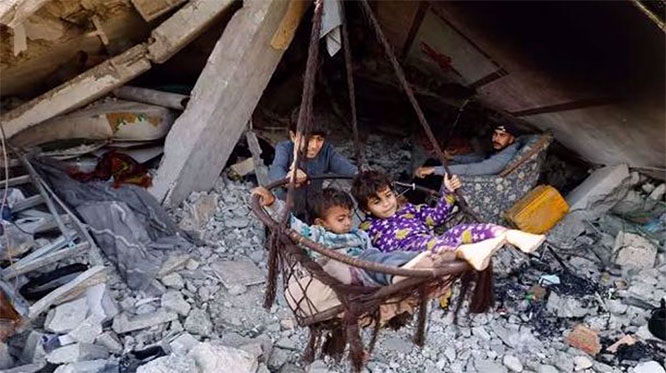
UNICEF teams say they repeatedly continue to witness heart-wrenching scenes of fearful Palestinian children sleeping outdoors with amputated limbs, while others live as orphans in flooded, makeshift shelters.

“I saw this myself in August. There is no safe place for them. The world cannot normalize their suffering,” Pires said, lamenting that the UN could “do a lot more if the aid that is really needed was entering faster.”

The UNICEF spokesperson warned that with the advent of winter, the risks for hundreds of thousands of displaced children will increase.

He warned, “The stakes are incredibly high” for children as winter acts as a threat multiplier, where children have no heating, no insulation, and few blankets. He said respiratory infections rise.

“Too many children have already paid the highest price,” Pires said. “Too many are still paying it, even under a ceasefire. The world promised them it would stop and that we would protect them.”

“Now we must act like it,” the UNICEF spokesperson added.

Since the Israeli regime launched its genocidal war against Palestinians in Gaza in October 2023, it has killed nearly 70,000 people in the territory, most of them women and children, and injured over 170,000 more, while reducing most of the structures in the enclave to rubble.

Comments

Add new comment

  • Coastaldigest.com reserves the right to delete or block any comments.
  • Coastaldigset.com is not responsible for its readers’ comments.
  • Comments that are abusive, incendiary or irrelevant are strictly prohibited.
  • Please use a genuine email ID and provide your name to avoid reject.
News Network
November 27,2025

siddDKS.jpg

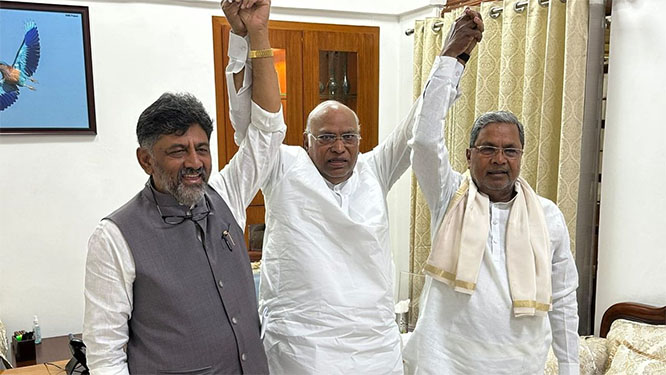
Congress president Mallikarjun Kharge on Thursday announced that he will convene a high-level meeting in New Delhi with senior leaders — including Rahul Gandhi, Karnataka Chief Minister Siddaramaiah and Deputy Chief Minister D.K. Shivakumar — to resolve the escalating leadership turmoil in Karnataka and “put an end to the confusion.”

Kharge said the discussions would focus on the way forward for the ruling party, as rumours of a possible leadership change continue to swirl. The speculation has intensified after the Congress government crossed the halfway mark of its five-year term on November 20, reviving talk of an alleged 2023 “power-sharing agreement” between Siddaramaiah and Shivakumar.

“After reaching Delhi, I will call three or four important leaders and hold discussions. Once we talk, we will decide how to move ahead and end this confusion,” Kharge told reporters in Bengaluru, according to PTI.

When asked specifically about calling Siddaramaiah and Shivakumar to Delhi, he responded: “Certainly, we should call them. We will discuss with them and settle the issue.”

He confirmed that Rahul Gandhi, the Chief Minister, the Deputy Chief Minister and other senior members would be part of the deliberations. “After discussing with everyone, a decision will be made,” he said.

Meanwhile, Siddaramaiah held a separate strategy meeting at his Bengaluru residence with ministers and leaders seen as his close confidants, including G. Parameshwara, Satish Jarkiholi, H.C. Mahadevappa, K. Venkatesh and K.N. Rajanna.
Signalling calm, the Chief Minister told reporters, “Will go to Delhi if the high command calls.”

Shivakumar echoed a similar stance, saying he too would head to the national capital if summoned by the party leadership.

Comments

Add new comment

  • Coastaldigest.com reserves the right to delete or block any comments.
  • Coastaldigset.com is not responsible for its readers’ comments.
  • Comments that are abusive, incendiary or irrelevant are strictly prohibited.
  • Please use a genuine email ID and provide your name to avoid reject.