Gujarat HC quashes order to show Modi's PG degree, imposes fine on CM Kejriwal

News Network
March 31, 2023

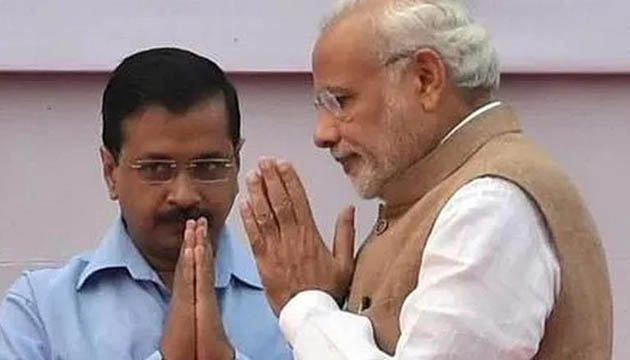
Kejrimodi.jpg

The Gujarat High Court allowed a petition moved by Gujarat University (GU) challenging direction of Central Information Commission (CIC) asking the varsity to provide post graduate degree of Prime Minister Narendra Modi under Right to Information Act (RTI) to Delhi Chief Minister Arvind Kejriwal. 
 
While setting aside the direction of CIC, Justice Biren Vaishnav also imposed a fine of Rs 25,000 on Delhi CM Kejriwal. The Delhi CM was party respondent in the case. The court refused to stay its order after a request by Kejriwal's lawyer for appealing the verdict. 
 
In 2016, GU had moved the court challenging the order passed by CIC directing it to provide information to Delhi chief minister Arvind Kejriwal on the graduation degree of Modi. 
 
The then information commissioner M Sridhar Acharyulu had passed the direction to the Prime Minister's Office to provide information of Modi's graduation and post graduation degrees to GU as well as Delhi University to help them in searching those documents. GU approached the court stating that CIC didn't have jurisdiction to pass such an order and pleaded the court to quash it.
 
The Delhi Chief Minister himself never filed any formal RTI application. It happened after he provided information about his electoral photo identity but criticised CIC publicly saying that it was "obstructing information on Modi's degrees." 
 
The CIC took cognisance of Delhi CM's response as an application and issued notice to PMO to provide "specific number and year" of degrees of "Narendra Damodardas Modi" for making the search for the documents easy for GU and Delhi University.
 
Solicitor General Tushar Mehta had appeared for the state government-run university and argued, "Although the varsity had nothing to hide, a very short and significant question arises for consideration before the court is whether, in principle, the Right to Information Act be applied either for extraneous purpose to satisfy somebody's curiosity or to give a job opportunity to a few individuals who are misusing the provisions. So, in principle the university is contesting." 
 
Mehta had argued, "No objection so far as degree is concerned... degree is in public domain.. degree was placed in public domain in more than one forum. This particular degree nobody is hiding. But, in principle, this needs to be examined." Mehta argued that seeking education qualification of a public person has to satisfy the RTI exemption clauses that it must be in public interest. He said that "just because the public is interested, it can't be held that it is of public interest." 
 
Mehta said that elections can't be questioned on the basis of educational qualification. "Can you seek any personal information merely because you are curious about it? Can a CM seek information about the health of a PM?," Mehta argued. He gave examples of federal laws of the United States of America and the United Kingdom, which guard personal information of citizens.
 
At the end of his submission, he had told the court that the varsity's petition should be allowed with a cost. "Otherwise, we would be doing a great disservice to the Act, which is intended for something else but it is used for something else...it is used for settling political scores, used for childish jabs against opponents."
 
Appearing for Kejriwal, senior lawyer Percy Kavina responded, saying "Settling political scores and politics is inextricably linked with this matter because of the allied parties who are politically antithetical to each other. He stated that provisions under RTI are clear that one shouldn't be required to give the purpose of seeking information.
 
Kavina argued that direction is to furnish information to the public information officer (PIO) of Gujarat University under RTI Act and not the varsity itself. There is no order against the university. 
 
"The university is a statutory body which can't hold the brief for somebody else no matter how desirable it is. The commission directed the PIO of the Prime Minister's Office and Gujarat University. Why should GU spring to the defence of a person who has not chosen to challenge this order. The PIO of the PMO, public information officer of PMO, is the principal directee... he has not chosen to challenge this order," Kavina argued. He also said that instead of challenging it in the high court, an alternative remedy was available for filing an appeal against the commission's order.
 
He argued that when a candidate contesting elections discloses his or her educational qualification, he goes out of the purview of exemption under RTI Act. "An attempt was made and we inquired that a person doesn't hold qualification. It is an offence to file wrong information. Kavina also contended that no information related to the degree was available in the public domain.
 
"Entire case of the university is being pleaded for by a person who is not before the court. If the university is directed to comply with an order then it is for the person whose information is to be given to be asked yes or no. The order can be treated as a request. Do you have a problem? If you have, I will consider it...it is how the rule of law operates. Ex-US president Donald Trump and US president Joe Biden's houses were also investigated by the FBI. No one is above the law," Kavina had argued. 

Comments

Add new comment

  • Coastaldigest.com reserves the right to delete or block any comments.
  • Coastaldigset.com is not responsible for its readers’ comments.
  • Comments that are abusive, incendiary or irrelevant are strictly prohibited.
  • Please use a genuine email ID and provide your name to avoid reject.
News Network
January 23,2026

Karnataka Governor Thaawarchand Gehlot read only three lines from the 122-paragraph address prepared by the Congress-led state government while addressing the joint session of the Legislature on Thursday, effectively bypassing large sections critical of the BJP-led Union government.

The omitted portions of the customary Governor’s address outlined what the state government described as a “suppressive situation in economic and policy matters” under India’s federal framework. The speech also sharply criticised the Centre’s move to replace the Mahatma Gandhi National Rural Employment Guarantee Act (MGNREGA) with the Viksit Bharat–Guarantee for Rozgar and Ajeevika Mission (Gramin) Act, commonly referred to as the VB-GRAM (G) Act.

Governor Gehlot had earlier conveyed his objection to several paragraphs that were explicitly critical of the Union government. On Thursday, he confined himself to the opening lines — “I extend a warm welcome to all of you to the joint session of the State legislature. I am extremely pleased to address this august House” — before jumping directly to the concluding sentence of the final paragraph.

He ended the address by reading the last line of paragraph 122: “Overall, my government is firmly committed to doubling the pace of the State’s economic, social and physical development. Jai Hind — Jai Karnataka.”

According to the prepared speech, the Karnataka government demanded the scrapping of the VB-GRAM (G) Act, describing it as “contractor-centric” and detrimental to rural livelihoods, and called for the full restoration of MGNREGA. The state government argued that the new law undermines decentralisation, weakens labour protections, and centralises decision-making in violation of constitutional norms.

Key points from the unread sections of the speech:

•    Karnataka facing a “suppressive” economic and policy environment within the federal system

•    Repeal of MGNREGA described as a blow to rural livelihoods

•    VB-GRAM (G) Act accused of protecting corporate and contractor interests

•    New law alleged to weaken decentralised governance

•    Decision-making said to be imposed by the Centre without consulting states

•    Rights of Adivasis, women, backward classes and agrarian communities curtailed

•    Labourers allegedly placed under contractor control

•    States facing mounting fiscal stress due to central policies

•    VB-GRAM (G) Act accused of enabling large-scale corruption

Comments

Add new comment

  • Coastaldigest.com reserves the right to delete or block any comments.
  • Coastaldigset.com is not responsible for its readers’ comments.
  • Comments that are abusive, incendiary or irrelevant are strictly prohibited.
  • Please use a genuine email ID and provide your name to avoid reject.
News Network
January 19,2026

trump.jpg

Donald Trump has linked his repeated threats to seize Greenland to his failure to win the Nobel Peace Prize, in a letter to Norwegian Prime Minister Jonas Gahr Støre.

The authenticity of the letter, in which Trump says he no longer feels obligated to “think purely of peace,” was confirmed by Støre to the Norwegian newspaper VG.

“Considering your country decided not to give me the Nobel Peace Prize for having stopped eight wars plus, I no longer feel an obligation to think purely of peace,” Trump wrote, adding he can now “think about what is good and proper for the United States.”

Støre said Trump’s letter was in response to a short message he had sent earlier, on behalf of himself and Finland’s President Alexander Stubb.

Trump has escalated rhetoric toward Greenland, a self-governing Danish territory, insisting the US will take control “one way or the other.” Over the weekend, he tweeted: “Now it is time, and it will be done!!!”

On Saturday, Trump threatened a 10% tariff on imports from Denmark, Norway, Sweden, France, Germany, the UK, the Netherlands, and Finland from 1 February until the US is allowed to purchase the island. EU diplomats met for emergency talks on possible retaliatory tariffs and sanctions.

In his letter, Trump argued Denmark “cannot protect” Greenland from Russia or China, questioning Danish ownership: “There are no written documents; it’s only that a boat landed there hundreds of years ago.” He added that NATO should support the US, claiming the world is “not secure unless we have complete and total control of Greenland.”

Trump’s stance has unsettled the EU and NATO, as he refused to rule out military action to take control of the mineral-rich island.

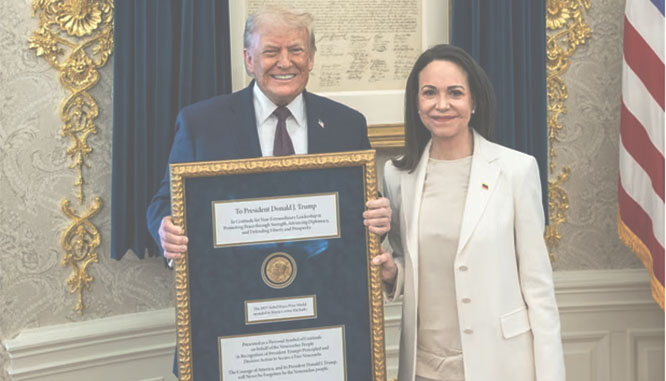
The Nobel Peace Prize is awarded by the independent Norwegian Nobel Committee, not the government. Trump had campaigned for last year’s prize, which went to Venezuelan opposition leader María Corina Machado, who dedicated her award to him.

Støre reiterated that the Nobel Prize decision rests solely with the committee.

Comments

Add new comment

  • Coastaldigest.com reserves the right to delete or block any comments.
  • Coastaldigset.com is not responsible for its readers’ comments.
  • Comments that are abusive, incendiary or irrelevant are strictly prohibited.
  • Please use a genuine email ID and provide your name to avoid reject.
News Network
February 1,2026

Bengaluru: The Karnataka High Court has refused to quash an investigation against a WhatsApp group administrator accused of allowing the circulation of obscene and offensive images depicting Hindutva politicians and idols in 2021.

Justice M Nagaprasanna observed that, prima facie, the ingredients of the offence under Section 295A of the Indian Penal Code were made out. “The offence under Section 295A of the IPC is met to every word of its ingredient, albeit prima facie,” the judge said.

The petitioner, Sirajuddin, a resident of Belthangady taluk in Dakshina Kannada district, had challenged the FIR registered against him at the CEN (Cyber, Economics and Narcotics) police station, Mangaluru, for offences under Section 295A of the IPC and Section 67 of the Information Technology Act. Section 295A relates to punishment for deliberate and malicious acts intended to outrage the religious feelings of any class of citizens.

According to the complaint filed by K Jayaraj Salian, also a resident of Belthangady taluk, he received a WhatsApp group link from an unknown source and was added to the group after accessing it. The group reportedly had six administrators and around 250 participants, where obscene and offensive images depicting Hindu deities and certain political figures were allegedly circulated repeatedly.

Sirajuddin was arrested in connection with the case and later released on bail on February 16, 2021. He argued before the court that he was being selectively targeted, while other administrators—including the creator of the group—were neither arrested nor investigated. He also contended that the Magistrate could not have taken cognisance of the offence under Section 295A without prior sanction under Section 196(1) of the CrPC.

Rejecting the argument, Justice Nagaprasanna held that prior sanction is required only at the stage of taking cognisance, and not at the stage of registration of the crime or during investigation.

The judge noted that the State had produced the entire investigation material before the court. “A perusal of the material reveals depictions of Hindu deities in an extraordinarily obscene, demeaning and profane manner. The content is such that its reproduction in a judicial order would itself be inappropriate,” the court said, adding that the material, on its face, had the tendency to outrage religious feelings and disturb communal harmony.

Observing that the case was still at the investigation stage, the court said it could not interdict the probe at this juncture. However, it expressed concern that the investigating officer appeared to have not proceeded uniformly against all administrators. The court clarified that if the investigation revealed the active involvement of any member in permitting the circulation of such content, they must also be proceeded against.

“At this investigative stage, any further observation by this Court would be unnecessary,” the order concluded.

Comments

Add new comment

  • Coastaldigest.com reserves the right to delete or block any comments.
  • Coastaldigset.com is not responsible for its readers’ comments.
  • Comments that are abusive, incendiary or irrelevant are strictly prohibited.
  • Please use a genuine email ID and provide your name to avoid reject.